Chamber Flag
A chamber flag is a bright, visible indicator inserted into an empty chamber or open action to show that a firearm has been cleared. It is a visual aid for range safety, not a replacement for unloading, inspection, safe handling, or secure storage.
By RaiS. Reviewed by RaiS. Published . 6 min read.
Research and drafting were assisted by AI. RaiS checked the facts against the sources below and approved this page.
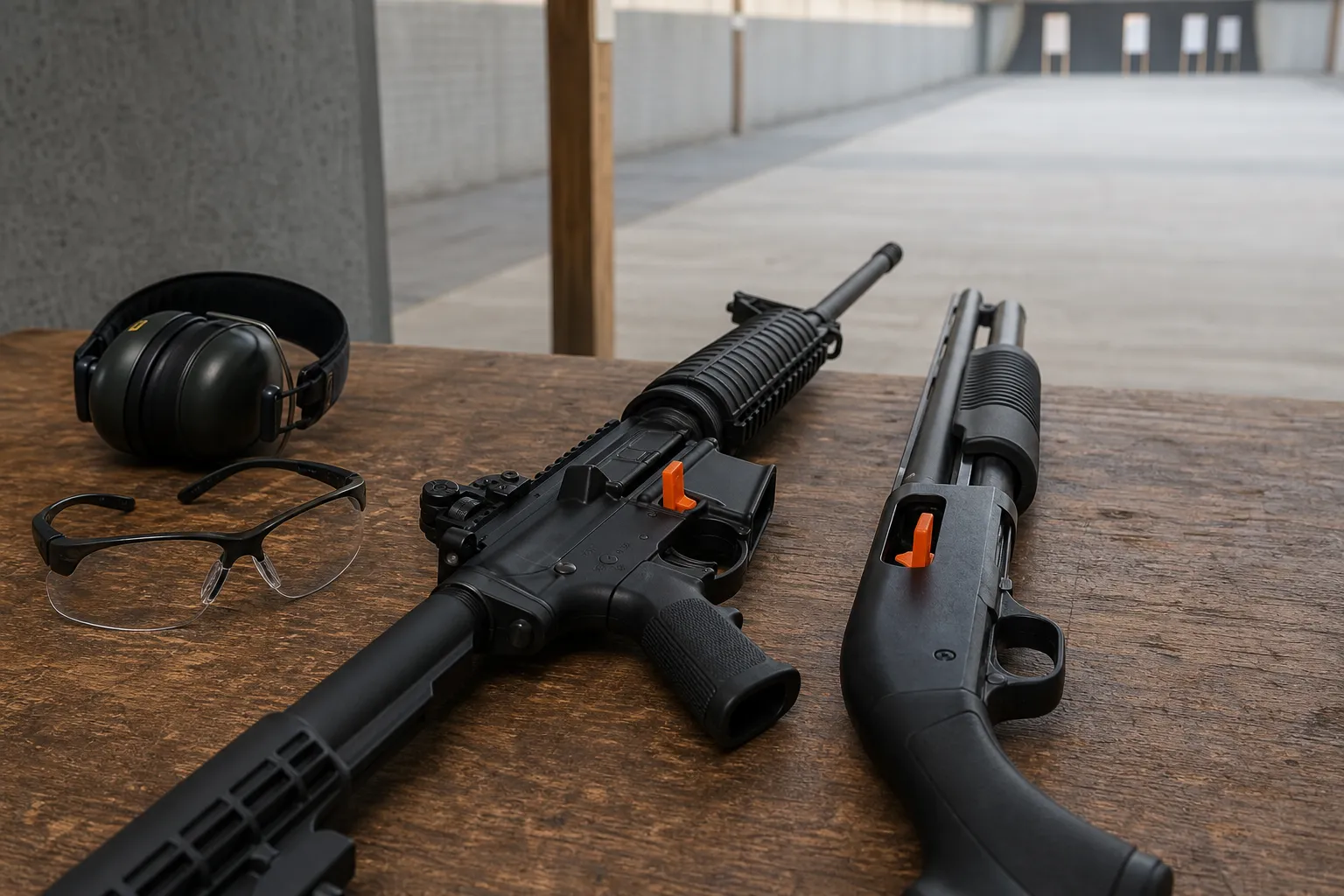
A chamber flag is a visible safety indicator inserted into the empty chamber or open action of a firearm. Rulebooks and manuals also call it an empty chamber indicator, ECI, safety flag, clear chamber device, chamber safety flag, clear barrel indicator, CBI, or open bolt indicator, OBI. Its job is simple: it helps other people see that the chamber is empty or that the action is open, depending on the firearm and the rule set.
What a chamber flag is
A chamber flag usually has two functional parts: something that enters the chamber or action, and a visible flag or indicator outside the firearm. CMP Games Rules define safety flags, formerly called ECIs, as devices with a chamber probe and a visible flag projecting from the open action. CMP also says those flags must be fluorescent orange, yellow, or a similar bright color, with a probe that inserts into the gun chamber.
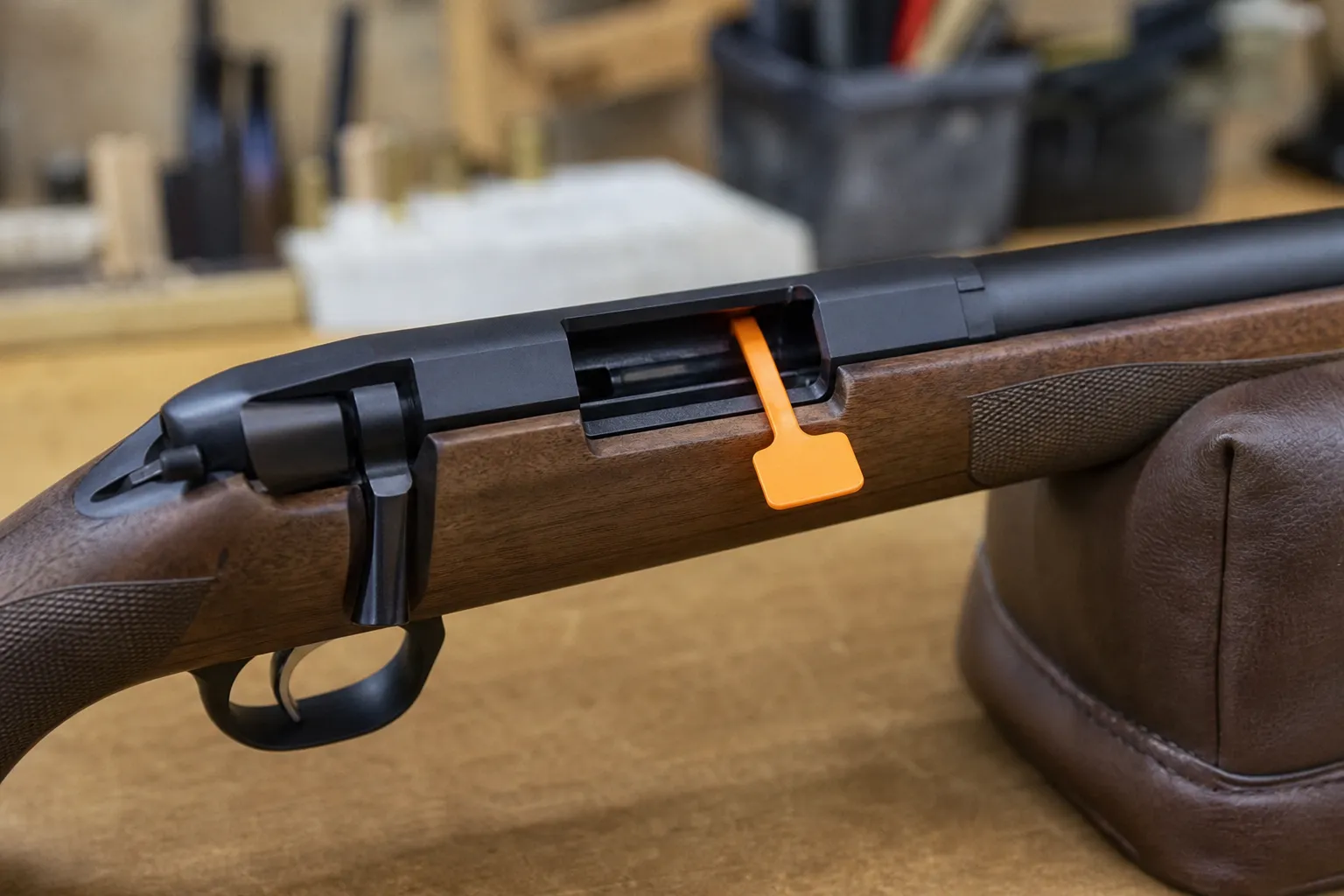
NRA Smallbore Rifle Rules describe the same basic idea for substitute indicators: the device must have a probe into the empty chamber, have a flag attached, and be a bright color. NRA Precision Pistol Rules say an ECI must extend into the empty chamber or cylinder and be externally visible.
In plain language, a chamber flag is a conspicuous reminder that the firearm has been placed in a cleared condition under the rules being used.
What it visually indicates
A chamber flag is used to make an unloaded or open action condition visible to range officers, competitors, instructors, and nearby people. NRA Precision Pistol Rules require an ECI in NRA sanctioned pistol competitions to indicate that the slide is open and the chamber is empty. NRA Smallbore Rifle Rules require a smallbore ECI to indicate that the chamber is empty.
Some rules emphasize the open action. PCSL General Rules say that when ECIs are required for long guns transported outside a full case or bag, the ECI must be clearly visible and must hold the firearm action open.
Those examples show why the exact meaning of a flag depends on the rulebook. In one setting, the rule may focus on an empty chamber. In another, it may focus on an action held open.
Where chamber flags are commonly used
Chamber flags are common anywhere several people need to verify firearm status quickly and consistently.
Ranges and cold firing lines
CMP Games Rules require safety flags in all rifles and pistols when they are on a shooting range. CMP also defines a cleared rifle or pistol as having an open action, empty chamber, magazine removed if any, a safety flag inserted in its chamber, and a Range Officer check.
CMP Games Rules require rifles and pistols to be cleared and benched or grounded before anyone goes downrange to hang, score, or retrieve targets. SIG Sauer's 716 TREAD operator manual also notes that many public ranges require chamber safety flags when the firing line is cold.
Matches and competition
Competition rulebooks often specify when a chamber flag or ECI is required.
| Rule set | How the rule describes use |
|---|---|
| CMP Games Rules | Safety flags must be placed in all rifles and pistols when they are on a shooting range. |
| NRA Precision Pistol Rules | An ECI is required in all NRA sanctioned pistol competitions to show the slide is open and the chamber is empty. |
| NRA Smallbore Rifle Rules | A smallbore ECI is required in all smallbore rifle competitions to indicate that the chamber is empty. |
| PCSL General Rules | ECIs are not required by default, unless the host range requires them. When required, the ECI must be clearly visible and hold the action open for long guns transported outside a full case or bag. |
Training classes and demonstrations
Training environments often have several firearms visible at the same time. CMP Safety guidance says firearm actions must be open with a CBI, ECI, or OBI inserted when handling rifles or firearms. CMP Safety guidance also says actions must remain open except when the gun is on the firing line and preparation or firing periods have begun.
That visible status can help instructors and safety officers manage a line, a classroom, or a demonstration area. It does not remove the need to follow commands and inspect firearms directly.
Carrying, casing, uncasing, and staging at the range
Some rulebooks address chamber flags while firearms are being moved or staged. CMP Games Rules say a rifle carried on the range must keep the safety flag inserted, whether the rifle is cased or uncased. CMP Games Rules also say uncased pistols carried on the range must have a safety flag inserted.
What a chamber flag does not do
A chamber flag is a visual aid. It is not a substitute for unloading, inspection, safe muzzle direction, trigger discipline, or secure storage.
The NRA safety rules say to always keep the gun unloaded until ready to use. The NRA also says a mechanical safety device is never foolproof and that nothing can replace safe gun handling. Although a chamber flag is not the same as a mechanical safety, the same safety principle applies: no device replaces safe handling.
Tennessee Department of Safety and Homeland Security describes chamber flags as an added safety measure while transporting and storing semiautomatic handguns. The same brochure states that chamber flags are not locks or security devices.
PCSL General Rules also give one important boundary: live rounds or spent casings or shells must never be used as an acceptable ECI.
Chamber flags and storage or transport checks
A chamber flag may be part of a storage or transport check when a manual, range rule, match rule, or safety program calls for it. SIG Sauer's 716 TREAD operator manual says every SIG Sauer firearm ships with a chamber safety flag. That manual says the chamber safety flag prevents chambering a round when installed and gives a readily visible indication that the chamber is empty.
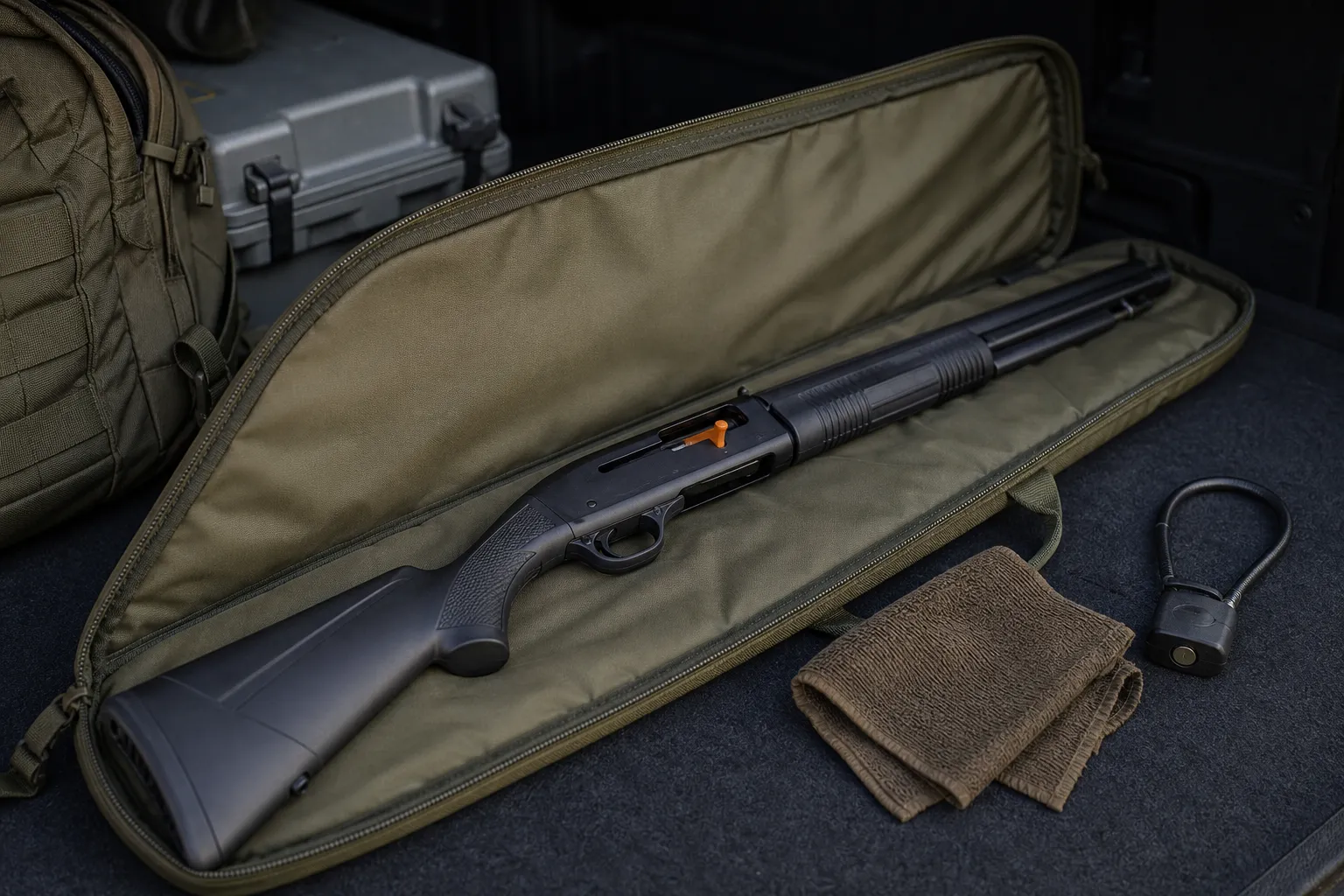
CMP Safety guidance says the action may be closed when a gun is placed in a gun case or storeroom, but the action should be opened and a CBI, ECI, or OBI inserted as soon as it is picked up again. CMP also says firearms should be kept unloaded during transport, and the chamber and magazine should be double checked before closing the action for travel.
For storage, the RCMP guidance for individuals says to unload and lock firearms, and to store ammunition separately or lock it up. That is a separate security point from using a chamber flag. A flag can show a condition, but it does not lock the firearm or secure it from access.
Related terms you may hear
Different organizations use different names for the same general idea.
Common terms include:
- Chamber flag
- Safety flag
- Empty chamber indicator, or ECI
- Clear chamber device
- Chamber safety flag
- Clear barrel indicator, or CBI
- Open bolt indicator, or OBI
CMP Safety guidance lists CBI, ECI, and OBI as indicators used with an open action. CMP Games Rules say safety flags were formerly called ECIs. USPSA uses the terms chamber safety flag and clear chamber device for pistol caliber carbine rules.
Bottom line
A chamber flag gives people a quick visual cue that a firearm has been cleared in the way a specific range, class, match, or manual requires. It is most useful when everyone follows the same rulebook and understands what the flag means.
Before using a firearm at a range, match, class, or storage location, check the firearm manual, the range commands, the match rulebook, and the storage or transport rules that apply where you are. If a safety officer or official rulebook uses a specific term such as ECI, CBI, OBI, or chamber safety flag, follow that terminology and procedure exactly.
Frequently asked questions
What is a chamber flag?
A chamber flag is a visible safety indicator inserted into an empty chamber or open action. CMP Games Rules describe a safety flag as having a chamber probe and a visible flag projecting from the open action.
Does a chamber flag prove a firearm is safe to handle casually?
No. A chamber flag is only a visual aid. NRA safety rules say to keep a gun unloaded until ready to use and that nothing replaces safe gun handling.
Are chamber flags required at every range or match?
Not always. Some rulebooks require them, such as CMP, NRA Precision Pistol, and NRA Smallbore Rifle. PCSL says ECIs are not required by default unless the host range requires them.
Can a spent case be used as a chamber flag?
PCSL General Rules say live rounds or spent casings or shells shall never be permitted as an acceptable ECI.
Is a chamber flag a lock or storage security device?
No. The Tennessee Department of Safety and Homeland Security states that chamber flags are not locks or security devices. RCMP guidance for individuals separately says to unload and lock firearms and store ammunition separately or lock it up.
Why are chamber flags often bright colors?
CMP Games Rules say safety flags must be fluorescent orange, yellow, or a similar bright color. NRA Smallbore Rifle Rules also describe substitute indicators as needing a bright color and a flag.
Sources
- CMP Games Rules for Rifle and Pistol, 2025, Civilian Marksmanship ProgramOfficial source. Accessed October 23, 2026.
- Safety, Civilian Marksmanship ProgramOfficial source. Accessed October 23, 2026.
- NRA Precision Pistol Rules, National Rifle Association Competitive Shooting DivisionOfficial source. Accessed October 23, 2026.
- NRA Smallbore Rifle Rules, National Rifle Association Competitive Shooting DivisionOfficial source. Accessed October 23, 2026.
- USPSA Competition Rules, September 2026, United States Practical Shooting AssociationOfficial source. Accessed October 23, 2026.
- SCSA Competition Rules, March 2026, Steel Challenge Shooting Association / USPSAOfficial source. Accessed October 23, 2026.
- PCSL General Rulebook, Range Safety and Procedures, Practical Competition Shooting LeagueOfficial source. Accessed October 23, 2026.
- SIG Sauer 716 TREAD Operator's Manual, SIG SauerOfficial source. Accessed October 23, 2026.
- NRA Gun Safety Rules, National Rifle AssociationOfficial source. Accessed October 23, 2026.
- Storing, Transporting and Displaying Firearms, Royal Canadian Mounted Police / Canadian Firearms ProgramOfficial source. Accessed October 23, 2026.
- Child Safety Brochure, Chamber Flag, Tennessee Department of Safety and Homeland SecurityOfficial source. Accessed October 23, 2026.