Negligent Discharge
A negligent discharge is an unintended firearm discharge caused by the person handling the firearm, usually through careless handling or failure to follow firearm safety rules. In safety training, it is commonly contrasted with an accidental discharge, which is tied to mechanical failure or a firearm firing without handler input.
By RaiS. Reviewed by RaiS. Published . 5 min read.
Research and drafting were assisted by AI. RaiS checked the facts against the sources below and approved this page.
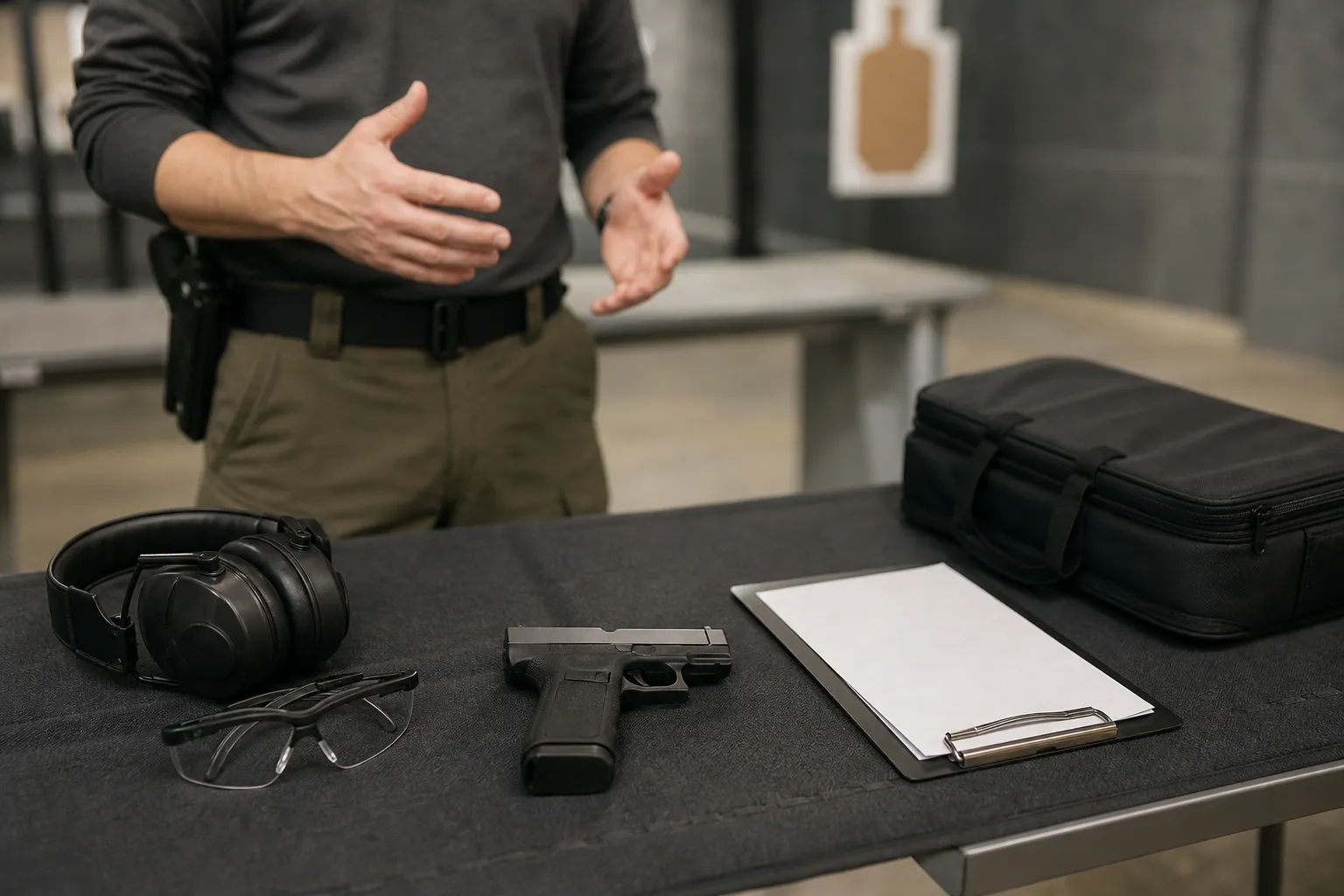
A negligent discharge is an unintended shot caused by the person handling the firearm. In plain safety-training terms, it usually means the firearm fired because of handler error, careless handling, or a failure to follow core firearm safety rules. It is different from an accidental discharge in the narrower training sense, where the firearm fires because of a malfunction, mechanical failure, or no physical input from the handler.
Definition
A negligent discharge is a type of unintentional discharge. The Los Angeles Police Department manual uses “unintentional discharge” as the broad term for a firearm discharge regardless of cause, then classifies such events as either accidental or negligent after evaluation.
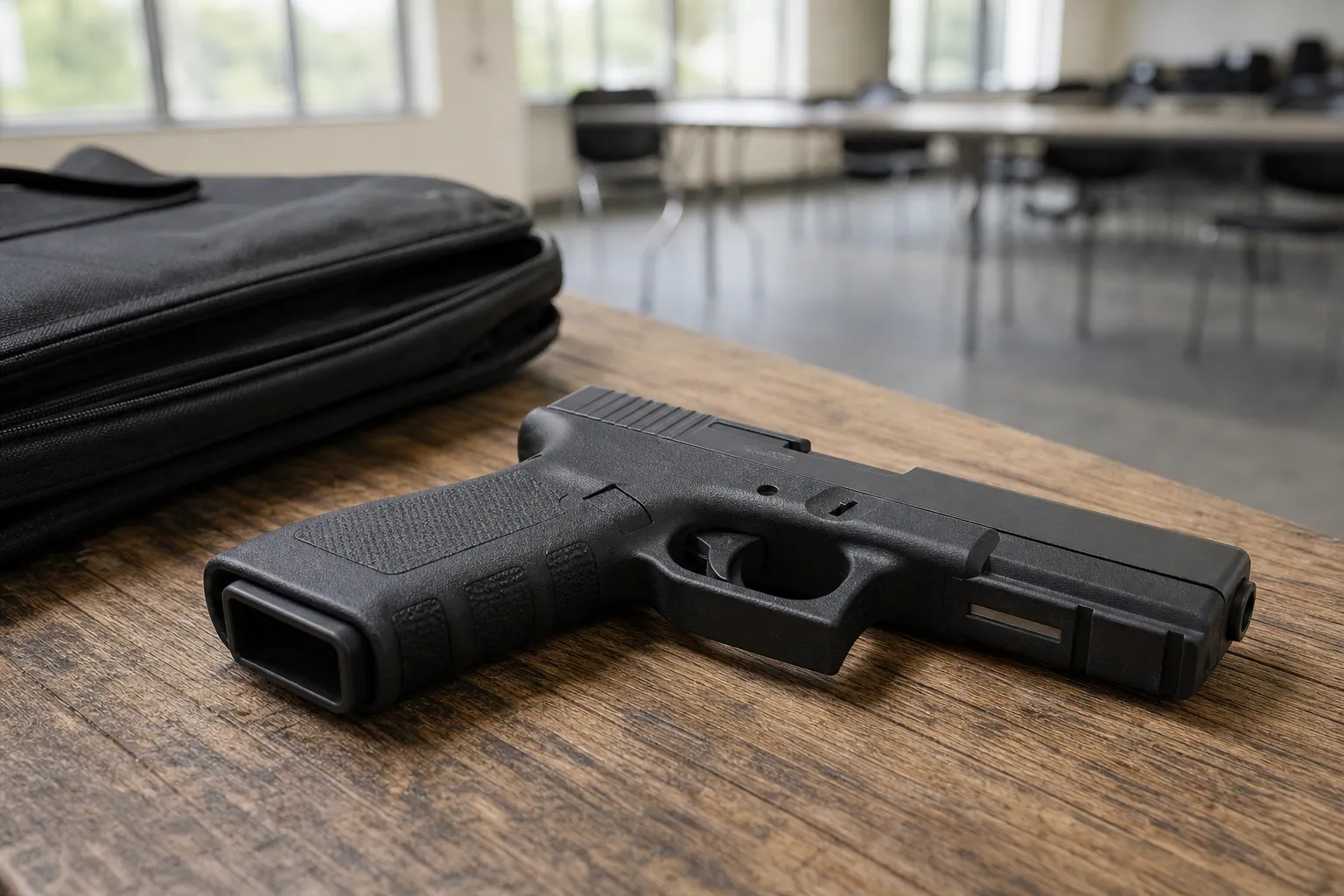
In that training use, “negligent” does not mean the same thing as a court finding. It is a safety term for an unintended discharge linked to operator error or negligence, such as violating a firearm safety rule. The University of Texas System Police training bulletin similarly describes negligent discharge as a failure to follow the four cardinal rules of gun safety.
For a new shooter, the simplest definition is this: a negligent discharge is an unintended shot that happens because the gun handler did something unsafe, or failed to do something safety rules require.
Negligent discharge versus accidental discharge
The difference matters because the prevention message is different.
| Term | Safety-training meaning |
|---|---|
| Unintentional discharge | A broad term for a firearm discharge regardless of cause, as described in the LAPD manual. |
| Negligent discharge | An unintentional discharge caused by operator error, negligence, or violation of a firearm safety rule, as described by the LAPD manual. |
| Accidental discharge | An unintentional discharge caused by firearm malfunction or other mechanical failure, not operator error, as described by the LAPD manual. |
The University of Texas System Police training bulletin also divides unintentional discharges into two categories. It describes accidental discharge as a firearm firing without physical input from the handler, often related to mechanical failures of the firearm.
This glossary entry uses those training distinctions. It does not decide whether any real event was negligent or accidental. That kind of conclusion depends on an official evaluation and the facts of the event.
Common causes
Most negligent-discharge prevention comes back to the same basic habits taught by firearm safety organizations, hunter education programs, and public safety agencies.
Finger on or inside the trigger guard too early
NRA safety material says the trigger finger should rest alongside the frame and outside the trigger guard until the shooter is ready to fire. NSSF states the same point more directly: never touch the trigger until you actually intend to shoot.
Texas Parks and Wildlife tells hunters to keep the finger out of the trigger guard until the instant they are ready to fire. Florida Fish and Wildlife Conservation Commission says keeping the finger off the trigger until ready to shoot controls when and where the firearm discharges.
Assuming a firearm is unloaded
NSSF warns shooters not to assume a firearm is unloaded, but to check it themselves. Texas Parks and Wildlife says that every time a person picks up a firearm, the first step is to point the muzzle in a safe direction and check whether it is loaded.
NRA’s safe-handling rules include keeping the gun unloaded until ready to use. NSSF says firearms should be loaded only when the shooter is in the field, on the target range, or in a shooting area and ready to shoot.
Unsafe loading, unloading, holstering, or other handling
Texas Parks and Wildlife lists careless handling causes that include improper loading or unloading, a dropped firearm, vehicle discharge, improper obstacle crossing, and walking with a loaded firearm.
The safety lesson is simple: loading, unloading, carrying, drawing, holstering, and administrative handling all require the same muzzle and trigger discipline as firing on a range.
Overreliance on a mechanical safety
NRA says a firearm’s mechanical safety device is never foolproof and cannot replace safe handling. NSSF likewise states that a firearm safety is a mechanical device and, like any such device, can become inoperable.
A manual safety or lock can be part of safe storage or safe handling, but it is not a substitute for the basic rules.
How to prevent a negligent discharge
The prevention steps are the core firearm safety rules. For a fuller explanation, read the Firearm Safety Rules guide.
1. Keep the muzzle pointed in a safe direction
NRA’s first fundamental safe-handling rule is to always keep the gun pointed in a safe direction. NSSF calls safe muzzle direction the most basic safety rule.
2. Treat every firearm as loaded, or verify its condition safely
Florida Fish and Wildlife Conservation Commission teaches the same concept in its S.A.F.E. hunter safety rules: every firearm must be treated as if it is loaded.
NSSF adds the practical step: never assume a gun is unloaded, check for yourself. Texas Parks and Wildlife says the first thing to do when picking up a firearm is to point the muzzle in a safe direction and check whether it is loaded.
3. Keep your finger off the trigger until ready to shoot
NRA says to keep the finger alongside the frame and outside the trigger guard until ready to fire. NSSF says not to touch the trigger until you actually intend to shoot.
This rule is central to negligent-discharge prevention because a firearm cannot usually distinguish between an intentional trigger press and an unintentional one.
4. Know your target and what is beyond it
NRA tells shooters to identify the target and know what is beyond it. NSSF emphasizes why this matters: once a gun fires, the shooter has given up control of where the shot goes.
Florida Fish and Wildlife Conservation Commission includes target and beyond in its S.A.F.E. hunter safety rules. This rule does not replace muzzle control or trigger discipline, but it helps prevent a bad outcome if a shot is fired.
Storage and handling habits also matter
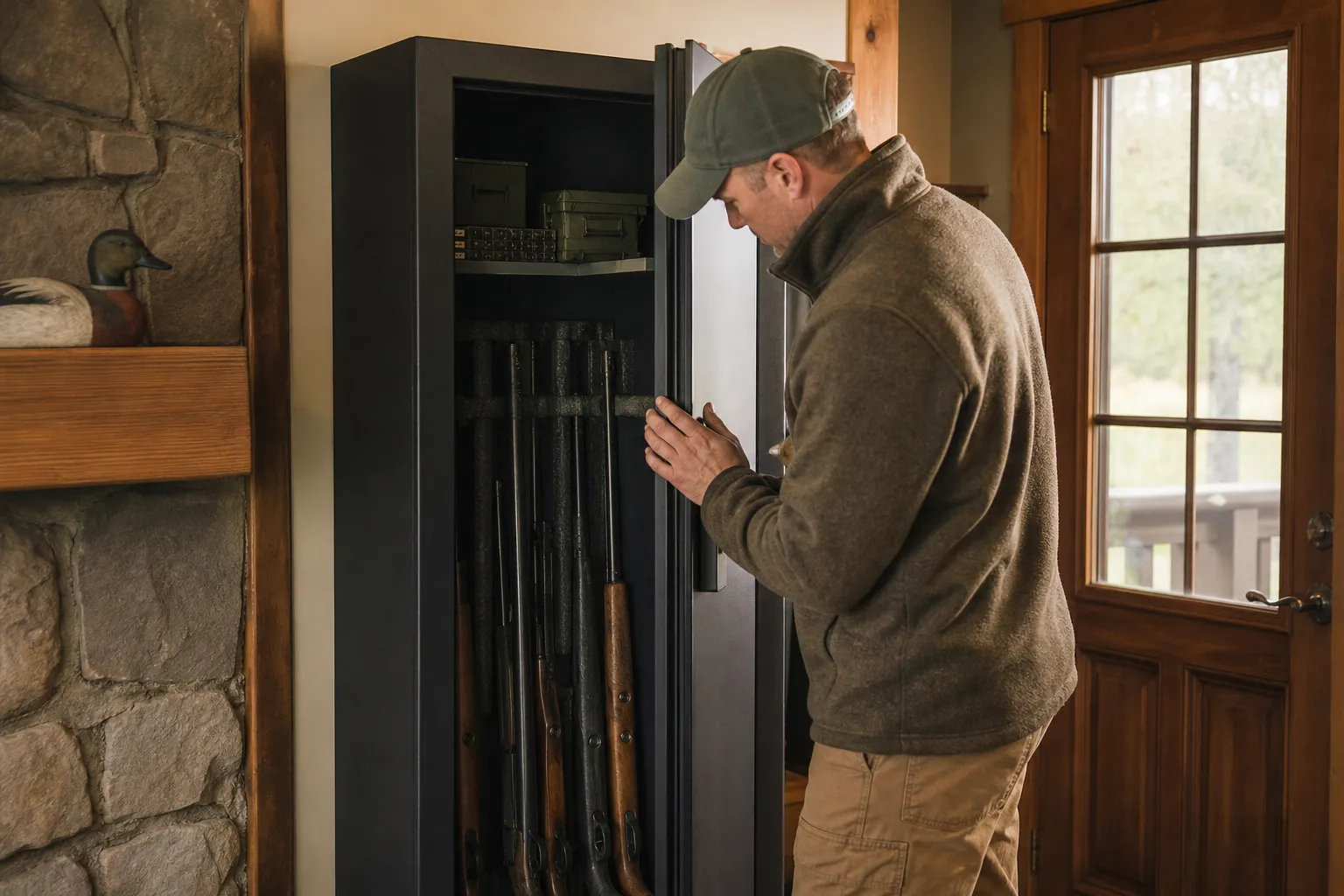
Storage practices help reduce access and handling risks. They do not replace safe handling when a firearm is picked up, checked, loaded, unloaded, carried, or used.
Bottom line
A negligent discharge is an unintended discharge caused by the handler, usually through a broken safety rule. An accidental discharge, in the narrower training sense used by the LAPD manual and University of Texas System Police bulletin, is tied to mechanical failure or a firearm firing without handler input.
Do not rely on a glossary definition as your only safety instruction. Review the ProjectGuns Firearm Safety Rules guide, your firearm manufacturer’s safety material, your range rules, and the hunter education materials from the wildlife agency where you hunt.
Frequently asked questions
What does negligent discharge mean?
A negligent discharge is an unintended firearm discharge caused by the person handling the firearm, usually through operator error, careless handling, or failure to follow firearm safety rules.
Is negligent discharge the same as accidental discharge?
In common safety-training usage, no. A negligent discharge is tied to handler error or violation of safety rules. An accidental discharge is tied to mechanical failure, malfunction, or the firearm firing without physical input from the handler.
What are common causes of negligent discharge?
Common causes include touching the trigger before intending to shoot, assuming a firearm is unloaded instead of checking it, unsafe loading or unloading, unsafe holstering, and relying on a mechanical safety instead of safe handling.
How can negligent discharges be prevented?
Prevention centers on the core firearm safety rules: keep the muzzle pointed in a safe direction, treat or verify firearms as loaded, keep the finger off the trigger until ready to shoot, and know the target and what is beyond it.
Does a mechanical safety prevent negligent discharge?
A mechanical safety can be part of a firearm’s safety system, but NRA and NSSF both warn that it is a mechanical device and not a substitute for safe handling.
Sources
- Special Order No. 29, Officer-Involved Shootings or In-Custody Deaths or Injury, Los Angeles Police DepartmentOfficial source. Accessed October 27, 2026.
- Training Bulletin 015, Safe Firearms Handling, University of Texas System PoliceOfficial source. Accessed October 27, 2026.
- NRA Gun Safety Rules, National Rifle AssociationOfficial source. Accessed October 27, 2026.
- Firearm Safety, 10 Rules of Safe Gun Handling, National Shooting Sports FoundationOfficial source. Accessed October 27, 2026.
- Firearm Safety, Wisconsin Department of Natural ResourcesOfficial source. Accessed October 27, 2026.
- Think S.A.F.E., Florida Fish and Wildlife Conservation CommissionOfficial source. Accessed October 27, 2026.
- Chapter 6, Hunting Safety, Texas Parks and Wildlife DepartmentOfficial source. Accessed October 27, 2026.
- Safety Bulletin: Light Bearing Holsters for Pistols, SIG SauerOfficial source. Accessed October 27, 2026.
- Safety and Security for Firearm Owners, Bureau of Alcohol, Tobacco, Firearms and ExplosivesOfficial source. Accessed October 27, 2026.
- Control Your Muzzle, U.S. ArmyOfficial source. Accessed October 27, 2026.
- Back to Basics: Weapons Safety, U.S. ArmyOfficial source. Accessed October 27, 2026.