Arrow Spine Chart Explained
Arrow spine is shaft stiffness, and the right spine depends on the bow and arrow setup rather than one number alone. Use the arrow maker’s current chart with measured draw weight, arrow length, point weight and any listed adjustments before choosing a shaft.
By RaiS. Reviewed by RaiS. Published . 6 min read.
Research and drafting were assisted by AI. RaiS checked the facts against the sources below and approved this page.
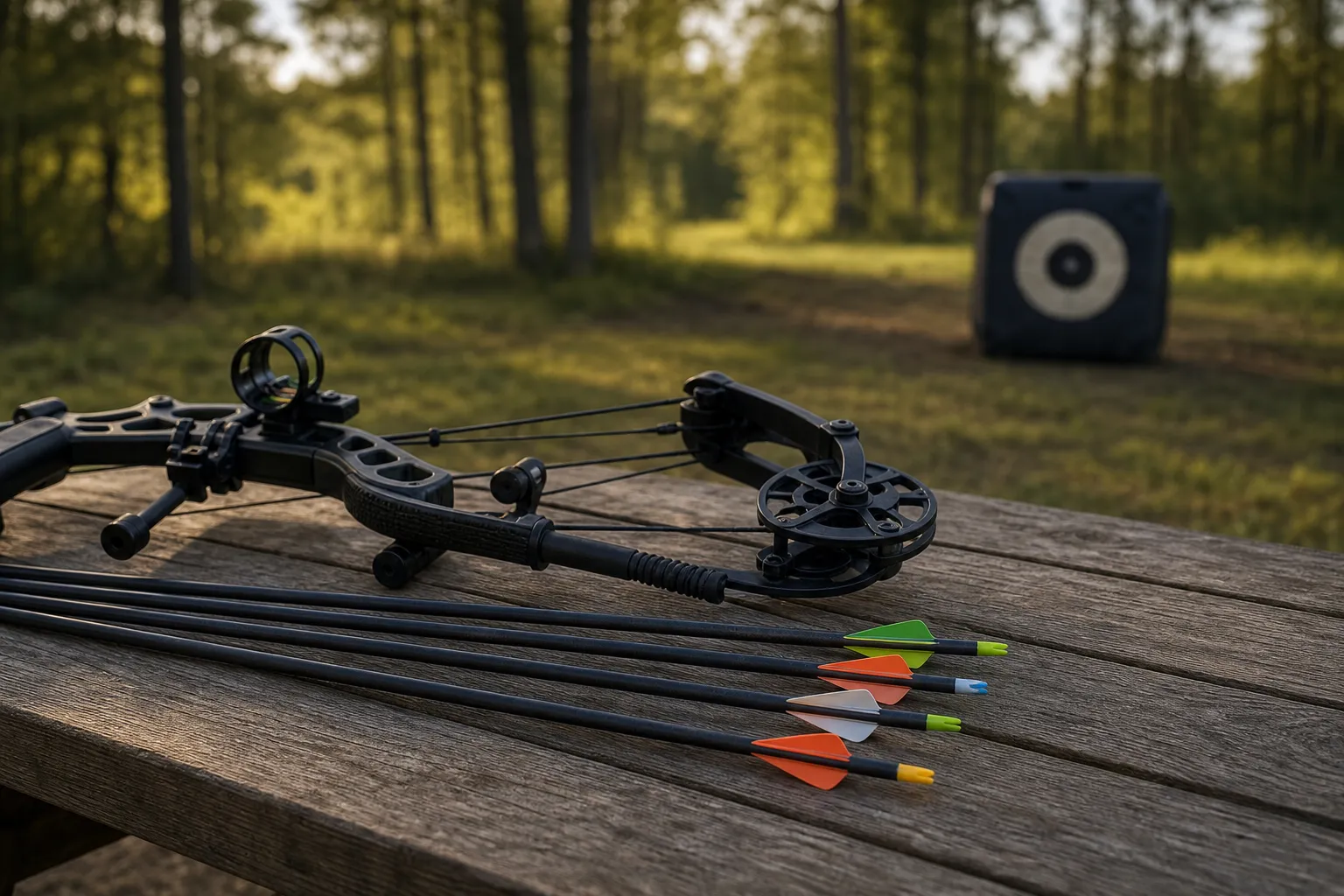
Arrow spine means arrow shaft stiffness. Static spine is measured under a controlled weight test. Dynamic spine is how the arrow reacts when it is shot from a bow. In the common carbon arrow number system described by Easton and Gold Tip, a lower spine number means a stiffer shaft, so a 330 spine is stiffer than a 500 spine.
What arrow spine means
Gold Tip says the spine number describes the stiffness of the arrow shaft, and that lower numbers mean stiffer shafts. Gold Tip gives this kind of comparison: 300 spine is stiffer than 340, 340 is stiffer than 400, and 500 is more flexible than 400.
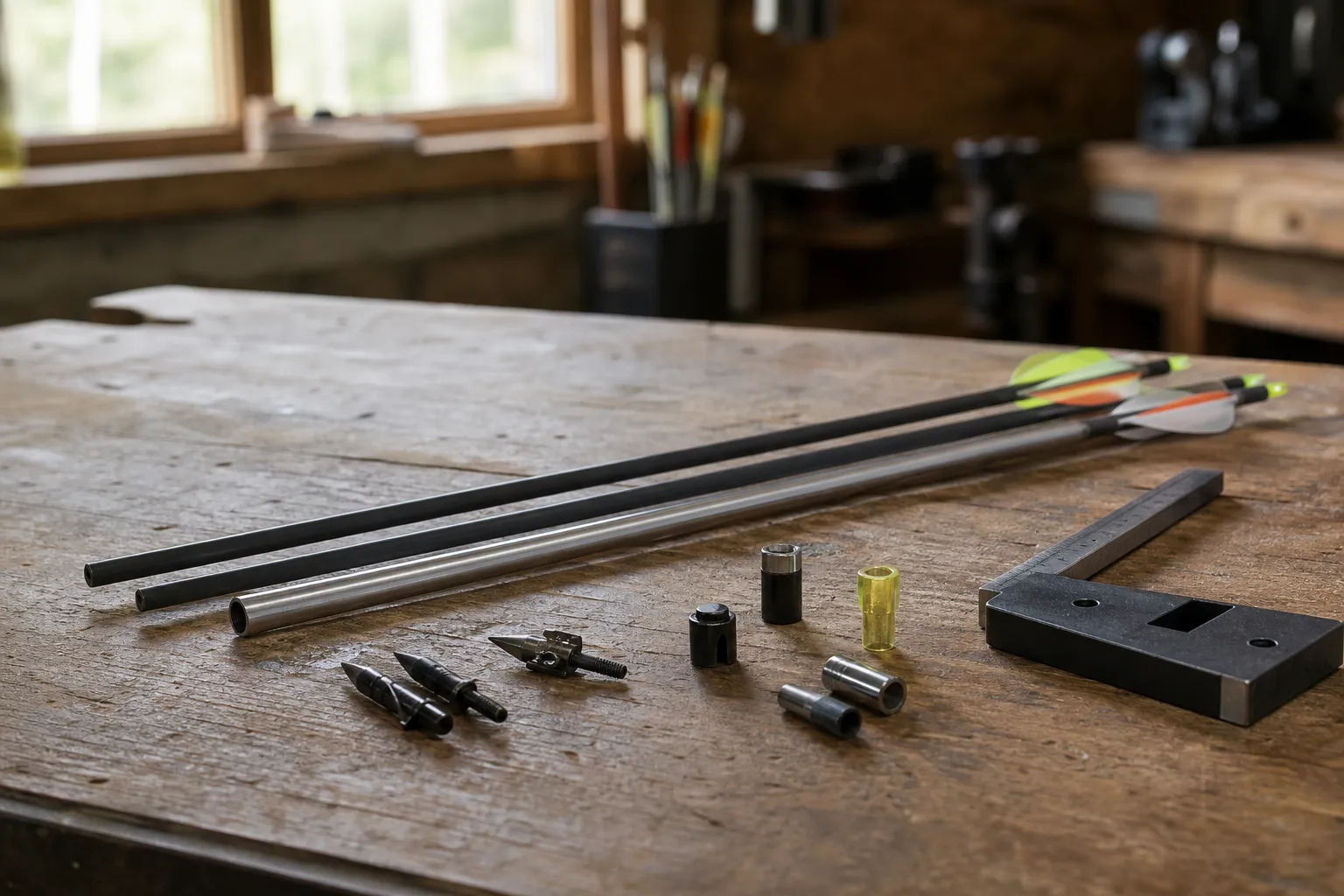
That is the opposite of what many beginners expect. A bigger number does not mean a stronger or stiffer arrow. In Easton’s example, a 330 arrow is stiffer than a 500 spine arrow.
Spine is also not the same thing as straightness. Gold Tip states that spine and straightness are separate specifications. Spine is about shaft stiffness. Straightness is a different specification, so do not use a straightness number as a substitute for a spine number.
Static spine: the deflection test
Easton defines static spine as the amount of flex measured when an 880 gram, or 1.94 pound, weight is suspended from the center of the arrow. Easton says the arrow used for that measurement must be 29 inches long and supported by two points that are 28 inches apart.
Easton’s selector page explains the common numeric format this way: the number of inches the arrow bends under the weight is multiplied by 1,000. Easton gives the example of a 500 spine arrow bending 0.5 inch when the weight is applied.
That is why lower numbers are stiffer. A shaft that bends less under the test weight has a smaller deflection number. A shaft that bends more has a larger deflection number.
ASTM F2031 is titled “Standard Test Method for Measurement of Arrow Shaft Static Spine (Stiffness).” ASTM describes it as a test method covering arrow spine measurement standards and nomenclature for arrow shafts. ASTM also says inches of deflection are used for spine values expressed for a given arrow shaft.
The Archery Trade Association says its Technical Guidelines exist to make industry testing, measurement and evaluation consistent across products and components. ATA also says those guidelines include consistency in terminology, definitions and specifications. ATA’s public page says the Technical Guidelines were revised in 2025, although the full document requires an ATA member login.
Dynamic spine: how the arrow acts when shot
Easton defines dynamic spine as the way an arrow reacts from the stored energy of a bow as it is shot. Static spine is a bench measurement. Dynamic spine is the arrow’s real reaction in a specific bow setup.
Easton lists many variables that affect dynamic spine, including release method, bow energy, cam system, arrow weight, arrow spine, shaft length, point weight, nock weight and fletching weight. Easton also says nock set material, string material and serving material can influence dynamic spine.
That long list is why a chart is only a selection tool, not a complete description of everything happening during the shot. Easton says arrows are usually measured with static spine because dynamic spine has nearly unlimited variables.
What makes an arrow act weaker or stiffer
Easton describes several setup changes that make an arrow act weaker or stiffer in spine. In this context, “weaker” means the arrow behaves as if it is more flexible. “Stiffer” means it behaves as if it is less flexible.
| Setup change | Easton’s stated effect |
|---|---|
| Increase peak bow weight | Arrow acts weaker in spine |
| Increase point weight, or point and insert combination weight | Arrow acts weaker in spine |
| Increase arrow length | Arrow acts weaker in spine |
| Decrease peak bow weight | Arrow acts stiffer in spine |
| Decrease point weight, or point and insert combination weight | Arrow acts stiffer in spine |
| Shorten arrow length | Arrow acts stiffer in spine |
Gold Tip also says the correct spine depends on draw weight, arrow length and point weight. Those three inputs are the main things most archers see first when they open a spine chart.
The practical takeaway is simple: do not pick spine by draw weight alone. The same bow weight can point to a different spine when the arrow is longer, when the point is heavier, or when the chart tells you to make another adjustment.
How to measure arrow length for a chart
Easton says correct arrow length is measured from the bottom, inside of the nock groove, the deepest point where the string goes into the nock, to the cut end of the shaft. Easton says that measurement does not include the point or point insert.
Use the arrow length definition given by the chart you are reading. If a chart uses Easton’s definition, do not measure to the point tip and do not include the insert.
Easton’s 2026 target chart also gives a rounding rule for fractional arrow lengths. It says to round up or down to the closest length column. Easton gives the examples that 28.25 inches rounds down to the 28 inch column, while 28.5 inches rounds up to the 29 inch column.
How to read a manufacturer spine chart
Start with the arrow maker’s current chart for the arrow line and use the setup assumptions printed with that chart. Easton’s 2026 target arrow chart is based on a bow speed rating of 301 to 320 fps, 100 grain glue in points and a mechanical release aid.
That baseline matters because Easton’s 2026 target chart instructs readers to adjust bow weight when setup variables differ from the chart’s baseline. In other words, you do not simply find your marked bow weight and stop if your setup does not match the chart assumptions.
A careful chart reading looks like this:
- Use measured bow weight rather than a guess.
- Use the chart’s arrow length definition.
- Use the correct point weight.
- Include insert or point and insert weight if the chart tells you to.
- Apply the maker’s adjustment rules before choosing the final chart cell.
- Treat the result as a starting point because Easton says dynamic spine is affected by many variables.
Example: Easton’s 2026 target chart adjustments
Easton’s 2026 target chart says 100 grain points need no adjustment. For points under 100 grains, it says to subtract 3 pounds per 25 grains of point weight. For points over 100 grains, it says to add 3 pounds per 25 grains of point weight.
The same Easton chart says a mechanical release needs no adjustment. It says a finger release adds 5 pounds of bow weight compared with a mechanical release.
Those adjustments do not mean every manufacturer uses the same numbers for every chart. They show why you should read the notes printed with the exact chart you are using.
Common chart reading mistakes
The first common mistake is reading the number backward. Easton and Gold Tip both say lower spine numbers are stiffer shafts. If a chart points you from 500 toward 400, it is generally moving you toward a stiffer shaft number, not a weaker one.
The second mistake is measuring arrow length differently than the chart. Easton’s arrow length definition runs from the deepest point of the nock groove to the cut end of the shaft, excluding the point and insert.
The third mistake is ignoring point weight. Gold Tip says correct spine depends on point weight, and Easton says increasing point weight or the point and insert combination makes an arrow act weaker in spine.
The fourth mistake is ignoring release type when the chart includes it. Easton’s 2026 target chart uses a mechanical release as its baseline and says finger release adds 5 pounds of bow weight.
What to check before choosing arrows
Before relying on any arrow spine chart, check the current chart from the arrow manufacturer and read its notes. Confirm how that chart defines arrow length, point weight, insert or outsert weight, release type, bow speed and any bow weight adjustments it requires.
If your setup differs from the chart assumptions, apply the manufacturer’s listed adjustments or ask the arrow maker or a qualified archery shop to help interpret the current chart. Static spine gives the standard stiffness number, but Easton’s explanation of dynamic spine shows why the complete bow and arrow setup still matters.
Frequently asked questions
What does arrow spine mean?
Arrow spine means arrow shaft stiffness. Static spine is measured under a controlled weight test, and dynamic spine describes how the arrow reacts when it is shot from a bow. Gold Tip says the spine number describes the stiffness of the shaft.
Is a 400 spine arrow stiffer than a 500 spine arrow?
Yes. Easton and Gold Tip both say lower spine numbers mean stiffer shafts. Gold Tip describes 500 spine as more flexible than 400 spine.
How is static arrow spine measured?
Easton says static spine is measured with an 880 gram, or 1.94 pound, weight suspended from the center of a 29 inch arrow supported at points 28 inches apart. Easton explains that deflection in inches multiplied by 1,000 gives the common spine number.
What makes an arrow need a stiffer spine?
Easton says increasing peak bow weight, increasing point weight or point and insert weight, and increasing arrow length make an arrow act weaker in spine. Those changes commonly move a setup toward a stiffer spine choice on a chart.
Does point weight affect arrow spine selection?
Yes. Gold Tip says correct spine depends on point weight, and Easton says increasing point weight or the point and insert combination makes an arrow act weaker in spine.
Is arrow spine the same as arrow straightness?
No. Gold Tip states that spine and straightness are separate specifications. Spine is shaft stiffness, while straightness is a different specification.
Sources
- ASTM F2031-05(2010): Standard Test Method for Measurement of Arrow Shaft Static Spine (Stiffness), ASTM InternationalOfficial source. Accessed October 23, 2026.
- ATA Technical Guidelines, Archery Trade AssociationOfficial source. Accessed October 23, 2026.
- Archery Frequently Asked Questions, Easton ArcheryOfficial source. Accessed October 23, 2026.
- Target and Hunting Arrow Selector, Easton ArcheryOfficial source. Accessed October 23, 2026.
- Easton 2026 Product Guide, Easton ArcheryOfficial source. Accessed October 23, 2026.
- What Arrow Spine Do You Need?, Gold Tip ArrowsOfficial source. Accessed October 23, 2026.
- What Do the Numbers on an Arrow Mean? Arrow Spine and Straightness Explained, Gold Tip ArrowsOfficial source. Accessed October 23, 2026.
- Arrow Guide, Victory ArcheryOfficial source. Accessed October 23, 2026.