Paper Tuning a Bow: How to Read Arrow Tears
Paper tuning is a close range check that shows whether a fletched arrow is leaving a compound bow cleanly. A clean bullet hole is the goal, but persistent high, low, left or right tears can point to nocking point, rest position, clearance, spine, cam timing or cam lean issues.
By RaiS. Reviewed by RaiS. Published . 9 min read.
Research and drafting were assisted by AI. RaiS checked the facts against the sources below and approved this page.
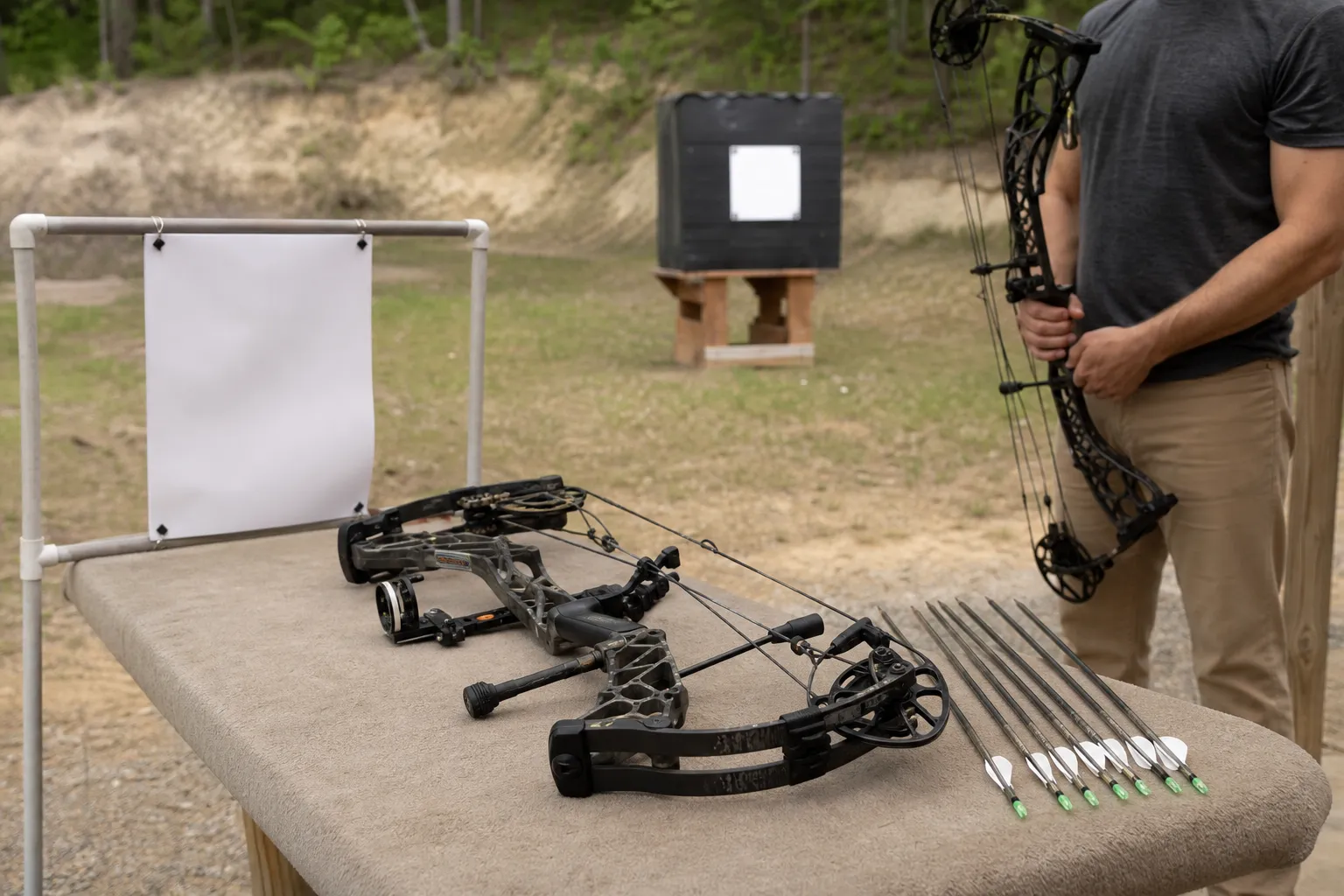
Paper tuning means shooting a fletched arrow through suspended paper at close range, then reading the tear to see how the arrow is leaving the bow. Easton describes it as the most commonly used tuning test for compound bows shot with release aids, and both Easton and Gold Tip describe the basic setup as shooting through paper from about 4 to 6 feet into a safe target or backstop.
The goal is a clean, round bullet hole. Easton says this shows the point and fletching entering the same hole. Bowtech describes the desired tear the same way: the point of the arrow goes through the center of the fletching.
Paper tuning is a diagnostic, not a final guarantee. Easton warns that a perfect paper tear does not always mean arrows will group well, only that the arrow is showing good flight at that test distance.
What you need before you paper tune
Start with a safe target behind the paper. Easton describes a paper rack about 24 inches by 24 inches, with a target mat behind it. Gold Tip describes the test as shooting through suspended paper at 4 to 6 feet and reading the tear.
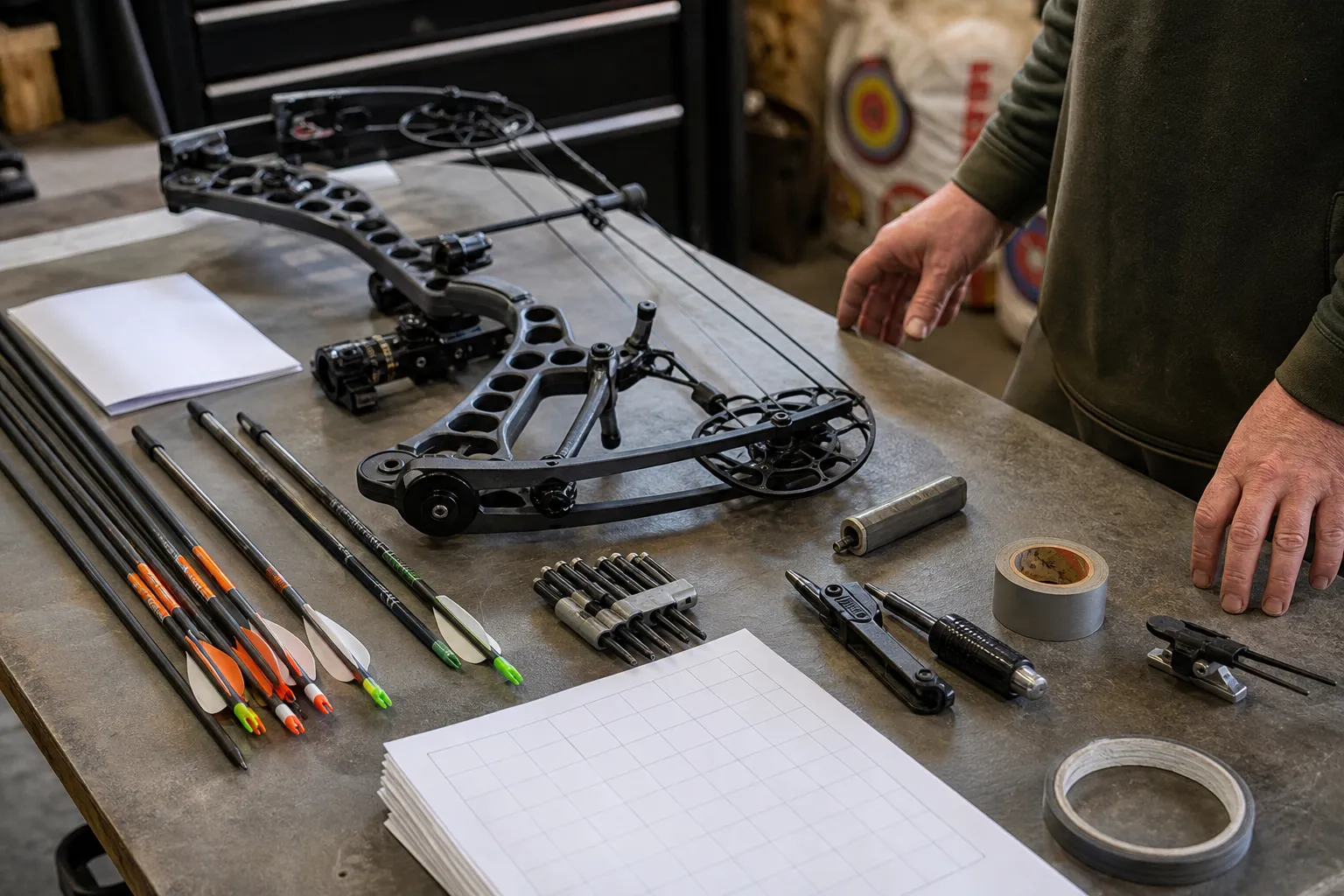
Use a fletched arrow. Easton says to shoot a fletched arrow through the center of the paper at shoulder height, then observe the tear.
Before changing anything, check the basics:
- Arrow spine should match the bow setup. Bowtech says proper arrow spine is part of perfect arrow flight, and Gold Tip’s spine selection guidance uses draw weight, point weight and arrow length to choose a spine group.
- Arrow length and point weight should be measured consistently. Gold Tip defines arrow length for its spine charts as the distance from the nock throat to the end of the insert, and says point weight includes the combined weight of the point, insert, Ballistic Collar and FACT weight.
- Fletching contact should be eliminated. Gold Tip says vane contact can cause erratic arrow flight and inaccurate paper tear readings.
- Form should be repeatable. Gold Tip says proper shooting form and a consistent release are critical when paper tuning. Bowtech also lists good form and a smooth release as requirements for good arrow flight.
- Use the bow maker’s starting centershot. Mathews lists 13/16 inch, plus or minus 1/16 inch, as the suggested centershot for Mathews bows.
If you are using a compound with a release aid, Gold Tip recommends a string loop because it helps prevent nock pinch and supports more reliable tuning.
How to run the paper test
Set the paper in front of the target, stand about 4 to 6 feet away, and shoot one fletched arrow through the center of the paper at shoulder height. Read the hole before shooting more arrows through the same spot.
Make one small change at a time. Easton describes moving the rest in small increments for left and right tears. Easton also says combination tears should be corrected by addressing the vertical pattern first, then the horizontal pattern. Gold Tip gives the same priority, saying vertical adjustments should be made before horizontal adjustments to avoid false readings from vane clearance issues.
After a good tear at the first distance, Easton says to move back another 6 feet and continue shooting through the paper. This helps confirm the arrow was not simply passing through the paper while in a recovery position at the first distance.
Reading a clean tear
A clean tear is often called a bullet hole. Easton says it indicates good arrow flight because the point and fletching enter the same hole. Bowtech says the desired tear shows the arrow point going through the center of the fletching.
When you get this result, do not assume the whole setup is finished. Easton says a perfect bullet hole through paper does not always mean arrows will group well. Paper tuning is best treated as an early check before follow up tuning and distance shooting.
High tear: nock high through the paper
A high tear usually means the nock end of the arrow is passing through the paper high in relation to the point. Easton says a high tear with a release aid can indicate a high nocking point, a clearance problem or a very weak arrow. Easton says to lower the nocking point first.
Gold Tip lists two possible corrections for a high tear: move the nock point down, or move the rest up. If the tear does not respond, do not keep moving parts randomly. Gold Tip says vane contact can create inaccurate tear readings, and Hoyt’s 2026 whitepaper says large high or low tears can indicate larger tuning issues such as fletching clearance, nock and rest height, or cams not timed.
For a high tear, a sensible order is:
- Check fletching clearance.
- Check that the nocking point and rest height are in a normal starting position.
- Make a small vertical adjustment, following the bow or rest maker’s guidance.
- Shoot again before changing anything else.
- If the tear remains large or stubborn, have a pro shop check the bow.
Easton recommends having a pro shop check cam or eccentric wheel timing if high or low paper tears cannot be corrected.
Low tear: nock low through the paper
A low tear usually means the nock end is passing through the paper low in relation to the point. Easton identifies this as a low nocking point tear and says to correct it by raising the nocking point in 1/16 inch increments.
Gold Tip also lists raising the nocking point as a possible correction for a low tear. Gold Tip additionally lists stiffening launcher stiffness, depending on the rest setup.
As with a high tear, fix vertical problems before chasing left and right tears. Easton says combination tears should be corrected vertical first, then horizontal. Gold Tip says vertical adjustments should come before horizontal adjustments to avoid false readings from vane clearance issues.
If a low tear will not respond to ordinary nocking point or rest checks, Easton recommends having a pro shop check cam or eccentric wheel timing.
Left tear on a right-handed compound with a release
For right-handed compound archers using mechanical releases, Easton says a left tear is common and usually indicates weak arrow reaction or a clearance problem. Easton lists several possible corrections: move the arrow rest to the right in small increments, relax bow hand torque, decrease peak bow weight, or choose a stiffer spine arrow.
Gold Tip lists several possible corrections for a left tear on a right-handed bow, including moving the rest or centershot toward the riser, moving the cable guard toward the arrow, adjusting wheel lean, using a stiffer arrow, or decreasing draw weight.
Hoyt says hand pressure, face contact and arrow spine selection can affect left and right tuning. That matters because a left tear is not always only a rest position problem. If the shooter is torquing the bow, contacting the string with the face inconsistently, using an arrow that does not match the bow, or getting fletching contact, rest movement alone may not solve it.
If arrow spine is suspect, compare the shaft to a current spine guide. Gold Tip’s spine guidance uses draw weight, point weight and arrow length, and you can also review our live Arrow Spine Chart guide before buying or cutting arrows.
Right tear on a right-handed compound with a release
For a right tear with a mechanical release, Easton lists moving the arrow rest left in small increments. Easton also says to check cable clearance and bow hand torque.
Gold Tip lists moving the rest or centershot away from the riser, moving the cable guard away from the arrow, or adjusting wheel lean as possible corrections for a right tear on a right-handed bow.
This is a good place to slow down. Easton warns that some release aid and rest combinations may require adjustments opposite from the usual chart. Bow designs and tuning systems differ, so follow the manual for the bow and rest you are using.
If the suggested small rest movements do not produce a normal result, stop before attempting cam lean, yoke, spacer or press work on your own.
When to stop and go to a pro shop
See a qualified shop or authorized retailer when the fix involves cam timing, cam lean, wheel lean, yoke tuning, spacer changes or a bow press.
Easton recommends having a pro shop check cam or eccentric wheel timing if high or low paper tears cannot be corrected. Bowtech says timing adjustments require a bow press and should be performed by an Authorized BowTech Dealer. Mathews says an Authorized Mathews Retailer can adjust cam lean with the Mathews Top Hat System and can assist with paper tuning a Mathews bow to the shooter’s setup.
Hoyt’s 2026 whitepaper says to confirm nock height and cam timing before using its XTS system to correct a vertical tear. It also says large high or low tears point to macro tuning issues such as fletching clearance, nock and rest height, or cams not timed.
A shop visit is also a good choice if you have changed arrows and the bow suddenly will not tune. USA Archery’s Linda Beck notes that arrow changes can require nocking point changes and bow tuning.
Bare shaft tuning, walk back tuning and broadhead follow up
Paper tuning is only one method. Gold Tip recommends paper tuning for release aid shooters and bare shaft tuning for finger shooters. Easton’s bare shaft test compares fletched shafts and unfletched shafts at 15 to 20 yards, and Easton says equipment is basically tuned when the bare shafts and fletched shafts impact at the same or nearly the same location.
USA Archery recommends bare shaft and walk back as suggested tuning methods. For compound bows, USA Archery says shooters can start with paper tuning followed by walk back tuning.
For hunting setups, treat broadhead tuning as a follow up after the bow is tuned with field points. Paper tuning can show good initial arrow flight, but Easton cautions that a bullet hole through paper does not always mean arrows will group well.
Quick tear reading table
| Paper tear | What it can suggest | Common checks and adjustments from manufacturer tuning guidance |
|---|---|---|
| Clean bullet hole | Point and fletching are passing through the same hole | Easton and Bowtech describe this as the desired paper tune |
| High tear | High nocking point, clearance problem or weak arrow reaction | Easton says lower the nocking point first. Gold Tip lists moving the nock point down or moving the rest up |
| Low tear | Low nocking point or launcher setup issue | Easton says raise the nocking point in 1/16 inch increments. Gold Tip lists raising the nocking point or stiffening launcher stiffness |
| Left tear, right-handed compound with release | Weak arrow reaction, clearance problem, torque or spine issue | Easton lists moving the rest right in small increments, relaxing bow hand torque, decreasing peak bow weight or choosing a stiffer spine |
| Right tear, right-handed compound with release | Rest position, cable clearance, torque or system specific tuning issue | Easton lists moving the rest left in small increments and checking cable clearance and bow hand torque |
| Large or stubborn vertical tear | Larger setup problem | Hoyt lists fletching clearance, nock and rest height, and cam timing as macro tuning issues |
Final check
Use paper tuning to get the arrow leaving the bow cleanly, then confirm the setup with follow up shooting. Check the current manual or tuning guide for your bow, rest and arrows, especially before changing cam timing, cam lean, wheel lean, cable guard position or anything that requires a bow press.
Frequently asked questions
What distance should I use for paper tuning a compound bow?
Easton and Gold Tip both describe paper tuning at about 4 to 6 feet from the paper, with a safe target or backstop behind it.
What does a perfect paper tune look like?
Easton says a clean tear means the point and fletching enter the same hole. Bowtech describes the desired tear as the point of the arrow going through the center of the fletching.
Should I fix vertical or horizontal tears first?
Easton says to correct combination tears by addressing the vertical pattern first, then the horizontal pattern. Gold Tip also says vertical adjustments should be made before horizontal adjustments.
What causes a high tear when paper tuning?
Easton says a high tear with a release aid can indicate a high nocking point, a clearance problem or a very weak arrow. Gold Tip lists moving the nock point down or moving the rest up as possible corrections.
Why won’t my paper tear clean up after rest adjustments?
Manufacturer guidance points to several possible causes beyond rest position, including vane contact, arrow spine, hand torque, face contact, cam timing and cam lean. Easton recommends a pro shop check cam timing if high or low tears cannot be corrected.
Is paper tuning the final step before hunting?
No. Easton warns that a perfect bullet hole through paper does not always mean arrows will group well. USA Archery recommends paper tuning followed by walk back tuning for compound shooters, and hunting setups should be confirmed with the arrows and heads they will use.
Sources
- Arrow Tuning and Maintenance Guide, Easton ArcheryOfficial source. Accessed October 28, 2026.
- How to Paper Tune Your Arrow, Gold Tip ArrowsOfficial source. Accessed October 28, 2026.
- What Arrow Spine Do You Need?, Gold Tip ArrowsOfficial source. Accessed October 28, 2026.
- BowTech 2010 Owner Manual, Bowtech ArcheryOfficial source. Accessed October 28, 2026.
- Hoyt Compound Bow Owner's Manual, Paper Tuning section, Hoyt ArcheryOfficial source. Accessed October 28, 2026.
- Tuning and Cam Lean, Hoyt ArcheryOfficial source. Accessed October 28, 2026.
- 2026 Premier Hunting Bows Whitepaper, XTS Paper Tuning Guide, Hoyt ArcheryOfficial source. Accessed October 28, 2026.
- FAQ, Mathews ArcheryOfficial source. Accessed October 28, 2026.
- Coach Linda Beck's Top Tips for Transitioning to Outdoor Season, USA ArcheryOfficial source. Accessed October 28, 2026.
- Compound Bow Safety and Warnings, Hoyt ArcheryOfficial source. Accessed October 28, 2026.