Crossbow Bolts vs Arrows: Length, Nocks, Vanes and Safety Differences
Crossbow bolts and vertical-bow arrows share basic parts, but they are not interchangeable. Crossbow setups may have model specific requirements for length, finished weight, spine and nock style, while vertical-bow arrows are usually selected with arrow length, draw weight, point weight and spine charts.
By RaiS. Reviewed by RaiS. Published . 6 min read.
Research and drafting were assisted by AI. RaiS checked the facts against the sources below and approved this page.
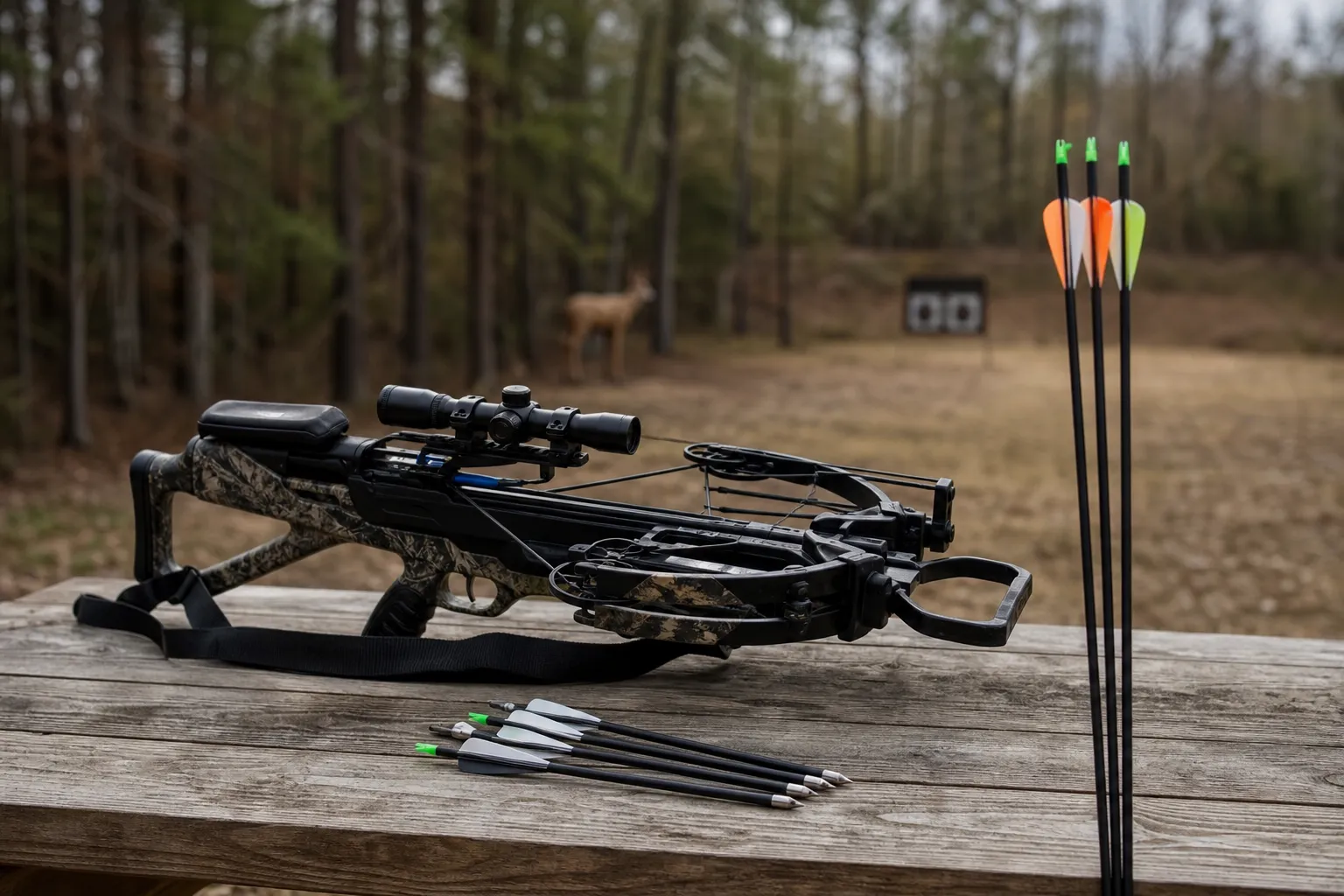
Crossbow bolts and vertical-bow arrows both have a shaft, point, fletching and a rear string interface, but they are matched to the launcher in different ways. The short version: a crossbow bolt is generally shorter, often uses a crossbow-specific nock system, and must meet the crossbow maker's exact specifications for length, finished weight, spine and nock style. Do not substitute compound-bow, recurve-bow or longbow arrows in a crossbow unless the crossbow manufacturer says that exact projectile fits that exact model.
Bolt vs arrow: what the words mean
Barnett defines a bolt as a projectile used in crossbow shooting and says bolts are typically shorter than traditional arrows. The Newfoundland and Labrador 2023 to 2024 Hunting and Trapping Guide uses the phrase crossbow arrows or bolts and says they differ from conventional arrows because they are shorter and usually use flat-capped or half-moon nocks rather than the notched nocks used on conventional arrows.
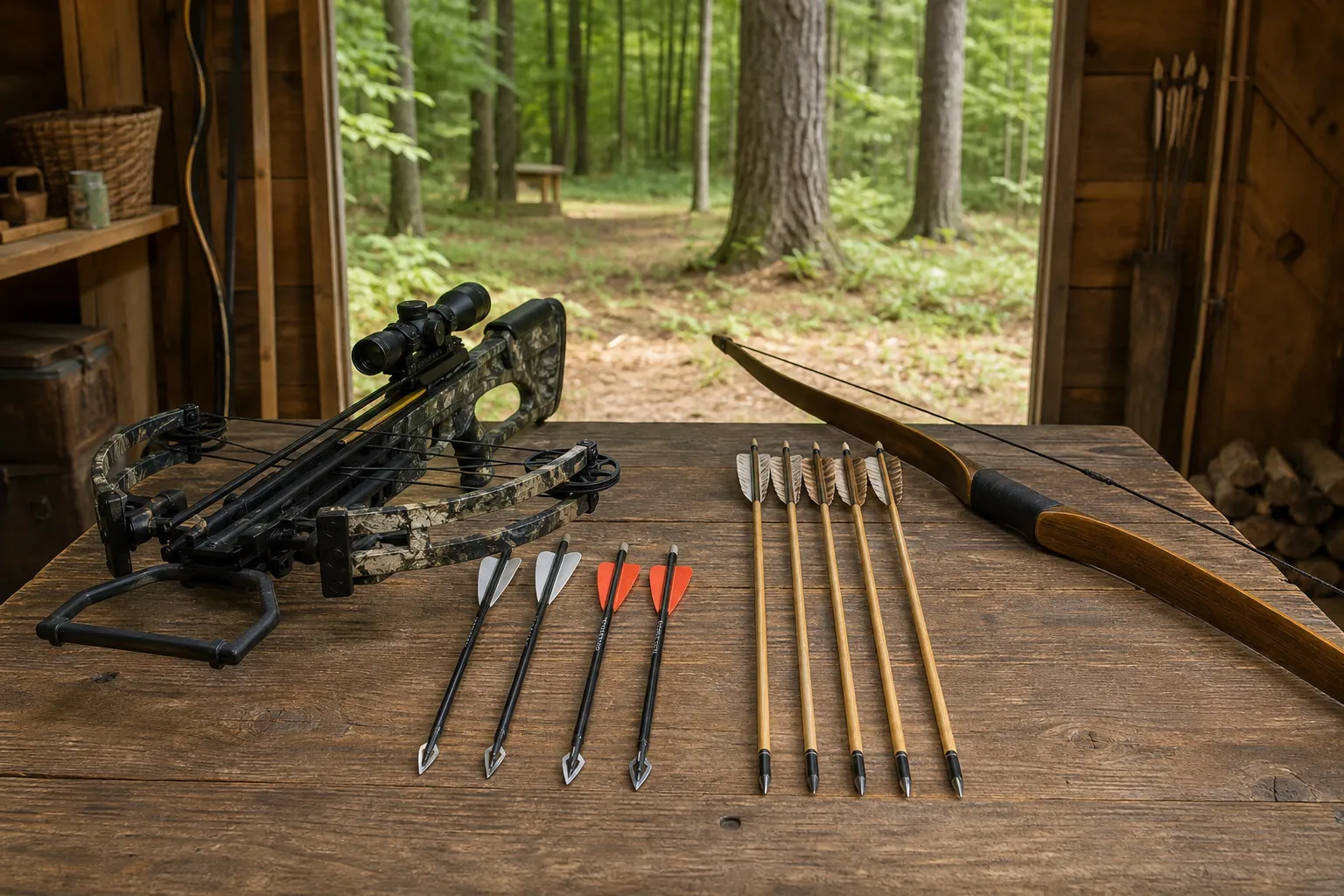
For a new shooter, the most useful distinction is not the word itself. It is the fit. A vertical bow arrow is selected for a bow setup. A crossbow arrow or bolt is selected for a particular crossbow model, and many crossbow manuals use very specific instructions.
The basic parts are similar. Barnett defines fletching as the wings at the back of an arrow that help stabilize it in flight. The Today’s Bowhunter Teaching Guide says a nock is the attachment point that secures an arrow on a bowstring. For a fuller parts overview, see Parts of an Arrow.
Quick comparison table
| Feature | Crossbow bolts or crossbow arrows | Vertical-bow arrows |
|---|---|---|
| Typical length | Generally shorter than conventional arrows, according to Newfoundland and Labrador and Barnett | Conventional arrows are longer than crossbow bolts in those same references |
| Length selection | Often specified by the crossbow manual for the exact model | Easton measures correct arrow length from the bottom inside of the nock groove to the cut end of the shaft, excluding the point or insert |
| Nock style | May use flat-capped, half-moon, moon, or clip-on nocks depending on maker and model | Newfoundland and Labrador describes conventional arrows as using notched nocks |
| Spine | Must match the crossbow for stiffness, according to Newfoundland and Labrador | Easton says spine matters and should be selected with manufacturer charts |
| Weight | Often has a manual-stated minimum finished weight | Selection may consider point weight, depending on the chart |
| Matching method | Follow the crossbow owner's manual for length, weight, spine and nock | Gold Tip says its spine selection uses draw weight, point weight and arrow length |
Length: crossbow bolts are usually shorter
The clearest general difference is length. Newfoundland and Labrador says crossbow arrows or bolts are shorter than conventional arrows. Barnett’s glossary also says bolts are typically shorter than traditional arrows.
That does not mean every crossbow can use any common commercial size. Follow the correct requirements for the exact model.
Vertical-bow arrow length is measured differently than many beginners expect. Easton says correct arrow length is measured from the bottom inside of the nock groove, the deepest point where the string goes into the nock, to the cut end of the shaft. Easton says this measurement does not include the point or point insert.
The Today’s Bowhunter Teaching Guide also says arrow length must be matched to the bow. It explains that a short arrow may slip off, while an overly long arrow adds unnecessary weight.
Weight: minimums matter, especially in crossbows
Crossbow manuals often give a minimum arrow or bolt weight. That number is important because some manufacturers warn that a too-light arrow can create a dry-fire effect.
Barnett’s universal crossbow owner’s manual says Barnett crossbows require arrows weighing at least 380 grains. The manual warns that lighter arrows can simulate a dry-fire condition.
Ravin’s R470 series manual requires arrows of at least 400 grains including the tip and warns that lighter arrows can cause a dry-fire effect.
For vertical-bow arrows, the selection process is usually built around the bow setup and an arrow chart. Gold Tip defines point weight as the combined weight of the point, insert, Ballistic Collar and FACT weight for its selection process.
Spine: stiffness must match the launcher
Spine means arrow stiffness. Barnett defines spine as the stiffness of an arrow.
Newfoundland and Labrador says crossbow bolts must be the right length, weight and stiffness, or spine, for the crossbow they are used with. It also warns that mismatched bolts can damage the crossbow and create a safety hazard.
Vertical-bow arrow spine is usually selected from arrow-maker charts. Easton says arrow spine is important for tuning, shooting and grouping, and recommends using Easton’s Shaft Selector or Shaft Selection Chart for the correct spine. Gold Tip says its spine selection uses draw weight, point weight and arrow length. For more on this topic, see Arrow Spine Chart Explained.
Easton also lists several dynamic-spine factors: release method, bow energy, cam system, arrow weight, spine, arrow length, point weight, nock weight and fletching weight. That is why two arrows with the same shaft label may not behave the same way in different bow setups.
Nocks: the biggest terminology trap
Nocks are one of the easiest places to make a dangerous mistake. The Today’s Bowhunter Teaching Guide defines a nock as the attachment point that secures an arrow on a bowstring. But crossbows do not all use the same rear interface.
Newfoundland and Labrador says crossbow arrows or bolts usually use flat-capped or half-moon nocks rather than the notched nocks used on conventional arrows. Barnett’s universal manual says Barnett crossbows require arrows designed for crossbows and that those arrows must have half-moon or moon nocks.
Ravin gives a clear example of why nock substitution is not safe. Ravin’s R470 series manual requires R500 Series arrows and Ravin Clip-on nocks for that crossbow. It says not to use flat, half-moon, slotted moon or universal nocks in that model. It also says the Ravin Clip-on nock must fully engage the bowstring and should make an audible click.
Vanes and indexing
Fletching and vanes stabilize arrow flight. Barnett says fletching is the wings at the back of an arrow that help stabilize it in flight.
Many shooters notice one vane in a different color. On some crossbows, that color is used for loading orientation, but the correct direction is not universal. Barnett’s universal manual says to turn a properly spined, weighted and sized arrow so the odd-colored vane faces downward.
The safe lesson is simple: do not assume the odd-colored vane points the same way on every crossbow. Read the manual for the exact model.
Matching rules: crossbow manual vs vertical-bow chart
Crossbow matching is usually manual driven. Newfoundland and Labrador tells users to check the owner’s manual or an archery shop for the correct bolt requirements of a crossbow.
That is different from the common vertical-bow process. Gold Tip says to use its shaft selection chart to find the group number matching draw weight, point weight and arrow length. Easton says to use its shaft selector or shaft selection chart to make sure the correct arrow spine is being used.
This difference matters for compound-bow archers moving to crossbows. A compound-bow arrow that was correctly selected for a vertical bow is not automatically a safe crossbow projectile. Barnett’s universal crossbow owner’s manual warns against using compound, vertical-bow or recurve arrows, described as full-length arrows, in a Barnett crossbow.
For a broader equipment comparison, see Crossbow vs Compound Bow and How a Compound Bow Works.
Safety takeaways for new crossbow users
Use the projectile the crossbow maker specifies. That means the correct length, finished weight, spine and rear interface for the exact crossbow model.
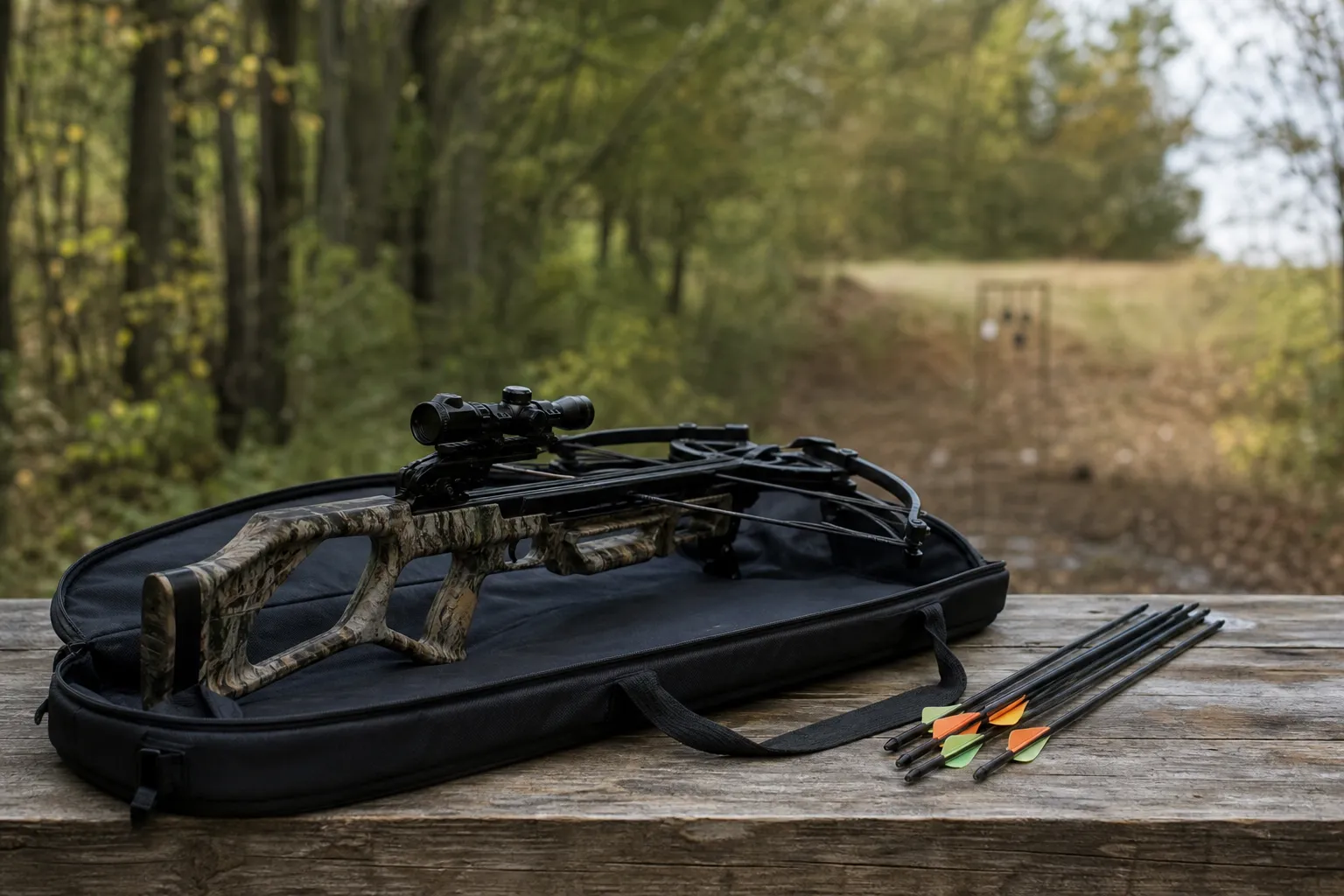
Do not mix nock systems. Ravin’s R470 series manual, for example, requires Ravin Clip-on nocks and says not to use flat, half-moon, slotted moon or universal nocks in that model. Barnett requires half-moon or moon nocks for its crossbows.
Do not go below the minimum finished weight. Barnett and Ravin warn in their manuals that lighter arrows can create a dry-fire effect or simulate dry firing.
Before shooting or hunting, confirm the current owner’s manual for your exact crossbow model. If hunting, also confirm current crossbow and archery rules with the wildlife agency for the place and season you plan to hunt.
Frequently asked questions
Are crossbow bolts the same as arrows?
They share similar parts, but they are not the same for matching purposes. Newfoundland and Labrador says crossbow arrows or bolts are shorter than conventional arrows and usually use flat-capped or half-moon nocks rather than notched nocks.
Can I shoot compound-bow arrows from a crossbow?
Do not do that unless the crossbow manufacturer says the exact projectile meets the exact model’s specifications. Barnett warns against using compound, vertical-bow or recurve arrows in its crossbows.
What nock does a crossbow bolt use?
It depends on the crossbow. Barnett specifies half-moon or moon nocks, and Ravin’s R470 series uses Ravin Clip-on nocks.
How are vertical-bow arrows selected?
Arrow makers commonly use charts. Gold Tip says its spine selection uses draw weight, point weight and arrow length, while Easton recommends using its Shaft Selector or Shaft Selection Chart for correct spine.
Why is minimum crossbow arrow weight important?
Some crossbow manuals warn that arrows lighter than recommended can create a dry-fire effect. Barnett and Ravin give minimum weight instructions in their manuals.
Which way should the odd-colored vane face on a crossbow bolt?
Follow the manual for that crossbow. Barnett says the odd-colored vane should face downward.
Sources
- Crossbow Bolts, Gold Tip ArrowsOfficial source. Accessed November 4, 2026.
- Information on Crossbows, 2023-24 Hunting and Trapping Guide, Government of Newfoundland and LabradorOfficial source. Accessed November 4, 2026.
- Bow and Crossbow Safety, Wisconsin Department of Natural ResourcesOfficial source. Accessed November 4, 2026.
- Glossary, Barnett OutdoorsOfficial source. Accessed November 4, 2026.
- Crossbow Owner’s Manual, Barnett OutdoorsOfficial source. Accessed November 4, 2026.
- CP400 Compound Crossbow Owner’s Manual, CenterPoint ArcheryOfficial source. Accessed November 4, 2026.
- Owner’s Manual, TenPoint Crossbow TechnologiesOfficial source. Accessed November 4, 2026.
- Ravin R470 Series User Manual, Ravin CrossbowsOfficial source. Accessed November 4, 2026.
- Suppressor 400 TD Owner’s Manual, Excalibur CrossbowOfficial source. Accessed November 4, 2026.
- FAQs, Archery Questions Answered, Easton ArcheryOfficial source. Accessed November 4, 2026.
- Arrow Spine Selector Tool, Gold Tip ArrowsOfficial source. Accessed November 4, 2026.
- Today’s Bowhunter Teaching Guide, Alaska Department of Fish and GameOfficial source. Accessed November 4, 2026.
- IBO Rules, International Bowhunting OrganizationOfficial source. Accessed November 4, 2026.
- Arrow Tuning and Maintenance Guide, Easton ArcheryOfficial source. Accessed November 4, 2026.