Broadheads: Fixed vs Mechanical
Fixed broadheads keep their cutting blades exposed in flight, while mechanical or expandable broadheads fly with blades retracted and open on impact. The right choice depends on matched equipment, verified point of impact, sharp blades, and a setup that supports penetration and accurate shot placement.
By RaiS. Reviewed by RaiS. Published . 8 min read.
Research and drafting were assisted by AI. RaiS checked the facts against the sources below and approved this page.
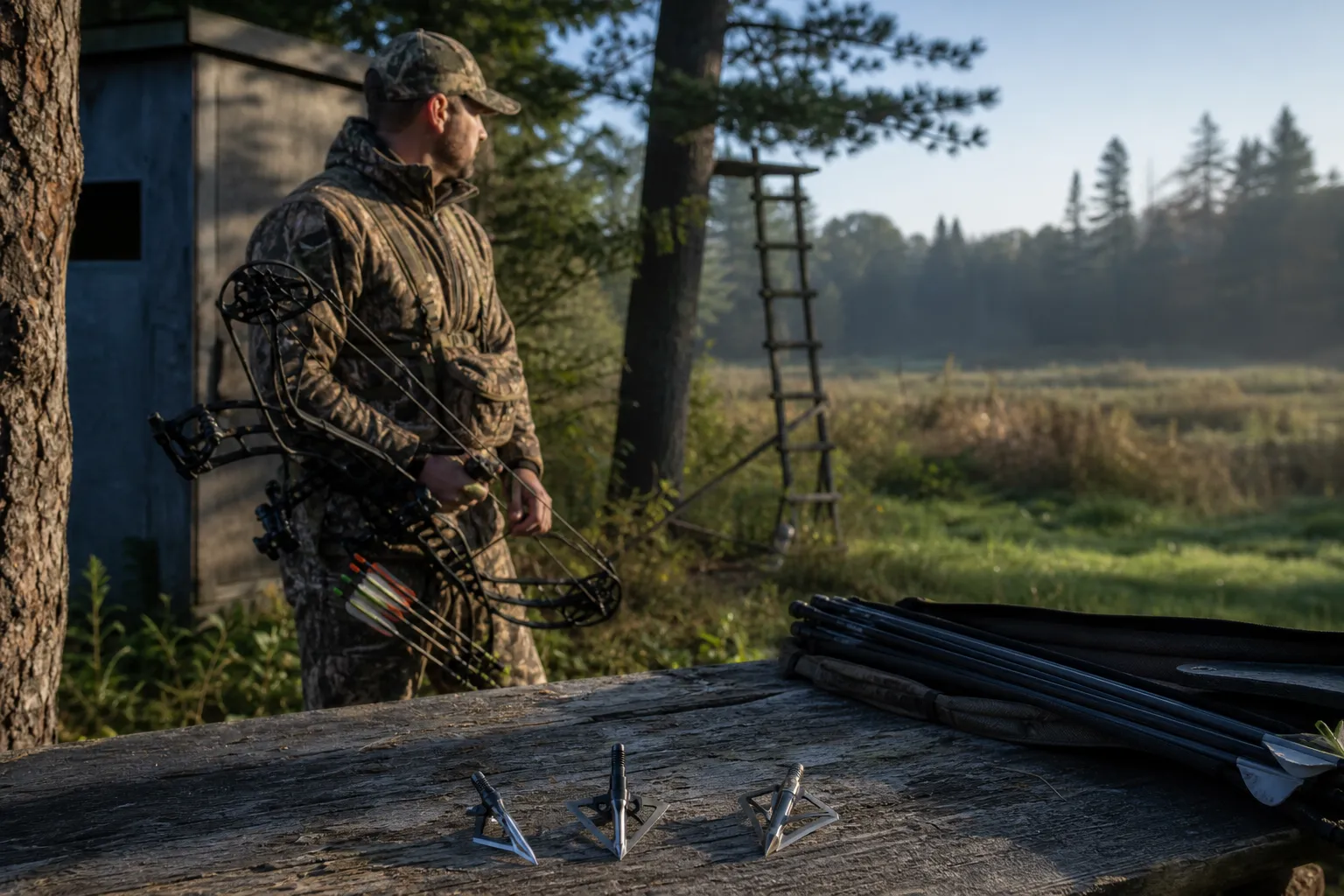
Broadheads are hunting points for big game, and IHEA-USA warns that they must be kept razor sharp and handled with extreme care. The fixed vs mechanical broadheads choice is mainly a tradeoff between exposed blades that cut without deployment, and mechanical broadheads that fly with blades retracted close to the ferrule and open on impact.
Neither style is a shortcut around tuning, practice, or shot placement. IHEA-USA says bowhunting equipment should be matched to the bowhunter, the bow, the arrow, and the game being hunted. Easton, Hoyt, and Gold Tip all stress that broadheads should be tested against field points before hunting.
Broadhead basics
IHEA-USA groups broadheads into three types: fixed blade, removable blade, and mechanical or expandable blade. Current manufacturers also list hybrid designs, which combine fixed and mechanical blades, and single-bevel designs, which use a blade edge sharpened on one side.
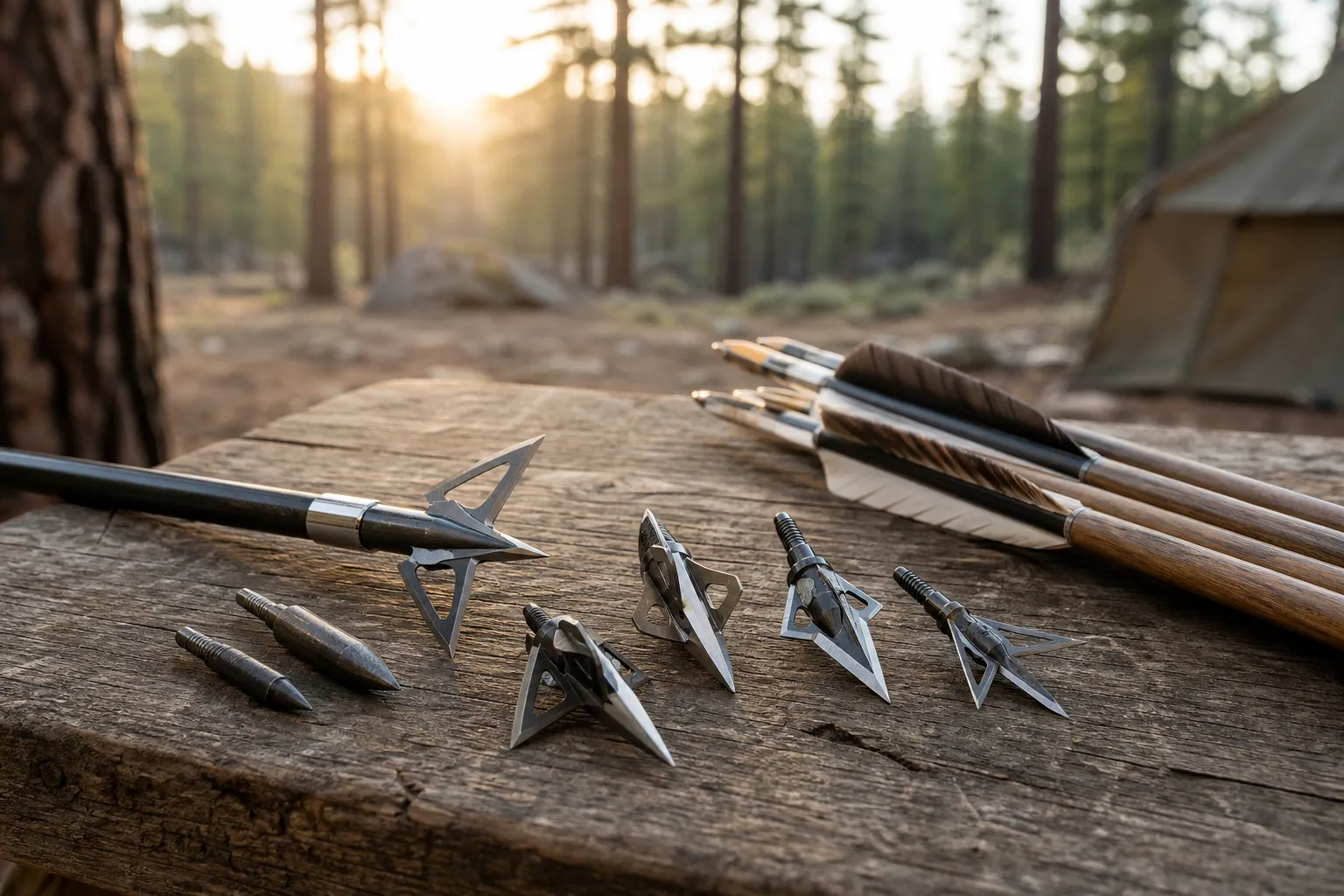
A broadhead listing usually includes grain weight, cutting diameter, blade count, and blade style. Those numbers matter because IHEA-USA says hunting tips and practice points should be the same grain weight, and Easton says field points should be as close as possible in weight to the broadheads used for tuning.
Grain weight
Grain weight is the listed weight of the head. IHEA-USA says practice points and hunting tips should be the same grain weight for hunting, and Easton gives the same basic guidance for broadhead tuning.
That does not mean a broadhead will always hit in the same place as a field point. Hoyt says many archers discover they need slight tuning adjustments when switching from practice points to broadheads, even at the same weight.
Cutting diameter and blade count
Manufacturers commonly list cutting diameter and blade count as part of a broadhead specification.
Mechanical broadhead listings often show larger cutting diameters. Rage lists several mechanical broadhead families with 100 and 125 grain options and cutting diameters from 1.75 inches to more than 2 inches. Rage describes the Hypodermic as a 2-blade rear-deploying broadhead with 100 and 125 grain heads, plus penetration-focused versions.
IHEA-USA also connects broadhead size with arrow stabilization. It says fletching assists in stabilizing arrow flight, and generally recommends 4 to 5 inch fletching with a fletching height profile that meets or exceeds the cutting diameter of the broadhead used.
Fixed-blade broadheads
A fixed-blade broadhead has cutting edges exposed before the shot, during flight, and at impact. IHEA-USA describes fixed-blade heads as mostly used by traditional-style bowhunters and says this type has strong cutting efficiency with lower draw-weight bows.
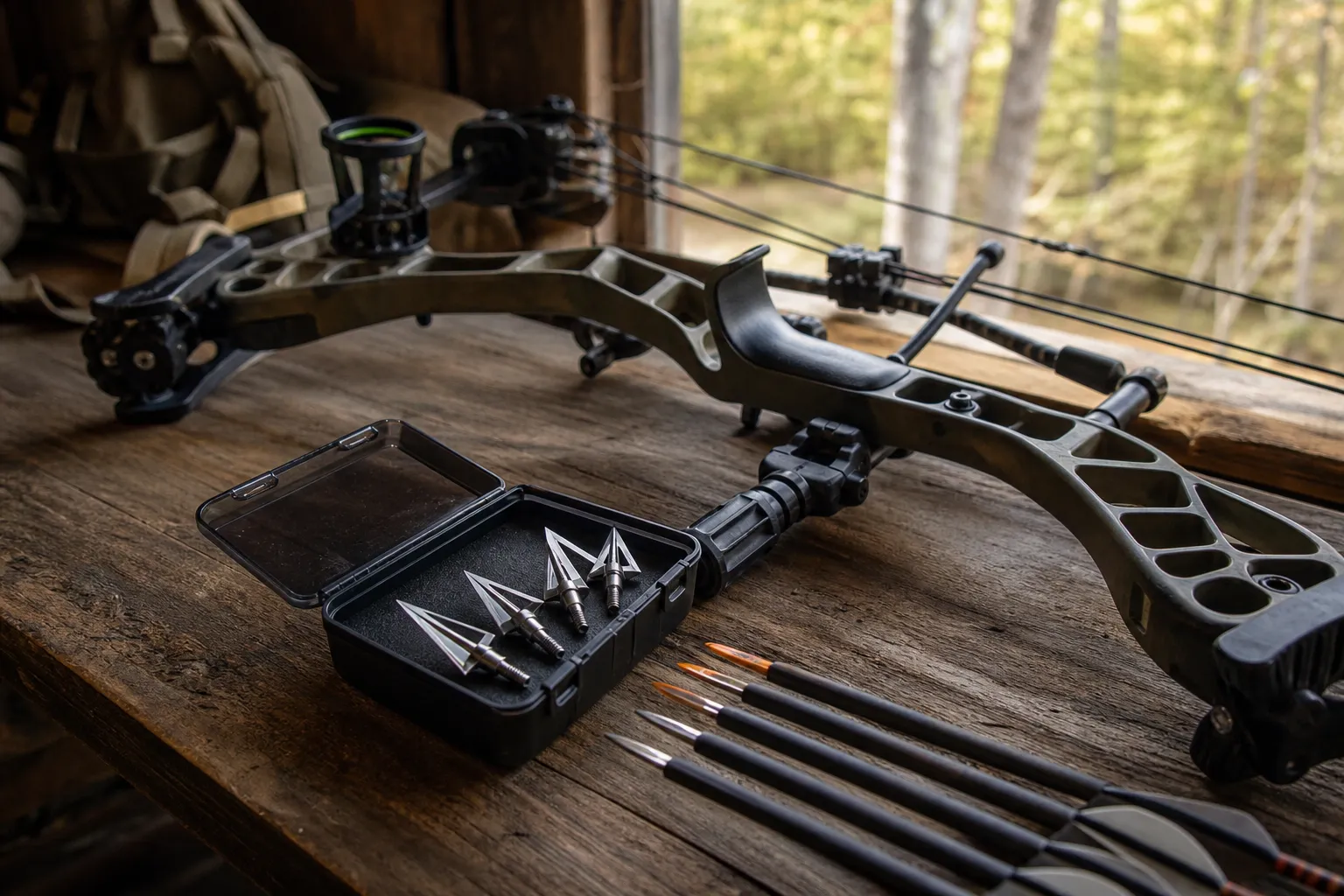
Fixed blades may be one-piece designs or may use removable blades, depending on the model. IHEA-USA describes removable-blade broadheads as having grooves in the ferrule that hold replaceable blades, so damaged blades can be replaced without discarding the entire broadhead.
The main tuning issue with fixed heads is aerodynamic steering. Gold Tip says broadheads with more blade surface have more steering ability, and large fixed blades can be harder to tune. Hoyt similarly says broadheads create a dramatic aerodynamic change in arrow flight.
That does not make fixed heads inaccurate by definition. It means they should be tuned and checked with the exact arrow, bow, and setup that will be used for hunting. Easton describes broadhead tuning as shooting field-point groups and broadhead groups, comparing the groups, and then making appropriate adjustments.
Mechanical broadheads
Mechanical broadheads, also called expandable broadheads, fly with blades retracted close to the ferrule. IHEA-USA says the blades open on impact to expose cutting areas.
That lower in-flight profile is the main reason many bowhunters consider mechanical broadheads. Gold Tip says mechanical broadheads tend to have fewer tuning issues than fixed heads, but still need to be properly aligned and have their point of impact verified before hunting.
The opening system is also the main caution. IHEA-USA recommends mechanical or expandable broadheads only for bows with draw weight of 50 pounds or more because energy is required to expose the blades on impact. This is not a general legality statement, it is hunter-education equipment guidance from IHEA-USA.
Hoyt adds that even expandable broadheads may require different sight settings than field points. In other words, a mechanical head can reduce some tuning difficulty, but it still has to be shot and verified.
Hybrid broadheads
Hybrid broadheads combine fixed and mechanical blades. Muzzy lists the Trocar HBX as a 4-blade hybrid with 2 fixed blades and 2 mechanical blades, 100 grain weight, a 1 inch fixed blade cutting diameter, a 1 5/8 inch expandable cutting diameter, and a 2 5/8 inch total cutting diameter.
Grim Reaper also describes its hybrid broadhead as a 4-blade design with 2 fixed blades and 2 mechanical blades. These examples show why hybrid heads should be evaluated by reading the manufacturer’s listed blade style, cutting diameter, and weight, then testing point of impact with the hunting arrow setup.
A hybrid head still includes exposed fixed cutting surface, and it still includes a mechanical opening component. The same practical checks apply: match weight, use suitable targets, and verify the broadhead group before hunting.
Single-bevel broadheads
Iron Will describes single-bevel broadheads as blades sharpened on one side, creating a single beveled edge. Iron Will says this design creates a rotating effect on impact.
Single-bevel is a blade-edge design, not a separate IHEA-USA category in the same way as fixed, removable, and mechanical.
For a bowhunter comparing heads, single-bevel specifications should be read alongside the same basic variables used for other heads: grain weight, cutting diameter, blade count, and whether the broadhead is fixed, mechanical, or another design.
Fixed vs mechanical broadheads: main tradeoffs
The fixed vs mechanical broadheads question is not just about sharpness or cutting diameter. It is about how the head flies, how it opens or cuts, and whether the complete bow-and-arrow setup is matched and verified.
| Factor | Fixed-blade broadheads | Mechanical broadheads |
|---|---|---|
| Blade position in flight | Cutting edges are exposed | IHEA-USA says blades are retracted close to the ferrule |
| Impact function | Cutting edges are already exposed | IHEA-USA says blades open on impact |
| Tuning concern | Gold Tip says more blade surface has more steering ability | Gold Tip says they tend to have fewer tuning issues than fixed heads |
| Verification | Must be shot and tuned with the hunting setup | Gold Tip says point of impact still needs verification before hunting |
| Energy consideration | IHEA-USA notes strong cutting efficiency with lower draw-weight bows for fixed blades | IHEA-USA recommends them only for bows of 50 pounds draw weight or more because deployment requires energy |
The table is a starting point, not a ranking. A fixed head that is not tuned is a poor choice. A mechanical head that has not been verified is also a poor choice. IHEA-USA says arrows should be matched to the bow, the archer, and the game hunted.
How broadheads kill
Bowhunter Ed’s Ohio course explains that an arrow commonly kills by cutting blood vessels, causing massive blood loss, dropping blood pressure, and cutting off oxygen to the brain. The course calls this hemorrhagic shock.
The Virginia Department of Wildlife Resources explains the same goal in bowhunting terms: causing profuse blood loss so the brain receives inadequate blood flow and inadequate oxygen. Bowhunter Ed’s Ohio course also says arrows can kill by puncturing both lungs or disrupting the heart muscle.
This is why broadhead sharpness, penetration, and shot placement belong in the same conversation. IHEA-USA identifies the heart, lungs, and major arteries in the chest cavity as vital organs for bowhunting shot placement instruction.
Bowhunter Ed’s Ohio course says the time it takes for an animal to die from bleeding can vary from seconds to several hours, depending on the animal’s size, how many vessels are cut, and whether those vessels are arteries or veins. That makes equipment checks and careful shot placement part of ethical preparation.
Why broadheads and field points can hit differently
A field point and a broadhead can have the same grain weight and still hit in different places. Hoyt says broadheads create a dramatic aerodynamic change in arrow flight, and many archers need slight tuning adjustments when switching from practice points to broadheads, even at the same weight.
Gold Tip explains one reason: the more blade surface a broadhead has, the more steering ability it will have. That is why large fixed-blade broadheads can be more difficult to tune.
Easton’s broadhead tuning method is straightforward: shoot a group with field points, shoot a group with broadheads, compare the two groups, and make the appropriate adjustments.
Poor arrow flight can also affect penetration. The Virginia Department of Wildlife Resources says poor tuning can reduce penetration if an arrow fishtails or porpoises and impacts less than straight on.
Practical selection checklist
Use this checklist to narrow the choice without turning it into a product ranking.
- Start with equipment match. IHEA-USA says the bow, arrows, archer, and game hunted should be matched for performance and accuracy.
- Match point weight. IHEA-USA says practice points and hunting tips should be the same grain weight, and Easton says field points should be as close as possible in weight to the broadheads.
- Read the broadhead specifications. Look for grain weight, blade count, blade style, and cutting diameter, the same details manufacturers list for fixed, mechanical, hybrid, and single-bevel heads.
- Consider tuning demands. Gold Tip says fixed heads with more blade surface can have more steering ability, while mechanical heads tend to have fewer tuning issues but still require verification.
- Consider deployment energy. IHEA-USA recommends mechanical or expandable broadheads only for bows with draw weight of 50 pounds or more because blade deployment requires energy.
- Practice with correct targets. IHEA-USA says to use correct targets, such as animal 3-Ds or block-style targets, when practicing with broadheads and field points.
- Verify the hunting setup. Easton says broadhead tuning requires comparing field-point and broadhead groups, and Gold Tip says mechanical broadhead point of impact should be verified before hunting.
Before hunting, confirm current rules with the wildlife agency for the place you plan to hunt, and check the manufacturer’s specifications for the exact broadhead model you use. Broadhead rules, equipment requirements, and hunting regulations are set by official agencies, not by general gear guides.
Frequently asked questions
What is the difference between fixed and mechanical broadheads?
IHEA-USA describes fixed-blade broadheads as heads with blades that are not removable, while mechanical or expandable heads have blades retracted close to the ferrule before impact and open on impact. Gold Tip says fixed heads with more blade surface can have more steering ability, while mechanical heads tend to have fewer tuning issues but still need point-of-impact verification.
Do broadheads and field points need to be the same weight?
IHEA-USA says practice points and hunting tips should be the same grain weight. Easton says field points should be as close as possible in weight to broadheads when broadhead tuning.
Why do broadheads hit differently than field points?
Hoyt says broadheads create a dramatic aerodynamic change in arrow flight, and many archers need tuning adjustments when switching from practice points to broadheads, even at the same weight. Gold Tip adds that more blade surface gives a broadhead more steering ability.
How do broadheads kill game animals?
Bowhunter Ed’s Ohio course explains that arrows commonly kill by cutting blood vessels and causing massive blood loss, which drops blood pressure and reduces oxygen to the brain. The same course says arrows can also kill by puncturing both lungs or disrupting the heart muscle.
Are mechanical broadheads easier to tune than fixed blades?
Gold Tip says mechanical broadheads tend to have fewer tuning issues than fixed-blade heads, but they still need to be properly aligned and their point of impact must be verified before hunting. Hoyt also says even expandable broadheads may require different sight settings than field points.
What is a hybrid broadhead?
Hybrid broadheads combine fixed and mechanical blades. Muzzy lists the Trocar HBX as a 4-blade head with 2 fixed blades and 2 mechanical blades, and Grim Reaper describes its hybrid broadhead the same way.
Sources
- IHEA-USA Education Standards: Bowhunter Education, International Hunter Education Association U.S.A.Official source. Accessed October 23, 2026.
- How a Broadhead Causes Death, Bowhunter Ed, Ohio Bowhunter Safety Course. Accessed October 23, 2026.
- The Trifecta: Recipe for Arrow Lethality, Virginia Department of Wildlife ResourcesOfficial source. Accessed October 23, 2026.
- Tuning Your Bow, Hoyt. Accessed October 23, 2026.
- Arrow Tuning and Maintenance Guide, Easton Archery. Accessed October 23, 2026.
- Gold Tip Bee Stinger Catalog, Broadhead Tuning, Gold Tip. Accessed October 23, 2026.
- Original Montec, G5 Outdoors. Accessed October 23, 2026.
- Trocar, FeraDyne Outdoors, Muzzy Broadheads. Accessed October 23, 2026.
- Rage Broadheads Explained: Tyrant, Hypodermic, Hypo 2, Trypan, FeraDyne Outdoors, Rage Broadheads. Accessed October 23, 2026.
- Muzzy Trocar HBX 4-Blade Crossbow Broadheads, FeraDyne Outdoors, Muzzy Broadheads. Accessed October 23, 2026.
- Hybrid Broadheads, Grim Reaper Broadheads. Accessed October 23, 2026.
- Superior Single Bevel Broadheads, Iron Will Outfitters. Accessed October 23, 2026.
- ATA Technical Guidelines, Archery Trade AssociationOfficial source. Accessed October 23, 2026.
- How to Tune Your Arrow to a Broadhead | Gold Tip Tuning Guide, Gold Tip Arrows. Accessed October 23, 2026.
- How to Tune Your Arrow to a Broadhead | Gold Tip Tuning Guide, Gold Tip Arrows. Accessed October 23, 2026.