Hunting Gaiters Explained: Boot Gaiters for Snow, Brush, Ticks and Wet Grass
Boot gaiters cover the gap between boots and pant cuffs to help keep snow, mud, seeds, grit and trail debris out. The right choice depends on height, fit, fabric, closure style and the field conditions you expect.
By RaiS. Reviewed by RaiS. Published . 5 min read.
Research and drafting were assisted by AI. RaiS checked the facts against the sources below and approved this page.
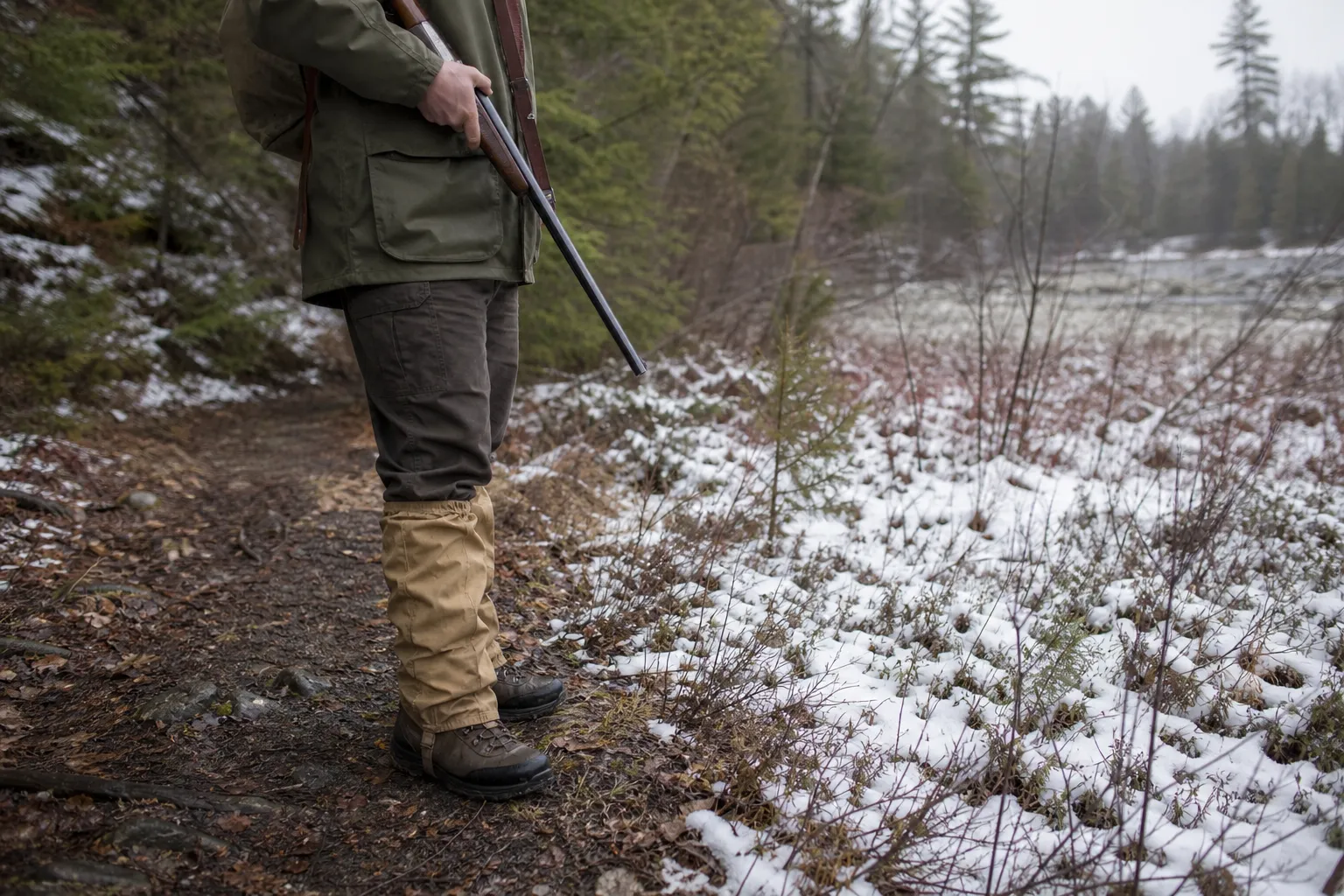
Hunting gaiters are protective coverings worn over the lower leg and boot upper. Outdoor Research describes their main job as sealing the gap between the boot top and pant cuff so snow, mud, scree and trail debris cannot get in. For hunters and hikers, gaiters are most useful when the problem is snow, wet grass, brush, grit, mud, seeds or ticks around the lower leg.
What boot gaiters do
A boot gaiter wraps around the outside of the pant leg and boot upper. Outdoor Research says gaiters for hiking and snowshoeing go over pants and boot uppers.
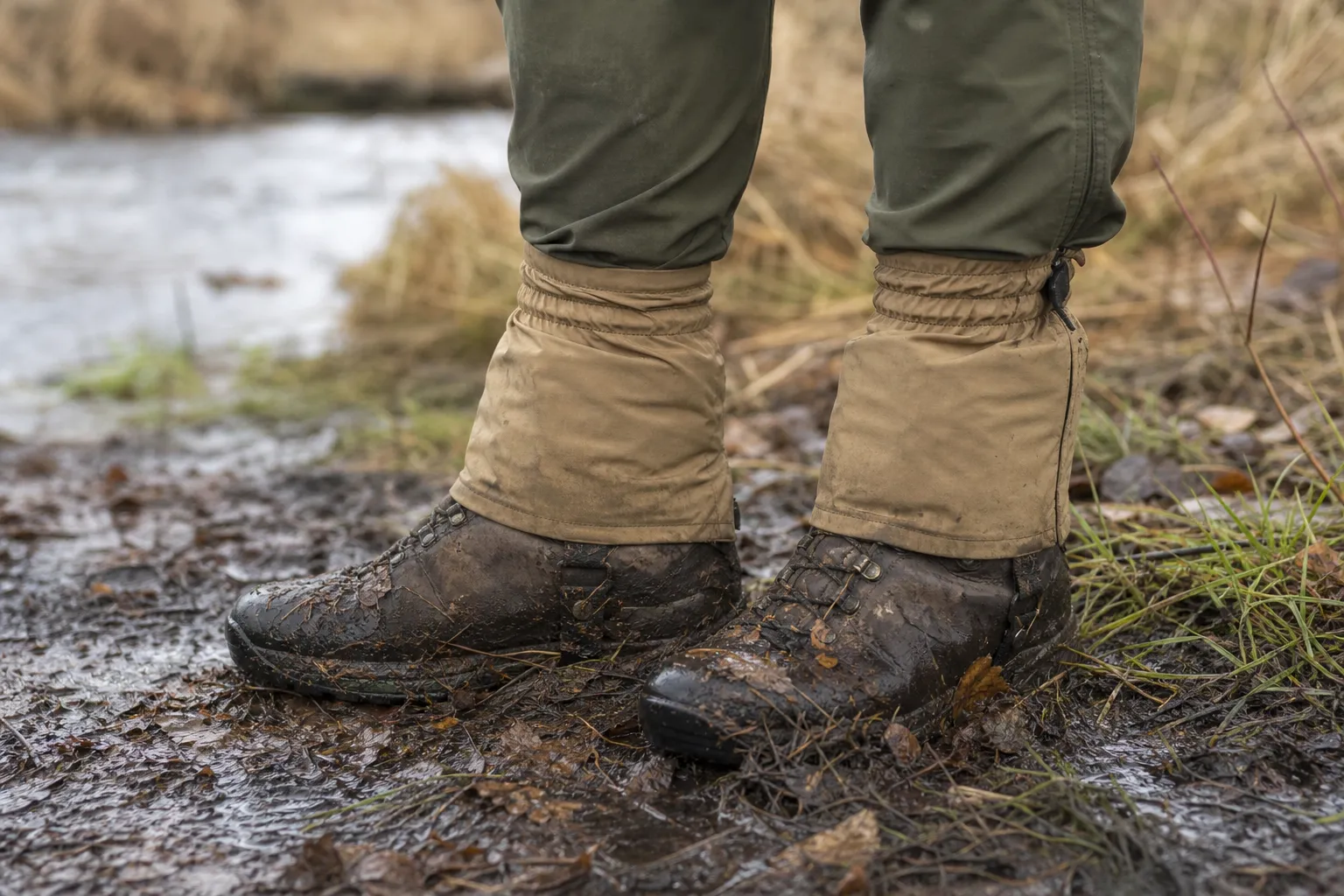
That placement matters because the boot top and pant cuff are where snow, mud, scree, pebbles, grit and trail debris can work into footwear. Outdoor Research describes gaiters as closing that gap.
The National Park Service lists waterproof boots and gaiters as winter hiking essentials for keeping snow and mud out of boots. NPS Alaska also recommends gaiters and trekking poles for river crossings, loose rock, snow patches, boggy areas and brush.
Ankle, mid-height and full-height gaiters
Outdoor Research recommends matching gaiter height to the hazard.
For hunters moving through wet grass or brush, height is often the first question. Minnesota DNR pheasant hunting guidance notes that hunting chaps or brush pants protect legs and help keep them dry on mornings when grass is wet. Gaiters do not cover as much of the leg as chaps or brush pants, but knee height gaiters do address the boot top, pant cuff and lower leg area that often gets wet first.
Materials: breathable, waterproof and abrasion-resistant
Gaiter fabrics vary because the field problems vary.
Snow, wet grass, mud and brush are not the same problem. Waterproofness helps when the outside of the gaiter is wet. Breathability matters when the gaiter covers more of the leg and traps more warmth. Durability matters when rocks, ice, brush or equipment rub against the lower part of the gaiter.
Abrasion resistance is especially relevant near the boot. Rab describes one trekking gaiter design as using ripstop nylon and high wear reinforcements for stones, water, mud and snow.
Do not treat waterproof, water resistant and insect related features as the same thing. The ledgered guidance separates these issues: REI discusses waterproofness and breathability for fabrics, while CDC discusses permethrin treated clothing and gear for ticks. A gaiter fabric that sheds wet grass is not the same as tick prevention by itself.
Closures and fit over boots and pants
Gaiters may use closures that let the gaiter open, wrap around the lower leg and boot, then secure in several places.
Common functional parts include:
- Upper drawcord: Rab lists an upper drawcord on a trekking gaiter design.
- Underfoot strap: Rab lists an underfoot strap.
- Shoelace hook: Rab lists a shoelace hook.
Fit matters more than extra features. Kahtoola advises choosing gaiters that cover the entire upper portion of the boot or shoe. Kahtoola also advises considering a larger gaiter size when footwear size is near the top of the range and the gaiter will be used on robust footwear.
For normal hiking and snowshoeing use, the gaiter usually goes over the pants and over the boot upper, not underneath the pant cuff.
When comparing sizes, use the gaiter maker’s own size chart. Match the gaiter height to the boot height and field hazard, and make sure the lower edge sits properly around the boot area.
Snow, mud, wet grass and brush
For snow and mud, the clearest public safety guidance comes from the National Park Service. NPS lists waterproof boots and gaiters as winter hiking essentials for keeping snow and mud out of boots.
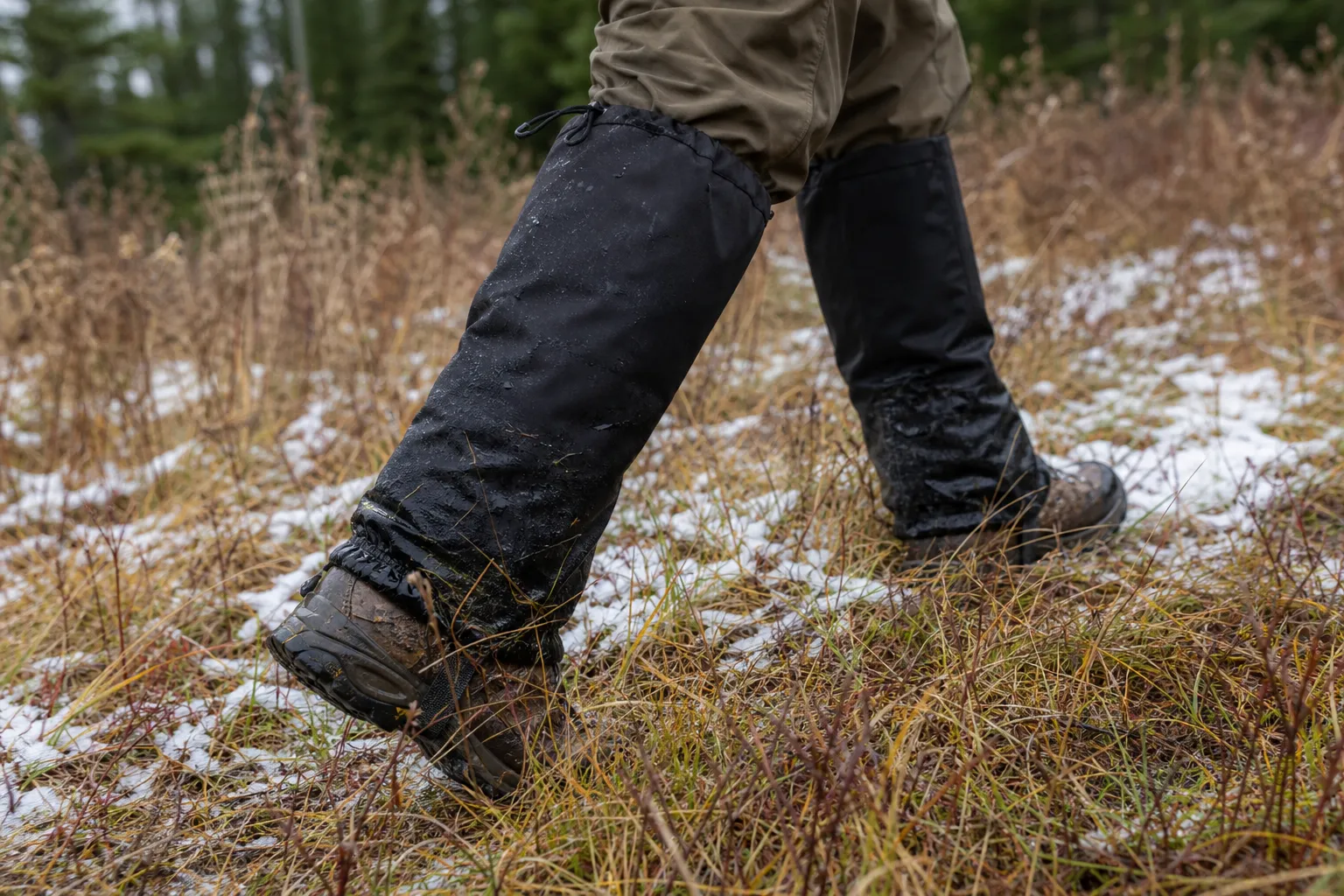
For mixed Alaska terrain, NPS recommends gaiters and trekking poles for river crossings, loose rock, snow patches, boggy areas and brush. That does not make gaiters a substitute for waterproof boots.
For wet grass and upland cover, Minnesota DNR pheasant guidance points to hunting chaps or brush pants for leg protection and staying dry on mornings when grass is wet. A hunter comparing gaiters with chaps or brush pants should think about coverage: gaiters protect the boot top, pant cuff and lower leg, while chaps or brush pants cover more of the leg.
Brush also brings abrasion.
Ticks, seeds and public-land cleanup
Gaiters can be part of a lower leg tick strategy, but official tick guidance still includes clothing practices and checks. National Park Service tick prevention guidance says to tuck pant legs into boots or sock gaiters, which forces ticks to climb up the outside of the pant legs. NPS tick safety guidance for Katahdin Woods and Waters also says gaiters or compression clothing may help reduce the chance that ticks attach where they are harder to detect.
The CDC says permethrin can be used to treat boots, clothing and camping gear, and should not be used directly on skin. If using permethrin treated clothing or gear, follow the CDC’s wording and the product label.
Seeds and mud are another reason to pay attention to gaiters.
Minnesota DNR public lands guidance similarly tells hikers to check gear for mud, seeds or insects before leaving home, including boots, clothing and backpacks. For hunters and hikers, that means gaiters should be cleaned along with footwear and pants, not treated as an afterthought.
Care and limits
Outdoor Research care guidance for its X Gaiters says to air dry gaiters completely and then clean them with a dry brush.
Follow the care label for the specific gaiter. Outdoor Research says its X Gaiters should not be put in a washing machine or dryer. That instruction is for that specialty product, but it is a good reminder that not all gaiters should be cleaned the same way.
The limits are simple. Gaiters can help keep snow, mud, scree, pebbles, grit, seeds and trail debris out of the boot and pant cuff area. They do not replace waterproof boots when waterproof boots are needed.
Before relying on gaiters for a specific hunt or public land trip, check current guidance from the land agency, wildlife agency or park you plan to visit. Confirm tick precautions, invasive species cleanup rules and any area specific recommendations for snow, mud, water crossings or brush conditions.
Frequently asked questions
What are hunting gaiters for?
Hunting gaiters cover the gap between boot tops and pant cuffs. Outdoor Research says gaiters help keep snow, mud, scree and trail debris out of boots.
Do gaiters keep water out?
Gaiters can help with snow, mud and wet brush, especially around the boot top and pant cuff area.
Do gaiters help with ticks?
They can be part of a tick prevention setup. NPS guidance says tucking pant legs into boots or sock gaiters forces ticks to climb outside the pant legs, and CDC says permethrin can be used on boots, clothing and camping gear but not directly on skin.
How should gaiters fit over boots?
Kahtoola advises choosing a gaiter that covers the entire upper portion of the boot or shoe.
How do you clean gaiters after a trip?
Outdoor Research says to air dry gaiters completely and clean them with a dry brush.
Sources
- Gaiters, Outdoor ResearchOfficial source. Accessed November 27, 2026.
- How to Set Up Hiking Gaiters, Outdoor ResearchOfficial source. Accessed November 27, 2026.
- X-Gaiters: Everything You Need to Know, Outdoor ResearchOfficial source. Accessed November 27, 2026.
- How to Choose and Use Gaiters, REI Co-op Expert Advice. Accessed November 27, 2026.
- Trek Gaiter, RabOfficial source. Accessed November 27, 2026.
- Gaiter Selection Tips, KahtoolaOfficial source. Accessed November 27, 2026.
- Winter Hiking Tips, National Park ServiceOfficial source. Accessed November 27, 2026.
- Appropriate Gear, Alaska, National Park ServiceOfficial source. Accessed November 27, 2026.
- RM50B Chapter 56, Tickborne Disease Prevention, National Park ServiceOfficial source. Accessed November 27, 2026.
- Tick Safety, Katahdin Woods and Waters National Monument, National Park ServiceOfficial source. Accessed November 27, 2026.
- About Permethrin-Treated Clothing and Gear, Centers for Disease Control and PreventionOfficial source. Accessed November 27, 2026.
- Pheasant Hunting Tips, Minnesota Department of Natural ResourcesOfficial source. Accessed November 27, 2026.
- Protect Your Public Lands When Hiking, Minnesota Department of Natural ResourcesOfficial source. Accessed November 27, 2026.
- Non-native Invasive Species Best Management Practices, Outdoor Recreation Forestry, USDA Forest ServiceOfficial source. Accessed November 27, 2026.