Waders Explained: Hip Boots, Chest Waders, Neoprene and Breathable Materials
Wader choice comes down to height, material, boot design, fit and safety. Match the wader to water depth, bottom conditions, temperature and activity.
By RaiS. Reviewed by RaiS. Published . 7 min read.
Research and drafting were assisted by AI. RaiS checked the facts against the sources below and approved this page.
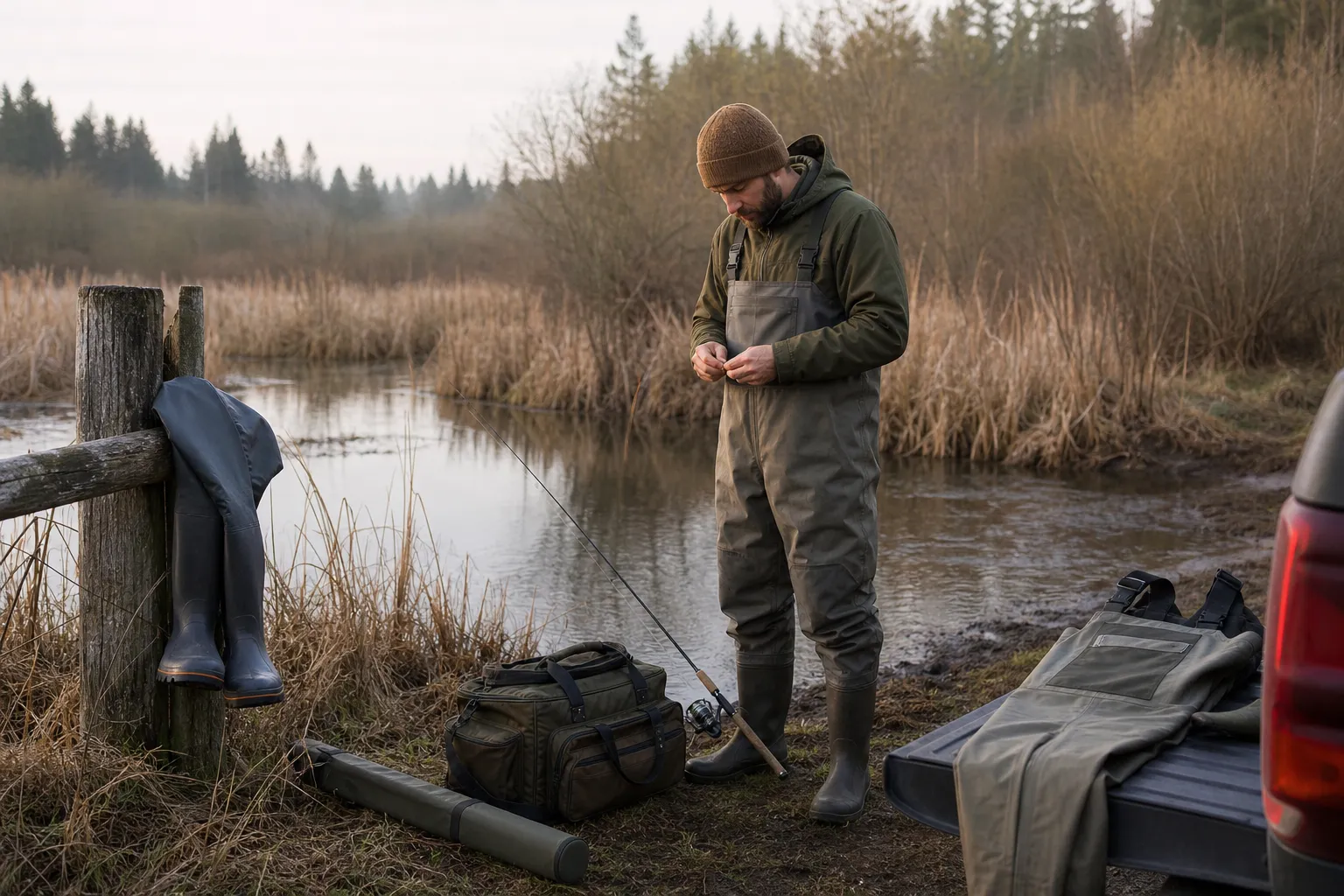
Waders help keep you dry in water and marsh conditions, but they are not a guarantee of safety in deep water, current, deep holes, cold water or soft mud. A good choice starts with the conditions: water depth, current, bottom type, weather, walking distance and how long you will stand still after you get there.
For duck hunters, anglers and wetland users, the main comparisons are wader height, bootfoot versus stockingfoot construction, material and insulation. Safety choices matter just as much as comfort, especially around cold water and unfamiliar wetlands.
The three main wader heights
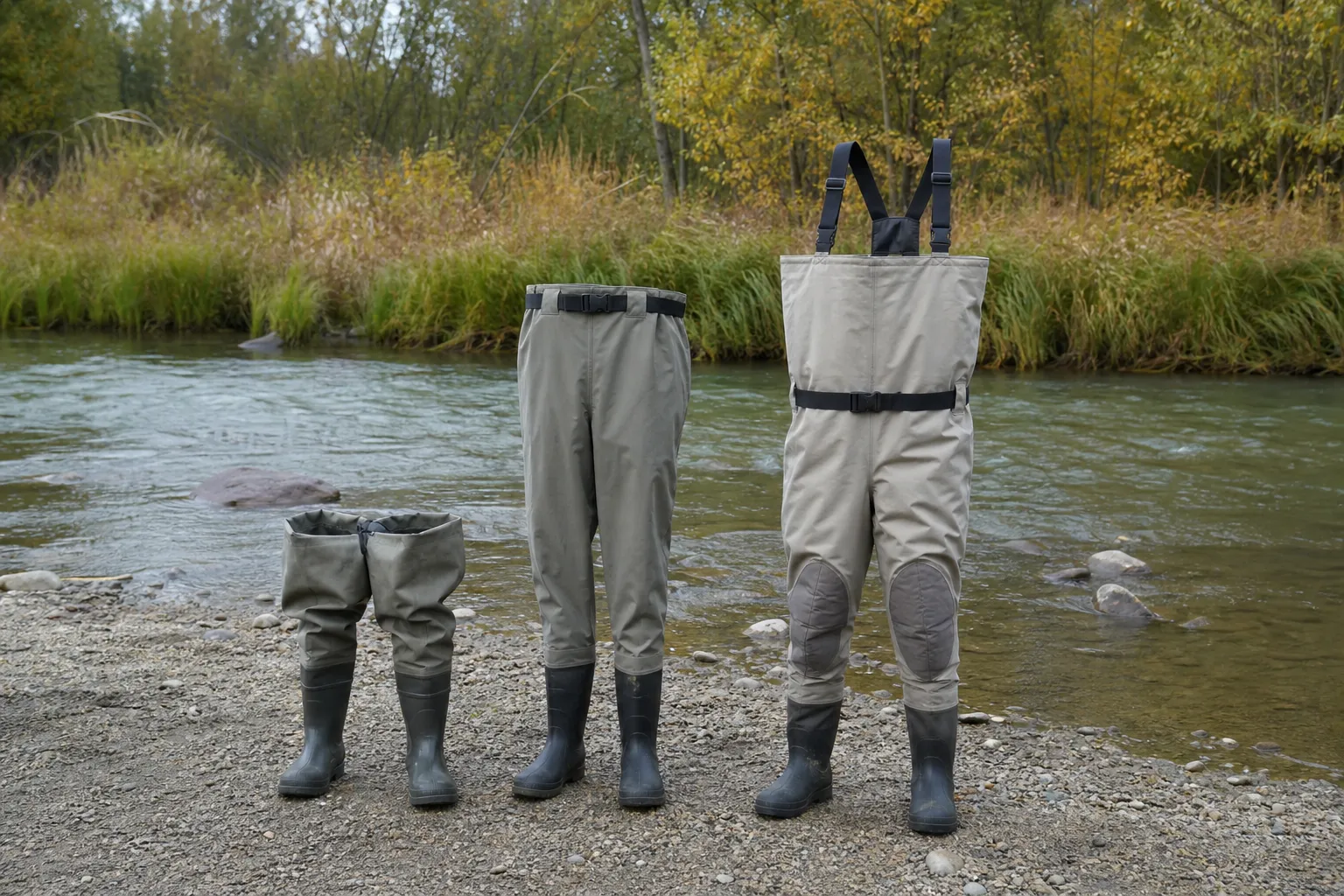
frogg toggs describes three main wader heights for fishing or waterfowl hunting: hip, waist and chest.
Hip waders
Hip waders, often called hip boots, cover the feet and legs up to the upper leg. frogg toggs describes them as useful for shallow water and low-current use where deep wading is not needed.
That makes them a simple option for shallow edges, muddy banks and short trips where you do not expect water above the leg. Their limitation is obvious: they provide less coverage than waist-high or chest waders, so they are a poor match for uncertain depth.
Waist-high waders
frogg toggs describes waist-high waders, also called wader pants, as beginning at the waist and covering the lower body. They sit between hip waders and chest waders in coverage.
Waist-high waders can make sense when the water is not expected to reach the torso and when the user wants less upper-body coverage than chest waders. They still require the same safety habits as any other wader: check depth, watch footing and do not wade to the top edge.
Chest waders
frogg toggs says chest waders offer the most coverage and use a bib secured by suspenders. North Dakota Game and Fish says waders are a must-have for waterfowl hunting in wetlands, and chest coverage is common because wetland depth can vary.
More coverage does not mean permission to go deeper. New Jersey Hunter Education warns not to wade to the top edge of waders.
Bootfoot versus stockingfoot waders
Orvis says wader choice usually starts with two major categories: bootfoot and stockingfoot. The difference is whether the boot is built into the wader or chosen separately.
Bootfoot waders
frogg toggs says bootfoot waders have integrated boots, which removes the need to buy separate boots. Orvis describes bootfoot waders as having heavy-duty rubber boots connected to them.
The main advantage is simplicity. You step into one piece of gear, rather than pairing stockingfoot waders with separate boots. For muddy or marshy conditions, frogg toggs says rubber soles work well, and the Pennsylvania Fish and Boat Commission says rubber treads are a good choice for muddy bottom streams, lakes and ponds.
The tradeoff is fit and traction choice. Because the boot is part of the wader, the boot fit, insulation and sole type are tied to that one design.
Stockingfoot waders
Orvis says stockingfoot waders have sock-like booties and are worn with wading boots and gravel guards. frogg toggs notes that stockingfoot waders allow separate wading boots with chosen outsole and lace features.
This design gives more control over fit and traction. Orvis says stockingfoot waders allow more precise boot selection and traction choices. New Jersey Hunter Education says boot soles should match the bottom conditions being walked on.
Stockingfoot booties need protection. Simms says stockingfoot wader booties should not contact the ground and that boots should be put on right away. That matters because the neoprene booties are not the same as an outdoor sole.
Materials: neoprene, breathable fabrics, rubber, PVC and canvas
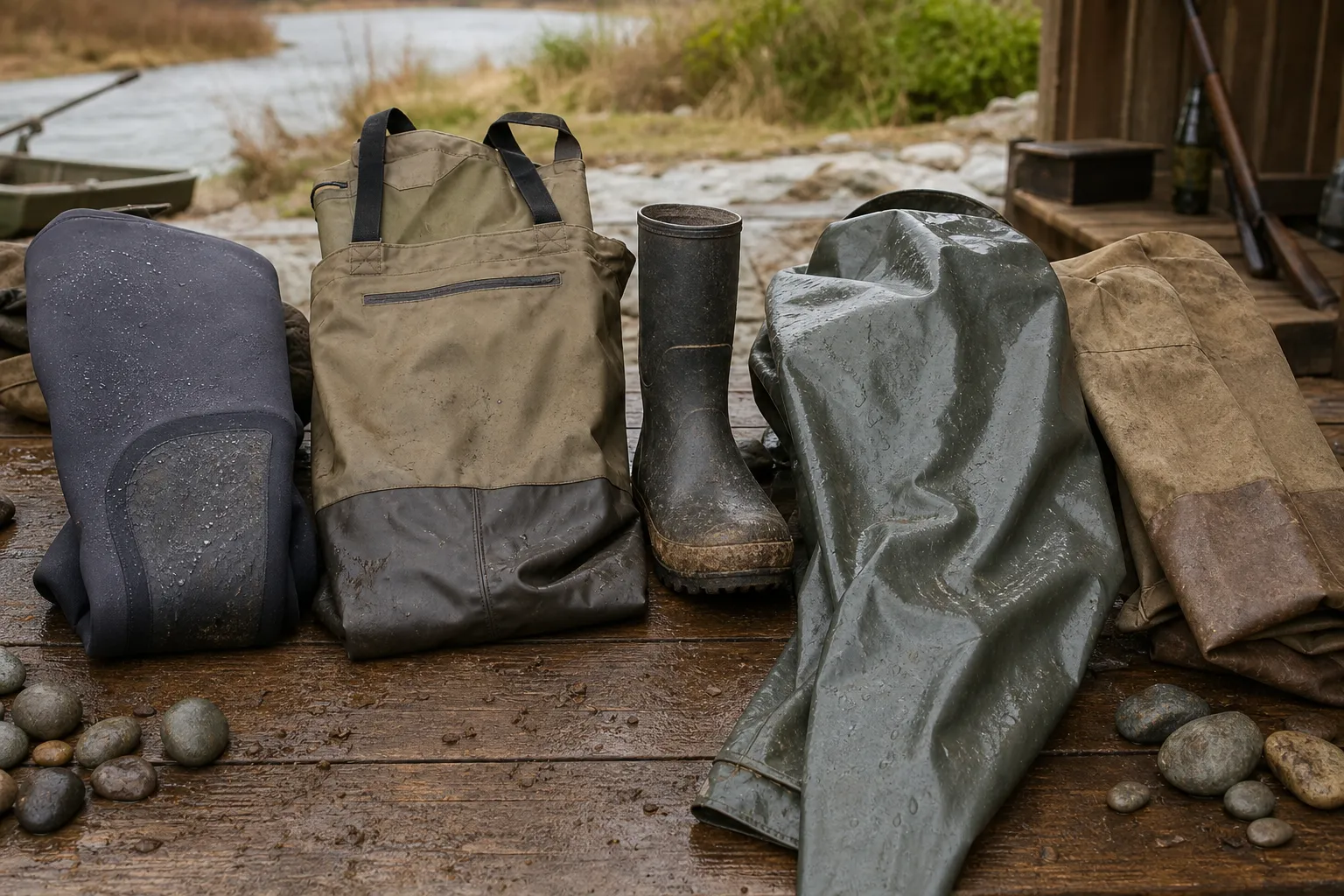
North Dakota Game and Fish also says waders can be canvas, neoprene or breathable materials, and that season, temperature and budget should guide choice.
Neoprene
The Pennsylvania Fish and Boat Commission says neoprene traps body heat and is useful in cold weather. Orvis compares neoprene to wetsuit material.
Neoprene is often chosen when warmth matters, especially when the user will spend time standing in cold water.
Breathable waders
frogg toggs says breathable waders use lightweight nylon or polyester with a waterproof membrane. The Pennsylvania Fish and Boat Commission says breathable fabric blocks water while allowing air and body moisture through. Orvis compares breathable waders to thinner waterproof rain-jacket-like materials.
Breathable waders are often paired with layers when temperatures drop. Simms recommends polyester, other synthetics and wool under waders, and says to avoid cotton base layers and jeans. For more on clothing next to the skin, see our guide to base layers for hunting and hiking and our guide to layering clothing for cold-weather hunting.
Rubber and PVC
Rubber and PVC are waterproof materials, but the Pennsylvania Fish and Boat Commission says rubber waders and boots offer no thermal protection from cold water.
That distinction matters in spring, fall and winter. Dry feet are not the same as warm feet, and cold-water risk is not solved by rubber boots alone.
Soles and traction in mud, marsh and streams
The right sole depends on the bottom. New Jersey Hunter Education says boot soles should match the bottom conditions being walked on.
For muddy conditions, frogg toggs says rubber soles work well for muddy or marshy conditions. The Pennsylvania Fish and Boat Commission says rubber treads are a good choice for muddy bottom streams, lakes and ponds.
Felt is not always the answer. The Pennsylvania Fish and Boat Commission says felt soles can be slippery on muddy bottoms and muddy banks. That is important for duck hunters and wetland users who may spend more time in muck than on clean rock.
Fit, layering and walking comfort
Fit matters because waders move with every step, squat and climb. Simms says waders that are too small put extra stress on seams. Simms also says waders that are too large can bunch and rub, leading to abrasion and pinholes.
Layering should match both the walk in and the time spent still.
Under waders, Simms recommends polyester, other synthetics and wool, and says to avoid cotton base layers and jeans. That is a useful rule for both breathable and neoprene waders, because moisture management matters inside waterproof clothing.
Care: rinse, dry and store them carefully
Wader care is mostly about preventing damage and moisture problems.
Full drying matters because waders are often packed after wet, muddy or salty use.
Fit and handling are part of care too. Simms says waders that are too small stress seams, while waders that are too large can rub and develop pinholes. Simms also says stockingfoot booties should not contact the ground and boots should be put on right away.
Safety limits: waders do not make unsafe water safe
New Jersey Hunter Education says to wear a belt with waders so they do not fill with water if the wearer slips.
New Jersey Hunter Education says to check water depth with a stick or wading staff before wading.
Around rivers, U.S. Fish and Wildlife Service says to locate river hazards and never cross above rapids, falls or other hazards. It also says that if a crossing exceeds a person’s skill or comfort level, they should abort.
Cold water, life jackets and flotation
The National Weather Service defines cold water as 70 degrees Fahrenheit or lower. It says cold water can cause panic, shock, involuntary gasping and drowning risk, and that a person can lose muscle control within 10 minutes after cold-water immersion.
NOAA National Weather Service advises wearing a life jacket on the water and dressing for water temperature, not air temperature. CDC NIOSH says wearing a PFD is the most important step for surviving a fall overboard, and says victims without flotation can drown after cold incapacitation, which is loss of movement coordination needed for swimming.
North Dakota Game and Fish recommends a life jacket for placing or picking up decoys and recovering downed birds, especially on unfamiliar water. That guidance is directly relevant to waterfowl hunting, where a short decoy trip can put someone in deeper or softer water than expected.
If a person falls in fast-moving water, the Pennsylvania Fish and Boat Commission says not to try to stand because foot entrapment and current can push them under. It says to float feet-first downstream and back-paddle to shallow water.
How to choose waders for your conditions
Start with depth. frogg toggs describes hip, waist and chest as the main height choices.
Then choose the boot design. Bootfoot waders simplify gearing up because the boots are integrated. Stockingfoot waders use separate boots, which Orvis says allows more precise boot selection and traction choices.
Next, match the material to temperature and activity. Neoprene traps body heat and is useful in cold weather, according to the Pennsylvania Fish and Boat Commission. Breathable fabric blocks water while allowing air and body moisture through. Rubber waders and boots offer no thermal protection from cold water.
Finally, choose for safety rather than maximum depth. Use a wader belt, check depth before wading, avoid wading to the top edge, and wear a life jacket around boats, unfamiliar water, decoy placement and cold-water risk.
Before a hunt, fishing trip or wetland crossing, check current weather, water conditions and safety guidance from the relevant wildlife, boating or land management agency. Waders are clothing, not a rescue device, and they should never be used to justify a crossing that exceeds your skill, comfort or conditions.
Frequently asked questions
Are chest waders safer than hip waders?
Chest waders offer the most coverage, according to frogg toggs, but more coverage does not make deep or hazardous water safe. New Jersey Hunter Education warns not to wade to the top edge of waders.
What is the difference between bootfoot and stockingfoot waders?
Bootfoot waders have integrated boots. Stockingfoot waders have sock-like booties and are worn with separate wading boots, which allows more boot fit and traction choices.
Are neoprene waders warmer than breathable waders?
The Pennsylvania Fish and Boat Commission says neoprene traps body heat and is useful in cold weather. Breathable fabric blocks water while allowing air and body moisture through, and it can be paired with layers.
Do rubber waders keep you warm in cold water?
The Pennsylvania Fish and Boat Commission says rubber waders and boots offer no thermal protection from cold water. Cold-water clothing choices should account for water temperature, not only air temperature.
Should you wear a wader belt?
Yes. New Jersey Hunter Education says to wear a belt with waders so they do not fill with water if you slip.
When should you wear a life jacket with waders?
NOAA National Weather Service advises wearing a life jacket on the water. North Dakota Game and Fish recommends one for placing or picking up decoys and recovering downed birds, especially on unfamiliar water.
Sources
- How to Buy Waders, frogg toggsOfficial source. Accessed November 22, 2026.
- Should I Get Bootfoot Or Stocking Foot Waders?, OrvisOfficial source. Accessed November 22, 2026.
- How To Maintain Your Fishing Waders & Gear, Simms FishingOfficial source. Accessed November 22, 2026.
- Wader Wash, Care and Repair, PatagoniaOfficial source. Accessed November 22, 2026.
- Wading for a Bite, Pennsylvania Fish and Boat CommissionOfficial source. Accessed November 22, 2026.
- NJ Hunter Education Manual, Chapter 5, New Jersey Department of Environmental Protection, Fish and WildlifeOfficial source. Accessed November 22, 2026.
- Getting Started Waterfowl Hunting, Missouri Department of ConservationOfficial source. Accessed November 22, 2026.
- Waterfowl: Safety and Health, Missouri Department of ConservationOfficial source. Accessed November 22, 2026.
- Start Hunting Ducks Over Water, North Dakota Game and Fish DepartmentOfficial source. Accessed November 22, 2026.
- Hazard of Cold Water Activities, National Weather Service, NOAAOfficial source. Accessed November 22, 2026.
- Cold Water Hazards and Safety, National Weather Service, NOAAOfficial source. Accessed November 22, 2026.
- Safety Guidelines: Falls Overboard, CDC NIOSHOfficial source. Accessed November 22, 2026.
- How To Cross A River, U.S. Fish and Wildlife ServiceOfficial source. Accessed November 22, 2026.
- Tips for Safe Wading, Pennsylvania Fish and Boat CommissionOfficial source. Accessed November 22, 2026.
- A Stringer of Safety Tips, Pennsylvania Fish and Boat CommissionOfficial source. Accessed November 22, 2026.