The M1 Garand: history of America's World War II rifle
The M1 Garand, officially the U.S. Rifle, Caliber .30, M1, was adopted by the U.S. Army in 1936 and became one of the most important American military rifle designs of the twentieth century. Its semiautomatic action and eight round en bloc clip remain central to its historical significance.
By RaiS. Reviewed by RaiS. Published . 5 min read.
Research and drafting were assisted by AI. RaiS checked the facts against the sources below and approved this page.
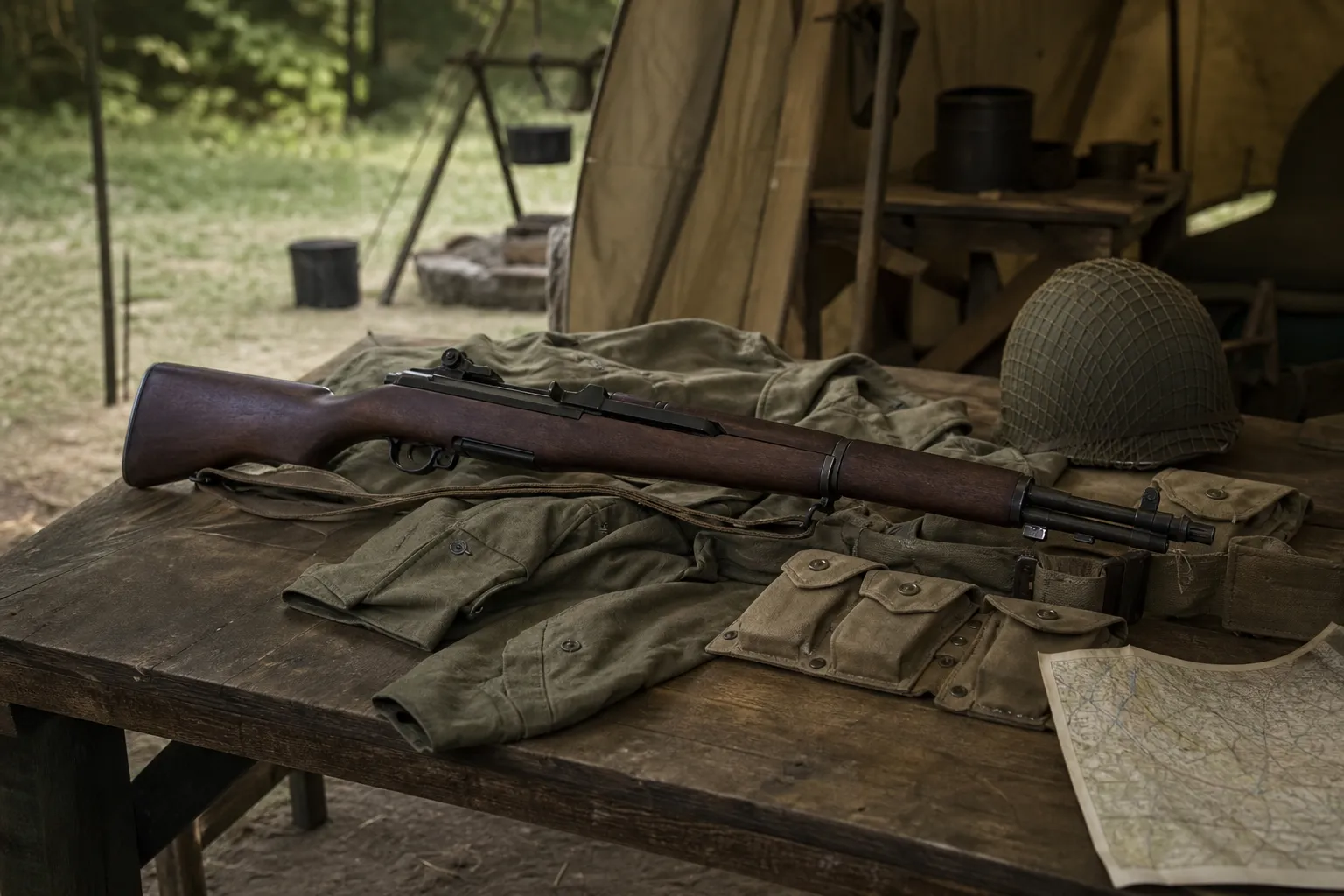
The M1 Garand, officially the U.S. Rifle, Caliber .30, M1, was a semiautomatic shoulder rifle adopted by the U.S. Army in 1936. It remains important today as a historic military rifle, a collecting subject, and a rifle used in Civilian Marksmanship Program competition and sales programs. Sources for those points include Springfield Armory National Historic Site, the NRA National Firearms Museum, and CMP.
What the M1 Garand was
Department of the Army FM 23-5 identifies the rifle as the “U.S. rifle caliber .30, M1.” Source: FM 23-5 copy.
In plain English, semiautomatic means the rifle fires one round for each pull of the trigger, rather than requiring the shooter to manually cycle the action after every shot. FM 23-5 states this directly: “the rifle fires one round each time the trigger is pulled.” Source: FM 23-5 copy.
Springfield Armory National Historic Site gives two simple identification details that help beginners picture the rifle: it weighed 9.5 pounds and fired semiautomatically from an eight-shot clip. Source: Springfield Armory National Historic Site.
John C. Garand and the road to the M1
John Cantius Garand was born on January 1, 1888, near Montreal in St. Remi, Quebec, Canada. Springfield Armory National Historic Site states that he moved to the United States at age 11 and later lived in Danielson, Connecticut. Source: Springfield Armory National Historic Site.
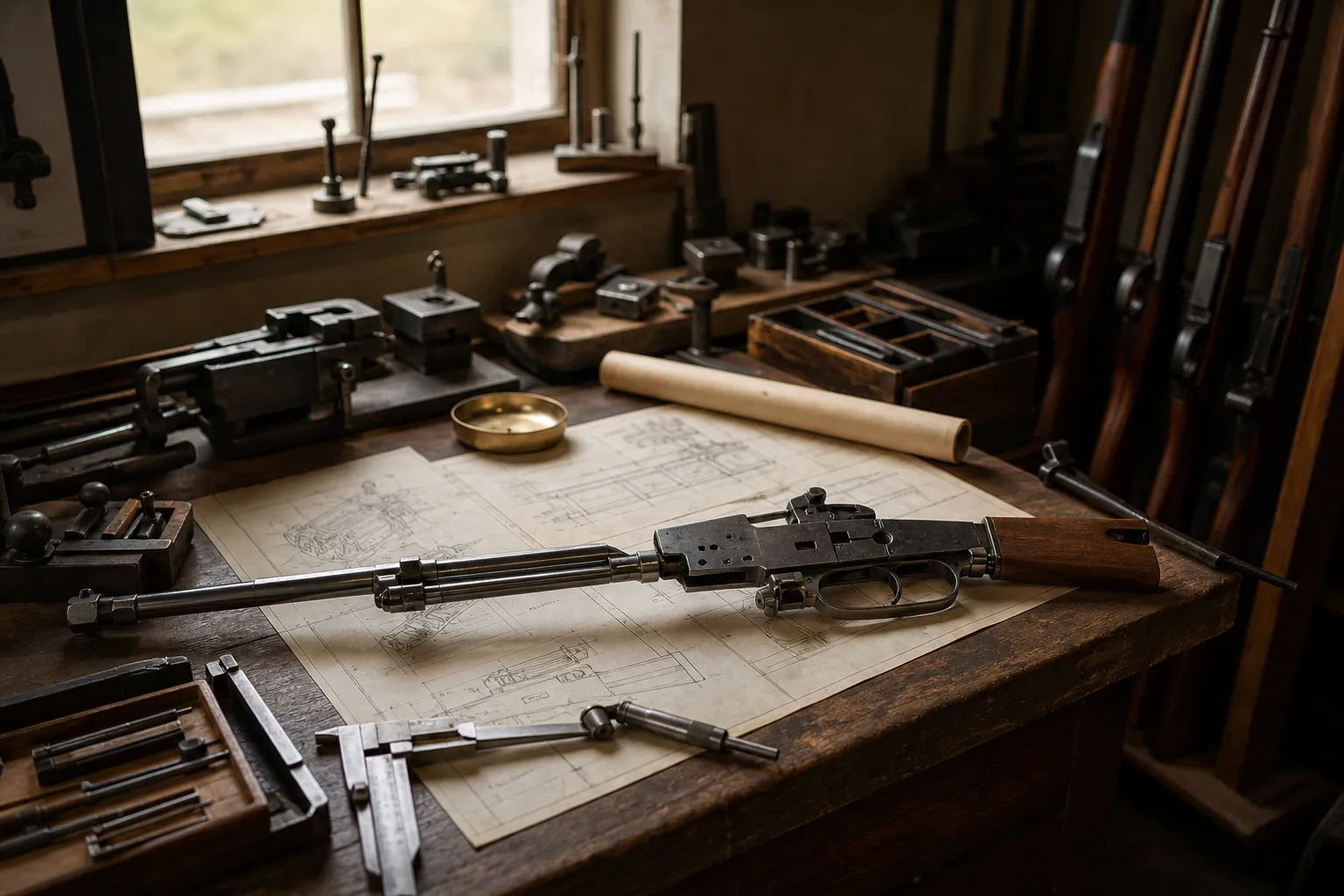
Garand began focusing on semiautomatic rifle design in 1916 and submitted a design to the U.S. Navy two years later, according to Springfield Armory National Historic Site. He later worked as an engineer at the government’s Springfield Armory, where he developed a new semiautomatic rifle. By 1932, he had patented the design that became the M1 semiautomatic rifle. Source: Springfield Armory National Historic Site.
Adoption in 1936 and early production
The U.S. Army Center of Military History gives the adoption date as January 9, 1936, when the rifle “became Army standard as the M1 rifle.” Springfield Armory National Historic Site also states that the Army officially adopted the M1 in 1936, with the Marine Corps and Navy following by 1940. Sources: U.S. Army Center of Military History, Springfield Armory National Historic Site.
Early production began at Springfield Armory. Springfield Armory National Historic Site records that the first M1 off the Springfield production line to pass the function firing test did so on July 21, 1937. Source: Springfield Armory National Historic Site.
The design also changed during early production. The NRA National Firearms Museum states that original production M1s used a gas-trap actuator, and that this was changed to a gas-port system in 1940. Source: NRA National Firearms Museum.
How the gas operation worked
This guide is describing the historic mechanism, not giving maintenance, conversion, or modification instructions. For any real firearm handling, owners should use the correct current manual and follow qualified range safety procedures.
The eight-round en bloc clip
The M1 is famous for its en bloc clip system. FM 23-5 states that the rifle is loaded by inserting a metal clip containing a maximum of eight rounds into the receiver. Source: FM 23-5 copy.
For a beginner, the important point is that the clip is part of the M1’s feeding system. It holds the cartridges together as a unit, and the rifle’s action feeds from that clip. Springfield Armory National Historic Site describes the M1 as firing semiautomatically from an eight-shot clip. Source: Springfield Armory National Historic Site.
World War II production and service
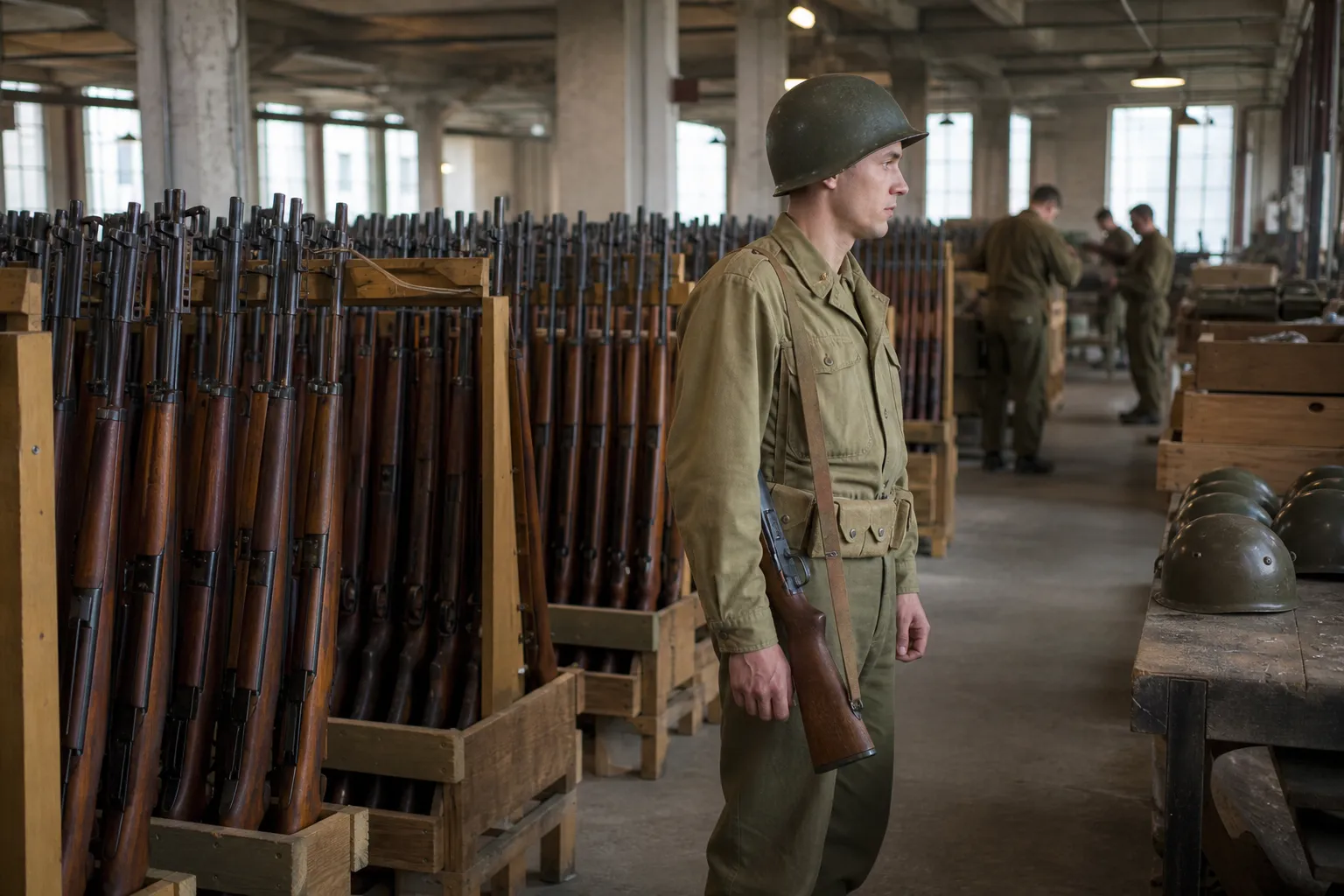
The NRA National Firearms Museum provides a breakdown that helps show the scale of production. It states that initial production was limited to Springfield Armory, that by the end of World War II nearly three and one-half million M1s had been produced there, and that Winchester Repeating Arms produced more than 500,000 more. Source: NRA National Firearms Museum.
Korea, later production, and replacement
The M1 did not disappear after World War II.
Production also resumed during the Korean War. The NRA National Firearms Museum states that nearly one million M1s were manufactured during that period by Springfield Armory, Harrington and Richardson, and International Harvester. It also states that M1 production ended in 1957. Source: NRA National Firearms Museum.
Springfield Armory National Historic Site states that the M1 was replaced by the M14 in 1957. Source: Springfield Armory National Historic Site.
Springfield Armory National Historic Site also identifies later M1 variants. It states that the M1D sniper rifle was adopted by the U.S. Army as substitute standard in September 1944 and saw considerable use in Korea and Vietnam. Source: Springfield Armory National Historic Site.
Producers named in official and museum sources
Several museum sources identify M1 production beyond the best-known wartime makers. Springfield Armory and Winchester are the central World War II producers in the NRA Museum source. Springfield Armory National Historic Site also lists other production by Rock Island Arsenal, International Harvester, and Harrington and Richardson. Sources: NRA National Firearms Museum, Springfield Armory National Historic Site.
| Source | Production facts from the source | |, -|, -| | NRA National Firearms Museum | Nearly three and one-half million were produced at Springfield Armory by the end of World War II, and Winchester produced more than 500,000 more. | | NRA National Firearms Museum | Korean War production involved Springfield Armory, Harrington and Richardson, and International Harvester. | | Springfield Armory National Historic Site | Lists Springfield Armory and Winchester, with other production by Rock Island Arsenal, International Harvester, and Harrington and Richardson. |
Collecting and the Civilian Marksmanship Program today
Today, the M1 Garand is also tied to collecting and marksmanship through the Civilian Marksmanship Program. CMP states that qualified U.S. citizens who are members of a CMP-affiliated club may qualify to purchase an M1 Garand rifle, and that M1 rifles are graded and priced according to condition. Source: CMP affiliate benefits.
CMP’s eligibility page states that federal eligibility for CMP surplus firearms includes U.S. citizenship, age, membership in a CMP-affiliated club, and legal eligibility to purchase a firearm. CMP also states that purchasers must provide proof of participation in a marksmanship-related activity or otherwise show familiarity with safe firearm handling and range procedures. Source: CMP eligibility requirements.
This page does not summarize all federal, state, local, or Canadian legal requirements for owning, transferring, importing, transporting, or using an M1 Garand. Readers should confirm current CMP requirements directly with CMP and confirm all applicable laws and rules with the relevant official authorities before buying, importing, transporting, or using any firearm.
Frequently asked questions
What is the M1 Garand?
The M1 Garand is a semiautomatic shoulder rifle adopted by the U.S. Army in 1936. Springfield Armory National Historic Site states that it weighed 9.5 pounds and fired semiautomatically from an eight-shot clip.
Who invented the M1 Garand?
John Cantius Garand developed the rifle while working as an engineer at Springfield Armory. Springfield Armory National Historic Site states that by 1932 he had patented the design that became the M1 semiautomatic rifle.
When was the M1 Garand adopted?
The U.S. Army Center of Military History gives the adoption date as January 9, 1936, when the rifle became Army standard as the M1 rifle.
How many rounds did the M1 Garand clip hold?
Springfield Armory National Historic Site describes the M1 as firing semiautomatically from an eight-shot clip.
Who made M1 Garand rifles during World War II?
The NRA National Firearms Museum states that initial production was limited to Springfield Armory, that by the end of World War II nearly three and one-half million M1s had been produced there, and that Winchester Repeating Arms produced more than 500,000 more.
Can people still get M1 Garand rifles through CMP?
CMP states that qualified U.S. citizens who are members of a CMP-affiliated club may qualify to purchase an M1 Garand rifle. CMP also lists eligibility requirements, including citizenship, age, club membership, legal eligibility to purchase a firearm, and proof of marksmanship activity or familiarity with safe firearm handling and range procedures.
Sources
- John Garand, Springfield Armory National Historic Site, National Park ServiceOfficial source. Accessed October 20, 2026.
- U.S. M1 Garand Rifle Production, Springfield Armory National Historic Site, National Park ServiceOfficial source. Accessed October 20, 2026.
- M1 Rifle variations and experimental models, Springfield Armory National Historic Site, National Park ServiceOfficial source. Accessed October 20, 2026.
- Post WWII Rifle Development, Springfield Armory National Historic Site, National Park ServiceOfficial source. Accessed October 20, 2026.
- FM 23-5, U.S. Rifle, Caliber .30, M1, Department of the Army, hosted copy. Accessed October 20, 2026.
- U.S. Rifle Caliber .30, M1 Field Manual FM 23-5, Department of the Army, hosted copy. Accessed October 20, 2026.
- U.S. Rifle Caliber .30, M1 Field Manual FM 23-5, Department of the Army, hosted copy. Accessed October 20, 2026.
- United States M1 Rifle, National Museum of American History, Smithsonian InstitutionOfficial source. Accessed October 20, 2026.
- U.S. Springfield M1 Garand Semi Automatic Rifle, NRA National Firearms Museum. Accessed October 20, 2026.
- U.S. Springfield M1 Garand National Match Semi Automatic Rifle, NRA National Firearms Museum. Accessed October 20, 2026.
- Survey of U.S. Army Uniforms, Weapons and Accoutrements, U.S. Army Center of Military HistoryOfficial source. Accessed October 20, 2026.
- U.S. Army Center of Military History catalog page on M1 Garand Rifle, U.S. Army Center of Military HistoryOfficial source. Accessed October 20, 2026.
- Infantry, Part I: Regular Army, U.S. Army Center of Military HistoryOfficial source. Accessed October 20, 2026.
- Benefits of Club Affiliation, Civilian Marksmanship ProgramOfficial source. Accessed October 20, 2026.
- Purchase Eligibility Requirements, Civilian Marksmanship ProgramOfficial source. Accessed October 20, 2026.
- 2026 CMP Games Rules, Civilian Marksmanship ProgramOfficial source. Accessed October 20, 2026.
- Mr. John C. Garand, Ordnance Corps Hall of Fame Inductee 1973, U.S. Army Ordnance Corps. Accessed October 20, 2026.