Magazine Disconnect Safeties Explained
A magazine disconnect safety is a mechanical feature on some semiautomatic pistols that can prevent firing when the magazine is removed. It is not proof that the chamber is empty, and it is never a substitute for opening the action and checking the chamber.
By RaiS. Reviewed by RaiS. Published . 8 min read.
Research and drafting were assisted by AI. RaiS checked the facts against the sources below and approved this page.
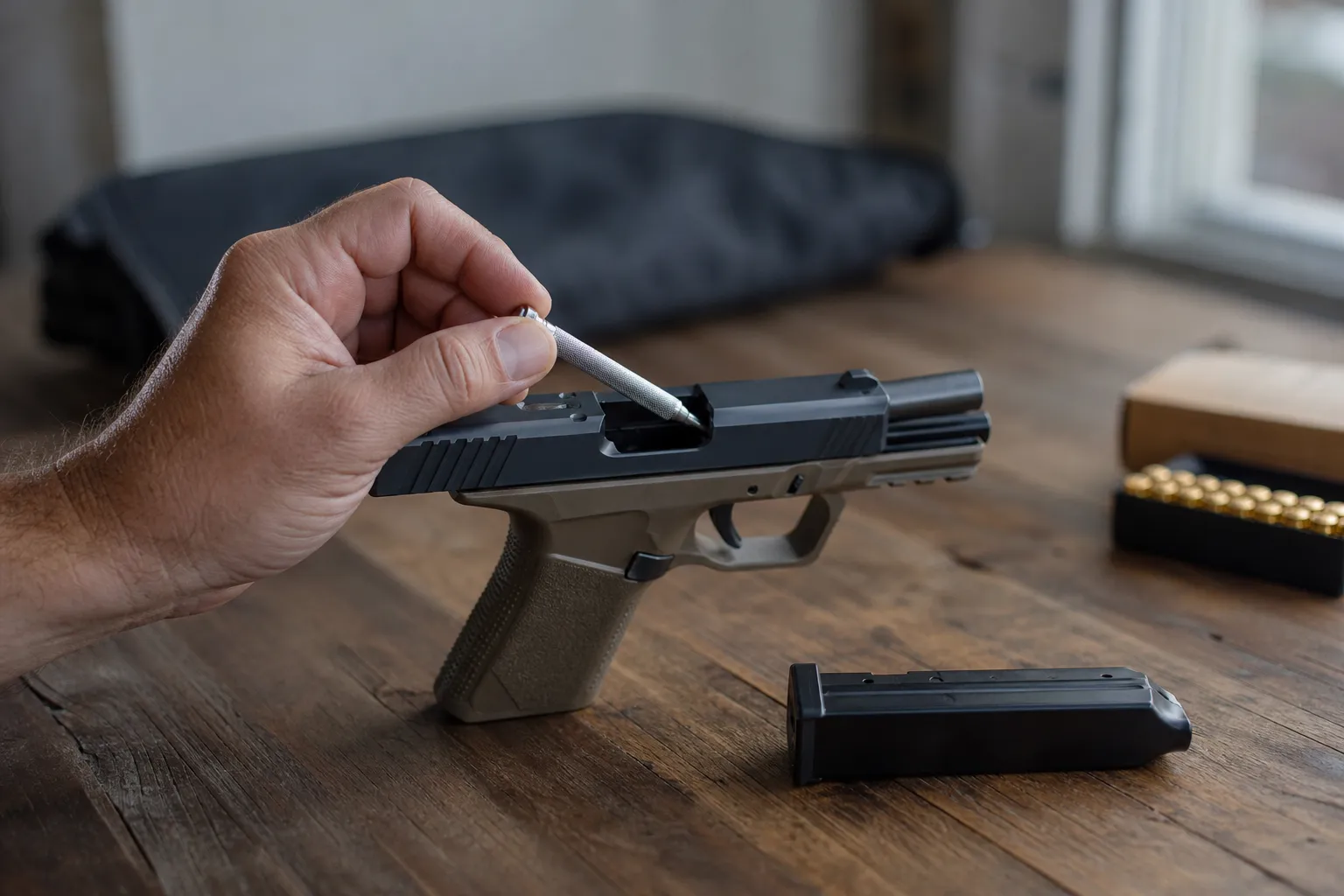
A magazine disconnect safety is a feature on some semiautomatic firearms that can prevent the firearm from firing when the magazine is removed. The most important point is simple: removing the magazine does not prove the chamber is empty. Manufacturer manuals, firearm safety organizations and law-enforcement training materials all warn that a round may still be in the chamber after the magazine is out.
What a magazine disconnect safety does
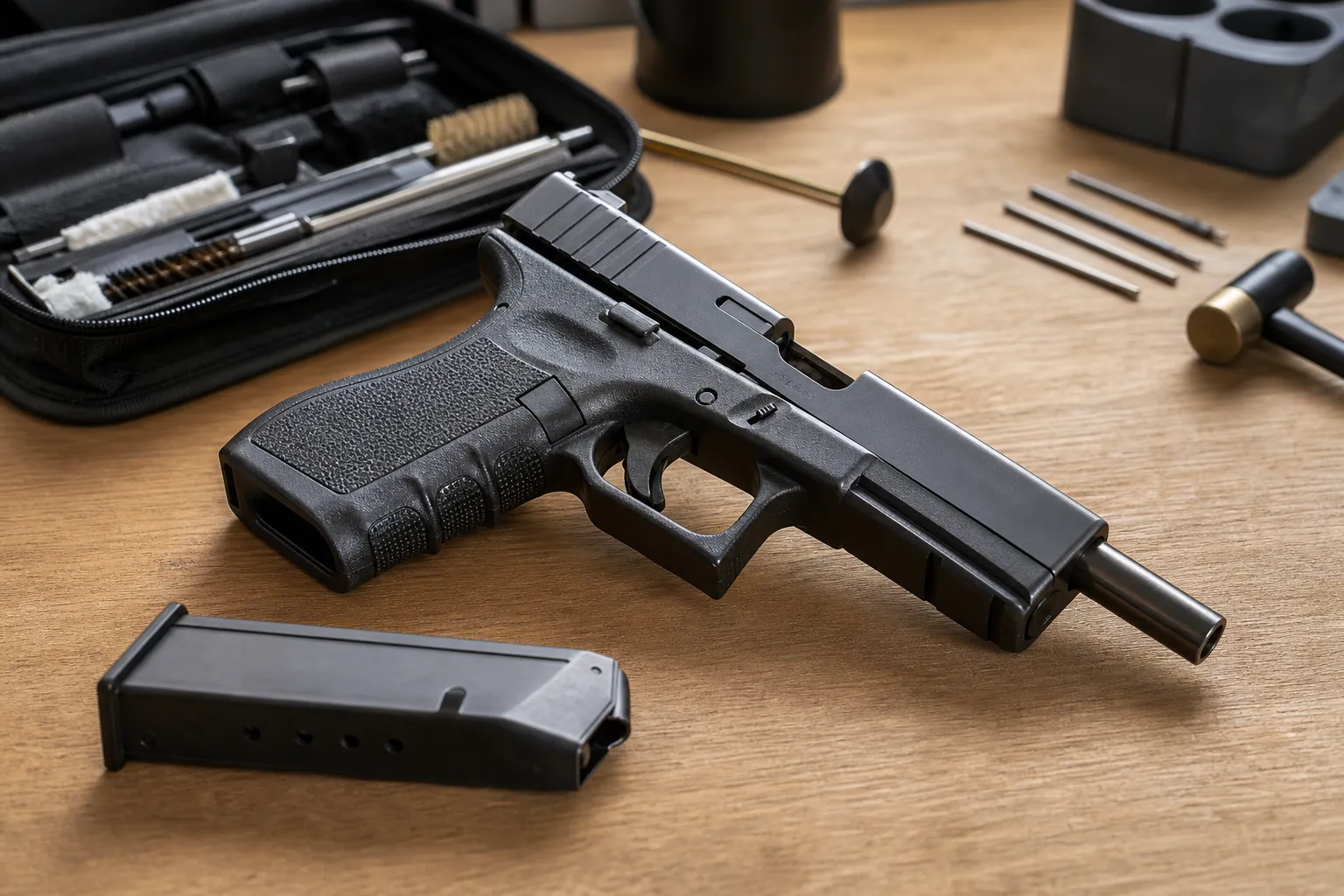
Manuals use a few names for the same general idea. You may see “magazine disconnect,” “magazine disconnect safety,” or “magazine safety.” Smith & Wesson identifies “magazine disconnect safety” as also known as a “magazine disconnect.” Browning uses the term “magazine ‘safety’” in its Buck Mark pistol manual.
The exact design can vary by model. Smith & Wesson says some of its pistols are designed to disengage the trigger linkage when the magazine is removed, preventing the pistol from firing when the trigger is pulled. Ruger says the Mark IV pistol has a magazine disconnect that prevents the trigger from being pulled if the magazine is removed. Browning says the Buck Mark pistol has a magazine safety designed to prevent the trigger from being pulled unless a magazine is inserted into the magazine well.
That is the basic purpose: in certain pistols, the magazine must be in place before the pistol can fire or before the trigger can move as designed.
The critical warning: the chamber may still be loaded
Removing a detachable magazine removes the ammunition source from the magazine well. It does not automatically remove a cartridge already in the chamber.
Smith & Wesson warns, in all capital letters in its SD pistol manual, that removing the magazine does not unload the pistol’s chamber. Ruger warns Mark IV users that a round may still be in the chamber and that the pistol may still be loaded even if the magazine is removed. Browning warns Buck Mark users that merely removing the magazine does not mean the chamber is unloaded.
FN America gives the same general warning for detachable-magazine firearms: removing the magazine does not mean the firearm is completely unloaded because a cartridge could be in the chamber. The California Department of Justice Firearm Safety Certificate Manual includes a safe-handling demonstration step showing that a round can be chambered with the magazine removed.
The National Shooting Sports Foundation’s safe-handling rules say that whenever you handle a firearm or hand it to someone, you should open the action immediately and visually check the chamber, receiver and magazine to be certain they do not contain ammunition. Ruger similarly tells users not to rely on memory, and to visually inspect the magazine and chamber with the pistol pointed in a safe direction.
For a beginner, the practical lesson is this: magazine out is not the same as unloaded. Follow the manual for your exact handgun, remove the magazine, open the action or lock the slide open where applicable, and verify the chamber according to the manual before treating the firearm as clear.
Pistols with and without the feature
Some pistols have a magazine disconnect safety, and some do not. You must check the manual for the exact make, model and variant.
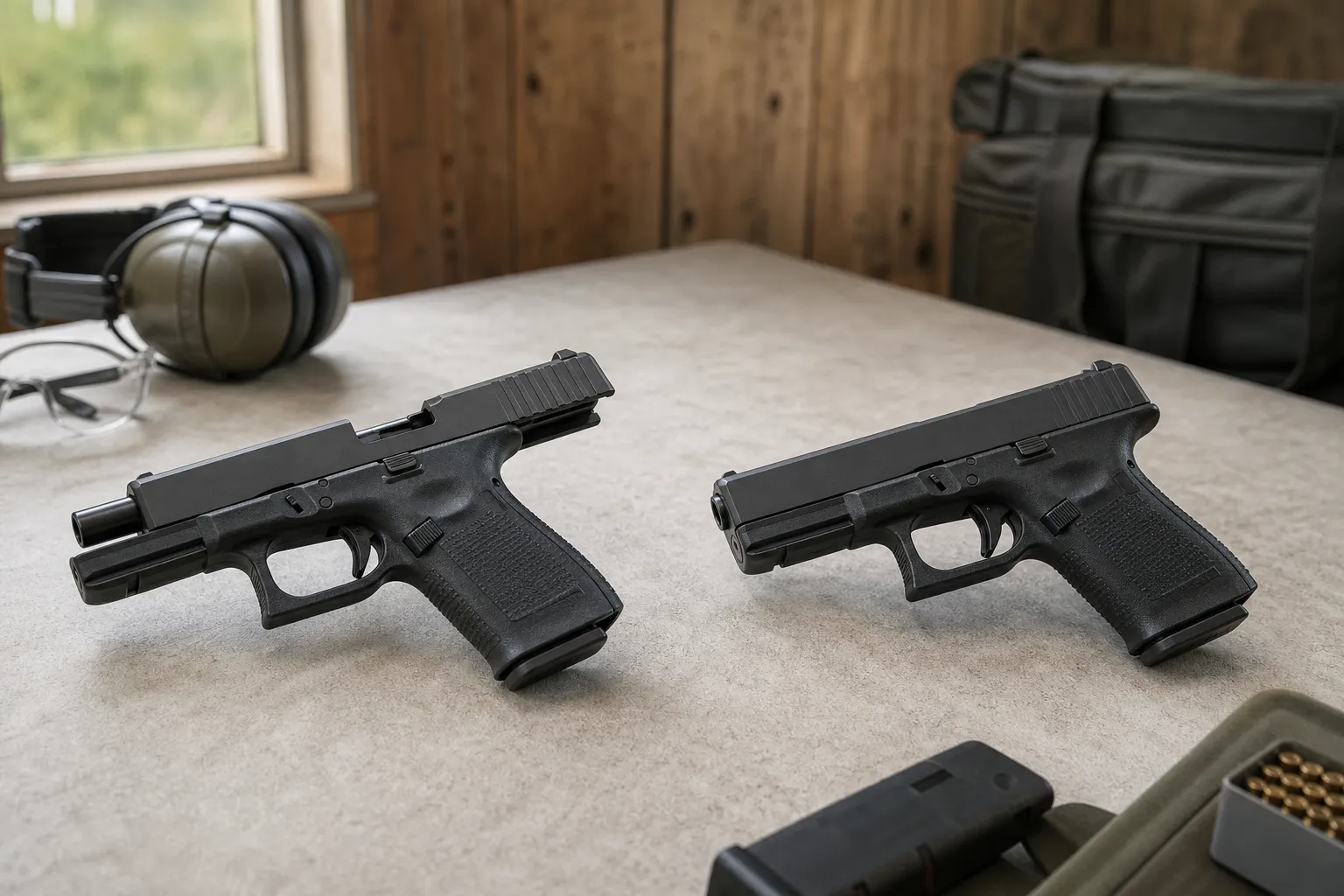
Smith & Wesson says some SD pistols may be equipped with a magazine disconnect safety that prevents firing when the magazine is removed. The same Smith & Wesson SD manual also warns that some SD model pistols can be fired when the magazine is removed. Smith & Wesson says its M&P22 pistol is equipped with a magazine disconnect that prevents firing when the magazine is removed.
Ruger says the Mark IV pistol is equipped with a magazine disconnect. Browning says the Buck Mark pistol is equipped with a magazine safety.
Other manuals and training materials warn that a pistol may fire a chambered round with the magazine removed. SIG Sauer warns in a P226 XSeries operator manual that removing the magazine does not prevent a chambered round from being fired. SIG Sauer also states that when the chamber has a live cartridge in it, it will discharge if the safety is disengaged and the trigger is pulled. LAPD transition-course material describes a pistol without a magazine disconnect feature as capable of firing the round in the chamber even when the magazine is removed from the magazine well.
This is why the feature should never be assumed. Two pistols may look similar to a new owner, but their manuals may describe different safety systems.
Benefits of a magazine disconnect
A magazine disconnect can add a mechanical layer in a narrow situation: the magazine is removed, a round remains chambered, and someone pulls the trigger.
American Rifleman describes the magazine disconnect as another layer of mechanical safety for some users, while also saying that no mechanical device should replace common safety practices.
This can address the unsafe assumption that when the magazine is withdrawn, the gun is empty. Manufacturer warnings from Smith & Wesson, Ruger, Browning and FN America all reinforce that this assumption is unsafe.
So the benefit is not that the pistol becomes “safe” in a broad sense. The benefit is that, on a pistol designed with this feature, the pistol may be prevented from firing in one specific magazine-removed condition.
Limits and tradeoffs
A magazine disconnect is a mechanical device, not a replacement for safe handling.
Ruger tells users not to rely on the magazine disconnect or any other mechanical device or safety to justify careless or unsafe handling of any firearm. Browning warns that the magazine safety is a mechanical safety device and, like any mechanical device, may fail. SAAMI defines a firearm safety mechanism as a device intended to provide protection against unintended discharge under normal usage when properly engaged, and defines safety in the handling sense as precautions taken by firearms users to help protect against accidental or unintentional discharge.
Those are different ideas. A safety mechanism is a device. Safe handling is the user’s conduct.
There can also be operational tradeoffs. American Rifleman identifies a potential limitation: if the magazine has not been completely seated, especially under stress, a pistol with a magazine disconnect may not fire. The article also notes that inadvertently pressing the magazine release can create the same concern.
Law-enforcement specifications may treat this tradeoff differently. A National Institute of Justice baseline specification for law-enforcement service pistols states that the pistol shall fire with the magazine removed and a live round in the chamber. That does not tell a private owner what to choose, but it shows that some equipment specifications deliberately prefer a pistol that can fire a chambered round after the magazine is removed.
The main safety conclusion stays the same either way. A pistol with a magazine disconnect must still be handled as if a round may be chambered. A pistol without a magazine disconnect may fire a chambered round with the magazine removed.
Related terms that are easy to confuse
Magazine-disconnect terminology can be confusing because several firearm parts and safety features have similar names. Keep these separate when reading a manual.
Magazine disconnect, magazine disconnect safety, magazine safety
These terms refer to the feature discussed here: a system on some semiautomatic firearms that can prevent firing, or prevent trigger movement, when the magazine is removed. Smith & Wesson uses “magazine disconnect safety” and “magazine disconnect.” Browning uses “magazine ‘safety.’”
If you are new to detachable magazines, our guide to pistol magazines explains the basic magazine parts and layouts.
Manual safety or safety mechanism
A magazine disconnect is not the same as every other safety mechanism on a firearm. SAAMI defines a firearm safety mechanism as a device on a firearm intended to provide protection against unintended discharge under normal usage when properly engaged.
That broad definition can include devices other than a magazine disconnect. Your manual is the authority for which safety mechanisms your handgun has and how they are intended to be used.
For the broader handling rules behind any safety device, see the basic rules of firearm safety.
Loaded chamber indicator
A loaded chamber indicator is a different feature from a magazine disconnect. Smith & Wesson warns in its M&P22 manual never to rely on the loaded chamber indicator alone to verify the presence or absence of a round in the chamber.
That warning fits the same safety theme: indicators and mechanical features do not replace opening the action and checking the chamber. For more on that feature, see loaded chamber indicators.
Disconnector
SAAMI defines a disconnector as a device intended to disengage the sear from the trigger. That is a broader term than magazine disconnect safety.
A magazine disconnect safety may involve disconnecting trigger operation when the magazine is removed, but not every “disconnector” reference in a manual means the pistol has a magazine disconnect safety.
Magazine cut-off
A magazine cut-off is a different feature. SAAMI defines a magazine cut-off as a mechanical device that enables the user to selectively enable or disable the magazine feed mechanism of a firearm.
That is not the same as a magazine disconnect safety. A magazine disconnect safety concerns whether the firearm can fire, or whether the trigger can move as designed, when the magazine is removed. A magazine cut-off concerns feeding from the magazine.
How to think about the feature as a handgun owner
The safest way to think about a magazine disconnect is as a model-specific mechanical feature, not as a universal rule.
Do not assume your pistol has one. Do not assume another person’s pistol has one. Do not assume a pistol with the magazine removed is empty. Manufacturer manuals repeatedly warn against that mistake.
A good mental checklist is:
- Treat the firearm according to the basic safety rules.
- Read the manual for the exact handgun model and variant.
- Understand whether the manual says the handgun has a magazine disconnect, magazine disconnect safety or magazine safety.
- Remember that a round can remain in the chamber after the magazine is removed.
- Open the action or lock the slide open where applicable, then verify the chamber according to the manual.
- Do not rely on a mechanical safety device as a substitute for safe handling.
If your question involves service, repair or a suspected problem with a safety mechanism, use the manufacturer’s instructions or a qualified gunsmith. Do not alter or disable safety mechanisms.
Bottom line
A magazine disconnect safety can prevent some semiautomatic pistols from firing when the magazine is removed. But it does not make chamber checks optional, and it does not make a firearm safe to handle carelessly.
Before relying on any feature, check the official manual for your exact handgun. Confirm whether that model has a magazine disconnect, how the manufacturer describes it, and what the manual says about unloading, chamber checks, storage, transport and service.
Frequently asked questions
What is a magazine disconnect safety?
A magazine disconnect safety is a feature on some semiautomatic firearms that can prevent firing when the magazine is removed.
Does removing the magazine unload a pistol?
No. Smith & Wesson, Ruger, Browning and FN America all warn that a round may still be in the chamber after the magazine is removed. Open the action and verify the chamber according to the firearm’s manual.
Do all pistols have a magazine disconnect?
No. Some pistols have the feature and some do not. Smith & Wesson manuals describe both pistols that may have a magazine disconnect and SD model pistols that can be fired with the magazine removed.
Can a pistol fire with the magazine removed?
Yes, if a round is chambered and the pistol does not prevent firing in that condition. SIG Sauer warns that removing the magazine does not prevent a chambered round from being fired, and LAPD training material describes pistols without a magazine disconnect as capable of firing the chambered round.
Is a magazine disconnect the same as a loaded chamber indicator?
No. A magazine disconnect concerns firing or trigger movement when the magazine is removed. A loaded chamber indicator is a separate feature, and Smith & Wesson warns not to rely on it alone to verify whether a round is in the chamber.
Should a magazine disconnect replace normal safety rules?
No. Ruger warns not to rely on a magazine disconnect or any other mechanical safety device to justify careless or unsafe handling, and Browning warns that a magazine safety is a mechanical device that may fail.
Sources
- Smith & Wesson SD and SDVE Safety & Instruction Manual, Smith & Wesson. Accessed November 6, 2026.
- Smith & Wesson M&P22 Pistol Safety & Instruction Manual, Smith & Wesson. Accessed November 6, 2026.
- Ruger Mark IV Instruction Manual, Sturm, Ruger & Co.. Accessed November 6, 2026.
- Buck Mark Owner's Manual, Browning. Accessed November 6, 2026.
- SIG Sauer P226 XSeries Operator’s Manual, SIG Sauer. Accessed November 6, 2026.
- Safety, FN America. Accessed November 6, 2026.
- Firearm Safety: 10 Rules of Safe Gun Handling, National Shooting Sports Foundation. Accessed November 6, 2026.
- SAAMI Glossary, S terms, Sporting Arms and Ammunition Manufacturers' InstituteOfficial source. Accessed November 6, 2026.
- Disconnector, Sporting Arms and Ammunition Manufacturers' InstituteOfficial source. Accessed November 6, 2026.
- Magazine Cut Off, Sporting Arms and Ammunition Manufacturers' InstituteOfficial source. Accessed November 6, 2026.
- Firearm Safety Certificate Manual, California Department of JusticeOfficial source. Accessed November 6, 2026.
- Firearms: A Training Guide for Law Enforcement, Milwaukee Area Technical College Police TrainingOfficial source. Accessed November 6, 2026.
- Firearms, Striker Fired Pistol Transition Course, Los Angeles Police DepartmentOfficial source. Accessed November 6, 2026.
- Baseline Specifications for Law Enforcement Service Pistols with Security Technology, National Institute of JusticeOfficial source. Accessed November 6, 2026.
- Magazine Disconnect, American Rifleman, NRA Publications. Accessed November 6, 2026.
- 10 Rules of Firearms Safety, Taurus USA. Accessed November 6, 2026.
- Basic Keys to Safe Handling of Firearms, Taurus USA. Accessed November 6, 2026.