The Canvasback Duck
The canvasback is a large North American duck with a distinct sloping profile. This guide covers identification, range, habitat, diet, population context and its historical role in waterfowl hunting.
By RaiS. Reviewed by RaiS. Published . 5 min read.
Research and drafting were assisted by AI. RaiS checked the facts against the sources below and approved this page.
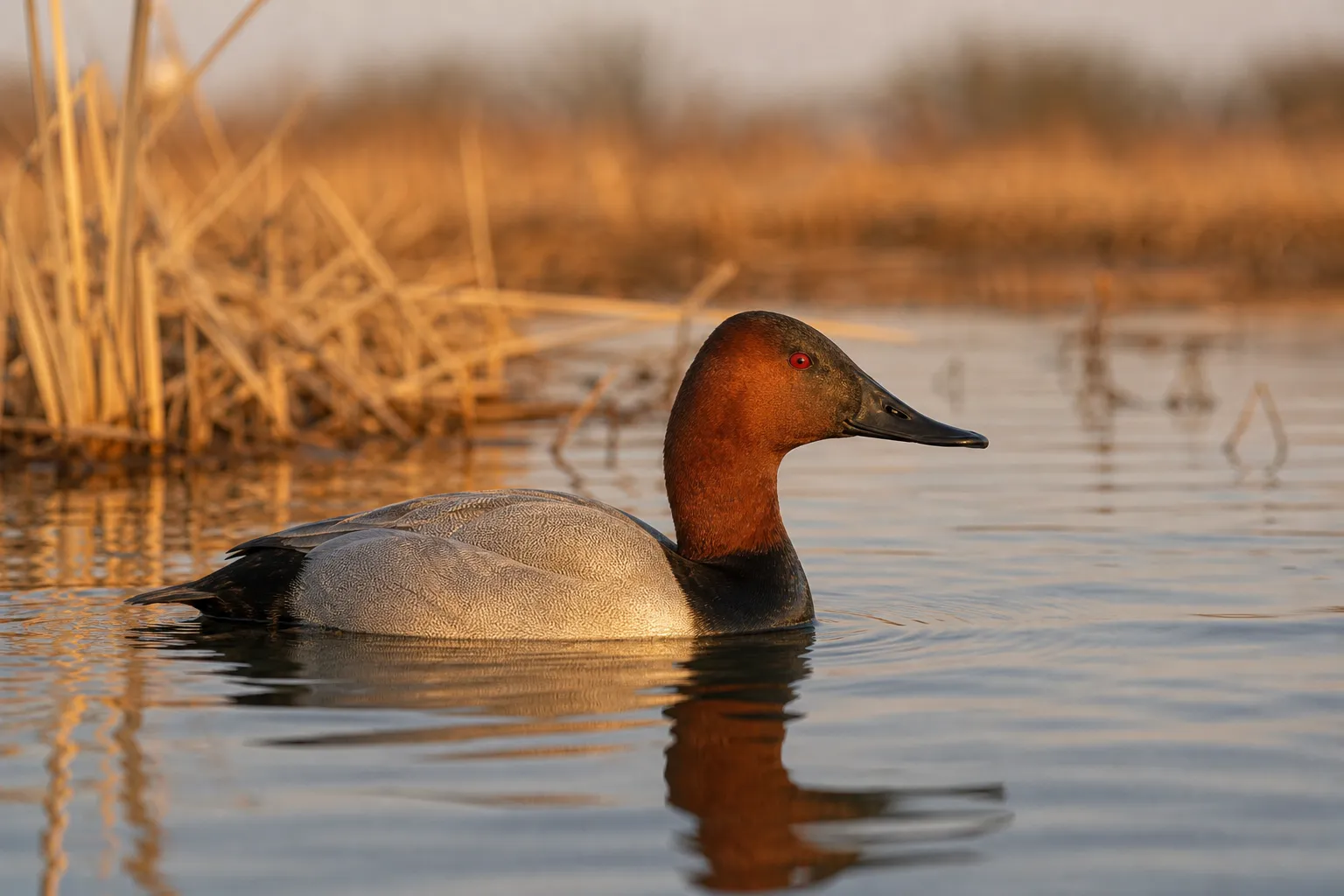
The canvasback is a large North American duck with a long bill that gives it a distinct sloping profile. For hunters and birders, that head shape is an important field mark, followed by the drake’s deep maroon head and stark white body, or the hen’s gray and sandy brown look.
Canvasback identification
The U.S. Fish and Wildlife Service emphasizes that both sexes have a long bill that gives the bird its distinct sloping profile.
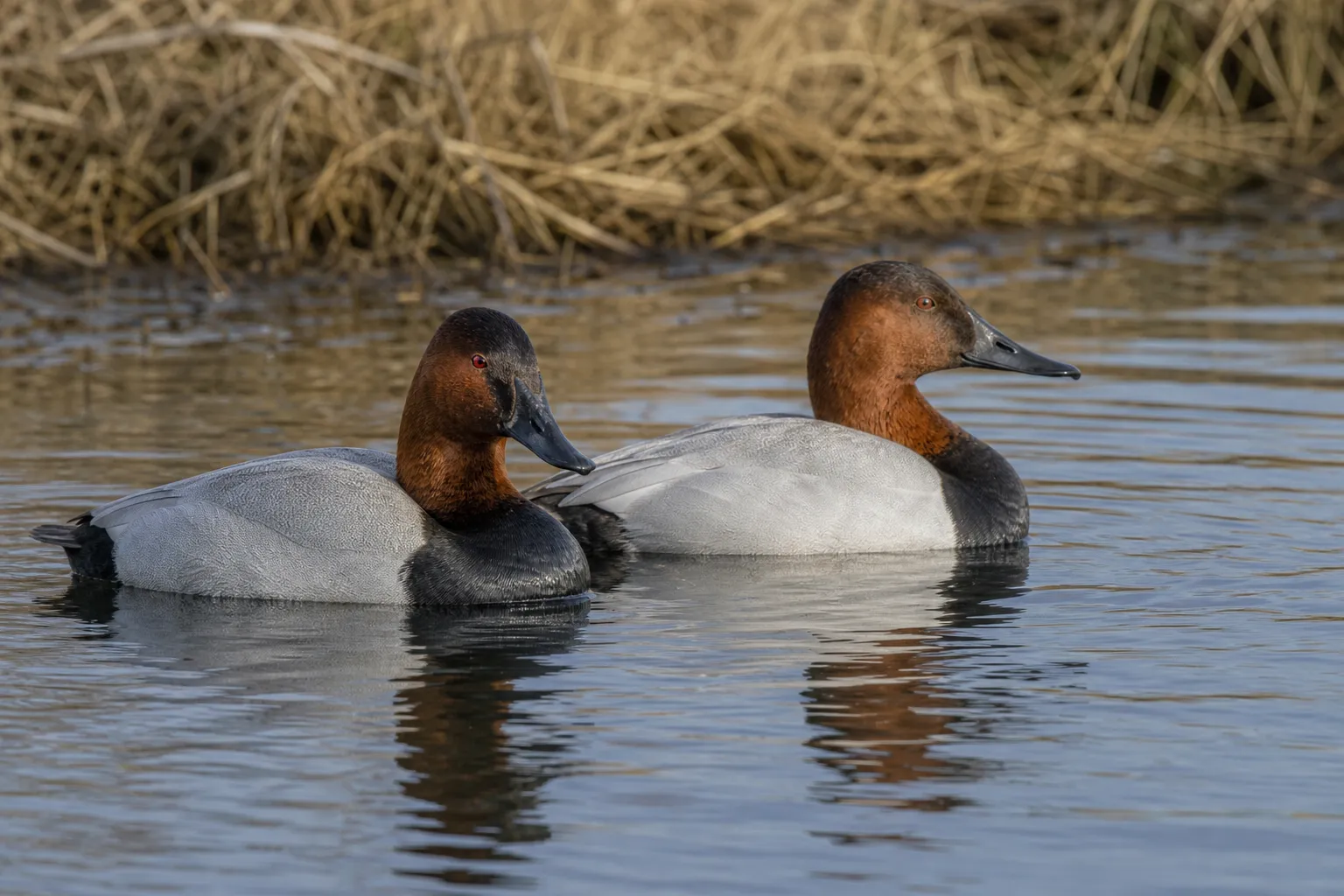
That profile matters because color can change with light, distance and season. A canvasback on open water can show as a long, low, pale bodied duck with a wedge shaped head rather than a round headed dabbling duck.
Canvasbacks are diving ducks. If you are sorting ducks by broad type, start with our Types of Ducks guide, then use the field marks below to separate canvasbacks from other divers.
Drake canvasback
The U.S. Fish and Wildlife Service describes the male as having a stark white body that contrasts with a deep maroon head and neck.
In late summer and early fall, Cornell notes that males have brown heads and necks with a paler body. That means the classic high contrast drake pattern is not always as sharp as it is in breeding plumage.
Hen canvasback
The U.S. Fish and Wildlife Service describes females as gray with a sandy brown head.
For another species guide that also treats drake and hen plumage as an important identification point, see our Wood Duck page.
Size
The U.S. Fish and Wildlife Service describes the canvasback as the largest species of diving duck in North America.
Range and migration
The U.S. Fish and Wildlife Service says canvasbacks nest in the Prairie Pothole Region and parkland areas of the northern United States and central Canada. Ducks Unlimited describes the primary breeding landscape as the U.S. and Canadian Prairie Pothole Region, and says canvasbacks breed predominantly in freshwater wetlands in western Canada and Alaska.
Ducks Unlimited Canada gives the broader breeding range as Alaska through Yukon and the western edge of the Northwest Territories to the parklands and mixed prairie of central North America.
On migration and wintering areas, the U.S. Fish and Wildlife Service says canvasbacks winter mostly on the U.S. Gulf Coast and inland on large reservoirs and deep water lakes, primarily in the southern Central and Mississippi flyways. The agency also notes high density migration areas in the Pacific and Atlantic Flyways, including San Francisco Bay, Lake Mattamuskeet and Chesapeake Bay.
Ducks Unlimited says migration and winter habitat includes large water bodies such as the Great Lakes, rivers, coastal bays and nearshore marine habitats. Its migration summary says canvasbacks leave breeding areas in October or November, arrive at wintering areas beginning in mid November, and have peak numbers from mid December to February. Ducks Unlimited also says spring migration begins in February, with birds reaching breeding areas from mid April to mid May.
The U.S. Fish and Wildlife Service notes one striking behavior for migrating birds: canvasback flocks often fly in a V formation, a behavior more often associated with geese.
Habitat
Ducks Unlimited describes breeding habitat as deep, permanent to semi permanent wetlands in the Prairie Pothole Region and boreal forest. Ducks Unlimited Canada lists lakes, ponds, rivers, potholes, woodland pools and surrounding uplands among canvasback habitats.
For a practical observer, the important pattern is open water and productive wetlands. During breeding season, look to deeper marsh and pothole habitats in the northern breeding range. During migration and winter, the species can gather on large lakes, bays, reservoirs, rivers and coastal waters.
Food and feeding
Canvasbacks are divers. Ducks Unlimited Canada says canvasbacks are physically specialized to consume subterranean plant parts and benthic invertebrates, and that they get much of their food by rooting through wetland bottoms with their bills.
Wild celery is central to the species’ story. The U.S. Fish and Wildlife Service says canvasbacks prefer tubers of aquatic vegetation and are well known for consuming wild celery tubers. The agency also says the scientific name valisineria refers to the scientific name of wild celery, Vallisneria americana.
Ducks Unlimited says the migration and winter diet shifts heavily to plant materials, including tubers from wild celery, pondweed and duck potato. Ducks Unlimited also notes that in some important wintering areas where poor water quality has caused a decline in favored plant foods, canvasbacks feed heavily on mussels.
Population and conservation context
The September 1, 2026 U.S. Fish and Wildlife Service Waterfowl Population Status report estimated canvasbacks at 0.8 ± 0.07 million. The report says that estimate was similar to the 2025 estimate and 32 percent above the long term average.
Historical place in waterfowl hunting
The canvasback has a prominent place in North American waterfowl history. The Smithsonian says that in the 19th century, canvasbacks were heavily hunted for food, and that hunters believed celery root, the bird’s favored food, made it one of the most delicious game birds.
The same Smithsonian account says commercial market hunting almost drove canvasbacks to extinction. It also says the Migratory Bird Treaty Act of 1918 outlawed market hunting and was the first step toward saving the bird.
That history is one reason modern waterfowlers often hear the canvasback described with unusual respect. Cornell notes that the species has often been called the aristocrat of ducks, a phrase that fits both its elegant shape and its long cultural history.
Quick field checklist
Use this short checklist when watching open water ducks:
- Head and bill: long bill giving the bird a sloping profile.
- Drake plumage: deep maroon head and neck with a stark white body.
- Hen plumage: gray body with a sandy brown head.
- Size: a large diving duck.
- Behavior: dives for food and roots through wetland bottoms with its bill.
- Habitat: breeding birds use deep, permanent to semi permanent wetlands in the Prairie Pothole Region and boreal forest, while migration and winter birds use large water bodies such as the Great Lakes, rivers, coastal bays and nearshore marine habitats.
What to check before a hunt or field trip
This guide does not cover seasons, bag limits or local hunting rules. Before hunting canvasbacks or any other waterfowl, check the current official regulations from the appropriate state, provincial or federal wildlife agency for the exact place and date you plan to hunt.
Birders and hunters should also check current local access rules, refuge rules and any waterfowl identification materials issued by the managing agency for the area they plan to visit.
Frequently asked questions
What is the best way to identify a canvasback duck?
Look first at the head and bill. The U.S. Fish and Wildlife Service emphasizes that both sexes have a long bill that gives the bird its distinct sloping profile.
What does a drake canvasback look like?
The U.S. Fish and Wildlife Service describes the male’s body as stark white with a deep maroon head and neck.
What does a hen canvasback look like?
The U.S. Fish and Wildlife Service describes females as gray with a sandy brown head.
Where do canvasbacks breed and winter?
The U.S. Fish and Wildlife Service says canvasbacks nest in the Prairie Pothole Region and parkland areas of the northern United States and central Canada. The agency says they winter mostly on the U.S. Gulf Coast and inland on large reservoirs and deep water lakes, with important migration areas including San Francisco Bay, Lake Mattamuskeet and Chesapeake Bay.
What do canvasbacks eat?
The U.S. Fish and Wildlife Service says they are well known for eating wild celery tubers, and Ducks Unlimited lists wild celery, pondweed, duck potato and, in some areas, mussels as important migration and winter foods.
How are canvasback populations doing?
The September 1, 2026 U.S. Fish and Wildlife Service Waterfowl Population Status report estimated canvasbacks at 0.8 ± 0.07 million, similar to 2025 and 32 percent above the long term average.
Sources
- Canvasback Overview, Cornell Lab of Ornithology, All About Birds. Accessed October 23, 2026.
- Canvasback Identification, Cornell Lab of Ornithology, All About Birds. Accessed October 23, 2026.
- Canvasback Life History, Cornell Lab of Ornithology, All About Birds. Accessed October 23, 2026.
- Canvasback (Aythya valisineria), U.S. Fish & Wildlife ServiceOfficial source. Accessed October 23, 2026.
- Waterfowl Population Status, 2026, U.S. Fish & Wildlife Service, with Canadian Wildlife Service and other partnersOfficial source. Accessed October 23, 2026.
- Canvasback, Ducks Unlimited. Accessed October 23, 2026.
- Canvasback, Ducks Unlimited Canada. Accessed October 23, 2026.
- Canvasback, Smithsonian's National Zoo & Conservation Biology Institute. Accessed October 23, 2026.
- Canvasback, American Bird Conservancy. Accessed October 23, 2026.