The Wood Duck: Identification, Nesting, Migration, and Conservation
The Wood Duck (Aix sponsa) is a North American duck associated with wooded wetlands and a major conservation recovery. This guide covers identification, range, migration, and the species’ rebound without covering current hunting regulations.
By RaiS. Reviewed by RaiS. Published . 4 min read.
Research and drafting were assisted by AI. RaiS checked the facts against the sources below and approved this page.
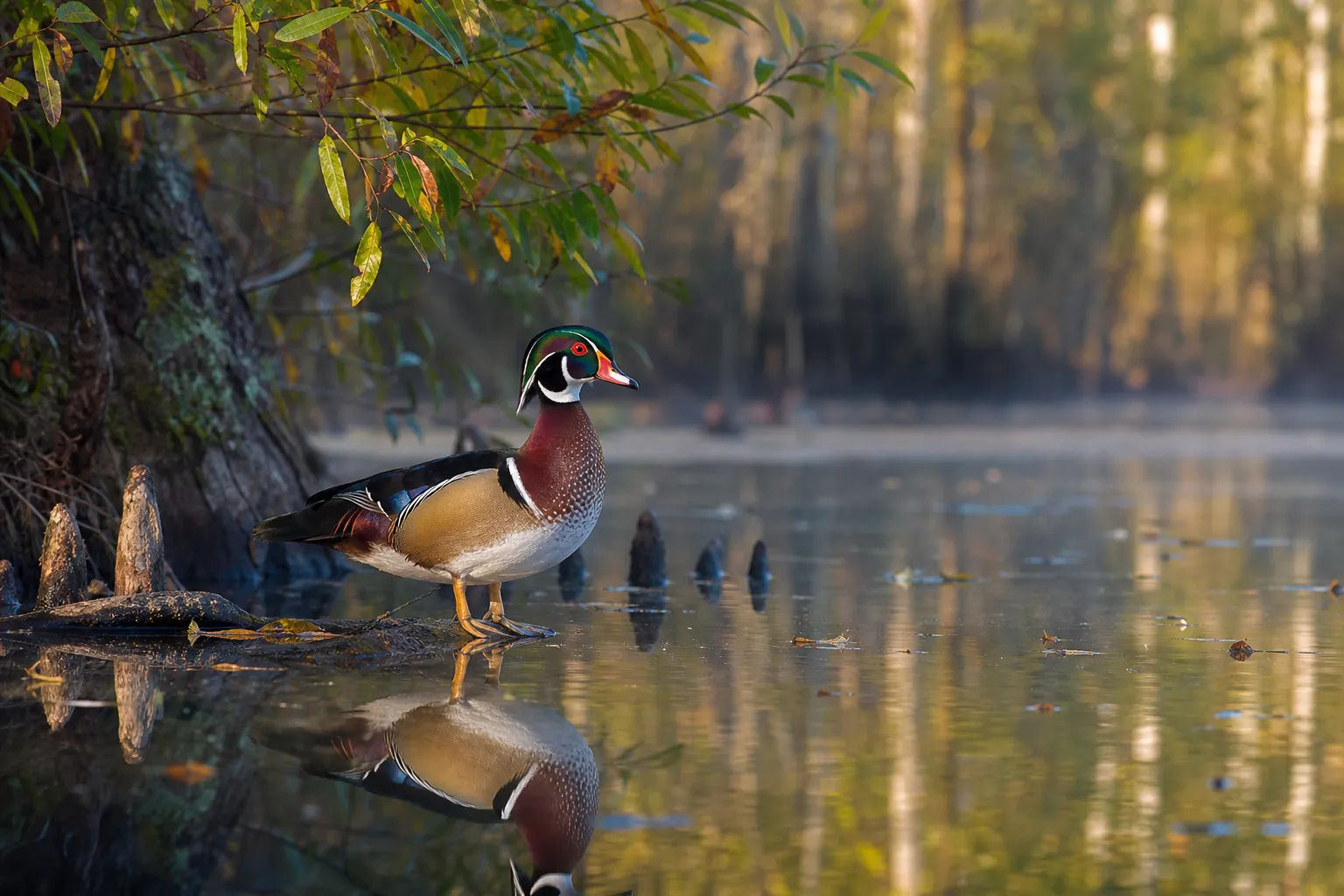
The Wood Duck (Aix sponsa) is a distinctively North American duck with a long conservation history and a broad North American range. For hunters and birders, the main things to know are its general profile, seasonal movement, and the conservation work tied to the species.
For a broader comparison of duck groups, see our types of ducks guide.
Quick profile
Feature: Wood Duck notes
Scientific name: The U.S. Fish and Wildlife Service lists the Wood Duck as Aix sponsa.
General identity: Hinterland Who’s Who describes it as a distinctively North American species.
Shape: Ducks Unlimited describes a mid sized duck with a crested head, broad wings, and a large rectangular tail.
Identification for hunters and birders
A drake Wood Duck can be recognizable when seen well.
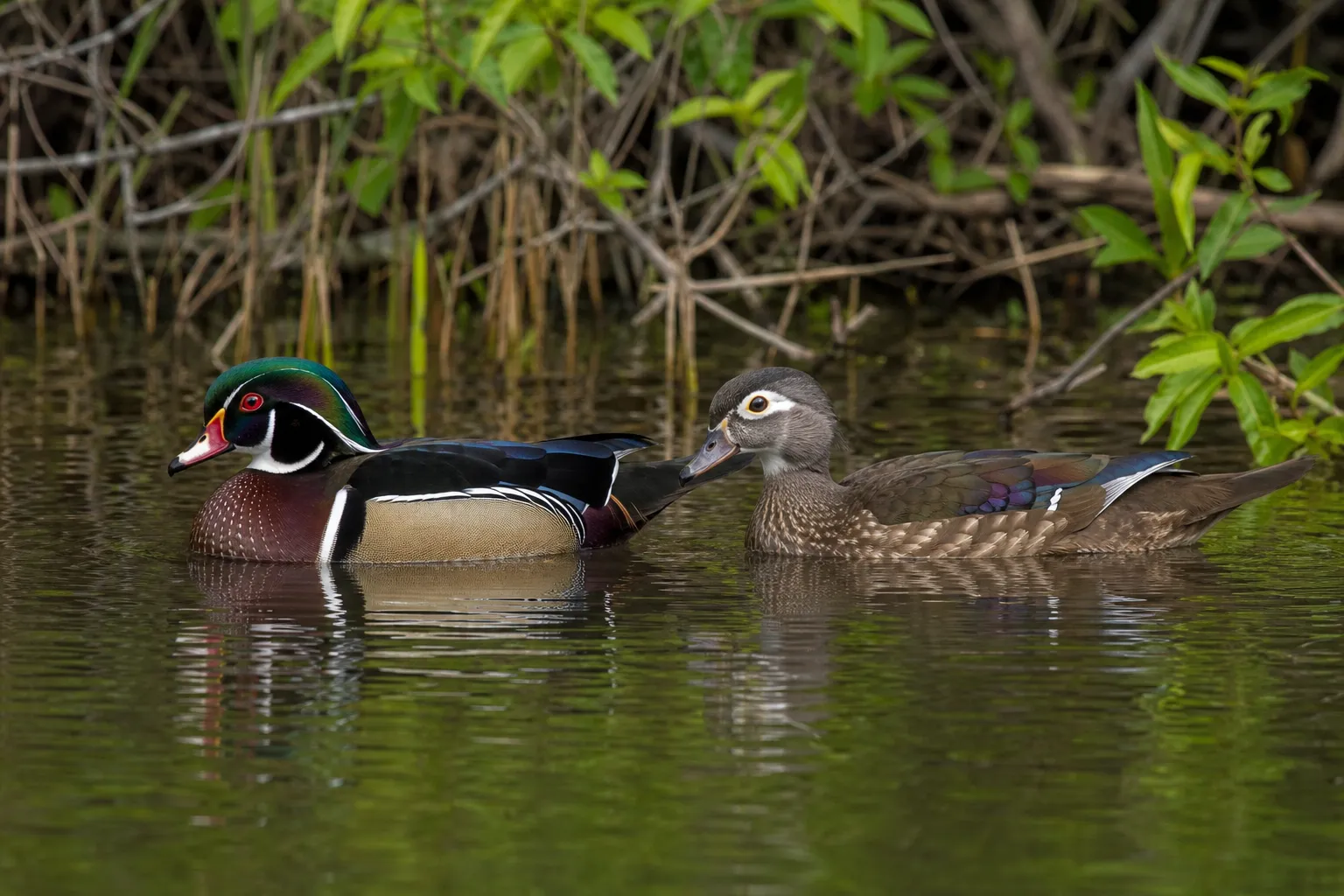
The hen is subtler than the drake.
Ducks Unlimited describes wood ducks as mid sized ducks with broad wings and a large rectangular tail.
Habitat, food, and behavior
The U.S. Fish and Wildlife Service says acorns are the primary winter food of choice, and that wood ducks also visit agricultural fields to feed on waste grain.
For practical observation, seasonal food can be a useful clue, especially where acorns or waste grain are available.
Cavity nesting and nest boxes
Placement and care matter for nest boxes.
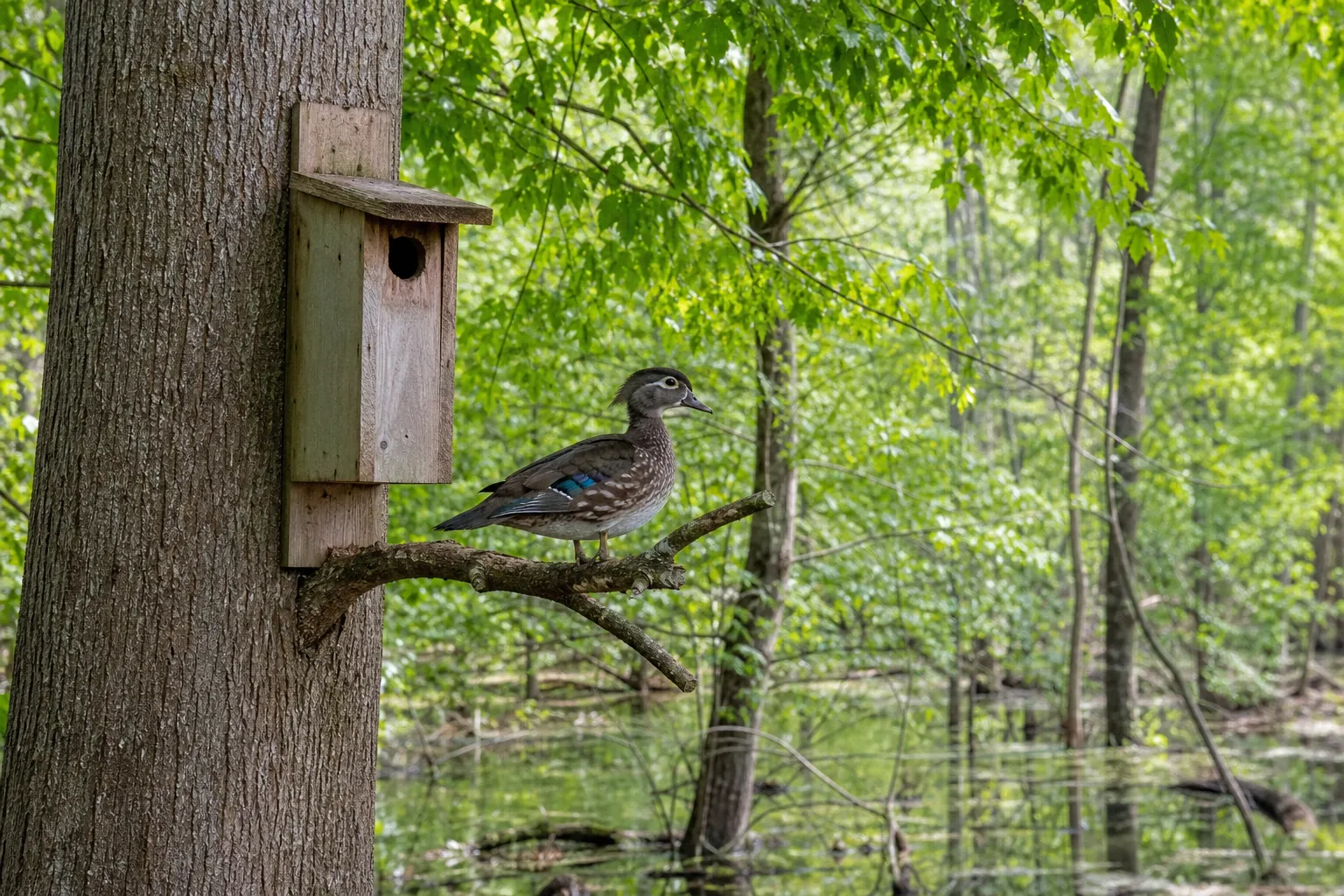
Ducks Unlimited says suitable brood habitat should be within a couple hundred yards of a nest box for ducklings to survive after they exit. Ducks Unlimited describes shallow fertile wetlands, thick cover, and invertebrates as the best brood habitat. Ducks Unlimited also recommends predator guards for nest boxes, especially against raccoons and rat snakes.
Nest boxes also need maintenance. Ducks Unlimited says wood shavings should be added as nesting material and refreshed during annual maintenance before early spring nesting. Ducks Unlimited also notes that rough cut, unfinished lumber helps ducklings climb the inside of a box with their sharp claws to reach the exit hole.
The ducklings’ nest jump
For birders, nesting and early brood activity are a reminder to observe from a distance and avoid disturbing a nesting hen or a brood. For hunters and habitat managers, it also explains why nest placement near suitable brood habitat matters so much.
Range, migration, and seasonal movement
The Wood Duck has a broad North American range. Ducks Unlimited Canada says wood ducks breed in much of southern Canada and the eastern United States, but are largely absent from the U.S. Prairies, Great Plains, and Southwest.
The U.S. Fish and Wildlife Service says Wood Ducks are common year round in the southern United States and present during summer throughout the United States and southern Canada. That creates a useful distinction: southern birds may be present year round, while northern birds are more tied to seasonal migration.
The U.S. Fish and Wildlife Service says Wood Ducks in northern regions migrate to avoid harsh winter conditions, then travel back north in spring to breed. Ducks Unlimited describes spring migration as February through April, with arrival on breeding areas from March to early May.
For field observers, the best takeaway is broad rather than regulatory: look for breeding activity in spring, and expect northern movement to be shaped by winter conditions and the return to breeding areas.
A conservation recovery story
The Wood Duck is widely known as a conservation success story. The U.S. Fish and Wildlife Service says the population declined dramatically during the late 19th century because of overharvesting and loss of nesting habitat.
The rebound came through wildlife management, legal protection, habitat work, and nest structures. The U.S. Fish and Wildlife Service says the species recovered due to wildlife management efforts and notes that, although population estimates are not known for wood ducks, breeding surveys suggest perhaps as many as 3 million breeding pairs across North America today.
Ducks Unlimited links the dramatic rebound of Wood Duck populations largely to protection provided by the Migratory Bird Treaty Act of 1918. Ducks Unlimited also says artificial nesting structures played a role, and notes that the U.S. Biological Survey, now the U.S. Fish and Wildlife Service, erected 486 bark covered slab wooden boxes at Chautauqua National Wildlife Refuge in Illinois in 1937.
That history is important because habitat, safe nest sites, and suitable brood habitat remain central to the species. Nest boxes can help, but they are not a substitute for healthy habitat.
What to remember in the field
For identification, note the broad wings and large rectangular tail described for the species.
For habitat, focus on the connection between water, cover, and seasonal food.
For nest boxes, predator protection, maintenance, and nearby brood habitat all matter.
For seasons and harvest rules, hunters should check current federal, state, provincial, or territorial waterfowl regulations from the responsible wildlife agency. This profile covers species identification and natural history, not current hunting regulations.
Frequently asked questions
What happens when Wood Duck ducklings leave the nest?
Ducks Unlimited notes that suitable brood habitat should be within a couple hundred yards of a nest box for ducklings to survive after they exit.
Why are Wood Ducks considered a conservation success?
The U.S. Fish and Wildlife Service says Wood Ducks declined dramatically in the late 19th century because of overharvesting and nesting habitat loss, then recovered due to wildlife management efforts. Ducks Unlimited links the rebound largely to protection under the Migratory Bird Treaty Act of 1918 and the use of artificial nesting structures.
Sources
- Wood Duck (Aix sponsa), U.S. Fish & Wildlife ServiceOfficial source. Accessed October 23, 2026.
- We’re Not Wood Ducking Around: A Survival Story, U.S. Fish & Wildlife ServiceOfficial source. Accessed October 23, 2026.
- Wood Duck Overview, Cornell Lab of Ornithology, All About Birds. Accessed October 23, 2026.
- Wood Duck Identification, Cornell Lab of Ornithology, All About Birds. Accessed October 23, 2026.
- Wood Duck Life History, Cornell Lab of Ornithology, All About Birds. Accessed October 23, 2026.
- Wood Duck, Ducks Unlimited. Accessed October 23, 2026.
- Wood Duck Boxes, Ducks Unlimited. Accessed October 23, 2026.
- Wood duck, Ducks Unlimited Canada. Accessed October 23, 2026.
- Wood Duck, Hinterland Who’s Who, Environment and Climate Change Canada and Canadian Wildlife FederationOfficial source. Accessed October 23, 2026.
- Wood Duck (Aix sponsa) | U.S. Fish & Wildlife Service. Accessed October 23, 2026.
- Wood Duck (Aix sponsa) | U.S. Fish & Wildlife Service. Accessed October 23, 2026.
- Wood Duck (Aix sponsa) | U.S. Fish & Wildlife Service. Accessed October 23, 2026.
- Wood Duck (Aix sponsa) | U.S. Fish & Wildlife Service. Accessed October 23, 2026.
- Wood Duck (Aix sponsa) | U.S. Fish & Wildlife Service. Accessed October 23, 2026.
- Wood Duck (Aix sponsa) | U.S. Fish & Wildlife Service. Accessed October 23, 2026.