Types of Ducks in North America: Identification Guide
A beginner friendly guide to general duck identification concepts and hunter regulation reminders. Hunters should always confirm current federal, state, provincial, and territorial waterfowl rules before hunting.
By RaiS. Reviewed by RaiS. Published . 4 min read.
Research and drafting were assisted by AI. RaiS checked the facts against the sources below and approved this page.
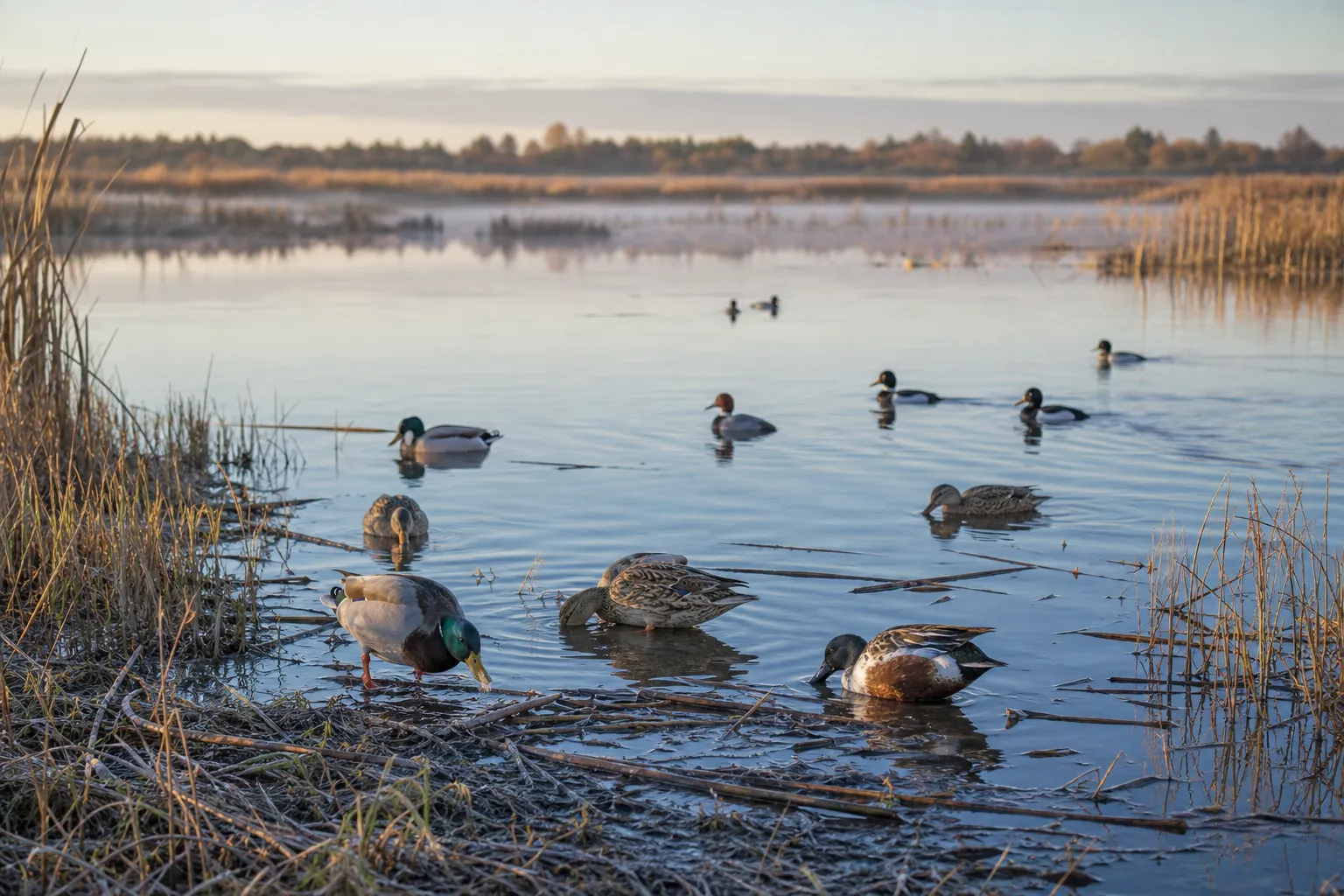
For hunters, the most useful first split among types of ducks is dabbling ducks versus diving ducks. Ducks Unlimited describes this as the biggest distinction among ducks, with dabblers feeding by tipping up and divers feeding by diving below the surface. Dabblers often lift straight off the water, while divers usually patter across the water before becoming airborne. Habitat helps too: dabblers are often around shallow wetland edges, while divers favor deeper water such as large wetlands, lakes, and rivers. Ducks Unlimited
Use this guide as a field starting point, not as a substitute for current regulations or a full field guide. In many ducks, the male, or drake, has more colorful plumage, while the female is duller, which Ducks Unlimited notes helps keep females safer on the nest. Ducks Unlimited
Quick field clues for duck identification
Start with behavior and place, then move to plumage. Ducks Unlimited lists feeding style, takeoff style, and habitat as useful ways to separate dabblers and divers. Ducks Unlimited
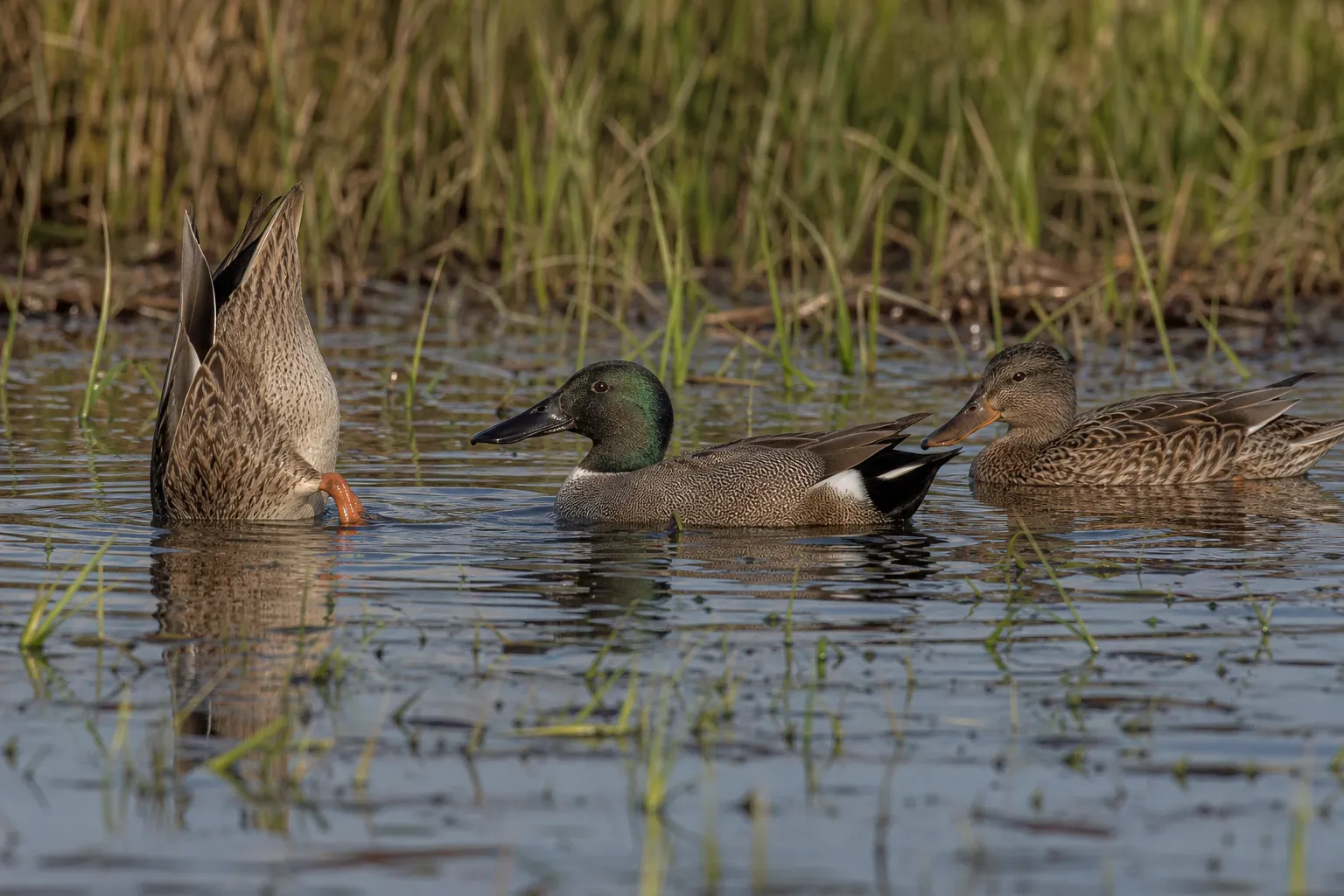
Key clues to check:
- Feeding behavior: dabblers tip up, divers dive below the surface. Ducks Unlimited
- Takeoff: dabblers fly straight up off the water, divers patter across the water to gain speed. Ducks Unlimited
- Habitat: dabblers are often in shallow wetland edges, divers prefer deeper water such as lakes and rivers. Ducks Unlimited
- Sex differences: drakes are generally more colorful, and females are generally duller. Ducks Unlimited
- Plumage details: head color, bill color, wing patch, breast color, body pattern, and tail patch are useful clues in the Cornell Lab of Ornithology species accounts cited below.
Dabbling ducks
The following species account links are provided as study references. Ducks Unlimited describes dabbling ducks as ducks that feed by going “bottoms up.” Ducks Unlimited
Mallard
For mallard identification and habitat details, use a current field guide and the linked Cornell Lab of Ornithology species account. Cornell Lab of Ornithology
Northern pintail
For northern pintail identification and habitat details, use a current field guide and the linked Cornell Lab of Ornithology species account. Cornell Lab of Ornithology
American wigeon
For American wigeon identification and habitat details, use a current field guide and the linked Cornell Lab of Ornithology species account. Cornell Lab of Ornithology
Gadwall
For gadwall identification and habitat details, use a current field guide and the linked Cornell Lab of Ornithology species account. Cornell Lab of Ornithology
Green-winged teal
For green-winged teal identification and habitat details, use a current field guide and the linked Cornell Lab of Ornithology species account. Cornell Lab of Ornithology
Blue-winged teal
For blue-winged teal identification and habitat details, use a current field guide and the linked Cornell Lab of Ornithology species account. Cornell Lab of Ornithology
Wood duck
For wood duck identification and habitat details, use a current field guide and the linked Cornell Lab of Ornithology species account. Cornell Lab of Ornithology
Diving ducks
The following species account links are provided as study references. Ducks Unlimited describes diving ducks as ducks that dive below the surface. Ducks Unlimited
Canvasback
For canvasback identification and habitat details, use a current field guide and the linked Cornell Lab of Ornithology species account. Cornell Lab of Ornithology
Redhead
For redhead identification and habitat details, use a current field guide and the linked Cornell Lab of Ornithology species account. Cornell Lab of Ornithology
Lesser scaup
For lesser scaup identification and habitat details, use a current field guide and the linked Cornell Lab of Ornithology species account. Cornell Lab of Ornithology
Bufflehead
For bufflehead identification and habitat details, use a current field guide and the linked Cornell Lab of Ornithology species account. Cornell Lab of Ornithology
Common goldeneye
For common goldeneye identification and habitat details, use a current field guide and the linked Cornell Lab of Ornithology species account. Cornell Lab of Ornithology
Hunter regulation notes
Duck identification matters because seasons, daily bag limits, possession limits, and species restrictions can vary by place and season. In the United States, the U.S. Fish and Wildlife Service states in its December 2021 waterfowl hunter information that daily bag limits apply, that tagging must identify birds by species when birds are left at a place or with another person, and that the head or one fully feathered wing must remain attached while birds are transported from the field to a home or processing facility. U.S. Fish and Wildlife Service
The U.S. Fish and Wildlife Service also states that a violation of a state waterfowl hunting regulation is also a violation of federal regulations, so hunters should check both federal and state rules before hunting. U.S. Fish and Wildlife Service
In Canada, Environment and Climate Change Canada explains that open seasons for ducks, geese, woodcock, and other hunted migratory game birds vary across the country and within provinces or territories, so hunters should check the open season dates for the area they will hunt. The same FAQ references the federal Migratory Birds Regulations, 2022. Environment and Climate Change Canada
Canada defines a daily bag limit as the maximum number of birds by species or group of species that a hunter may harvest during a single day of hunting, and states that daily bag limits and possession limits vary in some areas. Canada also requires hunters to retain either the fully feathered wing or head on unpreserved carcasses for identification because limits vary by species in many areas. Environment and Climate Change Canada
Before hunting, check the current federal rules, your state or provincial and territorial summaries, local season dates, species specific bag limits, possession limits, tagging rules, transport rules, and any requirement to keep identifying parts attached.
Frequently asked questions
What are the main types of ducks hunters should learn first?
A practical first split is dabbling ducks versus diving ducks. Ducks Unlimited says this is the biggest distinction among duck types, with dabblers feeding by tipping up and divers diving below the surface.
How can I tell a dabbling duck from a diving duck in the field?
Dabblers often feed in shallow wetland edges, tip up while feeding, and fly straight up off the water. Divers prefer deeper water such as large wetlands, lakes, and rivers, and they usually patter across the water before becoming airborne, according to Ducks Unlimited.
Are drake ducks always easier to identify than hens?
Often, yes. Ducks Unlimited notes that males generally have more colorful plumage, while females are duller and drabber. Hens still have useful marks such as bill color, body pattern, wing patches, cheek patches, or head shape depending on the species.
Why does duck identification matter for hunters?
Bag limits and possession limits can vary by species and place. The U.S. Fish and Wildlife Service and Environment and Climate Change Canada both describe rules that rely on species identification, including requirements to keep a head or fully feathered wing attached in certain transport situations.
Sources
- Wetland species, Ducks Unlimited Canada. Accessed October 20, 2026.
- Mallard Identification, Cornell Lab of Ornithology, All About Birds. Accessed October 20, 2026.
- Northern Pintail Identification, Cornell Lab of Ornithology, All About Birds. Accessed October 20, 2026.
- American Wigeon Identification, Cornell Lab of Ornithology, All About Birds. Accessed October 20, 2026.
- Gadwall Identification, Cornell Lab of Ornithology, All About Birds. Accessed October 20, 2026.
- Green-winged Teal Identification, Cornell Lab of Ornithology, All About Birds. Accessed October 20, 2026.
- Blue-winged Teal Identification, Cornell Lab of Ornithology, All About Birds. Accessed October 20, 2026.
- Wood Duck Identification, Cornell Lab of Ornithology, All About Birds. Accessed October 20, 2026.
- Canvasback Identification, Cornell Lab of Ornithology, All About Birds. Accessed October 20, 2026.
- Redhead Identification, Cornell Lab of Ornithology, All About Birds. Accessed October 20, 2026.
- Lesser Scaup Identification, Cornell Lab of Ornithology, All About Birds. Accessed October 20, 2026.
- Bufflehead Identification, Cornell Lab of Ornithology, All About Birds. Accessed October 20, 2026.
- Common Goldeneye Identification, Cornell Lab of Ornithology, All About Birds. Accessed October 20, 2026.
- Information for Waterfowl Hunters, U.S. Fish and Wildlife ServiceOfficial source. Accessed October 20, 2026.
- Migratory game bird hunting regulations: frequently asked questions, Environment and Climate Change Canada, Canadian Wildlife ServiceOfficial source. Accessed October 20, 2026.