Types of Geese in North America
North American goose identification often begins with management groupings such as light geese and dark geese. This guide introduces Canada, cackling, snow, Ross’s, greater white-fronted, brant and emperor geese for new hunters and birders.
By RaiS. Reviewed by RaiS. Published . 4 min read.
Research and drafting were assisted by AI. RaiS checked the facts against the sources below and approved this page.
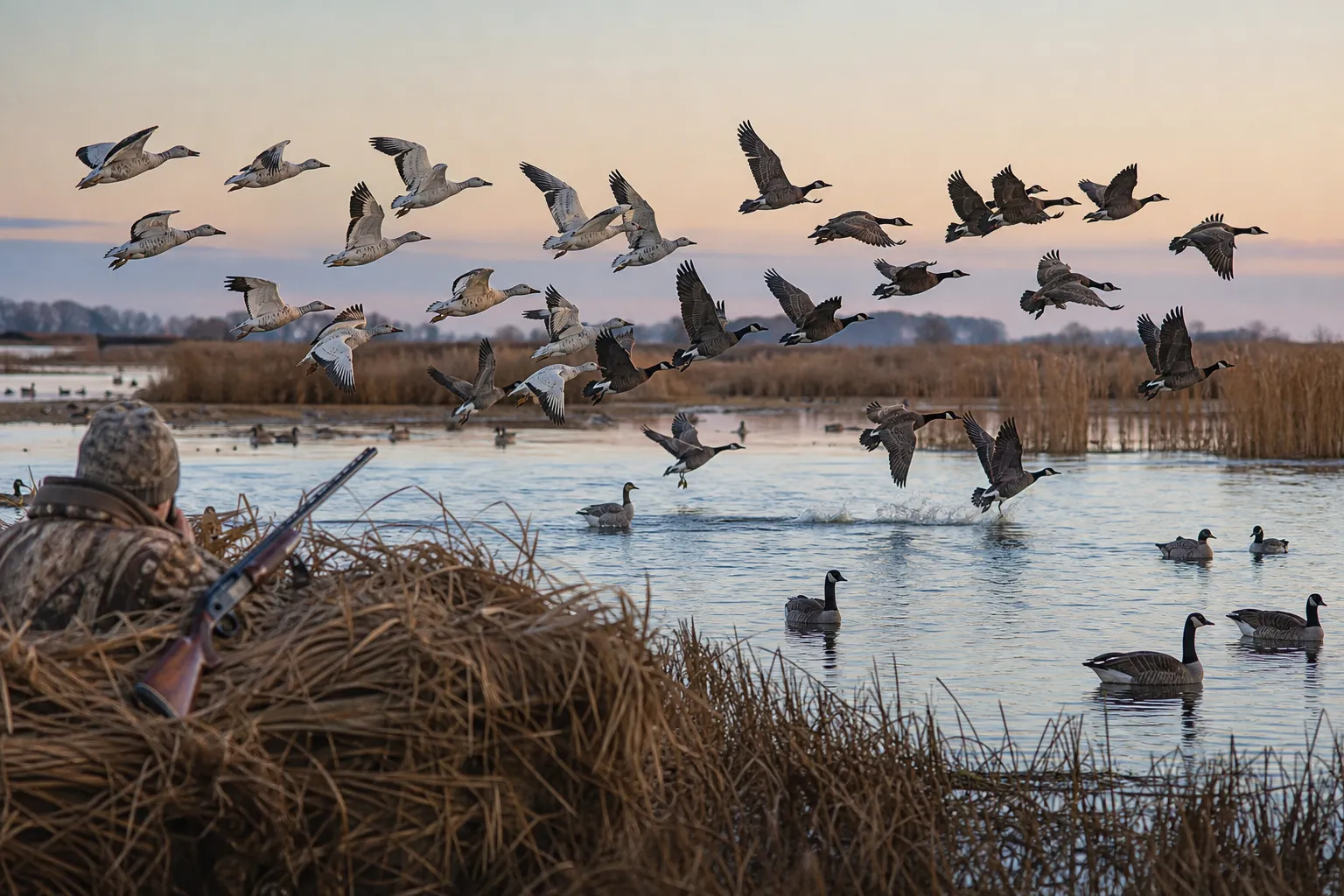
North American goose identification usually starts with two questions: is the bird in a light goose management group or a dark goose group, and which field marks separate it from similar species? The seven geese covered here are Canada, cackling, snow, Ross’s, greater white-fronted, brant and emperor geese, all of which are named as goose entries in federal migratory bird regulations.
For hunters, this is an identification guide, not a regulation guide. Seasons, zones, licensing rules and bag limits are set by wildlife agencies and can change. Always confirm the current wording with the agency for the place where you plan to hunt.
Light geese vs dark geese
The light goose and dark goose distinction is a hunting and management grouping. It is not just a simple rule about whether a bird looks pale or dark in the field.
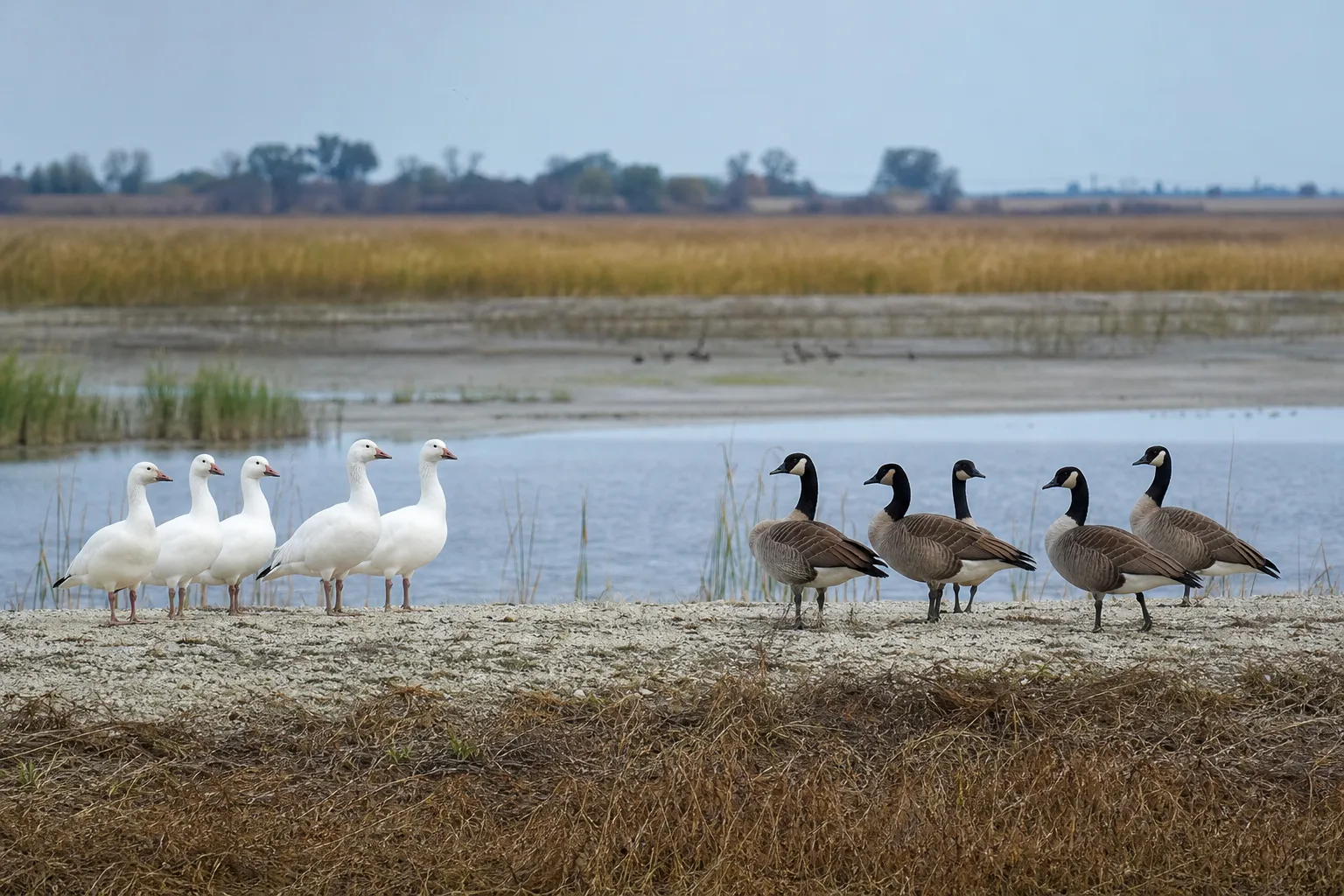
For management purposes, light geese include lesser snow geese, greater snow geese and Ross’s geese. Both blue and white phases of lesser snow geese are considered light geese for management purposes.
That matters because a blue morph Snow Goose can look dark-bodied, but it is still treated as a light goose in that management context. Dark goose groupings can include birds such as Canada geese and white-fronted geese.
For a beginner, the practical takeaway is simple: learn the field marks first, then read the exact agency wording for your state, province or territory before hunting. A field guide can help you identify birds, but only the current agency regulation document tells you how that place is managing them.
Quick comparison table
Use this section as a reminder that goose identification depends on more than color alone. Size, structure, bill details, head pattern, range and habitat all matter when comparing similar geese.
Canada Goose
The Canada Goose is one of the goose species many people first learn.
Canada Geese are often a comparison bird for beginners because many new birders and waterfowl hunters recognize the name.
Canada geese number in the millions in North America. That does not mean every flock is the same for hunting purposes, but it does explain why this is often the first goose new birders and waterfowl hunters recognize.
A useful identification habit is to study overall shape, head pattern and nearby birds before assuming every dark goose is a Canada Goose.
Cackling Goose
The Cackling Goose is a separate species from the Canada Goose.
That separate species point is important for beginners, because older habits of lumping every similar goose together can cause confusion.
In the field, compare the bird against nearby geese when possible and use more than apparent size alone.
Snow Goose
The Snow Goose is a light goose for many management purposes.
Snow Geese also occur in a blue morph. Both blue and white phases of lesser snow geese are considered light geese for management purposes.
That blue morph point is one of the easiest places for beginners to make a category mistake. A blue morph Snow Goose can look dark-bodied, but the field marks and the management grouping are not the same as a simple pale versus dark color impression.
When separating Snow Geese from similar geese, look closely at size, neck length and the bill.
Ross’s Goose
Ross’s Goose is included in the light goose management group.
If a white goose with black wingtips is in a mixed flock, do not rely only on color. Compare the neck length, body size and bill shape.
Ross’s Goose is among birds known to breed regularly in Canada.
Greater White-fronted Goose
The Greater White-fronted Goose is one of the goose entries named in federal migratory bird regulations.
For a new observer, this bird can look plain at first glance. Spend time on the bill area, leg color and belly pattern, and compare those details with similar geese.
Brant
Brant is one of the goose entries named in federal migratory bird regulations.
The white neck markings can vary, so do not expect every bird to show the exact same necklace shape. Focus on the whole bird and the setting.
Emperor Goose
The Emperor Goose is one of the goose entries named in federal migratory bird regulations.
For most North American readers, this is not a common everyday goose. Range, head pattern and overall body pattern are useful points to study when learning this species.
Identification tips for new hunters and birders
Start with size and structure before color. A distant goose can look darker or lighter depending on light, angle and weather, but structure can still point you in the right direction.

Next, check the head and bill. Similar goose species can overlap in general color, so details of shape, proportion and bill pattern matter.
Then use habitat and range as supporting clues. These clues should support identification, not replace careful observation of the bird.
Finally, treat hunting categories as official wording, not field-guide shorthand. Management material defines light geese in a specific way, and agency season documents may use their own categories and dates. Before hunting, check the current regulations from the state, provincial, territorial or federal wildlife agency for the exact area, season, species grouping and identification requirements.
Frequently asked questions
What geese are considered light geese?
Light geese include lesser snow geese, greater snow geese and Ross’s geese. Both blue and white phases of lesser snow geese are considered light geese for management purposes.
Sources
- Canada Goose Identification, Cornell Lab of Ornithology, All About Birds. Accessed October 22, 2026.
- Canada Goose Overview, Cornell Lab of Ornithology, All About Birds. Accessed October 22, 2026.
- Cackling Goose Overview, Cornell Lab of Ornithology, All About Birds. Accessed October 22, 2026.
- Cackling Goose Identification, Cornell Lab of Ornithology, All About Birds. Accessed October 22, 2026.
- Snow Goose Identification, Cornell Lab of Ornithology, All About Birds. Accessed October 22, 2026.
- Snow Goose Overview, Cornell Lab of Ornithology, All About Birds. Accessed October 22, 2026.
- Ross's Goose Overview, Cornell Lab of Ornithology, All About Birds. Accessed October 22, 2026.
- Ross's Goose Identification, Cornell Lab of Ornithology, All About Birds. Accessed October 22, 2026.
- Greater White-fronted Goose Overview, Cornell Lab of Ornithology, All About Birds. Accessed October 22, 2026.
- Greater White-fronted Goose Identification, Cornell Lab of Ornithology, All About Birds. Accessed October 22, 2026.
- Brant Overview, Cornell Lab of Ornithology, All About Birds. Accessed October 22, 2026.
- Brant Identification, Cornell Lab of Ornithology, All About Birds. Accessed October 22, 2026.
- Emperor Goose Overview, Cornell Lab of Ornithology, All About Birds. Accessed October 22, 2026.
- Emperor Goose Identification, Cornell Lab of Ornithology, All About Birds. Accessed October 22, 2026.
- Final Environmental Impact Statement: Light Goose Management, U.S. Fish and Wildlife ServiceOfficial source. Accessed October 22, 2026.
- Birds known to breed regularly in Canada, Environment and Climate Change CanadaOfficial source. Accessed October 22, 2026.
- Canada Geese: frequently asked questions, Environment and Climate Change CanadaOfficial source. Accessed October 22, 2026.
- 50 CFR § 91.4 Eligible species, Electronic Code of Federal RegulationsOfficial source. Accessed October 22, 2026.