The Mallard: Identification, Migration and Habits
The mallard, Anas platyrhynchos, is a medium to large dabbling duck found in all North American waterfowl flyways. This guide covers field identification, habitat, diet, nesting, migration, similar species and USFWS population status information.
By RaiS. Reviewed by RaiS. Published . 4 min read.
Research and drafting were assisted by AI. RaiS checked the facts against the sources below and approved this page.
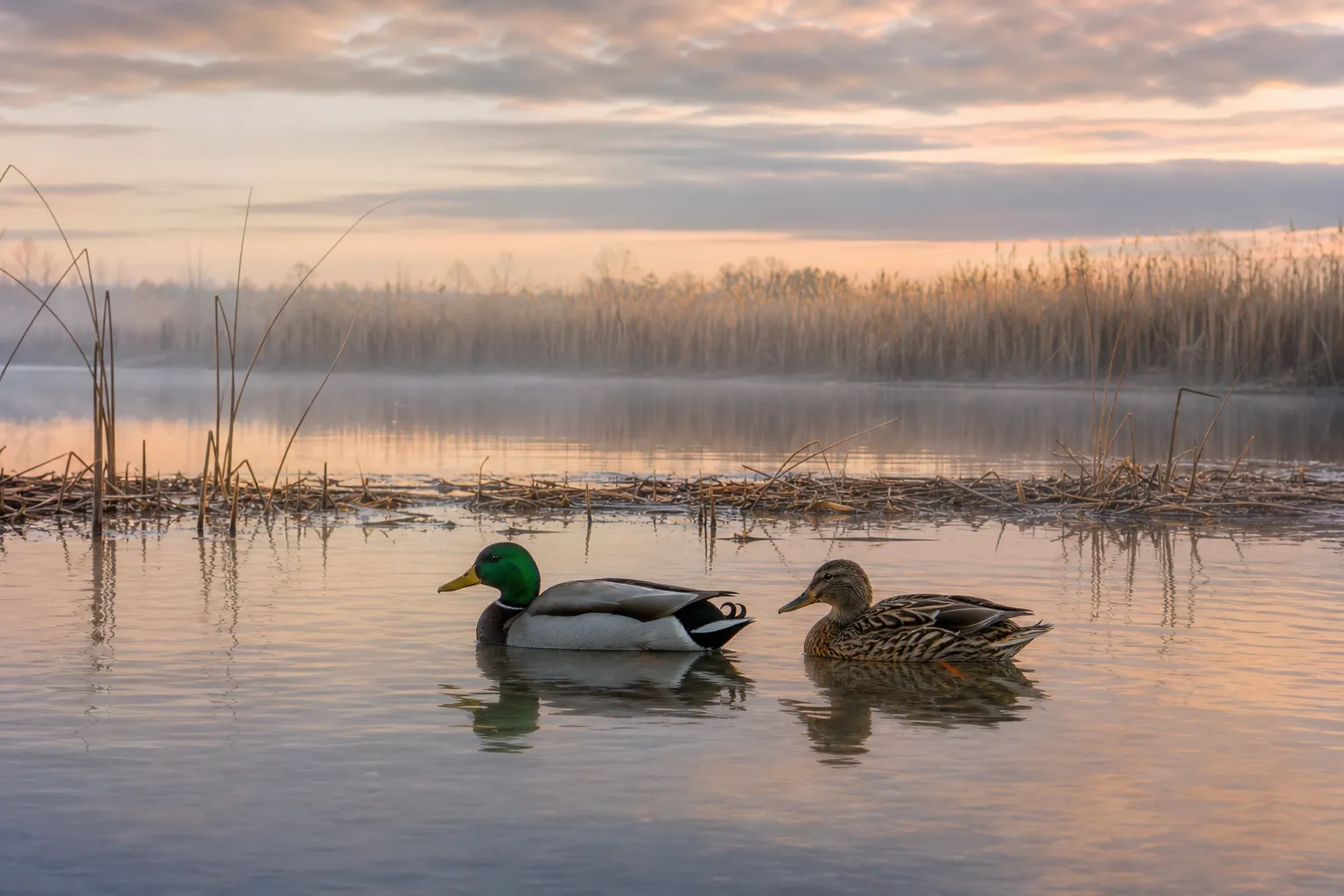
The mallard, Anas platyrhynchos, is a medium to large dabbling duck found in all flyways. It is familiar to hunters and birders in many seasonal settings.
Quick profile
The U.S. Fish and Wildlife Service lists the mallard as a medium to large dabbling duck, with a length of 19.7 to 25.6 inches and a wingspan of 32.3 to 37.4 inches.
| Feature | What to look for |
|---|---|
| Scientific name | Anas platyrhynchos, according to the U.S. Fish and Wildlife Service |
| Duck type | Medium to large dabbling duck, according to the U.S. Fish and Wildlife Service |
For a broader comparison of mallards with other dabbling ducks, divers and sea ducks, see our Types of Ducks guide.
Identification: drake, hen and speculum
Mallards are often among the first ducks many new waterfowlers learn because drakes and hens can look noticeably different in the field.
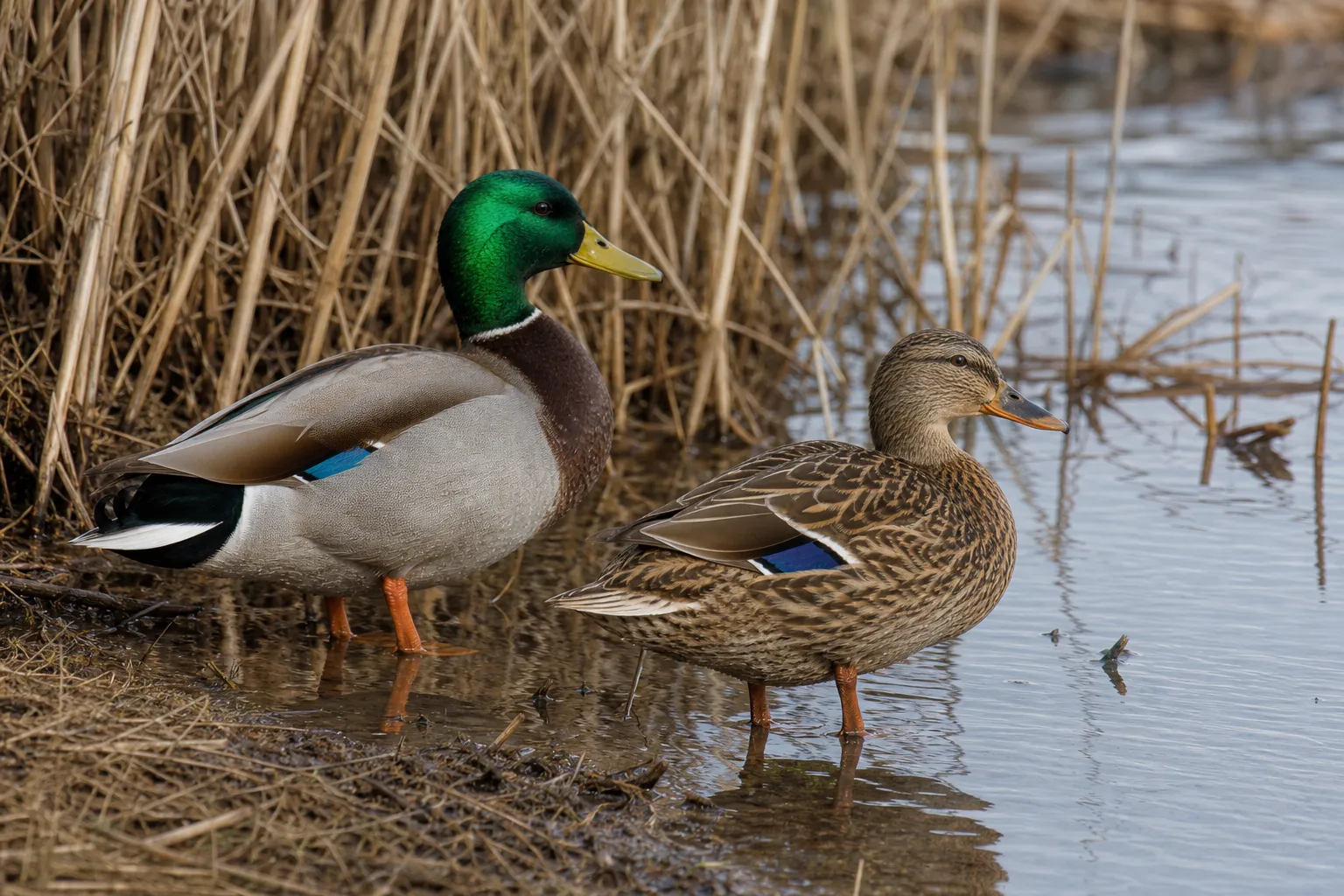
The hen is more camouflaged than the drake in many field settings. In marsh grass, mud edges and stubble, take time to study the whole bird before making an identification.
After breeding season, drakes can become less obvious. A late summer or early fall drake may not show the sharp pattern hunters expect from winter birds.
Habitat: where mallards live
Mallards are familiar in many wild and human made settings.
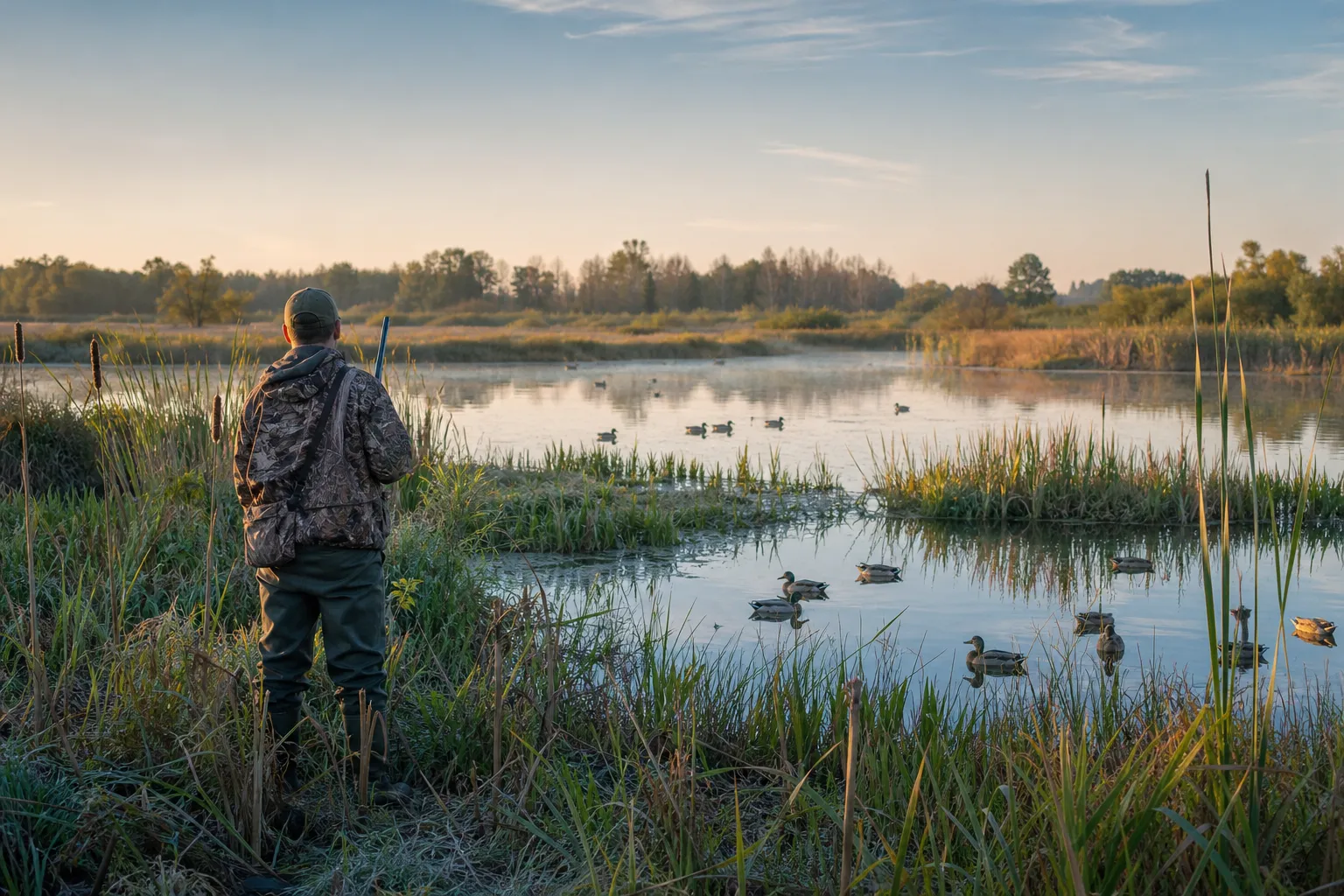
That flexibility explains why mallards are familiar to both hunters and birders. A hunter or birder may encounter them in very different places across the continent.
The U.S. Fish and Wildlife Service says mallards are found in all flyways. Ducks Unlimited names the four North American waterfowl flyways as the Atlantic, Mississippi, Central and Pacific flyways, and a U.S. Fish and Wildlife Service education document says the four U.S. waterfowl flyways were established for management purposes in 1948.
Feeding habits and diet
Their diet changes with season and life stage. Ducks Unlimited says breeding mallards, especially females, shift toward invertebrate rich diets to support egg production.
Breeding and life cycle
The U.S. Fish and Wildlife Service says mallards primarily nest on the ground in grasslands.
Mallards can also nest in surprising human dominated places. The U.S. Fish and Wildlife Service says urban mallards may nest in flower beds, along roadsides and on rooftops. It also says mallard nests can contain up to 13 eggs.
After hatching, mallard young are mobile quickly. The U.S. Fish and Wildlife Service says mallard chicks can swim within a day of hatching. For a watcher in an urban area, that helps explain why a brood may appear away from the nest site soon after hatch, moving toward water.
Migration and the four flyways
Ducks Unlimited says the four North American waterfowl flyways are the Atlantic, Mississippi, Central and Pacific flyways. The U.S. Fish and Wildlife Service says mallards are found in all flyways, so hunters and birders across the continent encounter them in different seasonal settings.
Ducks Unlimited says mallards may leave breeding areas in September or October and reach winter areas from October through December. For spring movement, Ducks Unlimited says migration begins from February through April, with arrival on breeding areas in March or early April.
Those are broad biological migration windows, not hunting season dates. Waterfowl hunting dates, zones and bag limits are set through official federal, state, provincial or territorial processes, and readers should confirm current rules with the appropriate agency before hunting.
Similar species and hybridization
Female mallards can be difficult to separate from several closely related brown ducks. Ducks Unlimited says female mallard separation from American black duck, mottled duck and Mexican duck should be made cautiously because hybrid offspring can complicate identification.
Hybrid offspring can show intermediate features that do not look like a clean field guide example.
When the bird is brown, distant or partly hidden, avoid relying on one mark. Use the bill, wing pattern, body tone and location together, and compare the bird with other ducks nearby when possible. For a wider identification framework, use our Types of Ducks guide. For calling vocabulary and field use of calls, see our queued Duck Calls guide.
Population status from the USFWS survey
The U.S. Fish and Wildlife Service Waterfowl Population Status 2026 report says federal, provincial and state agencies conduct spring surveys to estimate breeding waterfowl populations and habitat conditions. The report says those surveys cover over 2.0 million square miles of principal North American breeding areas.
For mallards, the 2026 report gives population comparisons for the traditional survey area and eastern North America.
| 2026 USFWS measure | Reported figure |
|---|---|
| Change from 2025 in the traditional survey area | 11 percent below 2025 |
| Comparison with long term average in the traditional survey area | 26 percent below the long term average |
| Eastern North America comparison with long term average | 23 percent below the long term average |
These figures do not replace local rules or agency updates. They are a population status summary from the 2026 USFWS report, based on spring survey work by U.S. Fish and Wildlife Service, federal, provincial and state partners.
What hunters and birders should check next
For identification, check the bird’s sex, season and plumage. A breeding drake can be straightforward, but a hen, seasonal drake or hybrid bird can require a slower look at bill color, body pattern and wing pattern.
For hunting, do not use broad migration timing as a substitute for official regulations. Confirm current season dates, zones, license requirements, species rules and bag limits with the appropriate state, provincial, territorial and federal agencies before going afield.
Frequently asked questions
What is the mallard’s scientific name?
The U.S. Fish and Wildlife Service lists the mallard’s scientific name as Anas platyrhynchos.
Do mallards hybridize with American black ducks?
Ducks Unlimited says hybrid offspring can complicate identification when separating female mallards from American black ducks, mottled ducks and Mexican ducks.
Sources
- Mallard (Anas platyrhynchos), U.S. Fish and Wildlife ServiceOfficial source. Accessed October 24, 2026.
- Waterfowl Population Status, 2026, U.S. Fish and Wildlife ServiceOfficial source. Accessed October 24, 2026.
- Ducks at a Distance, Waterfowl Identification Guide, U.S. Fish and Wildlife ServiceOfficial source. Accessed October 24, 2026.
- Mallard Identification, Cornell Lab of Ornithology, All About Birds. Accessed October 24, 2026.
- Mallard Life History, Cornell Lab of Ornithology, All About Birds. Accessed October 24, 2026.
- Mallard Range Map, Cornell Lab of Ornithology, All About Birds. Accessed October 24, 2026.
- Mallard Overview, Cornell Lab of Ornithology, All About Birds. Accessed October 24, 2026.
- Mallard, Ducks Unlimited. Accessed October 24, 2026.
- Waterfowl Migration Flyways, Ducks Unlimited. Accessed October 24, 2026.
- Understanding Waterfowl: Mallards and Their Relatives, Ducks Unlimited. Accessed October 24, 2026.