The M1 Carbine
The M1 Carbine was a light U.S. military shoulder weapon for troops who needed more than a pistol but less than the full-size M1 Garand. Winchester’s design won the Army trials, used the distinct .30 Carbine cartridge, and became one of the major U.S. small-arms production programs of World War II.
By RaiS. Reviewed by RaiS. Published . 6 min read.
Research and drafting were assisted by AI. RaiS checked the facts against the sources below and approved this page.
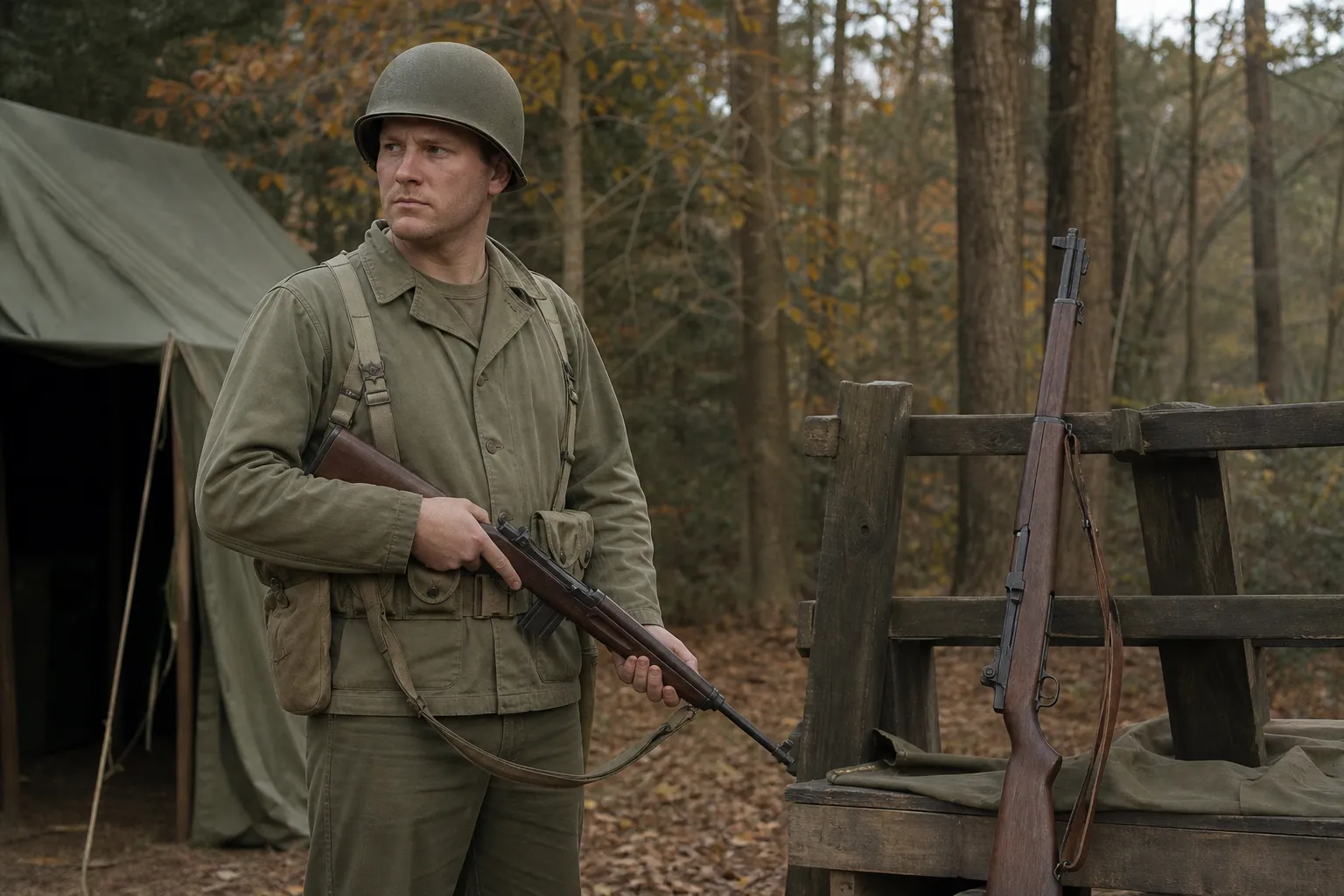
The M1 Carbine was a World War II U.S. military carbine adopted to give selected troops a light, handy defensive arm that was more capable than a pistol but smaller than a full-size service rifle.
Why the Army wanted a carbine
The National Firearms Museum describes the Army’s requirement as a need for a semi-automatic personal defense arm. The Army Heritage material says the M1 Carbine was designed chiefly for non-combat and line-of-communications troops as a better defensive weapon than a pistol or submachine gun.
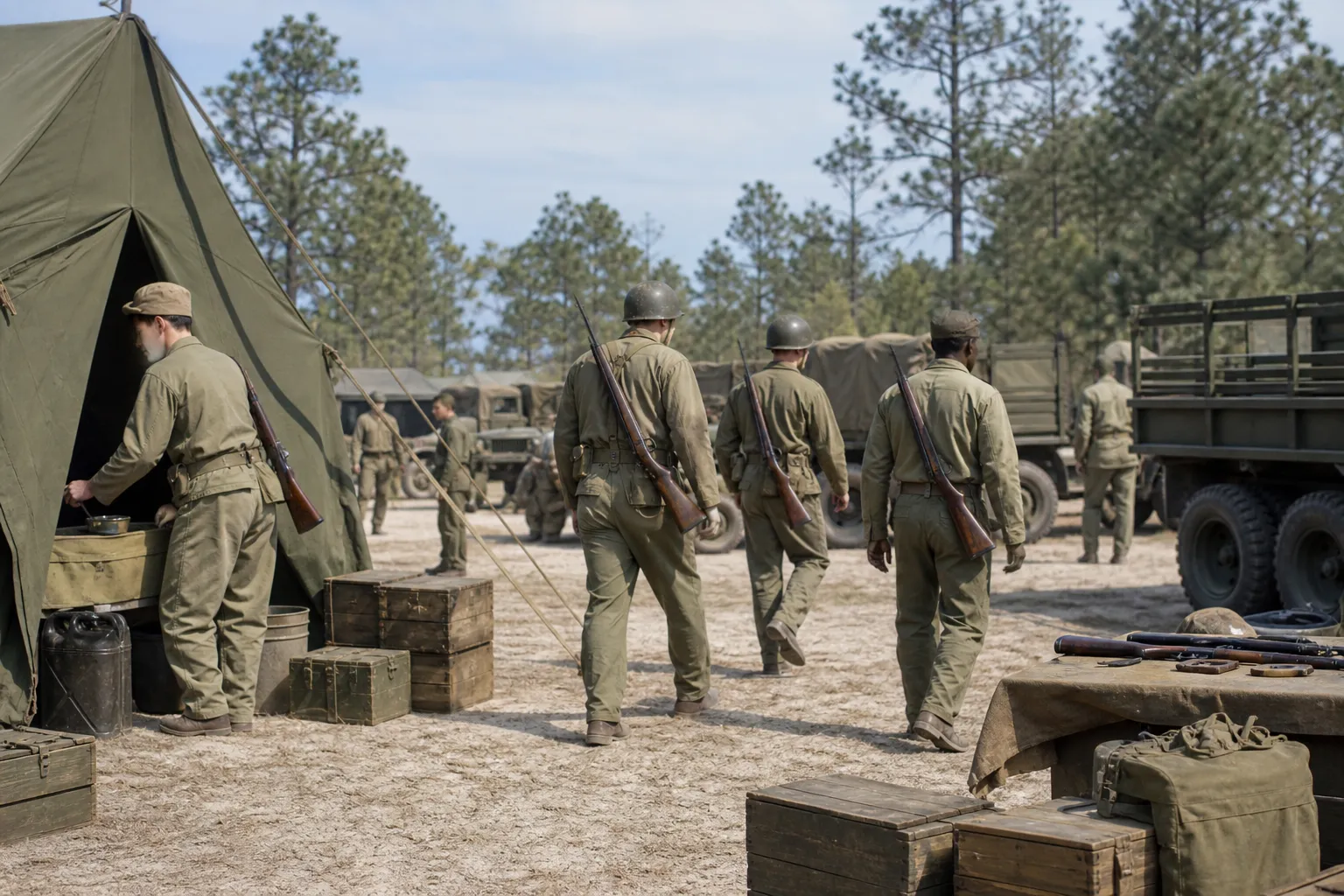
Army Heritage lists tank crews, drivers, artillery crews, mortar crews, and other personnel among carbine recipients. Those examples show the intended role clearly: the carbine was meant for soldiers whose main duties made a full-size infantry rifle less convenient, but who still needed a shoulder weapon.
The National Firearms Museum states that the specification called for a maximum weight of five pounds. It also states that the successful carbine design was expected to have an effective range of 300 yards and to use the Winchester .30 Carbine cartridge from a detachable box magazine.
Winchester’s role and the 1941 adoption
The carbine program moved quickly in 1941. The National Firearms Museum states that test models were submitted in May 1941 by firms and designers including John Garand, Eugene Reising, L. H. Hoover, and Val Browning.
Winchester was not part of that first submission deadline. The National Firearms Museum says Winchester was working on a gas-operated semi-automatic rifle, but demands connected with M1 Garand production kept Winchester from the first round.
Winchester then entered with a design that the National Firearms Museum describes as based on a scaled-down Garand receiver and David M. Williams’ short-stroke gas system. The museum says Winchester’s entry won the carbine trials by unanimous decision of the testing officers.
Army Heritage material states that the Winchester design was standardized as the M1 Carbine.
The National Firearms Museum states that Winchester received a contract for 350,000 carbines before Pearl Harbor. The museum also says Winchester later allowed royalty-free contract production in exchange for reimbursement of development costs.
How the M1 Carbine worked
War Department TM 9-1276 describes the M1 and M1A1 carbines as gas-operated, self-loading, air-cooled shoulder weapons using 15-round box magazines. In simple terms, the carbine was a semi-automatic shoulder arm: each pull of the trigger fired one round, and the action used gas energy from firing to cycle the mechanism and load the next round.
The same technical manual describes the M2 and M3 carbines as weapons that could deliver semiautomatic or full automatic fire and were fed by a 30-round box magazine. That distinction matters when reading historical descriptions, because “M1 Carbine” is often used casually for the family, while the military model names identify different configurations.
War Department TM 9-1276 lists several basic figures for the M1 and M2 pattern carbines. It gives the unloaded weight of the M1 and M2 carbines with a 15-round magazine as 5.50 pounds. It lists the M1 and M2 overall length as 35.58 inches, barrel length as 18.00 inches, muzzle velocity as 2,000 feet per second, and effective range as 300 yards.
| Item | War Department TM 9-1276 data |
|---|---|
| Unloaded weight, M1 and M2 with 15-round magazine | 5.50 lb |
| Overall length, M1 and M2 | 35.58 in |
| Barrel length | 18.00 in |
| Muzzle velocity | 2,000 ft/s |
| Effective range | 300 yd |
The .30 Carbine cartridge
The M1 Carbine did not use the M1 Garand’s .30-06 cartridge. War Department TM 9-1276 says the .30 Carbine cartridge differs from the .30 cartridge used in rifles and machine guns because its bullet is smaller and its case is shorter, smaller, and without a neck.
That cartridge choice was central to the carbine’s role. The National Firearms Museum ties the 300-yard effective range requirement to the Winchester .30 Carbine cartridge and a detachable box magazine. The result was not a pistol, not a submachine gun, and not a full-power infantry rifle. It was a separate class of light military shoulder weapon.
Main variants
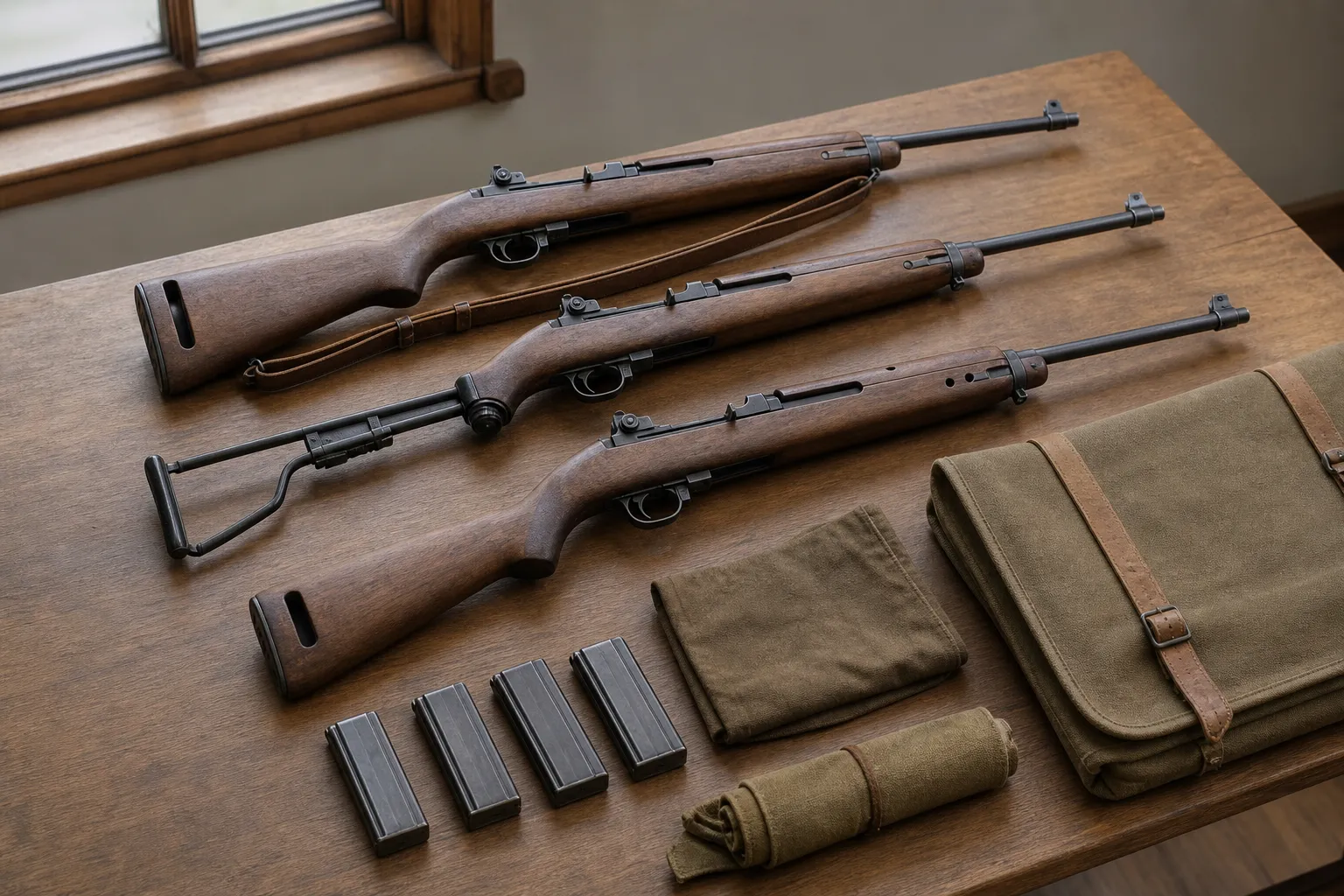
The wartime carbine family included several closely related models. The following descriptions use the wording and distinctions found in War Department TM 9-1276 and the National Firearms Museum.
| Variant | Description |
|---|---|
| M1 | War Department TM 9-1276 identifies the M1 as the basic carbine model with a one-piece wooden stock and hand guard. |
| M1A1 | War Department TM 9-1276 says the M1A1 is identical to the M1 except for its stock, which includes a grip and hinged metal skeleton folding stock extension. The National Firearms Museum lists the M1A1 folding-stock carbine among M1 Carbine variants. |
| M2 | The National Firearms Museum lists the M2 selective-fire carbine among variants. War Department TM 9-1276 says the M2 could deliver semiautomatic or full automatic fire and used a 30-round box magazine. |
| M3 and T3 | War Department TM 9-1276 includes the M3 among the carbine models. The National Firearms Museum lists the T3 infrared-capable carbine among M1 Carbine variants. |
The M1A1 is the most visually distinctive early variant because of its folding metal stock extension and pistol-grip style stock. War Department TM 9-1276 treats the stock as the key difference between the M1 and M1A1.
The M2 and M3 descriptions show how the carbine family expanded beyond the original semi-automatic M1. They should not be confused with the basic M1 model, which War Department TM 9-1276 identifies as the basic carbine.
Wartime makers and production
Springfield Armory National Historic Site says the M1 Carbine was never made at Springfield Armory. Instead, it was produced by private contractors.
The National Firearms Museum states that ten primary contractors, including Winchester, IBM, and General Motors, assembled and delivered finished M1 Carbines. The museum also says a government-run Carbine Industry Integration Committee directed production and allocation of parts.
The National Firearms Museum summarizes the scale more generally, stating that more than six million carbines had been manufactured by 1945.
M1 Carbine vs. M1 Garand
The M1 Carbine and M1 Garand are both famous U.S. arms of World War II, but they were built for different roles. Springfield Armory National Historic Site states that John Garand’s M1 rifle was adopted by the Army in 1936, weighed 9.5 pounds, and fired from an eight-shot clip. The National Firearms Museum says the M1 Garand was adopted as the U.S. Rifle, Caliber .30 M1 on January 9, 1936.
By contrast, War Department TM 9-1276 lists the M1 Carbine with a 15-round box magazine and an unloaded weight of 5.50 pounds with that magazine. The carbine used the separate .30 Carbine cartridge, while the Garand was the full-size .30-06 service rifle in the Army’s World War II small-arms system.
The practical distinction is role. Army Heritage describes the carbine’s intended users as non-combat and line-of-communications troops, with examples such as tank crews, drivers, artillery crews, and mortar crews.
For the companion story of the full-size U.S. service rifle, see the M1 Garand guide.
Why the M1 Carbine matters
The M1 Carbine matters because it filled a specific gap in the U.S. Army’s World War II small-arms lineup. Museum and Army accounts describe a requirement for a light defensive shoulder arm, a rapid 1941 development and adoption process, and a massive private-contractor production program.
Its design also shows a different answer from the M1 Garand. The Garand was the full-size service rifle. The carbine was lighter, fed from detachable magazines, and used its own smaller cartridge. That combination made it one of the most recognizable American firearms of the period, and one of the largest U.S. small-arms production efforts of World War II.
Readers studying a specific carbine should confirm model markings, configuration details, and historical context with official manuals, museum references, and documented military records.
Frequently asked questions
Was the M1 Carbine made by Springfield Armory?
No. Springfield Armory National Historic Site says the M1 Carbine was never made at Springfield Armory. It was produced by private contractors.
What cartridge did the M1 Carbine use?
It used the .30 Carbine cartridge. War Department TM 9-1276 says this cartridge differed from the .30 cartridge used in rifles and machine guns because its bullet was smaller and its case was shorter, smaller, and without a neck.
How is the M1 Carbine different from the M1 Garand?
The M1 Garand was the full-size service rifle, adopted in 1936, weighing 9.5 pounds and firing from an eight-shot clip according to Springfield Armory National Historic Site. The M1 Carbine was lighter, used the .30 Carbine cartridge, and fed from detachable box magazines.
What were the main M1 Carbine variants?
War Department TM 9-1276 identifies the M1 as the basic carbine and describes the M1A1 as having a grip and hinged metal skeleton folding stock extension. The National Firearms Museum also lists the M2 selective-fire carbine and T3 infrared-capable carbine among variants.
Sources
- U.S. Small Arms of World War II, Springfield Armory National Historic Site, National Park ServiceOfficial source. Accessed October 22, 2026.
- M1 variations, Springfield Armory National Historic Site, National Park ServiceOfficial source. Accessed October 22, 2026.
- John Garand, Springfield Armory National Historic Site, National Park ServiceOfficial source. Accessed October 22, 2026.
- U.S. Winchester M1 Semi Automatic Carbine, National Firearms Museum. Accessed October 22, 2026.
- Inland Manufacturing Division (Dayton, OH) M1A1 Semi-Automatic Carbine, National Firearms Museum. Accessed October 22, 2026.
- U.S. Springfield M1 Garand Semi Automatic Rifle, National Firearms Museum. Accessed October 22, 2026.
- The Ordnance Department: Procurement and Supply, U.S. Army Center of Military History, mirrored by govinfoOfficial source. Accessed October 22, 2026.
- Ready for Battle: World War II, Army Heritage Center Foundation. Accessed October 22, 2026.
- TM 9-1276, Carbines, Cal. .30, M1, M1A1, M2, and M3, War Department, January 1947, hosted by ibiblio HyperWar. Accessed October 22, 2026.
- Rifleman Q&A: When Did M1 Carbines Get Bayonet Lugs?, American Rifleman. Accessed October 22, 2026.
- E-Gazette Mk II, No. 100, May 2019, New Zealand Antique & Historical Arms Association / NZ Arms Register. Accessed October 22, 2026.