Pistol-Caliber Carbines Explained: How PCCs Work and What They Are For
A pistol caliber carbine, or PCC, is a shoulder fired or carbine length firearm chambered for a cartridge commonly associated with handguns. PCCs are popular in sport shooting and training because they combine carbine handling with pistol caliber ammunition, but their legal classification, ammunition limits, and magazine compatibility all depend on the exact firearm and jurisdiction.
By RaiS. Reviewed by RaiS. Published . 6 min read.
Research and drafting were assisted by AI. RaiS checked the facts against the sources below and approved this page.
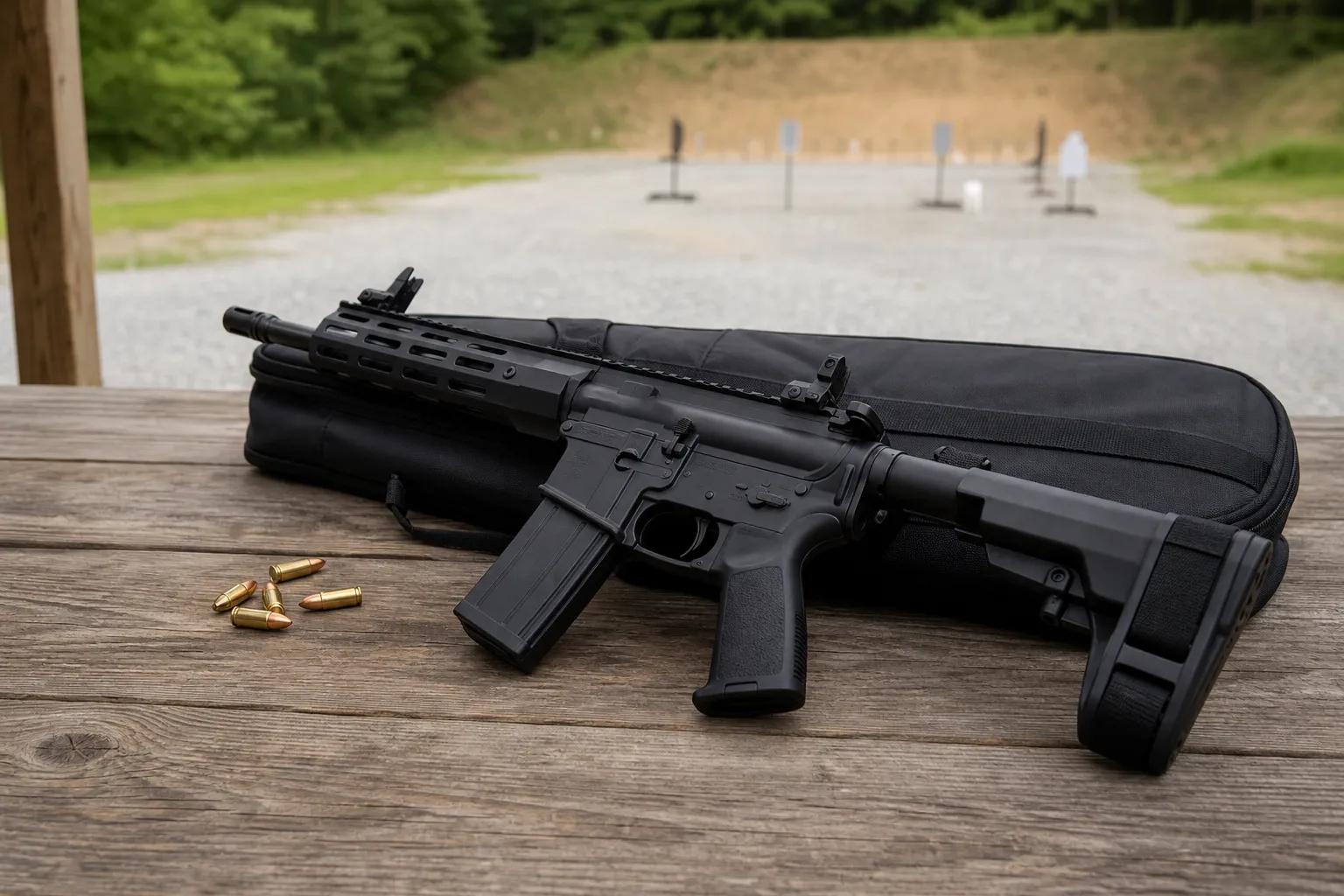
A pistol caliber carbine, usually shortened to PCC, is a shoulder fired or carbine length firearm chambered for a pistol cartridge. In plain shooting language, the term usually means a carbine in cartridges such as 9 mm.40 S&W, 10mm, or .45 ACP. It is a useful category for discussion, but it is not a substitute for legal definitions, which depend on federal, state, provincial, and local rules.
What does PCC mean?
PCC means pistol caliber carbine. The phrase describes the general idea: a carbine format using a cartridge normally associated with handguns.
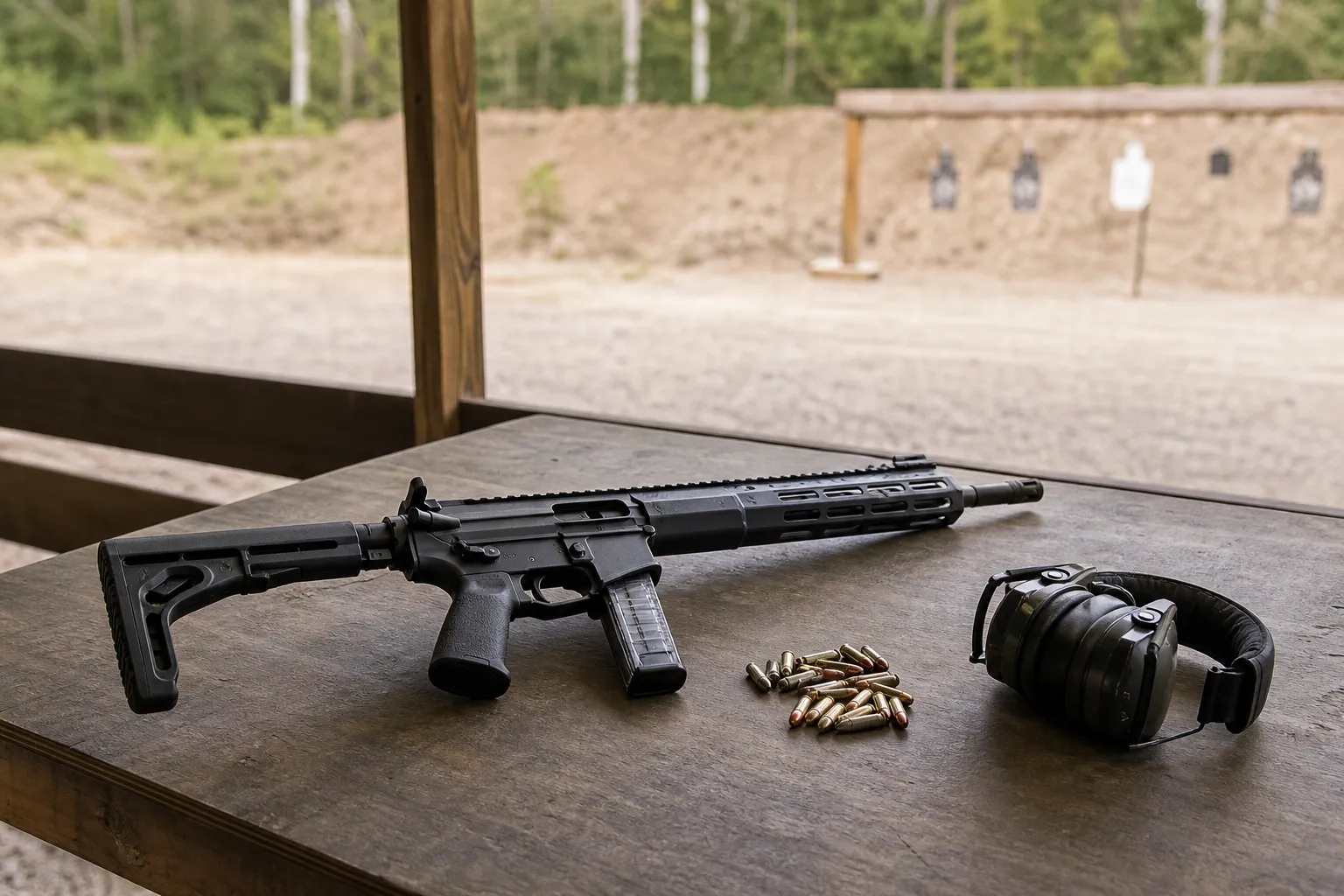
That does not mean every firearm called a PCC is legally treated the same way.
So, for general reference, a PCC is best understood as a carbine type rather than a single legal class. Always check the current rules that apply where you live or shoot.
How semiautomatic PCCs work
Many PCCs are semiautomatic. At a high level, that means one trigger pull fires one round, and the action uses energy from firing to cycle the firearm for the next shot.
The details vary by design. PCCs commonly use blowback systems, delayed blowback systems, or locked breech systems.
Simple blowback
SAAMI defines blowback action as an action with no separate breech locking mechanism. The AFTE Glossary explains that blowback action uses the mass of the bolt or slide, recoil spring force, and sometimes a mechanical delay as the main closing force, without mechanical breech locking.
Simple blowback is the most straightforward form. AFTE defines simple blowback as an unlocked breech system that relies on breech bolt mass and return spring strength during peak pressure. In other words, the breech is not mechanically locked at firing. The design depends on mass and spring force to keep the action closed long enough for safe operation.
A PCC manual describes blowback operation. Beretta’s Cx4 Storm manual says the carbine automatically reloads after each fired round if cartridges remain in the magazine, and describes the firearm as using a blowback type locking system.
Delayed blowback
AFTE describes delayed blowback as an unlocked breech bolt with a mechanical delay intended to keep the unsupported case from emerging while pressure is still high.
Heckler & Koch lists the MP5 in 9 mm x 19 with a roller delayed blowback bolt system. CMMG support says its pistol calibers use a Radial Delayed Blowback operating system, while its rifle rounds use direct impingement. CMMG lists 9mm.40 S&W.45 ACP, 10mm, and 5.7x28mm under its Radial Delayed Blowback calibers.
The key point is not that all delayed systems are the same. The key point is that delayed blowback is still different from a fully locked breech: it uses a delay mechanism along with bolt mass rather than a conventional lock that must be unlocked after firing.
Locked-breech and gas-operated PCCs
Some PCCs use locked-breech designs. The National Institute of Justice describes recoil action as a locked-breech system in which recoil unlocks the breech after chamber pressure has reduced. NIJ also describes gas-operated action as a locked-breech system in which gas from the barrel moves a piston rearward to unlock and cycle the firearm.
The SIG MPX is a manufacturer-documented example. The SIG MPX manual describes it as a magazine-fed, gas-operated 9x19 mm firearm that fires from a rotating locking closed bolt. The same manual describes the MPX operating system as a short-stroke piston system.
Locked-breech or gas-operated PCCs are not automatically better or worse than blowback carbines. They are different mechanical approaches, and they usually add parts and design complexity compared with the simplest blowback layout.
Common PCC chamberings
PCCs are most often discussed around pistol cartridges. Manufacturer documents show common PCC chambering patterns. The Beretta Cx4 Storm manual lists models in 9mm Parabellum.40 S&W, and .45 ACP. The KelTec SUB2000 manual describes the second generation SUB2000 as a semiautomatic rifle chambered for 9mm Luger or .40 S&W.
Some manufacturers include other cartridges in PCC-related lines. CMMG support lists 5.7x28mm under its Radial Delayed Blowback calibers, along with 9mm.40 S&W.45 ACP, and 10mm. For more background on that cartridge, see our guide to 5.7x28mm.
SAAMI data show why pistol caliber carbines are not the same category as rifle caliber carbines. SAAMI’s centerfire pistol and revolver standard lists 9mm Luger with 115 grain entries and a transducer MAP value of 350 in psi per 100. The same SAAMI pistol and revolver standard lists .40 S&W with a transducer MAP value of 350 in psi per 100.
By contrast, SAAMI’s centerfire rifle data include .223 Remington. That distinction is one reason a PCC should not be confused with a rifle caliber carbine such as a .223 Remington or 5.56 NATO firearm. For chamber safety background in that rifle cartridge family, see .223 Remington vs 5.56 NATO.
Ammunition safety
Use the cartridge marked for the firearm and follow the firearm manual.
That guidance matters because “pistol caliber” is a broad phrase. A magazine may fit a firearm, a cartridge may look similar to another cartridge, or a model name may sound familiar, but safe ammunition selection is determined by the markings and manual for the specific firearm.
Magazine concepts in PCCs
Many PCCs use detachable box magazines. Magazine layout is one of the main reasons shooters notice PCCs, because some designs share magazines or magazine patterns with handguns.
There are three broad concepts:
- Proprietary magazines. Some carbines use magazines made for that firearm or firearm family.
- Pistol magazine compatibility. Some carbines are made to accept magazines from particular pistol lines.
- Interchangeable magazine wells or adapters. Some designs use different magazine wells or adapters for different magazine patterns.
Henry says the Homesteader 9mm is offered in versions for common 9mm magazine patterns, and says it uses removable magazine well adapters to accept Glock, SIG Sauer, or Smith & Wesson M&P style magazines, in addition to Henry 9mm magazines. The KelTec SUB2000 manual says different versions accept most double-column handgun magazines from S&W, Glock, or Beretta. It also says the rifle is intended to complement a handgun through ammunition and magazine interchangeability.
Magazine compatibility is model specific. It should be treated as a manufacturer-stated feature, not assumed from caliber alone. For basic terminology, see our guide to pistol magazines.
Handling tradeoffs
Compared with a handgun, a PCC gives the shooter shoulder contact and more room for sights or optics.
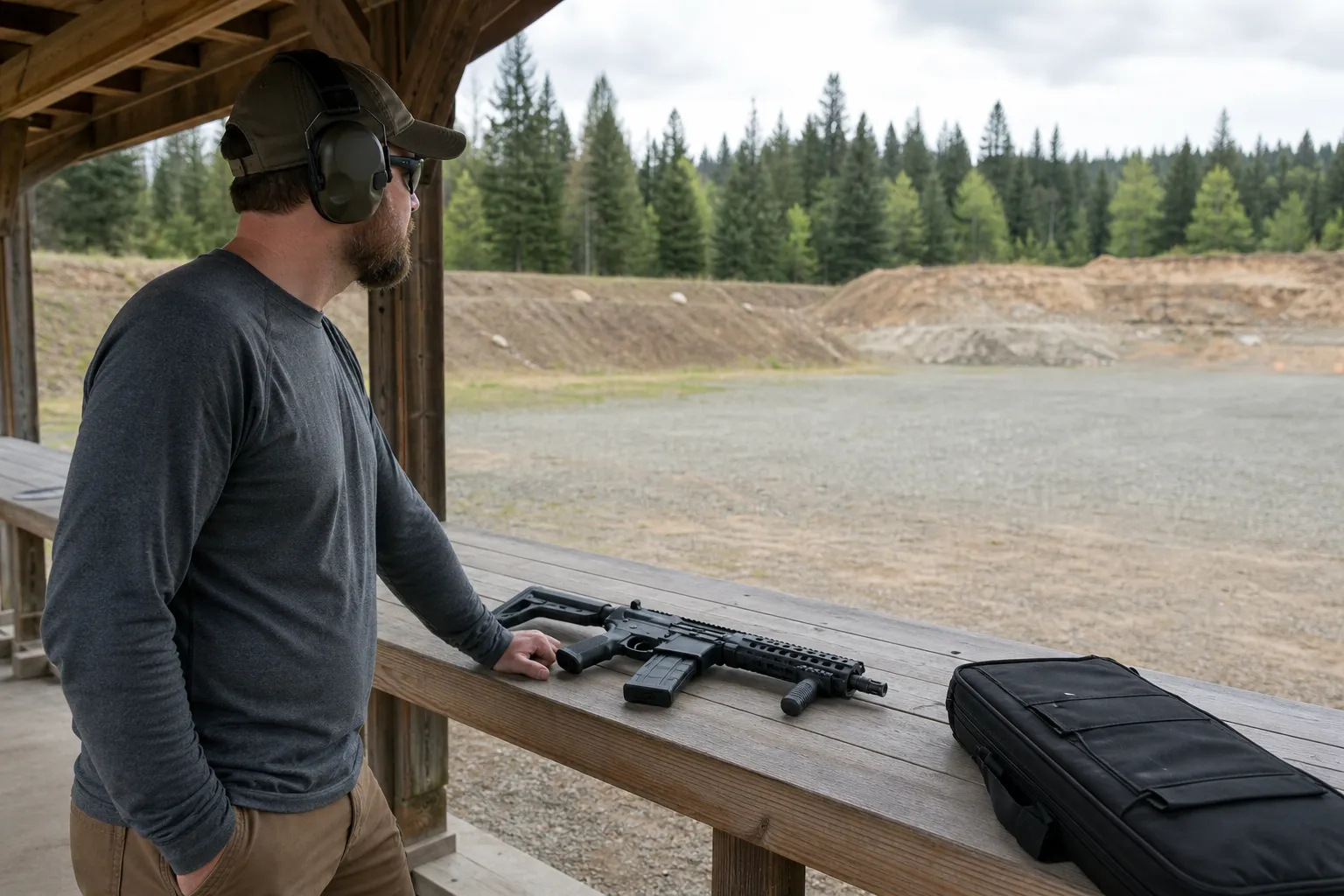
The tradeoff is size. A carbine is larger than a handgun, even when it uses a handgun cartridge. That larger format can be useful in sport shooting or training contexts, but it changes storage, transport, and handling needs.
Compared with a rifle caliber carbine, a PCC uses cartridges that SAAMI places in its centerfire pistol and revolver standards rather than its centerfire rifle standards. That does not make one category universally better. It does mean the ammunition standards, operating systems, and expected role are different.
Operating system choice also has tradeoffs. Simple blowback is common and mechanically direct. Delayed blowback adds a delay mechanism. Locked-breech and gas-operated systems use still different mechanics, as shown by NIJ’s descriptions and the SIG MPX manual. More complexity can bring different design goals, but it also means the exact manual matters.
Legal and safety boundaries
State, provincial, and local rules can differ, and firearm configuration details can matter. Confirm current requirements with the agency that has jurisdiction before buying, transporting, modifying, or using any firearm.
Manufacturer safety warnings should also be treated seriously. This guide does not provide conversion, modification, or assembly instructions.
Before using a PCC, check the current manual for the exact model, the cartridge marking on the firearm, the magazine compatibility stated by the manufacturer, and the current laws and range or competition rules that apply to your location.
Frequently asked questions
What does PCC stand for?
PCC stands for pistol caliber carbine. In common shooting language, it means a shoulder fired or carbine length firearm chambered for a pistol cartridge.
Are PCCs semiautomatic?
Many PCCs are semiautomatic. In general terms, a semiautomatic firearm fires one round for each trigger pull and uses energy from firing to cycle the action for the next shot.
What cartridges are common in PCCs?
Manufacturer manuals show PCC examples in 9mm.40 S&W, and .45 ACP. Other PCC related lines may include cartridges such as 10mm and 5.7x28mm.
What is the difference between blowback and delayed blowback?
SAAMI defines blowback action as having no separate breech locking mechanism. AFTE describes delayed blowback as an unlocked breech system that uses a mechanical delay to help control when the breech opens.
Do PCCs use handgun magazines?
Some do, but compatibility is model specific. Henry and KelTec documents describe PCC examples that accept certain pistol magazine patterns or use magazine wells or adapters, but the manufacturer’s manual controls what fits a specific firearm.
Is a PCC the same as a rifle caliber carbine?
No. A PCC uses pistol cartridges, while rifle caliber carbines use rifle cartridges. SAAMI lists pistol cartridges such as 9mm Luger and .45 Automatic in its centerfire pistol and revolver standards, while .223 Remington appears in SAAMI centerfire rifle data.
Sources
- 27 CFR § 478.11, Bureau of Alcohol, Tobacco, Firearms and Explosives eRegulationsOfficial source. Accessed November 21, 2026.
- 2026 Equipment Appendices, International Defensive Pistol AssociationOfficial source. Accessed November 21, 2026.
- SAAMI Glossary, Blowback Action, Sporting Arms and Ammunition Manufacturers’ InstituteOfficial source. Accessed November 21, 2026.
- AFTE Glossary, Version 6.07302025, Section 1 Firearms Identification, Association of Firearm and Tool Mark Examiners. Accessed November 21, 2026.
- Firearms Examiner Training: Autoloading, Semiautomatic Pistols, National Institute of JusticeOfficial source. Accessed November 21, 2026.
- Instruction Manual for Ruger PC Carbine, Sturm, Ruger & Co., Inc.Official source. Accessed November 21, 2026.
- Cx4 Storm User Manual, BerettaOfficial source. Accessed November 21, 2026.
- MP5, Heckler & KochOfficial source. Accessed November 21, 2026.
- Is my CMMG firearm Direct Impingement or Radial Delayed Blowback?, CMMG SupportOfficial source. Accessed November 21, 2026.
- SIG MPX Operator’s Manual, SIG SauerOfficial source. Accessed November 21, 2026.
- Introducing the Henry Homesteader 9mm, Henry Repeating ArmsOfficial source. Accessed November 21, 2026.
- SUB2000 and SUB CQB Manual, KelTecOfficial source. Accessed November 21, 2026.
- SAAMI Z299.3, Centerfire Pistol and Revolver, Voluntary Industry Performance Standards, Sporting Arms and Ammunition Manufacturers’ InstituteOfficial source. Accessed November 21, 2026.
- SAAMI Z299.4, Centerfire Rifle, Voluntary Industry Performance Standards, Sporting Arms and Ammunition Manufacturers’ InstituteOfficial source. Accessed November 21, 2026.
- ® SIG MPX OPERATOR’S MANUAL: HANDLING & SAFETY IN. Accessed November 21, 2026.