Tree Stand Safety Harnesses and Fall-Arrest Systems Explained
A tree stand fall-arrest system helps keep a hunter connected to the tree while climbing, hunting, and descending. The key parts are a full-body harness, tether, tree strap or lifeline, lineman’s belt where required, and suspension-relief device.
By RaiS. Reviewed by RaiS. Published . 7 min read.
Research and drafting were assisted by AI. RaiS checked the facts against the sources below and approved this page.
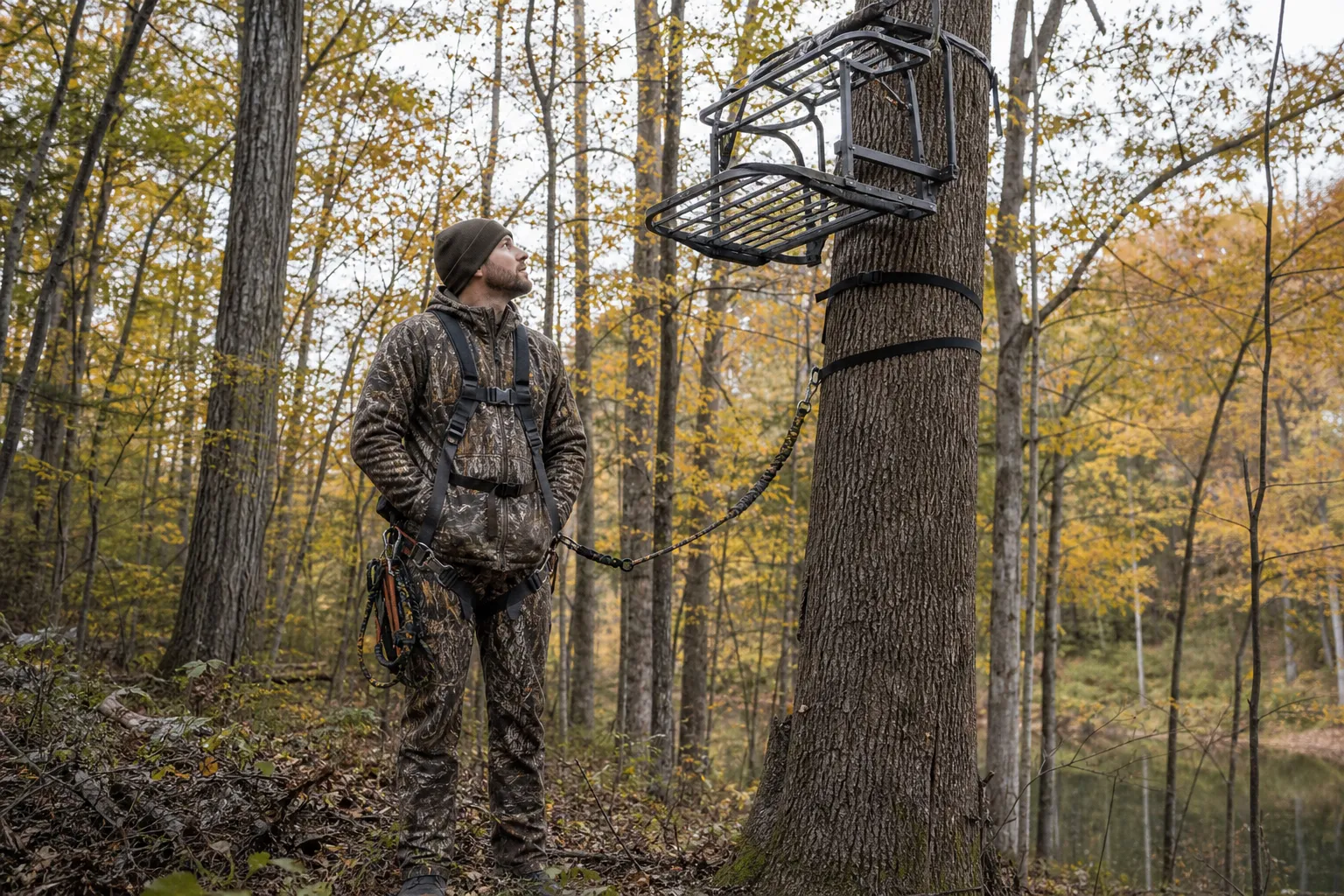
A tree stand safety harness is not just a vest or strap. In modern hunter-education language, it is part of a full-body fall-arrest system that helps keep you connected to the tree while climbing, sitting, hunting, and descending. The Treestand Manufacturers Association says hunters should wear and properly use a full-body fall-arrest harness system every time they leave the ground, including while ascending and descending.
Why fall-arrest systems matter
The International Hunter Education Association U.S.A. curriculum states that falls are the number one cause of injury or death when using elevated stands. That is why the central safety message is simple: stay connected while climbing, sitting, hunting, and descending.
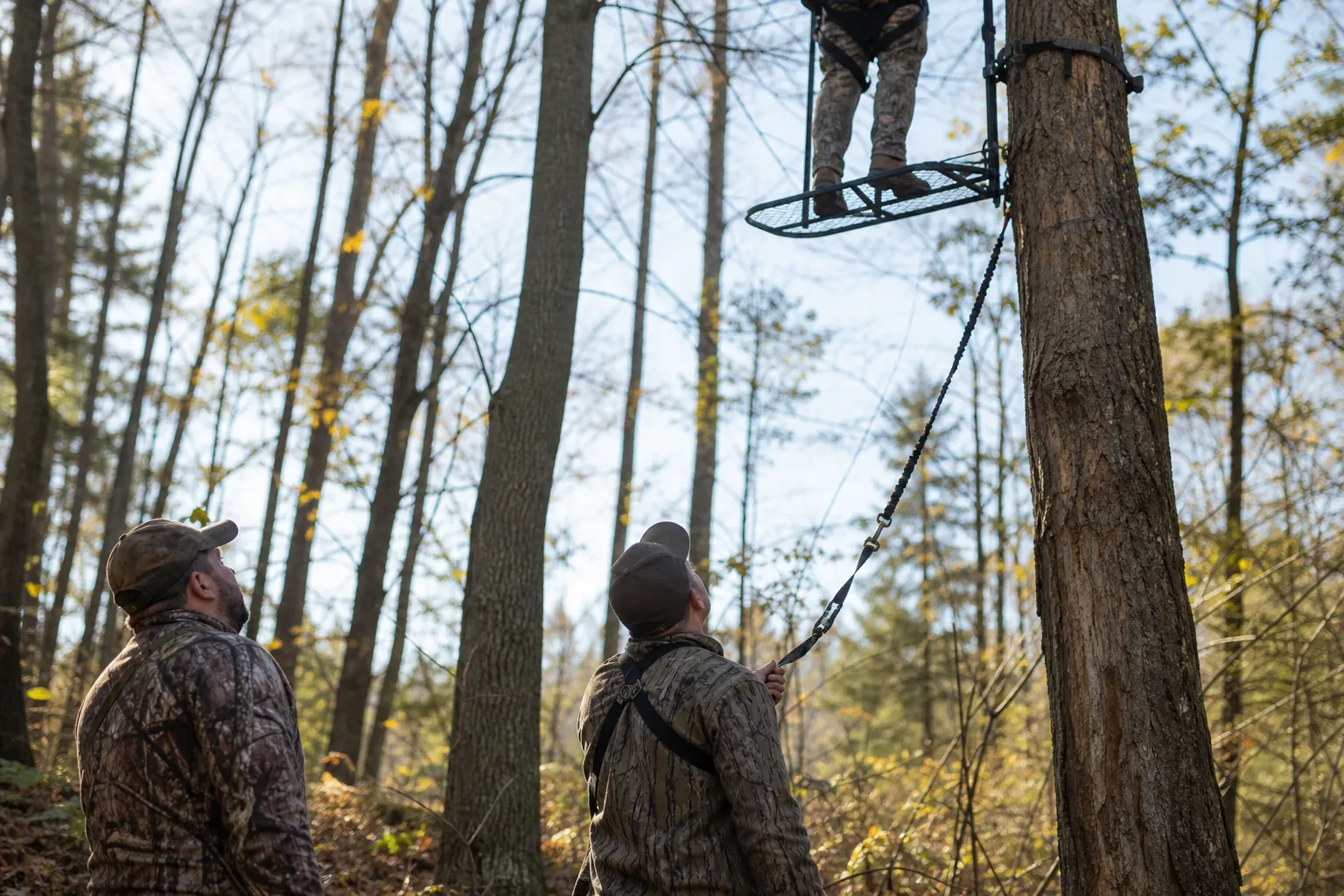
TMA says single-strap belts and chest harnesses are no longer allowed and shall not be used. Modern tree stand safety guidance focuses on a full-body fall-arrest harness system, not older belt-only or chest-only systems.
If you are still choosing the stand itself, see our guide to tree stand types. This page focuses on the fall-arrest gear that goes with elevated hunting.
The main parts of a tree stand fall-arrest system
Texas Parks and Wildlife Department describes a fall-arrest system as having three core parts: a full-body harness worn by the hunter, a tether, and a tree belt. Other hunter-education materials also include a lineman’s-style belt or climbing belt, a suspension relief strap, and, for many setups, a lifeline.
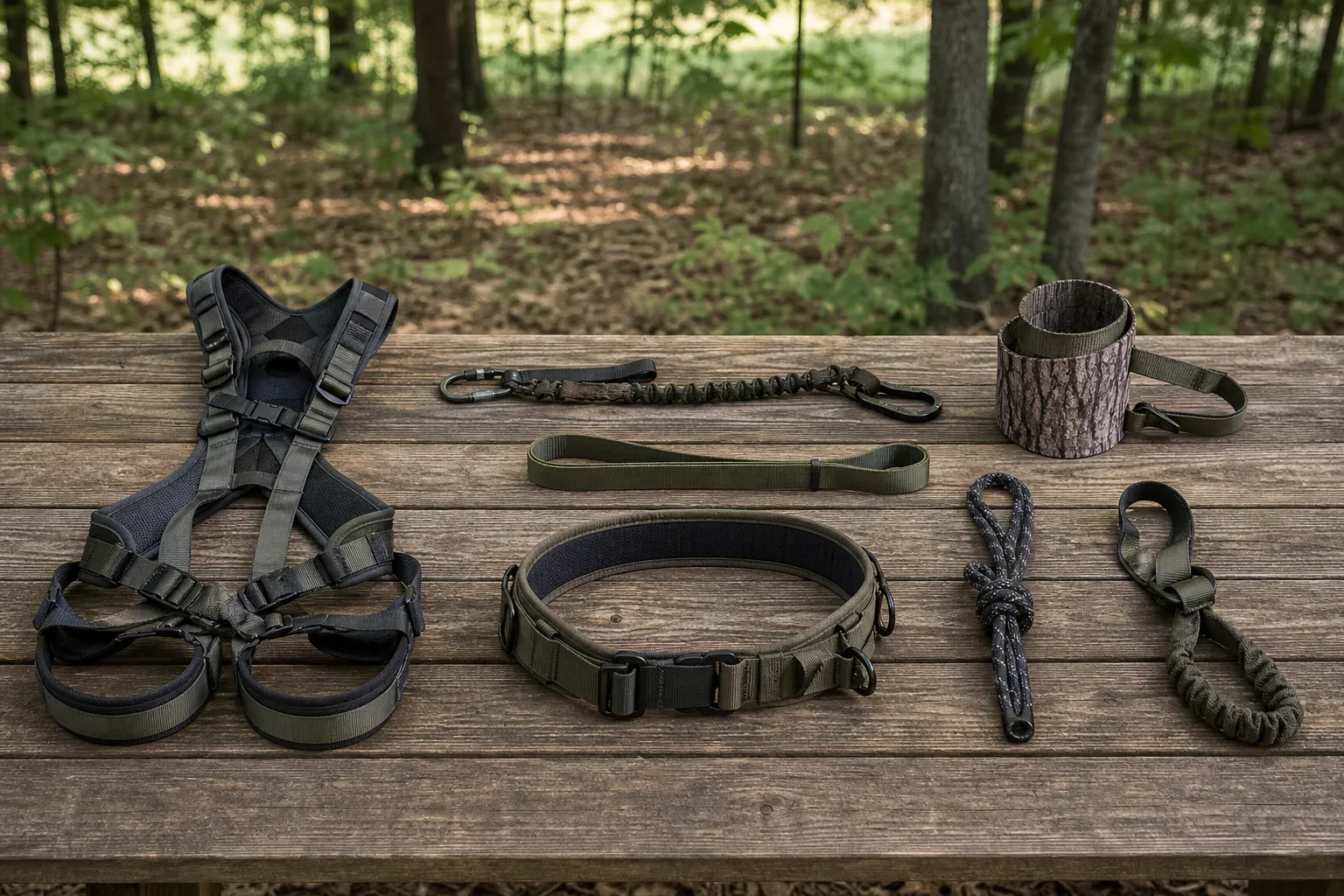
Full-body harness
The full-body harness is the part worn on the hunter’s body. The International Hunter Education Association U.S.A. curriculum says a properly used full-body harness or fall-arrest system prevents the wearer from falling to the ground.
A full-body harness must be used as its manufacturer describes. TMA says hunters should read and understand the manufacturer’s warnings and instructions before using a treestand and full-body fall-arrest harness system each season. TMA also says hunters should practice using the system with a responsible adult before using it in an elevated hunting environment.
Manufacturer manuals may include product-specific limits and warnings. For example, Primal Treestands’ PTDH-902 manual states that its safety harness has a total weight limit of 300 pounds. That number applies to that manual and product, not every harness.
Tether
The tether is the connection from the full-body harness to the tree belt, tree strap, or lifeline system. Texas Parks and Wildlife Department says the tree belt attaches to the tree and the tether connects the full-body harness to the tree belt.
TMA says the harness tether should have no slack when the hunter is sitting. California Department of Fish and Wildlife hunter-education slides also say the tether should have no slack while seated. Hunter Safety System’s HSS-320 manual says there should be no slack in the tether while the hunter is sitting.
Tree strap or tree belt
The tree strap or tree belt wraps around the tree and provides the connection point for the tether when the hunter is in position. Texas Parks and Wildlife Department says the tree belt attaches to the tree.
California Department of Fish and Wildlife hunter-education slides say the tree strap should be at head level when the hunter is standing, and that the tether should have no slack while seated. Follow the manual for the exact product you use, because the strap, buckle, tether, and harness are designed as a system.
Lifeline or safety rope
A lifeline, also called a safety rope in some materials, is used to keep the hunter connected while climbing up and down. New York State DEC says to use a full-body harness with a lifeline and stay connected from the time you leave the ground to the time you get back down.
New York State DEC describes a lifeline or safety rope as secured at the base of the tree or stand and to the tree just above the hunter’s head when sitting in the stand. DEC says the tether from the full-body harness attaches to the lifeline using a carabiner and prusik knot that slides on the lifeline.
That description is a concept, not a substitute for a manual. Do not improvise a rope system or substitute knots, carabiners, straps, or attachment methods that are not specified by the manufacturer of your gear.
Lineman’s belt or climbing belt
A lineman’s belt, also called a lineman’s-style belt or climbing belt in some materials, is used to remain attached during certain climbing, hanging, installing, or removing tasks. The International Hunter Education Association U.S.A. curriculum says a full-body fall-arrest system should include a full-body harness with a tether strap and lineman’s belt and a suspension relief system.
Summit’s SwifTree manual says a lineman’s climbing belt allows the user to remain attached to the tree during climbing and descent. That same manual requires a lineman’s climbing belt when installing, using, or removing any climbing aid or fixed-position treestand.
Use this part only as the product manual describes. A lineman’s belt is not a reason to disconnect from fall protection or take shortcuts while setting up a stand or climbing aid.
Suspension relief: what it is and why it matters
Suspension relief is part of the plan for what happens after a fall has been arrested. TMA warns that prolonged suspension in a full-body fall-arrest harness system may be fatal.
Texas Parks and Wildlife Department says suspension trauma can result when suspension restricts blood flow, especially from the legs. California Department of Fish and Wildlife hunter-education slides explain that a motionless suspended hunter can suffer suspension trauma, with leg straps constricting blood flow and blood pooling in the legs.
A suspension relief strap or device is meant to help reduce that risk while the hunter is waiting for recovery or rescue. Texas Parks and Wildlife Department says a suspension relief device is designed to relieve pressure on the femoral vessels in the legs. Primal Treestands’ PTDH-902 manual says its suspension relief system is used to help maintain circulation and prevent blood pooling in the legs.
Hunter Safety System’s HSS-320 manual says the suspension relief strap must be on the hunter and easily accessible when using the harness. Primal Treestands’ PTDH-902 manual says all users must know and understand how to use the suspension relief device before ascending a tree.
Inspection, replacement, and product limits
Fall-arrest gear should be treated as safety equipment, not as ordinary clothing. Summit’s SwifTree manual says to inspect all ropes and straps before each use and to stop using the product if damage is present.
TMA says a full-body harness system must be discarded and replaced after it has arrested a fall. Hunter Safety System’s HSS-320 manual similarly says its harness and fall-arrest system is designed to arrest only a single fall.
TMA also tells hunters to read and understand manufacturer warnings and instructions before using a treestand and full-body fall-arrest harness system each season. That includes checking the exact harness, stand, lifeline, climbing aid, tree strap, tether, lineman’s belt, suspension relief device, weight limit, expiration information, and service-life information that applies to your equipment.
Do not modify fall-arrest gear. Hunter Safety System’s HSS-320 manual says not to modify, repair, alter, sew, or cut the product in any way.
Standards and manufacturer instructions
ASTM F2337-22 covers load-capacity determination for treestand fall-arrest systems and their components or subsystems. ASTM describes the standard as addressing equipment used in hunting situations where personal fall protection is needed at height.
That does not mean every piece of gear is interchangeable. Manuals list the parts and instructions for specific products. Primal Treestands’ PTDH-903 manual, for example, lists the included parts as a full-body harness, tree strap, climbing belt, and suspension relief strap. Hunter Safety System’s HSS-320 manual lists package contents that include an instruction booklet, DVD, lineman’s climbing strap, tree strap, suspension relief strap, and vest or harness.
Use the components that belong with the system and follow the manufacturer’s current instructions. Avoid improvised systems, shortcut setups, and non-manufacturer rigging methods.
Practice and emergency planning
Texas Parks and Wildlife Department says hunters should practice wearing, adjusting, and setting up a fall-arrest system at ground level. TMA says hunters should practice using a full-body fall-arrest harness system in the presence of a responsible adult before using it in an elevated hunting environment.
TMA also says hunters should always have a plan in place for rescue, including the use of cell phones or signal devices. That plan should be made before hunting from height, not after a fall.
At a minimum, use the exact instructions for your harness, stand, climbing system, lifeline, and suspension relief device. Confirm the current guidance from the manufacturer and from your state or provincial hunter-education or wildlife agency before relying on any elevated setup.
Frequently asked questions
Do I need a full-body harness in a tree stand?
TMA says hunters should wear and properly use a full-body fall-arrest harness system every time they leave the ground, including while ascending and descending.
Are single-strap belts or chest harnesses acceptable for tree stand safety?
TMA says single-strap belts and chest harnesses are no longer allowed and shall not be used. Current guidance focuses on full-body fall-arrest systems.
What are the main parts of a tree stand fall-arrest system?
Texas Parks and Wildlife Department describes a fall-arrest system as a full-body harness, tether, and tree belt. Hunter-education materials also discuss lineman’s belts, lifelines, and suspension relief straps.
What does a lifeline do?
New York State DEC describes a lifeline as a way to stay connected from the time you leave the ground until you get back down. DEC says the tether attaches to the lifeline with a carabiner and prusik knot that slides on the lifeline.
Why is suspension relief important after a fall?
TMA warns that prolonged suspension in a harness may be fatal. Texas Parks and Wildlife Department says a suspension relief device is designed to relieve pressure on the femoral vessels in the legs.
Can I reuse a harness after it catches a fall?
TMA says a full-body harness system must be discarded and replaced after it has arrested a fall. Hunter Safety System’s HSS-320 manual says its harness and fall-arrest system is designed to arrest only a single fall.
Sources
- Treestand Safety Guidelines, Treestand Manufacturers AssociationOfficial source. Accessed November 23, 2026.
- Elevated Stands, Texas Parks and Wildlife DepartmentOfficial source. Accessed November 23, 2026.
- Tree Stand Best Practices, New York State Department of Environmental Conservation Hunter Education ProgramOfficial source. Accessed November 23, 2026.
- Tree Stand Safety, Wisconsin Department of Natural ResourcesOfficial source. Accessed November 23, 2026.
- Hunter Education Standards, Safe Field Practices, International Hunter Education Association U.S.A.. Accessed November 23, 2026.
- Hunter Education Instructor Slides, Hunting From Elevated Stands, California Department of Fish and WildlifeOfficial source. Accessed November 23, 2026.
- ASTM F2337-22, Standard Test Method for Treestand Fall Arrest System, ASTM International. Accessed November 23, 2026.
- Summit SwifTree Instruction Manual, PN SU82051, Summit TreestandsOfficial source. Accessed November 23, 2026.
- Protector Full-Body Harness Model PTDH-903 Instruction and Safety Manual, Primal TreestandsOfficial source. Accessed November 23, 2026.
- Protector Full-Body Harness Model PTDH-902 Instruction and Safety Manual, Primal TreestandsOfficial source. Accessed November 23, 2026.
- Hunter Safety System HSS-320 Instruction and Safe Use Manual, Hunter Safety SystemOfficial source. Accessed November 23, 2026.