What Is an LPVO?
An LPVO is a low power variable riflescope that starts at 1x and zooms to a higher setting, commonly 4x, 6x, 8x, or 10x. It is different from a red dot because it uses a riflescope lens system, even when set to true 1x.
By RaiS. Reviewed by RaiS. Published . 5 min read.
Research and drafting were assisted by AI. RaiS checked the facts against the sources below and approved this page.
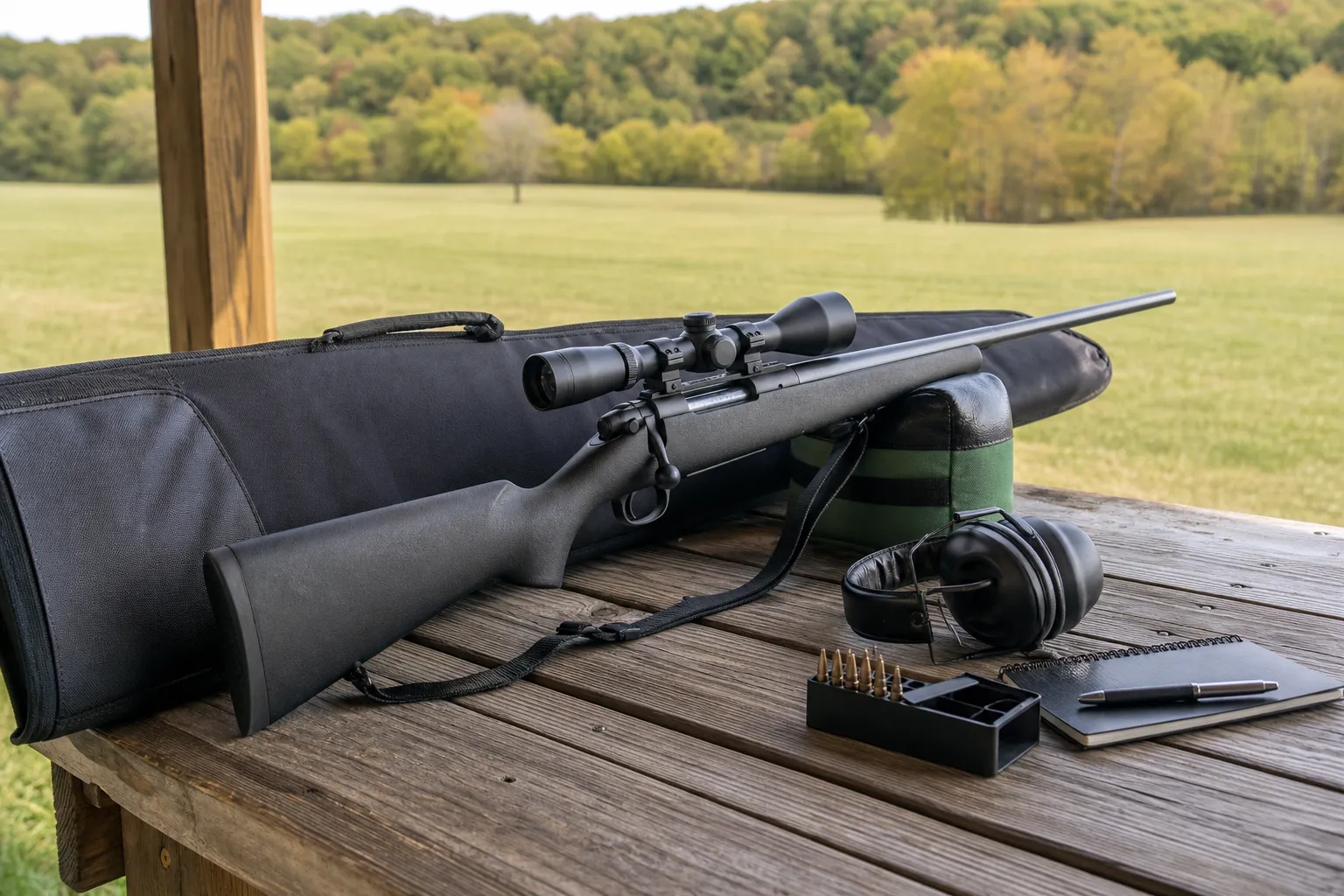
An LPVO is a Low Power Variable Optic: a riflescope with adjustable magnification that starts at 1x and can be turned up for more magnification. Vortex describes LPVOs as riflescopes that start at true 1x and commonly top out at 4x, 6x, 8x, or 10x.
What LPVO means
LPVO stands for Low Power Variable Optic. The key words are “variable optic.” It is not a red dot sight. It is a riflescope with a magnification range.
Vortex uses the same basic idea. It describes an LPVO as a riflescope that starts at true 1x and goes to a higher magnification, such as 4x, 6x, 8x, or 10x. Trijicon lists examples with true 1x that reach 4x or 8x, and EOTECH lists a 1-10x first focal plane riflescope.
Common LPVO ranges include:
| LPVO range | What the numbers mean |
|---|---|
| 1-4x | Starts at 1x and zooms to 4x |
| 1-6x | Starts at 1x and zooms to 6x |
| 1-8x | Starts at 1x and zooms to 8x |
| 1-10x | Starts at 1x and zooms to 10x |
How to read 1-6x24 and similar names
LPVO names usually tell you the magnification range and the objective lens diameter. Vortex explains that a name such as 1-6x24 means the scope is 1x at the low end, 6x at the high end, and has a 24 mm objective lens.
That same pattern appears across many LPVO product names. Trijicon lists a Credo 1-4x24 low power variable riflescope. Vortex lists a Venom 1-6x24 with 1-6x magnification and a 24 mm objective lens. Trijicon lists an AccuPoint 1-8x24, and EOTECH lists a Vudu 1-10x28.
In that naming style:
- The first number is the lowest magnification.
- The second number is the highest magnification.
- The number after the “x” in the objective size, such as 24 or 28, is the objective lens diameter in millimeters.
What “true 1x” means
Manufacturers use “true 1x” to mean the low end is optically 1x, or not magnified. Trijicon lists the Credo 1-4x24 as having true 1x magnification, and Trijicon also lists the AccuPoint 1-8x24 as offering true 1x with the ability to reach 8x.
Vortex cautions that even when an LPVO is optically true 1x, it may not feel exactly like looking through a red dot or holographic sight. Vortex explains that LPVOs use a full optical lens system, which is part of why the 1x view can feel different from a non magnifying sight.
The diopter setting also matters. Vortex says the diopter setting on an LPVO affects how close the lowest power image looks to true 1x for the individual shooter.
So “true 1x” answers the magnification question, but not every handling or sight picture question. It tells you the optic is designed to be optically 1x at its low end. It does not make the LPVO the same thing as a red dot.
Illumination on an LPVO
Illumination lights part or all of the reticle so the aiming point has more contrast against the target or background. Vortex describes an illuminated reticle on the Venom 1-6x24 as providing precise aiming under low light conditions.
Do not assume every illuminated LPVO reticle is intended to look like a red dot in bright daylight. Vortex says riflescope illumination is often intended for low light or dark, cluttered backgrounds, while some LPVO reticles are designed to be very bright.
Manufacturers use different illumination systems. Trijicon describes one Credo LPVO setup as using user selectable LED brightness settings with off positions between settings. Trijicon also describes one AccuPoint LPVO setup as battery free, using tritium and fiber optic technology that automatically adjusts to lighting conditions.
EOTECH lists the Vudu 1-10x28 FFP as using a CR2032 battery. That is one example of a battery powered LPVO illumination system.
When comparing LPVOs, read the manufacturer’s reticle and illumination specifications rather than assuming that “illuminated” means the same thing across models.
First focal plane vs second focal plane
LPVOs can use first focal plane or second focal plane reticles. Leupold explains that a riflescope reticle can be installed closer to the objective lens, called front or first focal plane, or closer to the ocular lens, called rear or second focal plane.
For a deeper explanation, see our FFP vs SFP guide.
Leupold explains that the erector system controls magnification as the power selector ring is adjusted. In a first focal plane scope, the reticle is placed before the magnifying lenses, so it is magnified along with the image. Leupold says Mil or MOA lines in a front focal plane scope remain accurate throughout the magnification range.
In a second focal plane scope, Leupold says the reticle stays the same apparent size at every magnification. Leupold also says rear focal plane subtensions are accurate on one specific magnification, typically maximum magnification.
That distinction matters more when you plan to use reticle marks for holds or ranging at different magnifications. Vortex says 1-8x and 1-10x LPVOs can benefit more from first focal plane reticles because they have more usable magnification settings between the lowest and highest powers.
There is also a tradeoff at low power. Leupold notes that a first focal plane reticle may be harder to see on low magnification.
LPVO vs red dot
An LPVO and a red dot are different optic types. The LPVO is a variable magnification riflescope. A red dot can be a non magnifying reflex sight.

Aimpoint lists the MPS II as a non magnifying sight with unlimited eye relief.
An LPVO adds variable magnification. That is the central difference. Vortex describes LPVOs as riflescopes that start at true 1x and go to higher magnifications.
A red dot keeps the simpler non magnifying format. In Aimpoint’s MPS II example, the red dot has unlimited eye relief. By comparison, EOTECH lists the Vudu 1-10x28 LPVO with specified eye relief ranges at 1x and 10x.
That does not make one optic type automatically better. It means they solve the sighting problem in different ways. If you want variable magnification in one riflescope, the LPVO category is the one to study. If you want a non magnifying reflex red dot sight, compare red dot specifications directly.
What to check before choosing an LPVO
Use the manufacturer’s specification sheet to confirm the details that matter for the model you are considering.
Check:
- Magnification range, such as 1-4x, 1-6x, 1-8x, or 1-10x.
- Objective lens diameter, such as 24 mm or 28 mm.
- Whether the reticle is first focal plane or second focal plane.
- How the illumination works.
- Whether illumination is battery powered or battery free.
- Eye relief specifications.
- Whether the manufacturer describes the low end as true 1x.
Also read the reticle information carefully. If the scope is second focal plane, Leupold says subtensions are accurate on one specific magnification, typically maximum magnification. If it is first focal plane, Leupold says Mil or MOA marks remain accurate throughout the magnification range, but the reticle may be less visible at low magnification.
The short version: an LPVO is a variable riflescope that starts at 1x and zooms higher. The details that separate one LPVO from another are the zoom range, focal plane, reticle design, illumination system, eye relief, and how the manufacturer describes the 1x view.
Frequently asked questions
What does LPVO stand for?
LPVO stands for Low Power Variable Optic. Vortex describes it as a riflescope that starts at true 1x and goes to higher magnifications such as 4x, 6x, 8x, or 10x.
Is an LPVO the same as a red dot?
No. An LPVO is a variable magnification riflescope. Vortex cautions that even when an LPVO is optically true 1x, it may not feel exactly like looking through a red dot or holographic sight because it uses a full optical lens system.
What does 1-6x24 mean?
Vortex explains that 1-6x24 means 1x at the low end and 6x at the high end, while 24 means the objective lens is 24 mm in diameter.
Does true 1x feel just like a red dot?
Not necessarily. Vortex says true 1x LPVOs are optically true 1x, but also cautions that an LPVO may not feel exactly like a red dot or holographic sight because it uses a full optical lens system.
Should an LPVO be FFP or SFP?
It depends on how the reticle will be used. Leupold says first focal plane Mil or MOA marks remain accurate throughout the magnification range, while second focal plane subtensions are accurate on one specific magnification, typically maximum magnification.
Does every LPVO have daylight bright illumination?
No. Vortex says riflescope illumination is often intended for low light or dark, cluttered backgrounds, although some LPVO reticles are designed to be very bright.
Sources
- Low Power Variable Optic (LPVO), SIG SauerOfficial source. Accessed October 22, 2026.
- Is an LPVO right for you?, Vortex OpticsOfficial source. Accessed October 22, 2026.
- What’s the Best Optic for Your AR? Let’s Talk LPVO’s, Vortex OpticsOfficial source. Accessed October 22, 2026.
- Venom 1-6x24 SFP, Vortex OpticsOfficial source. Accessed October 22, 2026.
- Trijicon Credo 1-4x24, CR424-C-2900011, TrijiconOfficial source. Accessed October 22, 2026.
- Trijicon AccuPoint 1-8x24, TR35-C-200183, TrijiconOfficial source. Accessed October 22, 2026.
- Vudu 1-10x28 FFP, EOTECHOfficial source. Accessed October 22, 2026.
- MPS II 4 MOA Red Dot Reflex Sight, AimpointOfficial source. Accessed October 22, 2026.
- Front Focal Plane Optics vs. Rear Focal Plane Optics, LeupoldOfficial source. Accessed October 22, 2026.