Kentucky Windage
Kentucky windage means aiming off to one side, usually into the wind, instead of changing the sight or scope setting. In modern optics, it contrasts with dialing turret corrections or using known MOA or MIL reticle holds.
By RaiS. Reviewed by RaiS. Published . 5 min read.
Research and drafting were assisted by AI. RaiS checked the facts against the sources below and approved this page.
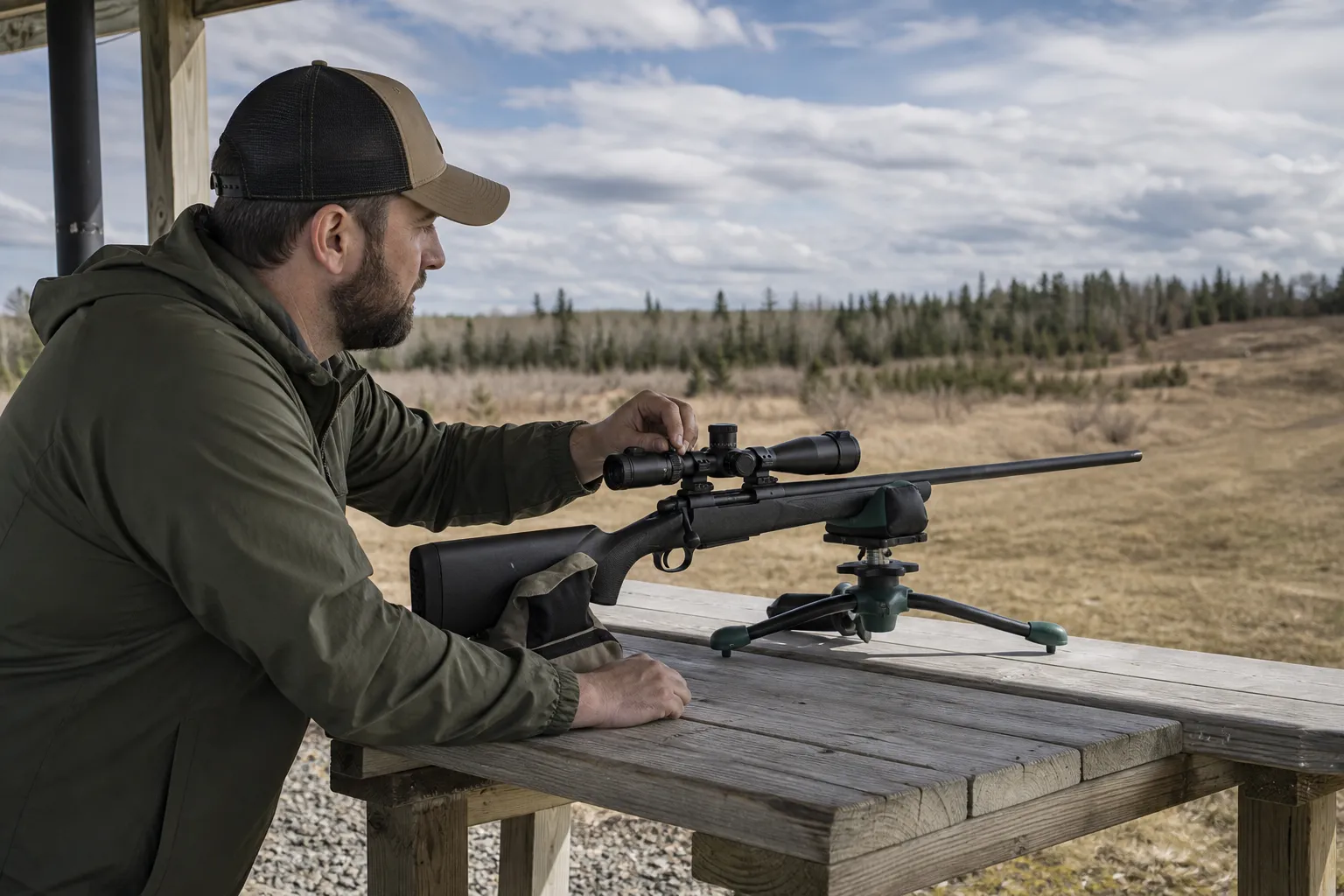
Kentucky windage means changing your point of aim left or right of the target, usually to compensate for wind, without adjusting the sights or scope. Some shooters use the phrase loosely for any “aiming off,” including holding high for bullet drop, but windage is the horizontal correction. The vertical correction is elevation.
What Kentucky windage means
In plain language, Kentucky windage is a holdoff. Instead of moving a scope turret or sight adjustment, the shooter aims to one side of the intended point of impact. Winchester Optics defines it as aiming left or right of the target without adjusting the scope to account for wind effects on the projectile.
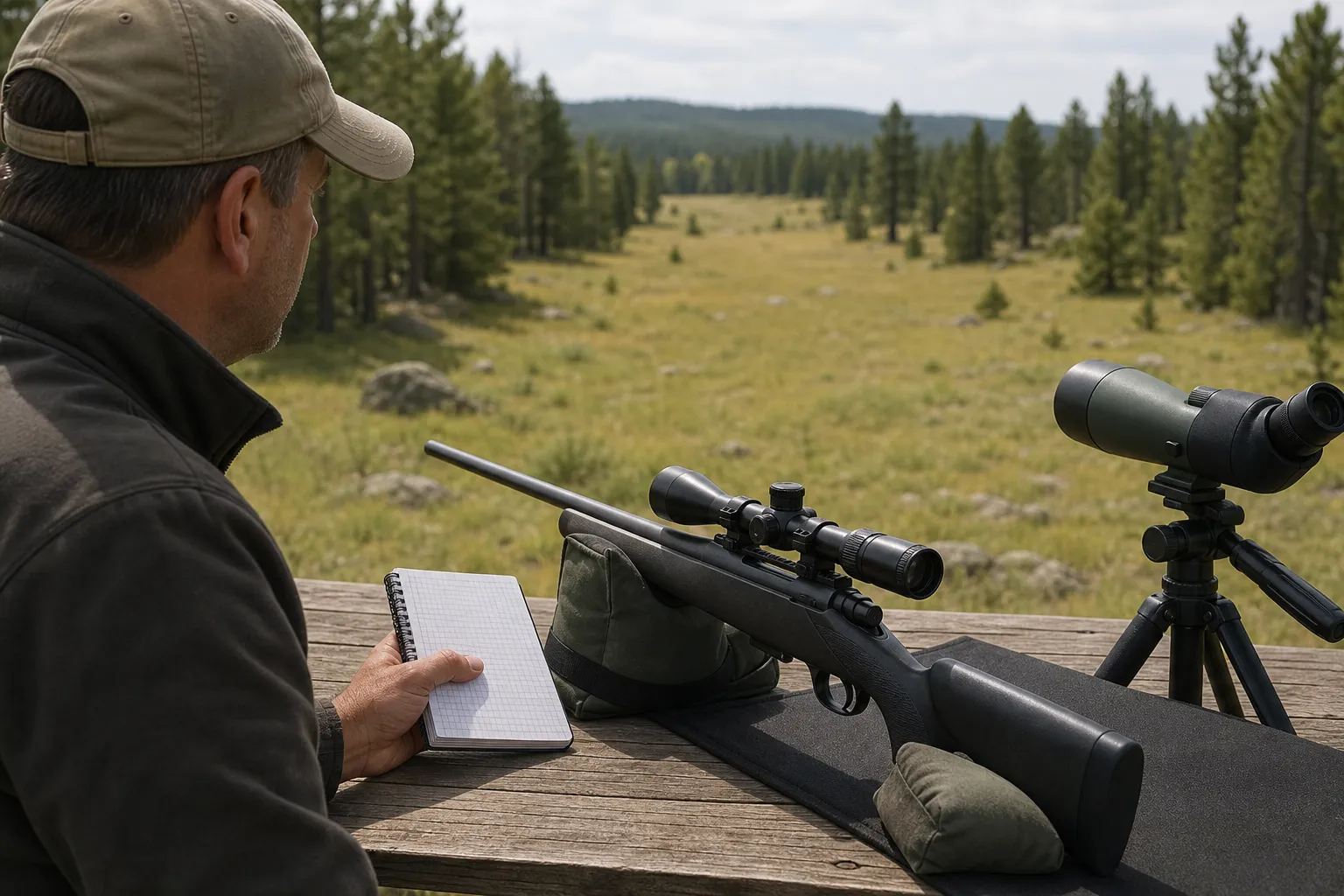
NRA Family describes the same basic idea as simply aiming into the wind. A 1951 U.S. Air Force small arms training manual described Kentucky windage as moving the sight picture off the target bull to counter wind drift.
The key idea is that the sight setting does not change. The shooter changes the sight picture.
Windage versus elevation
Windage and elevation are related, but they are not the same correction. Kentucky Hunter Safety Course material describes windage as moving shots from side to side, and elevation as moving shots up or down.
That distinction matters because the word “windage” is horizontal. A left or right hold for wind is Kentucky windage in the strict sense.
A vertical hold is different. Winchester Optics describes hold over or hold under as changing point of aim above or below the target without adjusting the scope. Boone and Crockett Club uses “Kentucky elevation” as a name for a similar hold used to compensate for trajectory drop with open sights or a plain reticle.
In casual conversation, you may hear “Kentucky windage” used for both wind and drop. In a glossary sense, it is clearer to reserve windage for the side to side correction and call the vertical version holdover, holdunder, or Kentucky elevation.
Where the name comes from
The name points back to the Kentucky rifle, the common name for the American longrifle. NRA American Rifleman describes the Kentucky rifle as a firearm produced during the 18th and 19th centuries, and says the “Kentucky rifle” name was popularized by the 1822 ballad “The Hunters of Kentucky.”
The historical name can be a little misleading. The Henry Ford states that the Pennsylvania or Kentucky long rifle developed in Lancaster, Pennsylvania, in the early 1700s. NRA Museums also says Lancaster was central to the evolution of the long rifle, and the Kentucky Rifle Association says researchers generally agree that the Kentucky rifle was born in Pennsylvania.
That background helps explain the phrase. Holding off can be a practical sighting method. A shooter using a holdoff has to know the rifle, the sight picture, and the conditions.
Kentucky windage with open sights
With open sights, Kentucky windage can mean shifting the sight picture rather than changing the sight hardware.
The central concept is that the shooter is not changing an adjustment. The shooter is intentionally using a different visual reference.
This is why Kentucky windage is often described as experience based. Boone and Crockett Club describes it as a guesstimate method done by instinct and experience. NRA Family notes that the advantage is speed and simplicity.
How it differs from dialing a scope
Modern riflescopes give shooters another option: dial the correction. Nightforce explains that scope adjustments are angular, not linear. Leupold states that each click of a dial moves point of impact by the increment marked on the dial, and lists common increments such as 1/4 MOA, 1/2 MOA, and 0.1 MIL.
That is different from Kentucky windage because the optic setting changes. Instead of aiming off in empty space, the shooter turns the windage or elevation turret to move the point of impact by a measured angular amount.
MOA and MRAD are the units commonly used for those adjustments. Vortex explains that MOA, or minutes of angle, and MRAD, or milliradians, are angular units of measure. Nightforce gives true MOA as 1.047 inches at 100 yards, and gives 1 mil as 3.6 inches at 100 yards.
For a fuller comparison of those angular units, see our live MOA vs MIL comparison.
How it differs from reticle holds
Reticle holds sit between pure Kentucky windage and dialing. The shooter still holds away from the desired point of impact, but the hold uses known reference marks in the reticle.
Leupold explains reticle wind holds as using MOA hash marks to compensate for wind speed and direction, and advises holding into the wind when using those references. Vortex explains that with a marked reticle, a shooter can hold on the corresponding hashmark or dial the correction.
That is more structured than guessing open space. A marked reticle gives a measured reference, such as an MOA or MRAD hash mark. Vortex also says shooters using an MRAD reticle should learn windage and moving target corrections in MRAD rather than inches.
So the three ideas are related but not identical:
| Method | What changes | Main idea |
|---|---|---|
| Kentucky windage | Point of aim | Aim off to one side without changing the sight or scope setting |
| Dialing turrets | Scope setting | Turn the turret to move point of impact by a marked MOA or MIL increment |
| Reticle hold | Point of aim using reticle marks | Hold on a known hash mark or stadia reference instead of guessing empty space |
Why shooters still use the term
Kentucky windage remains useful as a simple term for a fast holdoff. It is easy to understand: if the wind pushes the projectile one way, the shooter aims into the wind rather than adjusting the sight.
The tradeoff is precision. The 1951 U.S. Air Force manual cautioned that the Kentucky windage method is not always reliable. Boone and Crockett Club’s description also frames it as an instinct and experience method, not a measured correction.
For modern riflescopes, a confirmed zero, verified ballistics, and known reticle subtensions give a more repeatable system than an unmeasured hold in empty space. Kentucky windage is a useful term to know, but it should not be confused with a measured turret correction or a verified reticle hold.
What to check next
If you are learning the term for range use, check your optic manual for its adjustment units and click values. Leupold and Nightforce both emphasize that scope adjustments are angular, and those angular units only help when you understand how your own scope, reticle, and zero work together.
If you are applying any sighting method while hunting, confirm the current rules and safety requirements with the appropriate state, provincial, or territorial wildlife agency before you go afield.
Frequently asked questions
What is Kentucky windage?
Kentucky windage is aiming left or right of the target, usually into the wind, without adjusting the sight or scope setting.
Is Kentucky windage the same as holdover?
Not exactly. Windage is a side to side correction. Holdover or holdunder is the vertical counterpart, meaning the shooter aims above or below without adjusting the scope.
Where does the term Kentucky windage come from?
The name is tied to the Kentucky rifle, the common name for the American longrifle. Historical sources describe that rifle as having strong Pennsylvania roots, especially around Lancaster, before the Kentucky name became widely popular.
How is Kentucky windage different from dialing turrets?
With Kentucky windage, the shooter changes point of aim while the sight setting stays the same. With dialing, the shooter turns the scope turret to move point of impact by a marked MOA or MIL increment.
How is Kentucky windage different from using reticle marks?
A reticle hold uses known hash marks or stadia in the reticle as measured references. Kentucky windage often means holding off by judgment or experience rather than using a marked angular reference.
Is Kentucky windage a precise method?
It can be fast and simple, but historical and shooting references describe it as experience based and not always reliable. Modern measured options include turret dialing and verified reticle holds.
Sources
- Riflescope Glossary, Winchester OpticsOfficial source. Accessed October 28, 2026.
- How to Read the Wind, NRA Family. Accessed October 28, 2026.
- Introduction to Small Arms 3, United States Air Force Officer Candidate School, hosted by AirForceBase.net. Accessed October 28, 2026.
- Adjusting Your Sight, Kentucky Hunter Safety Course, Hunter-ed.comOfficial source. Accessed October 28, 2026.
- Ranging, Rangefinders, and Trajectory Compensation, Boone and Crockett Club. Accessed October 28, 2026.
- Kentucky Rifle Exhibit Opens at NRA National Firearms Museum, American Rifleman. Accessed October 28, 2026.
- American Long Rifle, circa 1810, The Henry FordOfficial source. Accessed October 28, 2026.
- Anstat Pennsylvania Kentucky Rifle, NRA National Firearms MuseumOfficial source. Accessed October 28, 2026.
- About the Kentucky Rifle Association, Kentucky Rifle Association. Accessed October 28, 2026.
- The Kentucky Rifle, U.S. Naval Institute Proceedings. Accessed October 28, 2026.
- Learning to Shoot with Open Sights: Part 1, Pyramyd AIR. Accessed October 28, 2026.
- NXS Owner’s Manual, Nightforce OpticsOfficial source. Accessed October 28, 2026.
- Riflescope Quick Start Guide, LeupoldOfficial source. Accessed October 28, 2026.
- FAQs, Vortex OpticsOfficial source. Accessed October 28, 2026.
- Leupold Shooting System, LeupoldOfficial source. Accessed October 28, 2026.
- HSR-5i Reticle Manual, Vortex Optics CanadaOfficial source. Accessed October 28, 2026.