Scope Magnification Explained: What 3-9x40 Means
A 3-9x40 riflescope is a variable power scope that can be set from 3x to 9x magnification and has a 40 mm objective lens. The numbers tell you the basic size and power range, but field of view, exit pupil, light transmission, eye relief, and parallax also matter.
By RaiS. Reviewed by RaiS. Published . 6 min read.
Research and drafting were assisted by AI. RaiS checked the facts against the sources below and approved this page.
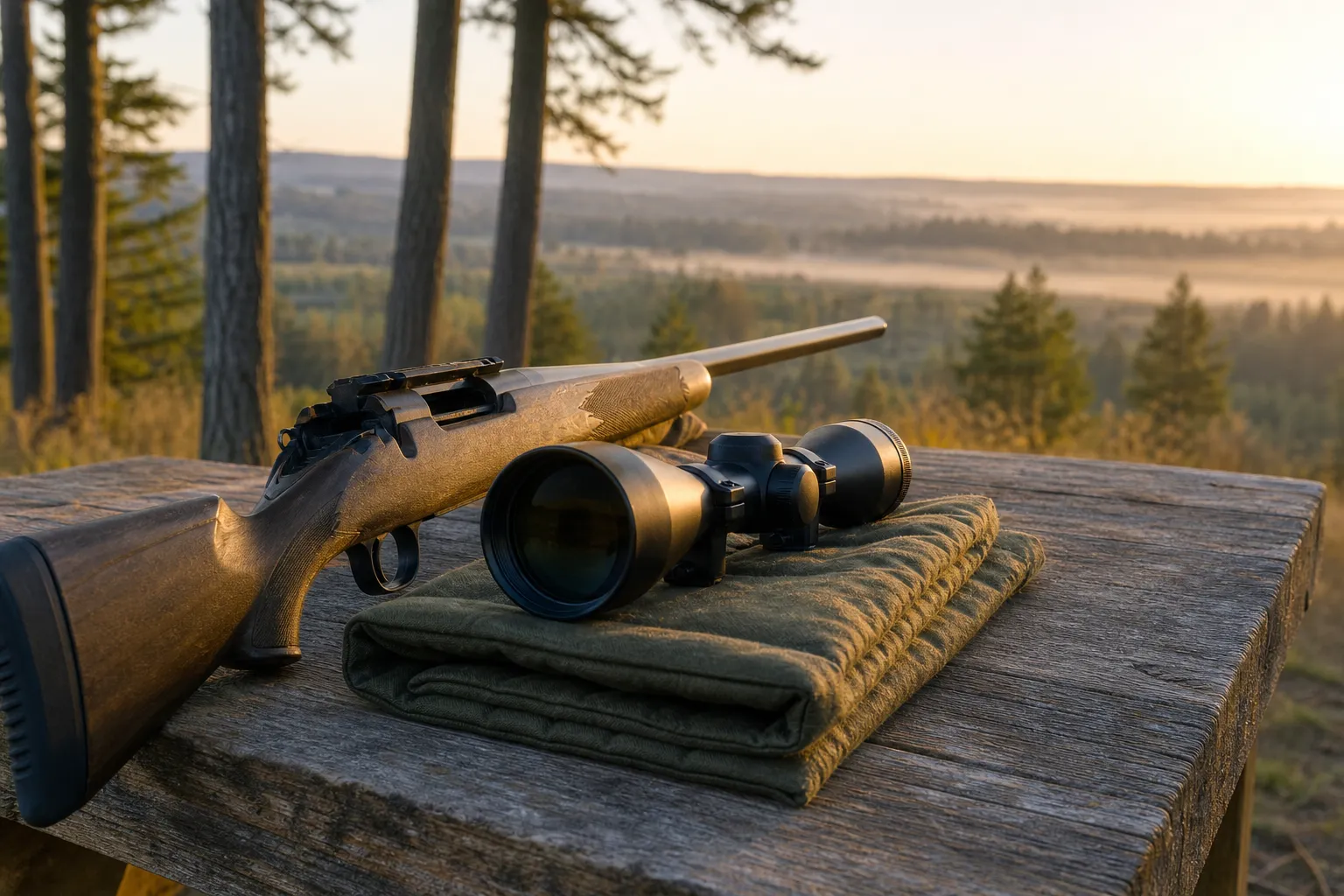
A 3-9x40 scope is a variable power riflescope with magnification that can be set from 3x to 9x and an objective lens diameter of 40 mm. Leupold says the numbers after a riflescope series name identify the magnification range, and Nikon lists a 3-9x40 riflescope model with actual magnification from 3x to 9x and a 40 mm objective diameter.
What 3-9x40 means
In 3-9x40, the “3-9” part is the magnification range. Leupold defines the first number in a variable range as the lowest magnification and the higher number as the maximum magnification. In this example, the low end is 3x and the high end is 9x.
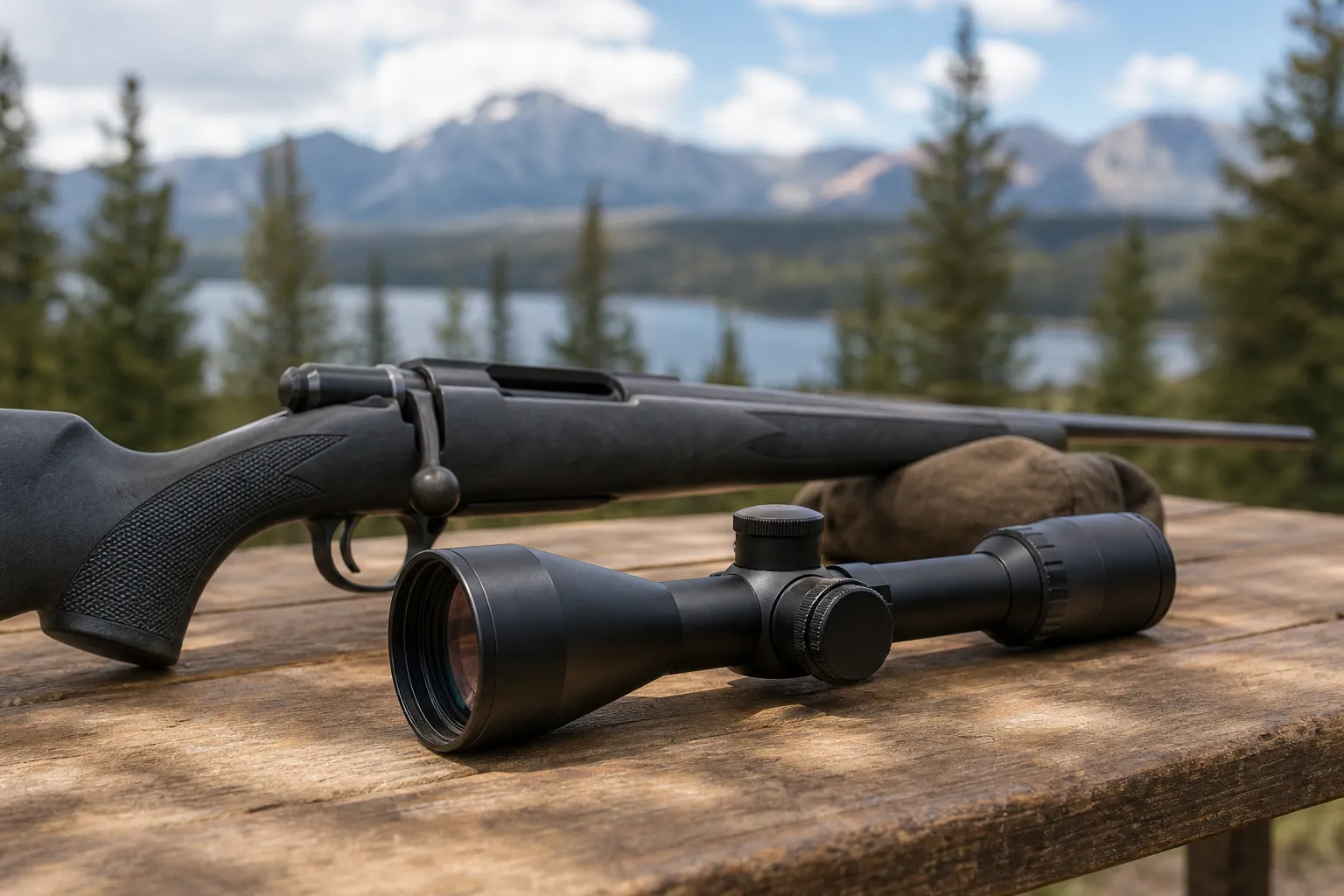
The “40” is the objective lens diameter in millimeters. Leupold says the objective lens is the lens nearest the objects being viewed, and its diameter in millimeters is the last number listed on the scope.
Nikon’s riflescope manual gives a simple real world example:
| Scope marking | What the marking tells you |
|---|---|
| 3-9x40 | Variable magnification from 3x to 9x |
| 40 | Objective diameter of 40 mm |
| Field of view | 33.8 to 11.3 feet at 100 yards, from minimum to maximum magnification |
Magnification describes apparent size. Leupold says riflescope magnification determines how many times closer a target appears compared with naked eye viewing. Nikon defines magnification as the ratio of apparent object size compared with what a viewer sees with the naked eye.
So at 3x, Leupold says the subject appears three times larger and closer. At 9x, the image appears more enlarged than it does at 3x, but the view also changes in other important ways.
Fixed power versus variable power
A fixed power scope has one magnification setting. Leupold describes fixed scopes as having a single magnification power that cannot be changed. A marking such as 4x32 is a fixed power format: 4x magnification with a 32 mm objective lens.
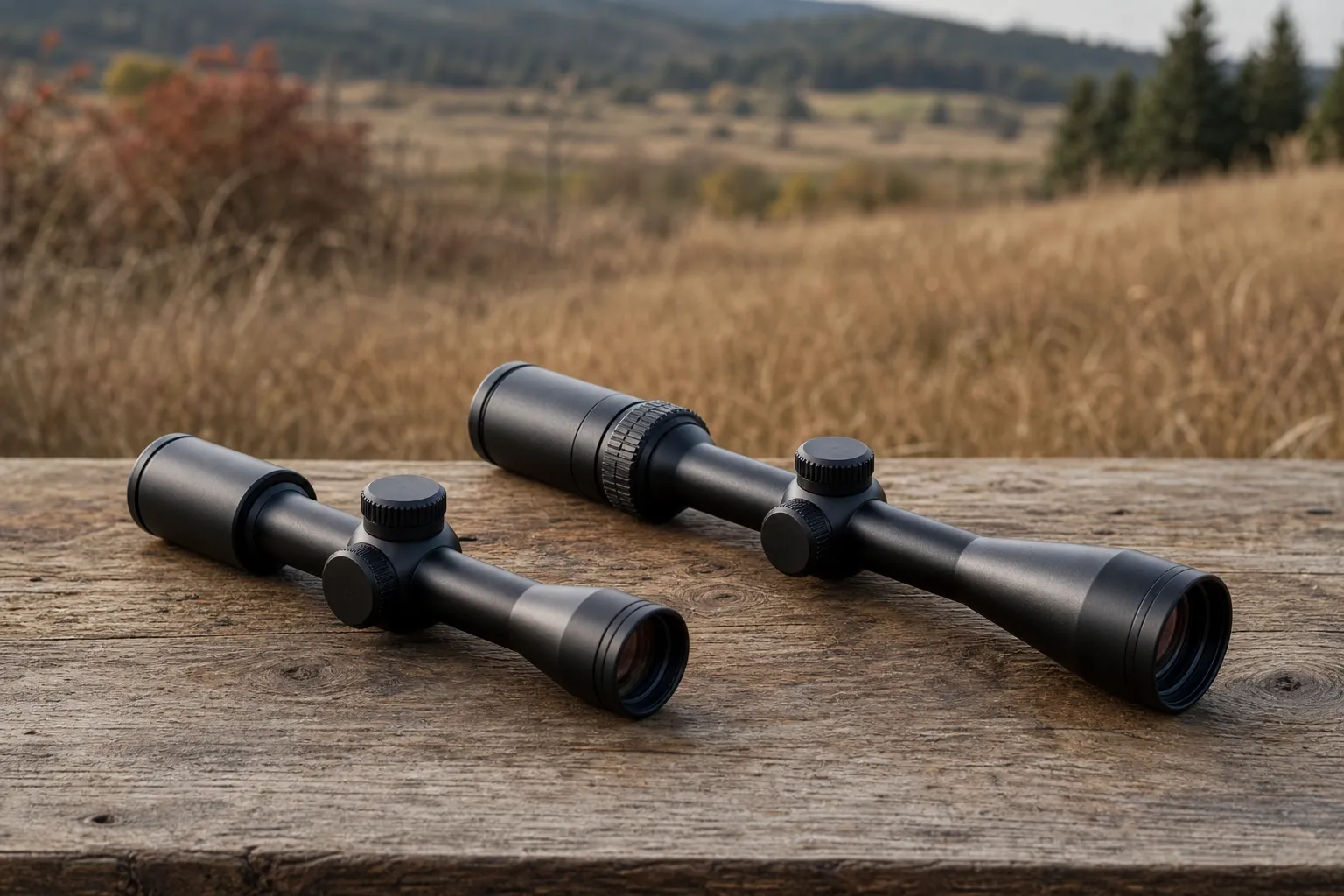
A variable power scope has a range of magnifications. Leupold says variable scopes have a range of magnification powers, and examples such as 3-9 and 4-12 can be set anywhere within those listed ranges.
A 3-9x40 is therefore a variable power scope. You can use the lower end of the range when you want a wider view, then increase magnification when you want the target to appear larger.
Magnification and field of view
Field of view is how much you can see through the optic at one time. Leupold defines field of view as the amount visible through an optic at any given moment.
Higher magnification makes the image appear larger, but it narrows the visible area. ZEISS says lower magnification generally gives a larger field of view than higher magnification. Leupold also says field of view becomes smaller as magnification goes higher.
Nikon’s 3-9x40 riflescope manual shows the tradeoff clearly. It lists field of view at 100 yards as 33.8 feet at minimum magnification and 11.3 feet at maximum magnification. Nikon states that the listed field of view range runs from minimum magnification to maximum magnification.
That means the same 3-9x40 scope gives a wider view at 3x and a narrower view at 9x. The higher setting may make the target look larger, but you see less of the area around it.
Riflescope field of view is usually listed differently than binocular field of view. ZEISS says riflescopes generally have a smaller field of view and that it is given at 100 m instead of 1,000 m. Leupold notes that field of view can be listed as a length at a specific distance, such as yards at 100 yards, or as an angle. For binocular markings, see our Binocular Numbers Explained guide.
ZEISS also says field of view cannot be calculated from the type designation alone because it depends on optical design. In other words, two scopes with similar numbers can still have different field of view specifications.
Objective lens diameter and light
The objective lens is the front lens, the one nearest the target. In 3-9x40, the objective lens diameter is 40 mm.
A larger objective can collect more light when magnification is the same. Leupold says larger objective lenses allow more light to enter an optic. Nikon similarly says that, given the same magnification, a larger objective diameter provides greater light collecting power, higher resolution, and a brighter image.
There are tradeoffs. Leupold says a larger objective lens may require taller mounts so the optic does not touch the rifle. Nikon notes that large diameter objective lenses make optics bigger and heavier.
Objective size is not the whole brightness story. Nikon explains that some light reflects from lens surfaces, reducing the amount of light that passes through the lens and potentially causing ghosting and flare. Nikon also says multilayer coating reduces reflected light more effectively than single layer coating and increases light transmittance.
That is why a simple number such as 40 mm tells you objective diameter, not total optical quality. Lens coatings and optical design affect how much light reaches your eye and how the image looks.
Exit pupil and brightness
Exit pupil is the beam or bright circle of light leaving the eyepiece. Leupold defines exit pupil diameter as the width of the beam of light between the ocular lens and the user’s eye. Nikon describes exit pupil as the bright circle seen in the center of an eyepiece when the objective lenses are pointed toward bright light.
Nikon gives the basic formula:
Exit pupil = effective objective diameter ÷ magnification
Using that formula for a 3-9x40 scope:
| Setting | Calculation | Exit pupil |
|---|---|---|
| 3x | 40 ÷ 3 | About 13.3 mm |
| 9x | 40 ÷ 9 | About 4.4 mm |
Exit pupil matters most in dim light. Nikon says the human pupil normally opens about 2 mm in daylight and about 7 mm in the dark. Nikon also says that if an optic has a small exit pupil in the dark, the image will not appear as bright as it does with the naked eye.
ZEISS says magnification and lens aperture both affect image brightness through exit pupil, and that a larger exit pupil allows more light to reach the eye and makes the image brighter. ZEISS also says the eye pupil must be at least as large as the optic’s exit pupil to take full advantage of the emerging light intensity.
For riflescopes, ZEISS adds that a large and reliable exit pupil is particularly important for fast target acquisition.
Why more magnification is not always better
More magnification is useful only if it helps the situation. Leupold cautions that higher magnification is not always better because field of view gets smaller, scope weight can increase, and sensitivity to movement increases.
Nikon says higher magnification increases image instability from hand movement, narrows field of view, and lowers brightness. Vortex says lower magnification provides a bigger field of view and generally better low light performance when comparing similar scopes from the same family.
ZEISS also lists benefits of lower magnification, including a steadier image, a larger field of view, a larger exit pupil, and greater depth of field.
For typical hunting use, the practical lesson is simple: use enough magnification for the shot rather than choosing the highest number available. Leupold recommends matching magnification to the situation and choosing just enough power for the specific circumstances.
Other scope numbers to check
Magnification and objective diameter are the numbers most shooters notice first, but they are not the only scope specifications that matter.
Eye relief is important enough to read separately rather than reduce to a single sentence. See our Eye Relief guide for that topic.
Parallax is another separate riflescope concept. See our Parallax guide for a focused explanation.
When comparing scopes, check the manufacturer’s current specification table and manual for the exact model. Pay attention to magnification range, objective diameter, field of view, exit pupil, light transmission, mounting considerations, eye relief, and parallax information.
Frequently asked questions
What does 3-9x40 mean on a rifle scope?
It means the scope has variable magnification from 3x to 9x and a 40 mm objective lens. Leupold says the first number is the lowest magnification, the higher number is the maximum magnification, and the last number is the objective diameter in millimeters.
Is a 3-9x40 scope fixed or variable power?
It is variable power. Leupold describes variable scopes as having a range of magnification powers that can be set within the listed range, such as 3-9.
Does higher magnification give a wider view?
No. Leupold and ZEISS both state that field of view gets smaller as magnification increases. Nikon’s 3-9x40 example lists 33.8 feet at 100 yards at minimum magnification and 11.3 feet at maximum magnification.
How do you calculate exit pupil on a 3-9x40 scope?
Nikon gives the formula as objective diameter divided by magnification. For a 3-9x40, that is about 13.3 mm at 3x and about 4.4 mm at 9x.
Does a larger objective lens always mean a better scope?
A larger objective can collect more light at the same magnification, but objective size is not the whole story. Nikon says coatings affect light transmittance, and Leupold notes that larger objective lenses may require taller mounts.
Why not just choose the highest magnification?
Leupold cautions that higher magnification narrows field of view and increases sensitivity to movement. Nikon also says higher magnification increases image instability from hand movement, narrows field of view, and lowers brightness.
Sources
- Understanding The Numbers on Your Riflescope, LeupoldOfficial source. Accessed October 28, 2026.
- Riflescope Magnification 101, LeupoldOfficial source. Accessed October 28, 2026.
- Glossary, LeupoldOfficial source. Accessed October 28, 2026.
- Nikon Riflescope ProStaff Manual, NikonOfficial source. Accessed October 28, 2026.
- Magnification, Nikon Consumer Sport Optics GuideOfficial source. Accessed October 28, 2026.
- Effective diameter of the objective lens, Nikon Consumer Sport Optics GuideOfficial source. Accessed October 28, 2026.
- Exit pupil, Nikon Consumer Sport Optics GuideOfficial source. Accessed October 28, 2026.
- Lens coatings, Nikon Consumer Sport Optics GuideOfficial source. Accessed October 28, 2026.
- Field of View, ZEISS HuntingOfficial source. Accessed October 28, 2026.
- Part 3: Exit pupil, ZEISS HuntingOfficial source. Accessed October 28, 2026.
- Things to consider when investing in new glass, ZEISS HuntingOfficial source. Accessed October 28, 2026.
- ZEISS Conquest V4, ZEISSOfficial source. Accessed October 28, 2026.
- What Riflescope Magnification Should You Get?, Vortex OpticsOfficial source. Accessed October 28, 2026.