The Longbow: History, Design, and Use Today
A longbow is a traditional bow with relatively straight limbs, best known in English and Welsh military history and still used today in traditional target archery and bowhunting. Modern rules vary, so the word can mean a broad bow style in casual use or a specific equipment class in competition.
By RaiS. Reviewed by RaiS. Published . 7 min read.
Research and drafting were assisted by AI. RaiS checked the facts against the sources below and approved this page.
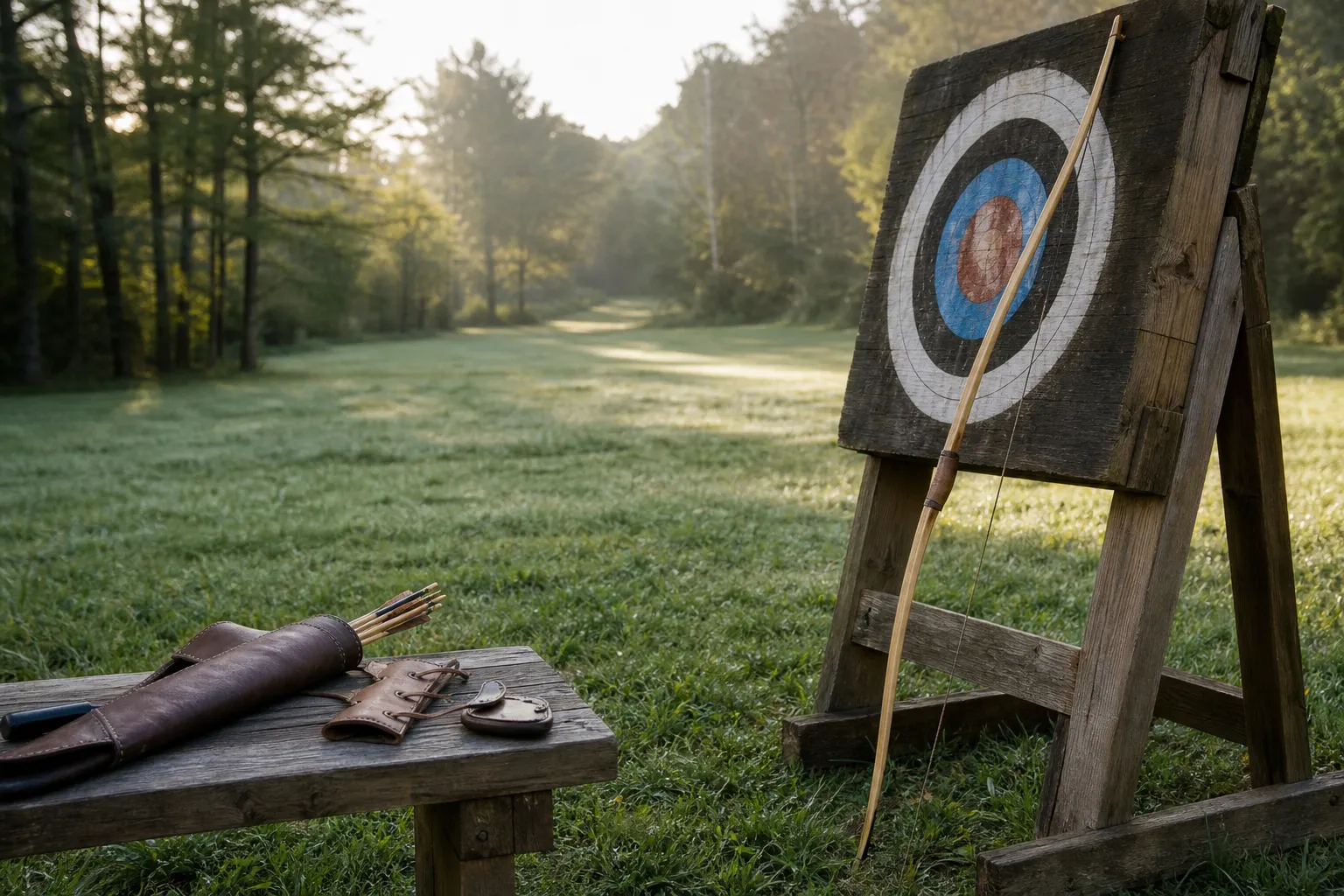
A longbow is a simple traditional bow with relatively straight limbs, described by Archery Canada as straight when unstrung and slightly C shaped when strung. In everyday archery, the word usually points to that plain, limb driven design. In formal competition, the definition can be narrower, with specific rules for bow shape, arrows, fletching, and accessories.
What a longbow is
Archery Canada recognizes three basic bow types: recurve, compound, and longbow. Its basic equipment guide describes the longbow as completely straight when unstrung, then slightly C shaped when strung.
That makes the longbow different from modern bows that use more visible geometry or mechanical help. Archery Canada also says longbows are shot without aiming or stabilizing features on the bow.
For a traditional archer, “longbow” is often a broad, practical word. It may describe a tall, simple bow with no sights, no wheels, and no stabilizers. For a tournament archer, the exact meaning depends on the rulebook. World Archery’s Longbow Division requires the bowstring to touch only the string nocks when the bow is strung.
World Archery’s Longbow Division also sets a minimum bow length of 150 cm. That competition rule is not the same thing as a universal definition for every historical bow or every traditional archery event. The safest way to use the term is to separate the general bow style from the formal class being discussed.
English longbow history
The English longbow is best known through its role in medieval warfare. Royal Armouries says the longbow was used for hunting and in medieval warfare, and describes it as the favored weapon of English and Welsh infantry.
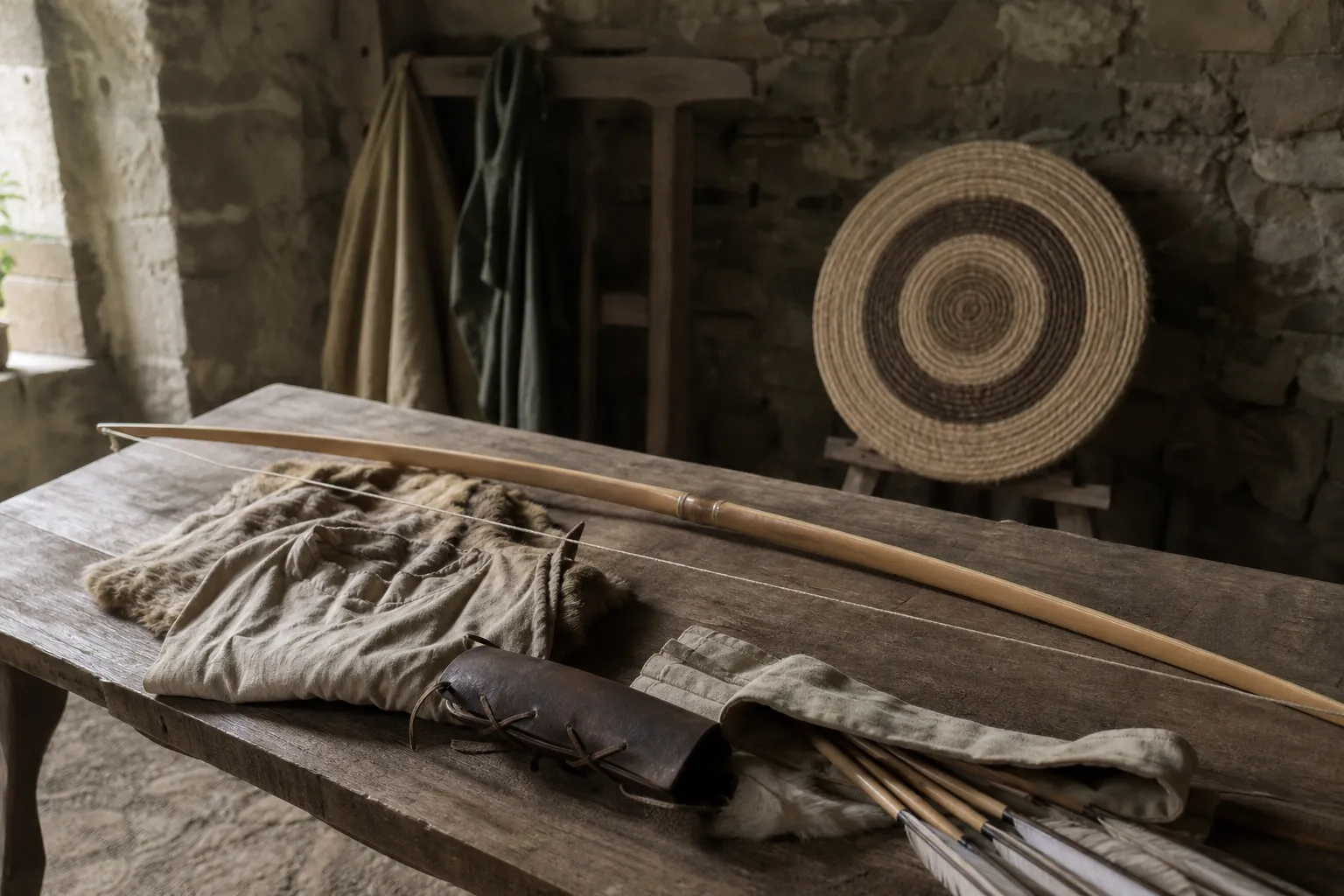
Royal Armouries gives a usual longbow length of about 1.8 m, or 6 ft. It says longbows were often made of yew, with elm, ash, and laburnum also used. Bowstrings were made of hemp or flax.
In its Hundred Years’ War account, Royal Armouries places the longbow in the story of battles such as Crécy, Poitiers, and Agincourt. At Agincourt, which Royal Armouries dates to October 25, 1415, Henry V’s archers were protected by wooden stakes.
Royal Armouries estimates that a longbow archer could shoot 10 to 12 arrows per minute. It also gives a believed longbow range of about 229 m, or 250 yd, perhaps more.
That rate of shooting and reach help explain why the longbow has such a strong place in English military memory. Still, it should not be reduced to a simple claim that arrows always pierced armor. Royal Armouries says good armor was often effective against arrow strikes, so the longbow’s battlefield effect depended on more than bow power alone.
The Mary Rose evidence
The Mary Rose finds are central to modern understanding of Tudor longbows. The Mary Rose Trust says the collection includes 172 longbows, over 2,000 complete arrows, and about 7,000 fragments. It calls this recovered archery material the only precisely dated archery assemblage from any historical period.
The Mary Rose Trust says all the longbows are single piece yew bows using heartwood and sapwood. That detail matters because yew longbows are often discussed as “self bows,” meaning bows made from one piece of wood rather than laminated from separate materials.
The Trust gives Mary Rose longbow lengths from 1,839 mm to 2,113 mm. It also gives suggested draw weights between 65 and 175 lb, with a peak at 110 lb.
The arrows are just as important to the picture. The Mary Rose Trust says most studied Mary Rose arrows are poplar. Together, the bows and arrows show a complete military archery system, not just isolated display pieces.
For history minded archers, the Mary Rose material is useful because it anchors discussion in recovered objects. It shows the size, wood choice, and estimated draw weights of bows from a specific historical context, while also showing the arrow materials used with them.
Construction and modern longbow types
Historically, Royal Armouries says longbows were often made of yew, while elm, ash, and laburnum were also used. Royal Armouries also says bowstrings were made of hemp or flax. The Mary Rose Trust’s recovered bows add a more specific example: single piece yew bows using heartwood and sapwood.
A yew self bow is the classic image of the English longbow. In that form, the bow is one continuous wooden stave. The Mary Rose Trust’s description of heartwood and sapwood is one reason yew has such a close association with the type.
Modern competition longbows can be broader in construction, depending on the rule set. World Archery has a Longbow Division with equipment rules for bow construction and setup. Its rules allow any material or combination of materials for the bow, but they restrict other parts of the setup.
World Archery’s Longbow Division requires natural feather fletching. It does not allow weights, stabilizers, or vibration dampeners. It also does not permit string walking or face walking.
Those rules show why “longbow” can mean different things in different conversations. A historian may be talking about yew bows from a medieval or Tudor context. A 3D archer may be talking about a World Archery equipment division. A bowhunter may simply mean a traditional bow with no sights, pulleys, or stabilizers.
Longbow vs recurve and compound bows
A recurve bow differs from a longbow mainly in limb shape. Archery Canada distinguishes recurves by their curved limb tips, while it describes longbows as straight when unstrung and slightly C shaped when strung.
World Archery identifies the recurve as the bow style used at the Olympic Games. That does not make every recurve an Olympic setup, but it does explain why many modern target archers meet the recurve first through Olympic style archery.
A compound bow is different again. Archery Canada distinguishes compound bows by wheels and cables. World Archery describes the compound bow as using pulleys and cables to make full draw easier to hold.
In plain terms:
| Bow type | Basic identifying feature | Context from archery organizations |
|---|---|---|
| Longbow | Straight when unstrung, slightly C shaped when strung | Archery Canada lists it as one of the three basic bow types and says it is shot without aiming or stabilizing features on the bow |
| Recurve | Curved limb tips | World Archery identifies the recurve as the Olympic Games bow style |
| Compound | Wheels, cables, pulleys | World Archery says pulleys and cables make full draw easier to hold |
The longbow’s appeal is its simplicity. Compared with a modern compound, it has no pulley system. Compared with many modern recurves, it is usually discussed as a more stripped down traditional bow. That simplicity is also why competition rulebooks spend so much space defining what is and is not allowed.
Traditional archery today
Longbows remain part of modern traditional archery. USA Archery lists Traditional Longbow and Modern Longbow among its traditional bow divisions. It says those traditional bow divisions represent equipment used before modern Olympic recurves and compound bows.
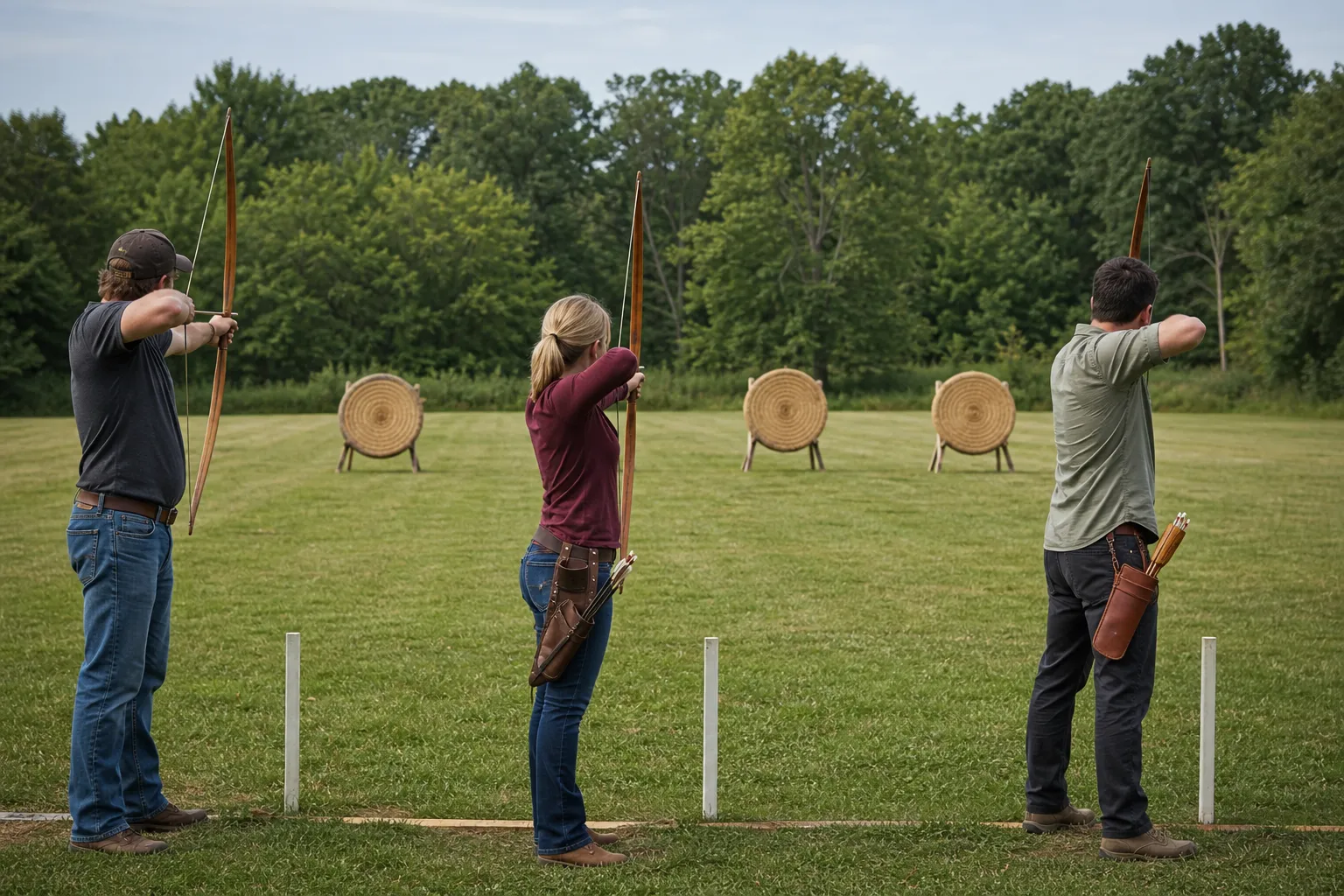
USA Archery also says modern longbows still provide a simple bow challenge with wood arrows.
World Archery also lists instinctive bow and longbow categories for 3D archery. For shooters who like field targets, wooded courses, and simple gear, those divisions help keep longbow shooting visible in organized archery.
A new traditional archer should read the rules for the event they plan to shoot. The same bow that feels like a longbow in casual language may or may not fit a specific longbow division, especially when rules address length, arrow material, fletching, sights, stabilizers, or shooting method.
Longbows and bowhunting basics
The longbow also remains part of bowhunting culture, especially among hunters who value traditional equipment. Royal Armouries notes that the longbow was used for hunting as well as medieval warfare, and that dual history is part of its appeal today.
For hunting, the key issues are safety, accuracy, and current regulations. Texas Parks and Wildlife Department’s hunter education material says most hunting shots are between 20 and 40 yards. It also says shot placement is critical and that hunters should become accurate before hunting.
Texas Parks and Wildlife Department also gives basic bow safety reminders. Its hunter education material says not to dry fire a bow, and says broadheads should be handled with extreme care.
A longbow asks a lot from the archer because it does not rely on sights, stabilizers, wheels, or cables in the way many modern setups do. That is part of the challenge, but it also makes practice and honest distance judgment especially important.
Before hunting with any bow, check the current rules from the wildlife agency for the state, province, territory, or specific hunting area. Seasons, equipment rules, draw weight requirements, broadhead rules, and licensing requirements can change, and they should be confirmed directly with the agency for the place and season you plan to hunt.
What to check before choosing a longbow
If you are choosing a longbow for history, target shooting, or hunting, first decide which meaning of “longbow” matters for your use.
For historical study, the English longbow is closely tied to Royal Armouries’ account of English and Welsh infantry and to the Mary Rose Trust’s recovered Tudor bows and arrows. For organized archery, the controlling definition is the rulebook for your event. For bowhunting, the controlling requirements are the current wildlife agency rules where you plan to hunt.
Check the official competition rulebook before entering a longbow division. Check your wildlife agency before hunting. And for historical discussion, stay close to museum and collection evidence, especially when discussing the English longbow’s construction, draw weights, battlefield role, and limits.
Frequently asked questions
What makes a bow a longbow?
Archery Canada describes a longbow as straight when unstrung and slightly C shaped when strung. In competition, definitions vary.
How long was an English longbow?
Royal Armouries gives a usual longbow length of about 1.8 m, or 6 ft. The Mary Rose Trust gives recovered Mary Rose longbow lengths from 1,839 mm to 2,113 mm.
What were Mary Rose longbows made from?
The Mary Rose Trust says all the recovered Mary Rose longbows are single piece yew bows using heartwood and sapwood.
How is a longbow different from a recurve bow?
Archery Canada describes longbows as straight when unstrung, while it distinguishes recurves by curved limb tips.
Can longbows be used for hunting today?
Longbows are part of bowhunting culture, but hunters must check current rules with the wildlife agency for the exact place and season. Texas Parks and Wildlife Department’s hunter education material says most hunting shots are between 20 and 40 yards and that shot placement is critical.
Sources
- Basic Archery Equipment, Archery CanadaOfficial source. Accessed October 23, 2026.
- Equipment, World ArcheryOfficial source. Accessed October 23, 2026.
- Book 4: Field and 3D Archery, Version 2026-01-27, World ArcheryOfficial source. Accessed October 23, 2026.
- About Traditional Target Archery, USA ArcheryOfficial source. Accessed October 23, 2026.
- The Hundred Years’ War 1337-1453, Royal ArmouriesOfficial source. Accessed October 23, 2026.
- Archery and longbows on the Mary Rose, The Mary Rose TrustOfficial source. Accessed October 23, 2026.
- Archery, Texas Parks and Wildlife DepartmentOfficial source. Accessed October 23, 2026.