The Ring-Necked Pheasant: Origins, Identification and Habitat
The ring necked pheasant is a familiar upland game bird in North America. Its success depends on mixed farmland, grassland, wetland, brush and winter cover arranged close together.
By RaiS. Reviewed by RaiS. Published . 5 min read.
Research and drafting were assisted by AI. RaiS checked the facts against the sources below and approved this page.
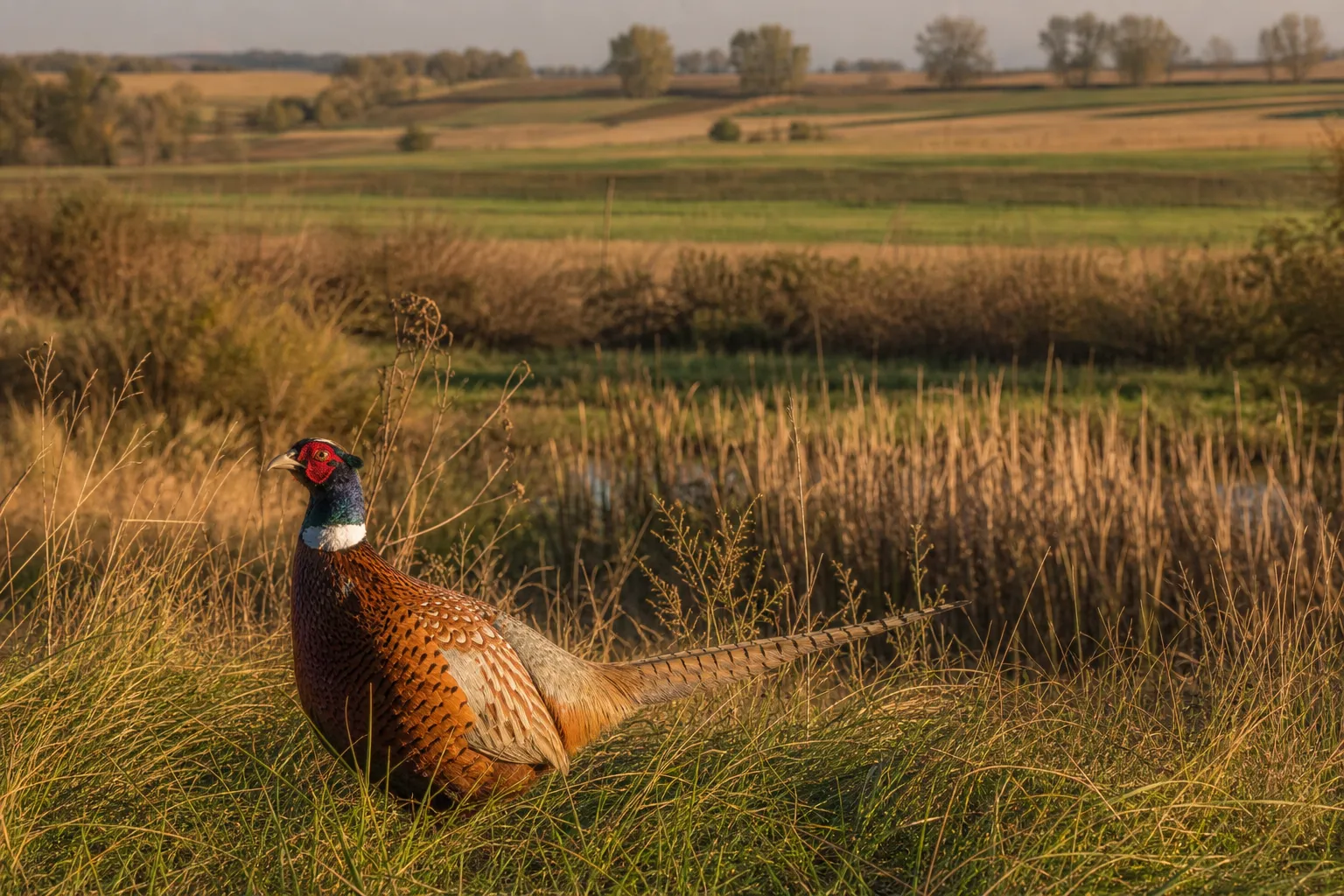
The ring necked pheasant, Phasianus colchicus, is an upland bird with roots in Asia. For hunters and birders, the key point is simple: good pheasant country is usually a mix of grassland, farmland, wetlands, brush and secure winter cover.
Origins and status in North America
The first successful U.S. introduction took place in Oregon’s Willamette Valley in 1881.
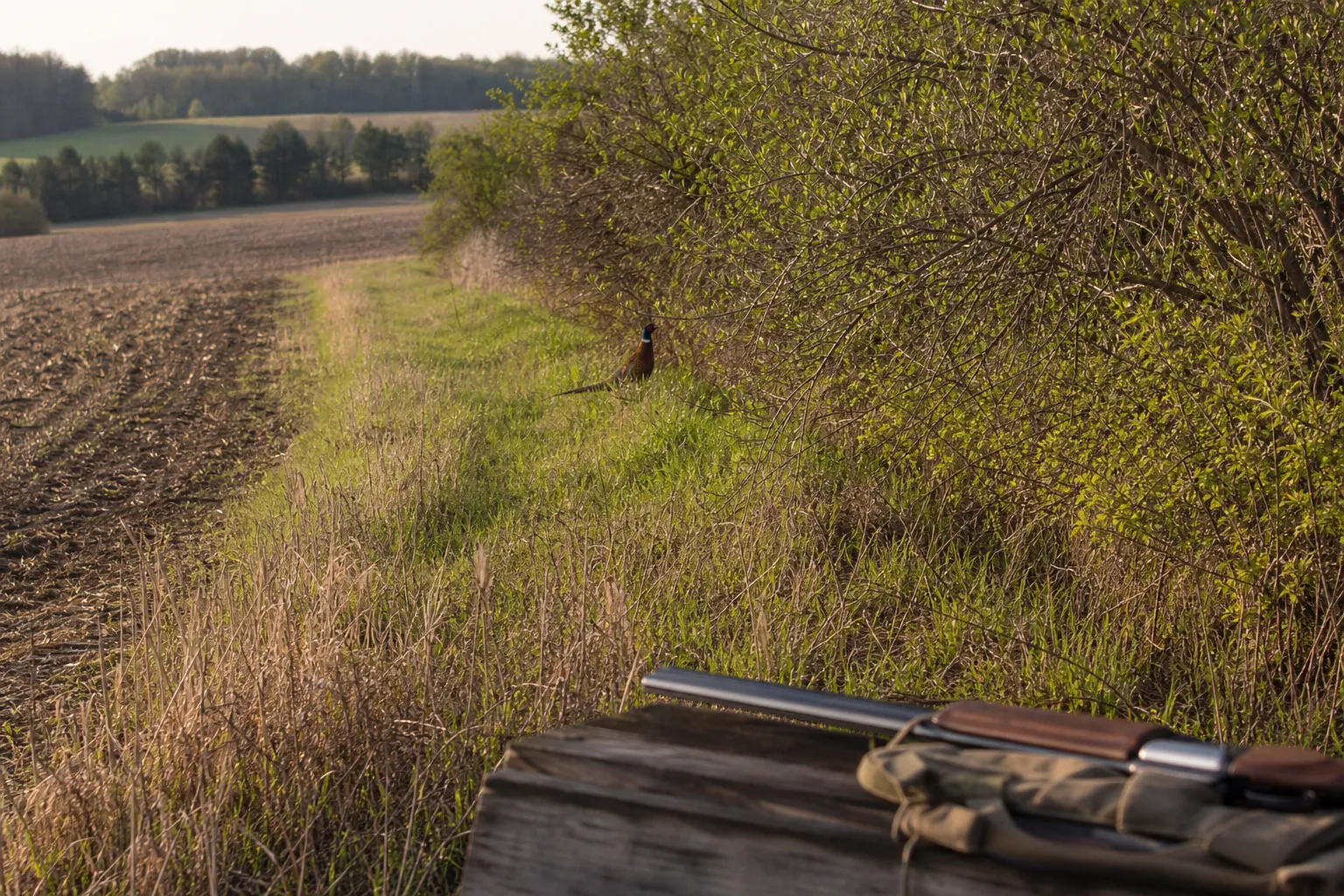
The species’ native range includes central and eastern Asia, China and Japan. Today’s pheasant is a hybrid produced by crossbreeding among English, Mongolian, Chinese and Japanese varieties.
Pheasants are among North America’s familiar upland game birds. They are familiar to many hunters and birders in agricultural landscapes.
Identification for hunters and birders
In the field, identification often begins with sex, setting and behavior. Adult males are commonly called roosters, and adult females are commonly called hens.
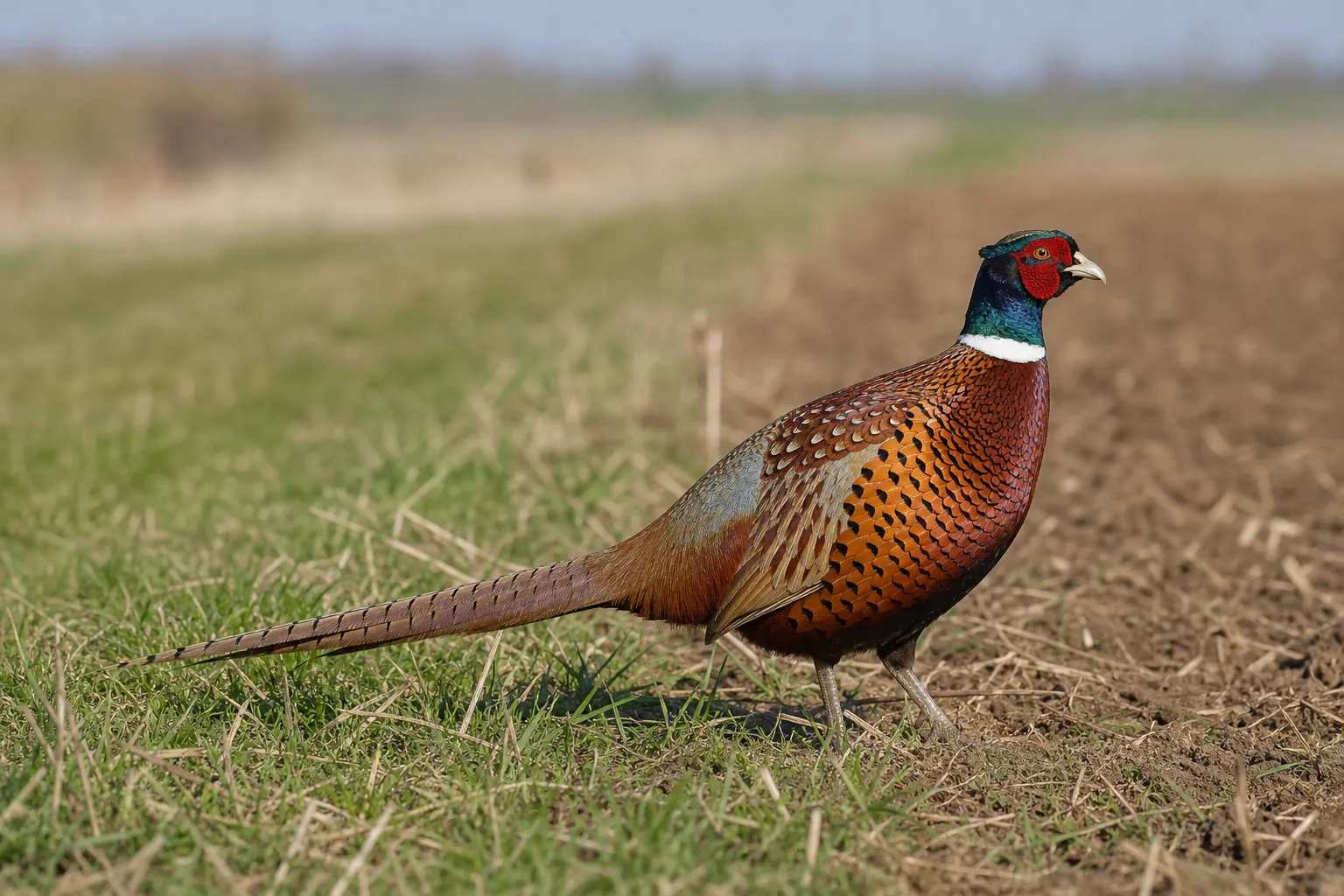
Roosters
Adult male pheasants are commonly called roosters. When viewing any pheasant, use several field marks together rather than relying on one detail seen briefly.
Hens
Female pheasants are much more subdued. Females are mottled brown, which helps camouflage them when they sit on a nest. For birders and hunters, that brown, cryptic pattern helps separate hens from roosters when seen well.
Behavior that helps with field ID
Pheasants are often encountered in cover, and sound can be useful in open country. Roosters may give crowing or cackling calls, which can help reveal their presence.
Habitat and range
Pheasants are birds of mixed agricultural and grassland landscapes. Preferred habitat includes grasslands mixed with farmlands, wetlands and woody brush.
Pheasants do best in mixed landscapes where grasslands border and blend with agricultural lands. In practical terms, strong pheasant habitat is not one uniform field. It is a patchwork.
Common habitat types include crop fields, haylands, native grasslands, ditches, fencerows, windbreaks, shelterbelts, woodlots, farmsteads and field corners. Other important cover types include roadsides, hedgerows, marshes, cattail swales and brushy areas when they provide food, concealment or winter protection.
The layout matters as much as the parts. Foraging areas, nesting cover, brood cover, roosting cover, winter cover and escape cover need to be close to one another to maintain pheasants in an area.
For hunters, that helps explain why birds may concentrate along seams: grass next to crop stubble, cattails beside grain, brushy fencerows near feeding areas or field corners that connect several cover types. For birders, those edges are often the best places to watch for birds walking, feeding or slipping through cover.
Diet, nesting and brood habitat
Ring necked pheasants eat a diet made mostly of plants as adults, but insects become especially important in spring, summer and early life. Adult pheasants rely heavily on plant foods, while insects are eaten in spring and summer and make up nearly the whole diet of young chicks for their first five weeks.
That pattern helps explain the value of crop fields, weedy edges and nearby cover in the same landscape.
Nesting cover
Pheasants nest on the ground in herbaceous cover. Nesting cover is dense herbaceous ground cover with overhead concealment. Frequently used nesting areas include Conservation Reserve Program lands, grassy field corners, odd areas, overgrown hedgerows, shelterbelts, fencerows, roadsides and field borders.
Brood habitat
Good brood habitat is not just thick cover. Brood cover should be relatively open near the ground so chicks can move and catch insects, while still providing some overhead concealment.
Broadleaf plants, also called forbs or wildflowers, attract insects that are critical for chick survival during the first few weeks of life. This is one reason diverse grassland and weedy cover can matter so much to pheasant production.
Winter survival and population drivers
Adequate winter cover and nesting cover are the two most important habitat components for supporting ring necked pheasant populations. In northern regions especially, winter cover can determine whether birds can conserve energy and stay protected during severe weather.
Dense herbaceous and woody vegetation is required for thermal and protective cover during winter months. Thick cattail wetlands, shelterbelts, switchgrass and big bluestem are examples of good winter cover.
During extreme winter weather, pheasants can go up to two weeks without feeding by reducing metabolism and energy requirements. Even with that adaptation, nearby food and reliable cover remain important parts of pheasant habitat.
Habitat quality can reduce some of the stress of harsh winter weather. Dense cover can block wind and snow, while nearby feeding areas reduce the distance birds must travel when conditions are difficult.
Long term pheasant numbers are closely tied to land use. In California, pheasant declines have been linked to agricultural and land use changes that reduced habitat amount and quality. Clean farming reduced idle habitat such as hedgerows, fencerows and unused edges in California agricultural regions.
The practical habitat lesson is plain: habitat quantity and quality are more strongly tied to pheasant populations than predator control.
Hunting context and the role of bird dogs
Pheasant hunting is closely associated with bird dogs because pheasants spend so much time hiding in cover. Bird dogs help find birds, get them airborne, retrieve downed birds and locate winged birds.
For readers comparing dog types, see our Hunting Dog Breeds guide.
Pointing dogs lock up and point when they find a bird, then the hunter walks in for the flush.
The habitat lessons above also help explain how hunters use dogs. Birds may be in grass, cattails, fencerows, brushy corners or crop edges depending on food, weather and pressure. A dog can search cover that is difficult for a person to read from the outside.
What to check before going afield
This guide does not include season dates, bag limits, possession limits or local legal requirements. Those details change by jurisdiction and year.
Before hunting pheasants, check the current official regulations from the state, provincial or tribal wildlife authority for the exact place you plan to hunt. Also confirm licensing, hunter education, public land rules, dog rules, non toxic shot requirements where applicable and any special area restrictions with the responsible agency.
Frequently asked questions
Where did ring necked pheasants in North America come from?
The first successful U.S. introduction took place in Oregon’s Willamette Valley in 1881. The species’ native range includes central and eastern Asia, China and Japan.
What habitat do pheasants prefer?
Preferred habitat includes grasslands mixed with farmlands, wetlands and woody brush. Common habitat types include crop fields, haylands, native grasslands, ditches, fencerows, windbreaks, shelterbelts, woodlots, farmsteads and field corners.
What do ring necked pheasants eat?
Adults rely heavily on plant foods. Insects are eaten in spring and summer and make up nearly the whole diet of chicks during their first five weeks.
Why is winter cover important for pheasants?
Dense herbaceous and woody vegetation is required for thermal and protective cover in winter. Thick cattail wetlands, shelterbelts, switchgrass and big bluestem are examples of good winter cover.
Do bird dogs matter for pheasant hunting?
Bird dogs help find birds, get them airborne, retrieve downed birds and locate winged birds. Pointing dogs point birds so the hunter can walk in for the flush.
Sources
- Ring-necked Pheasant Overview, Cornell Lab of Ornithology, All About Birds. Accessed October 26, 2026.
- Ring-necked Pheasant Identification, Cornell Lab of Ornithology, All About Birds. Accessed October 26, 2026.
- Ring-necked Pheasant Life History, Cornell Lab of Ornithology, All About Birds. Accessed October 26, 2026.
- Ring-necked Pheasant, Connecticut Department of Energy and Environmental ProtectionOfficial source. Accessed October 26, 2026.
- Ring-necked pheasant, Minnesota Department of Natural ResourcesOfficial source. Accessed October 26, 2026.
- Ring-necked Pheasant, California Department of Fish and WildlifeOfficial source. Accessed October 26, 2026.
- Ring-necked Pheasant (Phasianus colchicus), U.S. Department of Agriculture, Natural Resources Conservation Service via GovInfoOfficial source. Accessed October 26, 2026.
- Pheasant Facts, Pheasants Forever. Accessed October 26, 2026.
- Pheasant Habitat Essentials Guide, Pheasants Forever. Accessed October 26, 2026.
- Bird Dogs, Pheasants Forever. Accessed October 26, 2026.
- Conservation Reserve Program (CRP), USDA Farm Service AgencyOfficial source. Accessed October 26, 2026.
- Conservation Reserve Program: Why Choose CRP? You Benefit Land, Water, and Wildlife, USDA Farm Service AgencyOfficial source. Accessed October 26, 2026.
- Linking Long-Term Pheasant Population Trends with the Conservation Reserve Program, USDA Natural Resources Conservation Service, Conservation Effects Assessment Project. Accessed October 26, 2026.