When Do Deer Shed Their Antlers? The Antler Cycle
White-tailed bucks usually cast antlers in late winter, but timing shifts with day length, hormones, health, age, nutrition, injury and local conditions. This guide explains the yearly cycle from velvet growth to hard antlers and shed hunting ethics.
By RaiS. Reviewed by RaiS. Published . 7 min read.
Research and drafting were assisted by AI. RaiS checked the facts against the sources below and approved this page.
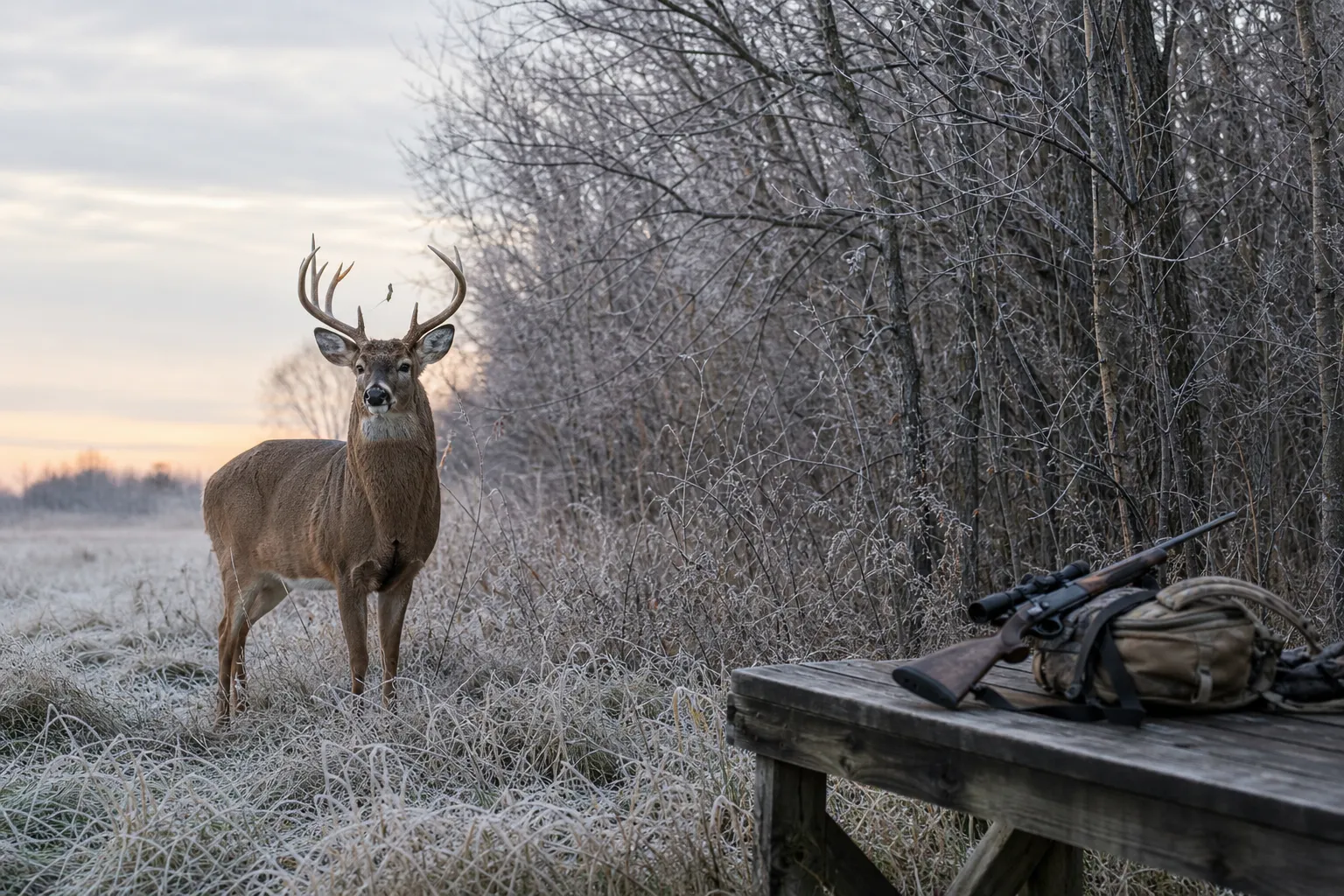
White-tailed bucks usually shed, or cast, their antlers from late winter into early spring. University of Missouri Extension says that in an average season some male white-tailed deer shed in late December and most have shed by early March, while the Pennsylvania Game Commission describes antler drop in Pennsylvania as occurring from December through March and Indiana DNR describes most Indiana bucks shedding from January through April. The exact date depends on hormones, day length, health, stress and local conditions.
This guide focuses on white-tailed deer. For a broader species overview, see our Whitetail Deer guide.
The short answer: late winter, with local variation
If you are planning time in the woods for shed hunting, late winter is the general window for white-tailed deer, but the calendar is not the same everywhere.
University of Missouri Extension describes the average pattern this way: some male white-tailed deer shed antlers in late December, and most have shed by early March. The Pennsylvania Game Commission gives a December through March range for Pennsylvania and notes that natural variation and general health contribute to timing. Indiana DNR gives a January through April range for most Indiana bucks.
Those agency ranges are useful because they show why a single national date does not work. A buck in one region, or even one individual buck in poor condition, may cast earlier than another buck that is still in better physical shape.
The annual antler cycle
Male white-tailed deer grow a new set of antlers each year, according to University of Missouri Extension. Antlers develop from the pedicle on the skull, grow during spring and summer, harden before fall, remain through the breeding period and are cast after the season.
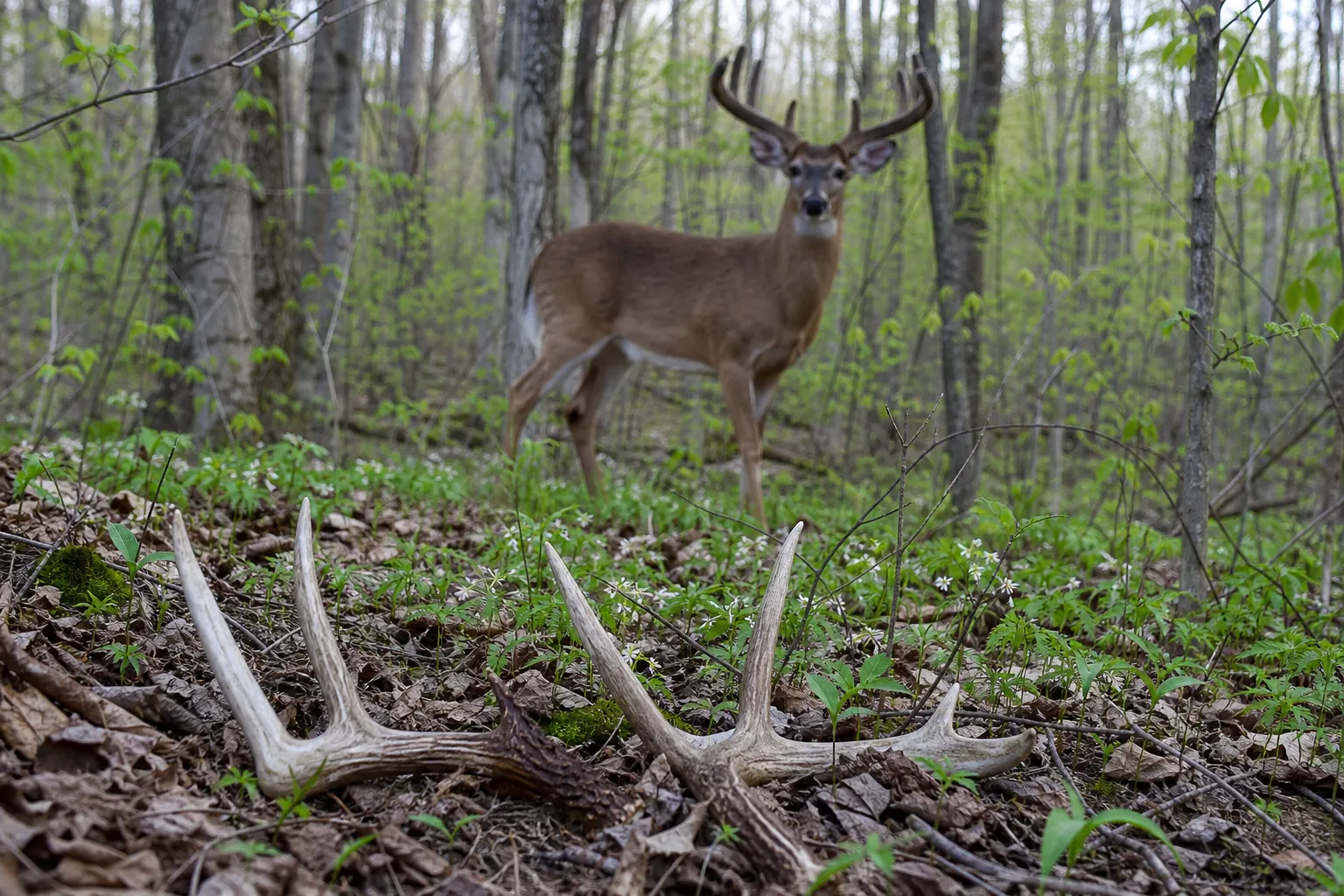
A simple whitetail cycle looks like this:
| Stage | General timing described by official or university sources | What is happening |
|---|---|---|
| Casting | Late December into March in Missouri Extension’s average description, December through March in Pennsylvania, January through April in Indiana | The old antlers detach from the pedicles |
| Pedicle healing and new growth | After casting | University of Missouri Extension says new growth starts immediately, though it may not be visible for weeks |
| Velvet growth | Late spring through summer, with the University of Georgia describing normal growth beginning around late March and early April | Growing antlers are living tissue with a rich blood supply and a velvet covering |
| Mineralization and hardening | August and September | University of Missouri Extension says antlers begin to mineralize by August, and the National Deer Association DeerReport 2024 says antlers mineralize in August and September in response to increasing testosterone |
| Velvet shedding | Late summer into early fall, with varied timing by state and province in the National Deer Association DeerReport 2024 | University of Missouri Extension says velvet shedding in white-tailed deer is usually fast, taking less than 24 hours |
The cycle repeats every year. After casting, Mississippi State University says the pedicle behaves like an open wound and develops a wound epithelium within two to three weeks.
Day length, hormones and testosterone
The antler cycle is strongly tied to photoperiod, which means day length. University of Missouri Extension says hormone regulation of antler growth is controlled by photoperiod, and the National Deer Association DeerReport 2024 says antler growth, mineralization and casting are largely controlled by hormones and photoperiod.
That day length signal changes through the year. The Pennsylvania Game Commission says antler growth begins while days are lengthening, between the spring equinox and summer solstice. The University of Georgia says shortening days after the summer solstice trigger hormone changes that help harden antlers.
Testosterone is part of that hardening phase. The National Deer Association DeerReport 2024 says antlers generally grow during spring and summer and mineralize in August and September in response to increasing testosterone levels.
Spring and summer: antlers grow in velvet
During late spring and summer, University of Missouri Extension says growing antlers are covered by velvet and have a rich blood supply. This is the rapid growth phase.
Mississippi State University describes peak antler growth rates as up to three quarters of an inch per week in yearlings and one and a half inches per week in adults. Those numbers help explain why antlers can look noticeably different over a short period during summer.
Velvet antlers are also vulnerable. University of Missouri Extension says injury to velvet antlers can affect antler shape. That is one reason hunters may see unusual points, bends or asymmetry on some bucks in the fall.
Antler growth is not controlled by only one thing. University of Missouri Extension says antler growth depends on nutrition, age and genetics. Those factors help explain why bucks in the same general area may carry very different antlers.
Late summer: hardening and velvet shedding
By August, University of Missouri Extension says antlers begin to mineralize and harden. The University of Georgia says antler growth is complete around late August and early September, and the National Deer Association DeerReport 2024 describes mineralization in August and September in response to increasing testosterone.
Once antlers are hard, velvet is shed. University of Missouri Extension says velvet shedding in white-tailed deer is usually fast and can take less than 24 hours. The National Deer Association DeerReport 2024 reports varied velvet shedding times across the country based on state and provincial agency responses, which is another reminder that local timing matters.
If you are watching trail camera photos or glassing fields during this period, the same buck may appear to change quickly from rounded velvet antlers to hard, polished antlers.
Late winter: casting the old antlers
After the breeding season, the connection between the antler and pedicle weakens. Mississippi State University says cells called osteoclasts demineralize the connection where the pedicle meets the antler after the breeding season.
The result is casting. The antler separates from the skull, the pedicle begins healing and the next cycle starts. University of Missouri Extension says that after antlers are shed, new growth starts immediately, although it may not be visible for weeks.
Shed antlers do not always stay on the ground for long. University of Missouri Extension says shed antlers are often eaten by rodents because they contain protein and calcium phosphate.
Why some bucks shed earlier or later
A useful shed hunting calendar is local, not universal. Several factors can shift timing.
Health matters. The Pennsylvania Game Commission says natural variation and general health contribute to antler drop timing. Maryland DNR says deer in the best physical condition lose antlers later in winter.
Stress and injury can also matter. Indiana DNR states that early shedding may occur when a buck is injured or severely stressed.
Age, nutrition and genetics matter for antler development. University of Missouri Extension says antler growth depends on nutrition, age and genetics. These factors do not make every buck shed on a fixed schedule, but they help explain why antler size and form differ between animals.
Region also matters. The National Deer Association DeerReport 2024 reports varied velvet shedding times across the country from state and provincial agency responses, and state wildlife agencies give different casting windows for Pennsylvania, Indiana and Missouri.
Antlers are not horns
The National Park Service distinguishes antlers from horns by noting that horns are not shed, while antlers are shed and regrown yearly. The National Park Service also says antlers are made entirely of bone.
That yearly regrowth is what makes antlers so interesting to hunters and wildlife watchers. The rack a buck carries in fall is the result of that year’s growth cycle, including photoperiod, hormones, nutrition, age, genetics, health and any velvet injury.
If you want to learn how hunters evaluate antler measurements after a harvest, see our How to Score a Deer guide.
Shed hunting ethics
Shed hunting is best treated as a low impact wildlife activity, especially in late winter.
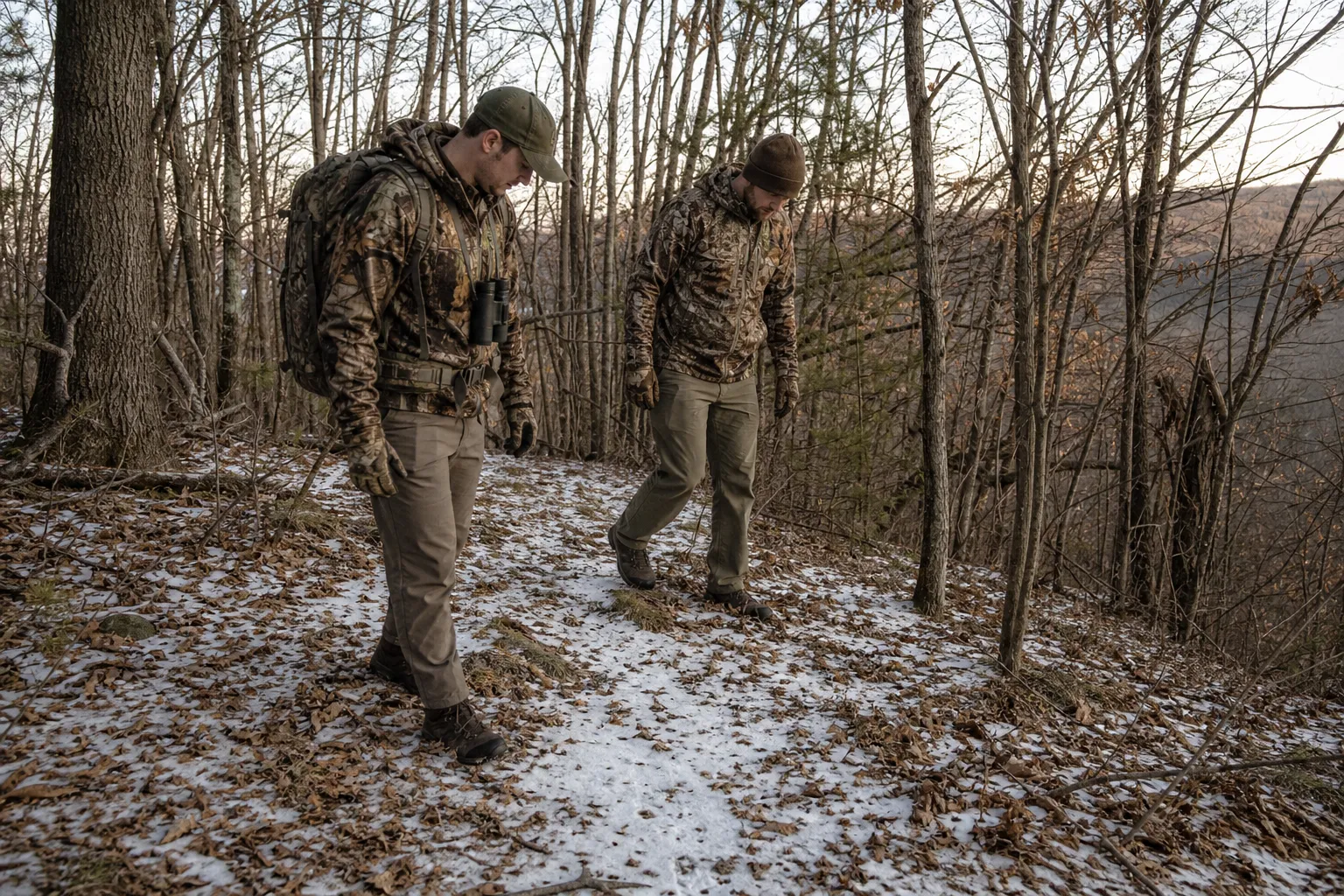
The U.S. Fish and Wildlife Service recommends ethical shed collecting by giving wildlife space and staying on roads and paths where collection is allowed.
Oregon Department of Fish and Wildlife says late winter shed hunting, especially with dogs, can stress big game when animals are vulnerable. That guidance is practical even outside Oregon: avoid pushing animals, keep dogs controlled where they are present and allowed, and leave an area if deer or elk are moving away from you.
Always check the current wildlife agency and land manager guidance before collecting sheds. Confirm whether collection is allowed, whether seasonal closures apply and what access rules are in place for the exact property you plan to visit.
Frequently asked questions
When do white-tailed deer shed their antlers?
University of Missouri Extension says that in an average season some male white-tailed deer shed in late December and most have shed by early March. State agencies give local ranges, such as December through March in Pennsylvania and January through April in Indiana.
What controls the antler cycle?
University of Missouri Extension and the National Deer Association DeerReport 2024 describe the cycle as largely controlled by photoperiod, hormones and testosterone changes. Day length helps time growth, hardening, velvet shedding and casting.
Do antlers grow back after a buck sheds them?
Yes. University of Missouri Extension says male white-tailed deer grow a new set of antlers each year, and that after antlers are shed, new growth starts immediately, even though it may not be visible for weeks.
Why do some bucks shed earlier than others?
The Pennsylvania Game Commission says natural variation and general health affect antler drop timing. Indiana DNR says early shedding may occur when a buck is injured or severely stressed, and Maryland DNR says deer in the best physical condition lose antlers later in winter.
Are antlers the same as horns?
No. The National Park Service says antlers are made entirely of bone and are shed and regrown yearly, while horns are not shed.
Is shed hunting allowed everywhere?
No. Check the current rules for the exact public land, private land or managed area before collecting sheds. Confirm whether collection is allowed, whether seasonal closures apply and what access rules are in place.
Sources
- Antler Development in White-tailed Deer: Implications for Management, University of Missouri ExtensionOfficial source. Accessed October 26, 2026.
- Antler Growth Cycle, Mississippi State University Deer Ecology and Management LabOfficial source. Accessed October 26, 2026.
- Deer antlers grow and shed as summer days shorten, University of Georgia College of Agricultural and Environmental Sciences Field ReportOfficial source. Accessed October 26, 2026.
- National Deer Association DeerReport 2024, National Deer Association, PDF hosted by Oklahoma Department of Wildlife ConservationOfficial source. Accessed October 26, 2026.
- White-tailed Deer Biology, Indiana Department of Natural ResourcesOfficial source. Accessed October 26, 2026.
- Frequently Asked Questions about White-tailed Deer, Maryland Department of Natural Resources Wildlife and Heritage ServiceOfficial source. Accessed October 26, 2026.
- Ask a Deer Question, Pennsylvania Game CommissionOfficial source. Accessed October 26, 2026.
- Horns vs. Antlers, U.S. National Park ServiceOfficial source. Accessed October 26, 2026.
- Eight points about antlers, U.S. Fish and Wildlife ServiceOfficial source. Accessed October 26, 2026.
- Responsible shed hunting, Oregon Department of Fish and WildlifeOfficial source. Accessed October 26, 2026.