Dry Fire Explained: What It Is, When It Is Safe and When to Use Snap Caps
Dry firing means operating a firearm’s firing sequence without live ammunition. It can be useful for practice, but the firearm must still be unloaded, pointed in a safe direction, and checked against the exact owner’s manual before deciding whether snap caps are needed.
By RaiS. Reviewed by RaiS. Published . 6 min read.
Research and drafting were assisted by AI. RaiS checked the facts against the sources below and approved this page.
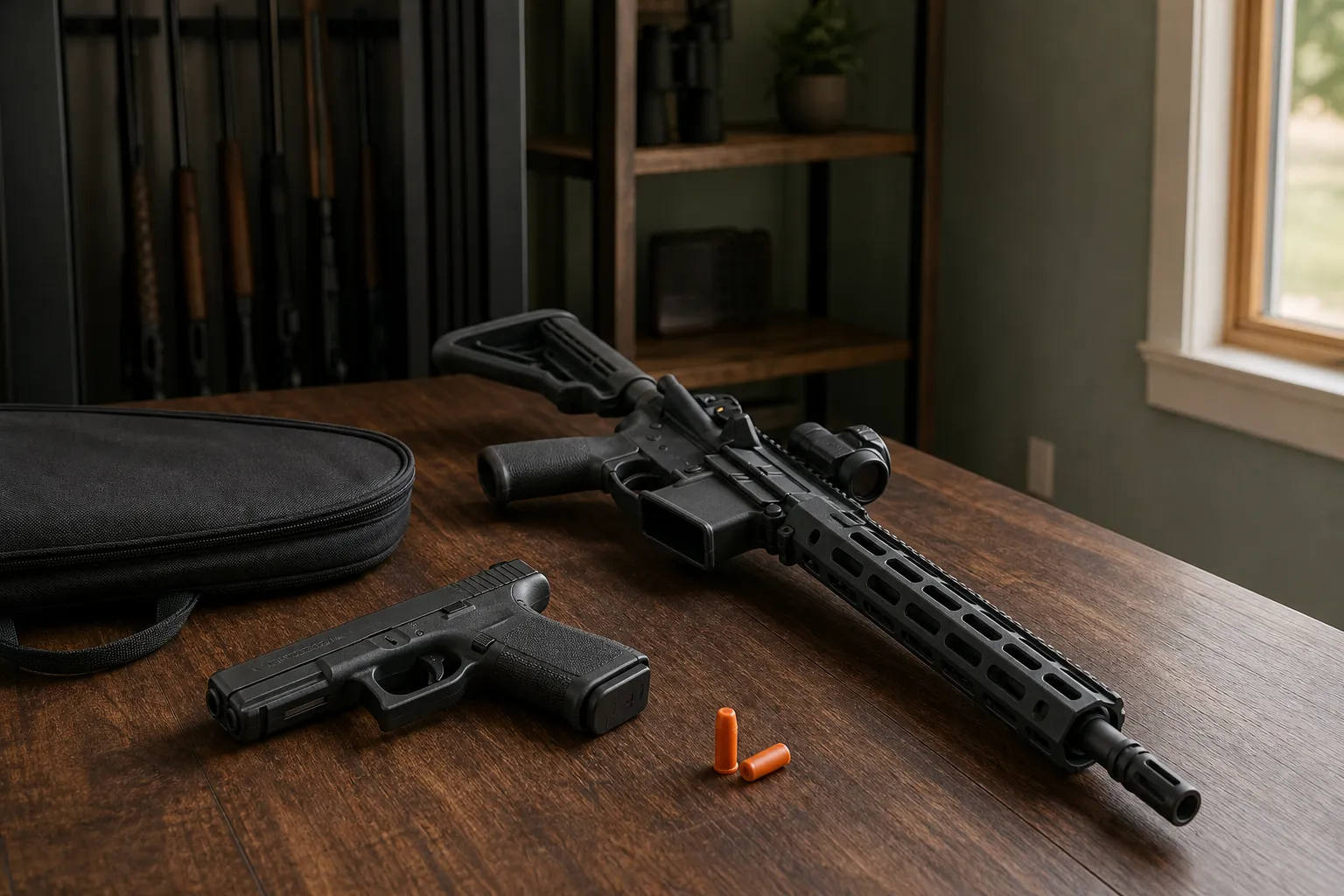
Dry fire means “firing” a firearm without live ammunition. SAAMI defines it as firing practice without live ammunition, but that does not make it casual or risk free. The safe answer is: dry fire only after unloading and checking the firearm, keep live ammunition out of the practice area, point in a safe direction, and follow the owner’s manual for that exact firearm. Many centerfire handguns tolerate some dry fire, but rimfire firearms and some specific designs may require snap caps or may warn against dry firing.
What dry firing means
SAAMI defines dry fire as the practice of “firing” a firearm without the use of live ammunition. In plain English, the shooter operates the trigger and firing mechanism as if taking a shot, but no live cartridge is supposed to be in the firearm.
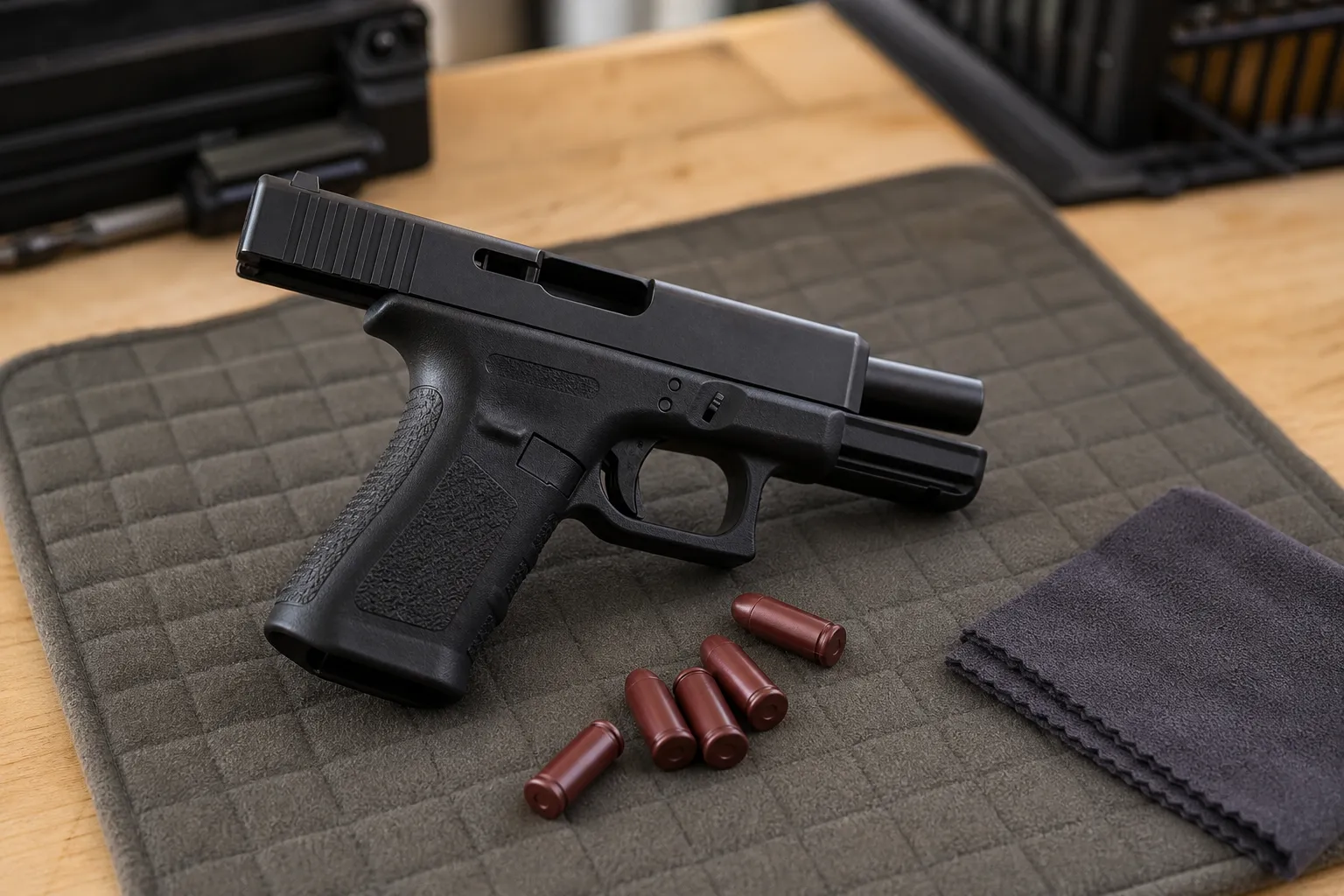
Dry fire is different from using live ammunition at a range. It is also different from using inert cartridges for loading or reloading practice.
SAAMI defines a dummy cartridge as an inert cartridge that cannot be fired under any circumstances.
That distinction matters. A dummy cartridge may be useful for handling or reloading drills, but it is not automatically a snap cap. Beretta’s APX Carry A1 manual specifically warns that dummy rounds with empty primer pockets are suitable for loading and unloading practice, but do not protect the striker tip during dry firing.
Dry fire safety still starts with the basic rules
Dry fire should begin the same way every firearm handling task begins: treat the firearm as if it could fire, point it in a safe direction, and verify its condition. NSSF says that even when dry firing with an unloaded gun, you should never point the gun at an unsafe target.
If you are new to the safety rules, start with the basic rules of firearm safety before building any dry practice routine.
NSSF says that whenever you handle a firearm or hand it to someone, you should open the action immediately and visually check the chamber, receiver, and magazine. Project ChildSafe gives similar home safety guidance, telling gun owners to point a firearm in a safe direction and confirm it is unloaded when removing it from or returning it to storage.
NRA Family says dry practice should start by unloading the firearm and checking it several times to make sure there is no ammunition in it. NRA Family also advises putting all of the ammunition for that gun in another room.
NRA Shooting Sports USA lists core dry fire safety rules that include an unloaded firearm, a safe backstop, and no live ammunition in the designated dry fire area. It also says only dummy ammunition should be used for reloading drills during dry fire practice.
A magazine check alone is not enough. Ruger’s Ruger American Pistol manual says the chamber and magazine must both be empty before dry firing, and it warns that removing the magazine does not unload the pistol. Beretta’s APX Carry A1 manual also warns that a pistol can fire with a live round in the chamber even if the magazine is empty or removed.
Centerfire and rimfire are not treated the same by many manuals
SAAMI defines a rimfire cartridge as a rimmed cartridge design in which the rim is formed with a cavity to contain the priming mix.
That definition, along with each manual’s own design guidance, helps explain why manuals often separate centerfire and rimfire guidance. The important point for the owner is not to assume that every firearm in a broad category follows the same rule. The exact model’s manual or manufacturer FAQ controls.
For background on the cartridge categories, see rimfire vs centerfire ammunition. For a common rimfire example, see .22 LR explained.
When dry firing may be acceptable
Several manufacturers say dry firing is acceptable for some centerfire models, sometimes with a recommendation to use snap caps for long or repeated practice.
Glock’s FAQ says it is okay to dry fire a Glock pistol, but Glock recommends using a snap cap or dummy round for a long period of dry firing.
Ruger’s Ruger American Pistol manual says that model can be dry fired without damage to the striker or other components.
Savage Arms says dry firing a centerfire firearm will not affect the functioning of the gun. That statement is from Savage’s own dry fire FAQ and should not be treated as a rule for every maker’s firearm.
These examples point to a practical rule: if the manufacturer allows dry fire, follow the limits and snap cap recommendations in that exact manual or FAQ.
When to use snap caps
Use snap caps when the firearm’s manual or manufacturer FAQ recommends them.
Manufacturer examples show why this is a model specific question:
- Glock pistol FAQ: Dry fire is okay, but Glock recommends a snap cap or dummy round for long dry fire sessions.
- Beretta APX Carry A1 manual: Long term dry firing may damage the striker, and snap caps are described as inert chamber inserts for dry fire.
- Beretta over and under shotgun manual: Pulling the trigger on an unloaded shotgun without snap caps can damage the firing pins.
The safest interpretation is simple: snap caps are cheap protection only when they are appropriate for the firearm, but the owner’s manual is still the authority. Also remember Beretta’s warning that some dummy rounds do not protect the striker tip during dry fire.
When to avoid dry fire until you verify the manual
Avoid dry firing if the manual tells you not to, if the manufacturer FAQ excludes your firearm, or if you do not have reliable model specific guidance.
Rimfire guidance is especially not universal. Ruger’s 10/22 Competition manual instructs the user not to dry fire that rifle during the function check. Savage Arms says that if you plan to dry fire a rimfire model, it suggests using snap caps to prevent firing pin damage.
Some non rimfire designs also have specific warnings. Beretta’s over and under shotgun manual says it is important not to decock the hammers by pulling the trigger on an unloaded shotgun without snap caps because the action could damage the firing pins. That is a good reminder that “centerfire versus rimfire” is not the only question.
For older, unfamiliar, inherited, modified, or manual missing firearms, do not guess. Get the correct owner’s manual or contact the manufacturer before dry firing.
A simple dry fire decision checklist
Before any dry fire practice, work through this checklist:
- Confirm the exact firearm model.
- Read the owner’s manual or manufacturer FAQ for dry fire guidance.
- Unload the firearm and check the chamber, receiver, and magazine where applicable.
- Do not rely on removing the magazine as proof that the chamber is empty.
- Move live ammunition out of the dry fire area.
- Use a safe direction and a safe backstop.
- Use snap caps if the manual recommends them, especially for extensive or regular dry fire.
- Do not dry fire if the manual says not to, or if you cannot confirm the guidance for that firearm.
Dry fire can be a useful practice tool, but it is still firearm handling. Check the current owner’s manual, the manufacturer’s FAQ, and any official safety guidance for your exact firearm before deciding whether to dry fire, whether to use snap caps, or whether to avoid dry fire entirely.
Frequently asked questions
What does dry fire mean?
SAAMI defines dry fire as the practice of “firing” a firearm without live ammunition. The firearm is operated as if firing, but no live cartridge is intended to be present.
Is dry firing safe for all guns?
No universal rule fits every firearm. Some manufacturers allow dry fire for certain firearms, while some rimfire firearms and specific designs carry warnings or snap cap recommendations. Check the manual for the exact model.
Do I need snap caps for dry fire?
Use snap caps when the firearm’s manual or manufacturer FAQ recommends them.
Are dummy rounds the same as snap caps?
Not always. SAAMI defines a dummy cartridge as inert and incapable of firing, while a snap cap is intended for dry fire. Beretta warns that dummy rounds with empty primer pockets do not protect the striker tip during dry fire.
Why should live ammunition be kept out of the dry fire area?
NRA Family advises putting the ammunition for that gun in another room during dry practice. NRA Shooting Sports USA also says no live ammunition is permitted in the designated dry fire area.
Does removing the magazine mean the firearm is unloaded?
No. Ruger’s Ruger American Pistol manual warns that removing the magazine does not unload the pistol, and Beretta’s APX Carry A1 manual warns that a pistol can fire with a live round in the chamber even if the magazine is removed.
Sources
- SAAMI Glossary, Dry Fire, Sporting Arms and Ammunition Manufacturers’ InstituteOfficial source. Accessed November 1, 2026.
- SAAMI Glossary, Dummy Cartridge, Sporting Arms and Ammunition Manufacturers’ InstituteOfficial source. Accessed November 1, 2026.
- SAAMI Glossary, Rimfire Cartridge, Sporting Arms and Ammunition Manufacturers’ InstituteOfficial source. Accessed November 1, 2026.
- Firearm Safety, 10 Rules of Safe Gun Handling, NSSFOfficial source. Accessed November 1, 2026.
- Firearm Safety Depends on You, NSSFOfficial source. Accessed November 1, 2026.
- In Your Home, Project ChildSafeOfficial source. Accessed November 1, 2026.
- How to Dry-Fire Your Gun Safely, NRA Family. Accessed November 1, 2026.
- SSUSA Q&A: What Is Dry-Firing?, NRA Shooting Sports USA. Accessed November 1, 2026.
- GLOCK FAQs, GLOCKOfficial source. Accessed November 1, 2026.
- FAQs, SIG SauerOfficial source. Accessed November 1, 2026.
- FAQs, Smith & WessonOfficial source. Accessed November 1, 2026.
- Ruger American Pistol Instruction Manual, Sturm, Ruger & Co.Official source. Accessed November 1, 2026.
- Ruger RXM Centerfire Pistol Manual, Sturm, Ruger & Co.Official source. Accessed November 1, 2026.
- Ruger 10/22 Competition Instruction Manual, Sturm, Ruger & Co.Official source. Accessed November 1, 2026.
- Can I dryfire my firearm?, Savage ArmsOfficial source. Accessed November 1, 2026.
- Hellcat Manual, Safety Rules, Springfield ArmoryOfficial source. Accessed November 1, 2026.
- Beretta APX Carry A1 Manual, BerettaOfficial source. Accessed November 1, 2026.
- Beretta Over-and-Unders Manual, BerettaOfficial source. Accessed November 1, 2026.