High Brass vs Low Brass Shotgun Shells: What the Terms Mean
High brass and low brass describe the height of the external metal cup on a shotshell, not a guaranteed level of power. Modern shotgun shooters should read the printed load data, including gauge, shell length, payload, shot size, shot material and velocity.
By RaiS. Reviewed by RaiS. Published . 8 min read.
Research and drafting were assisted by AI. RaiS checked the facts against the sources below and approved this page.
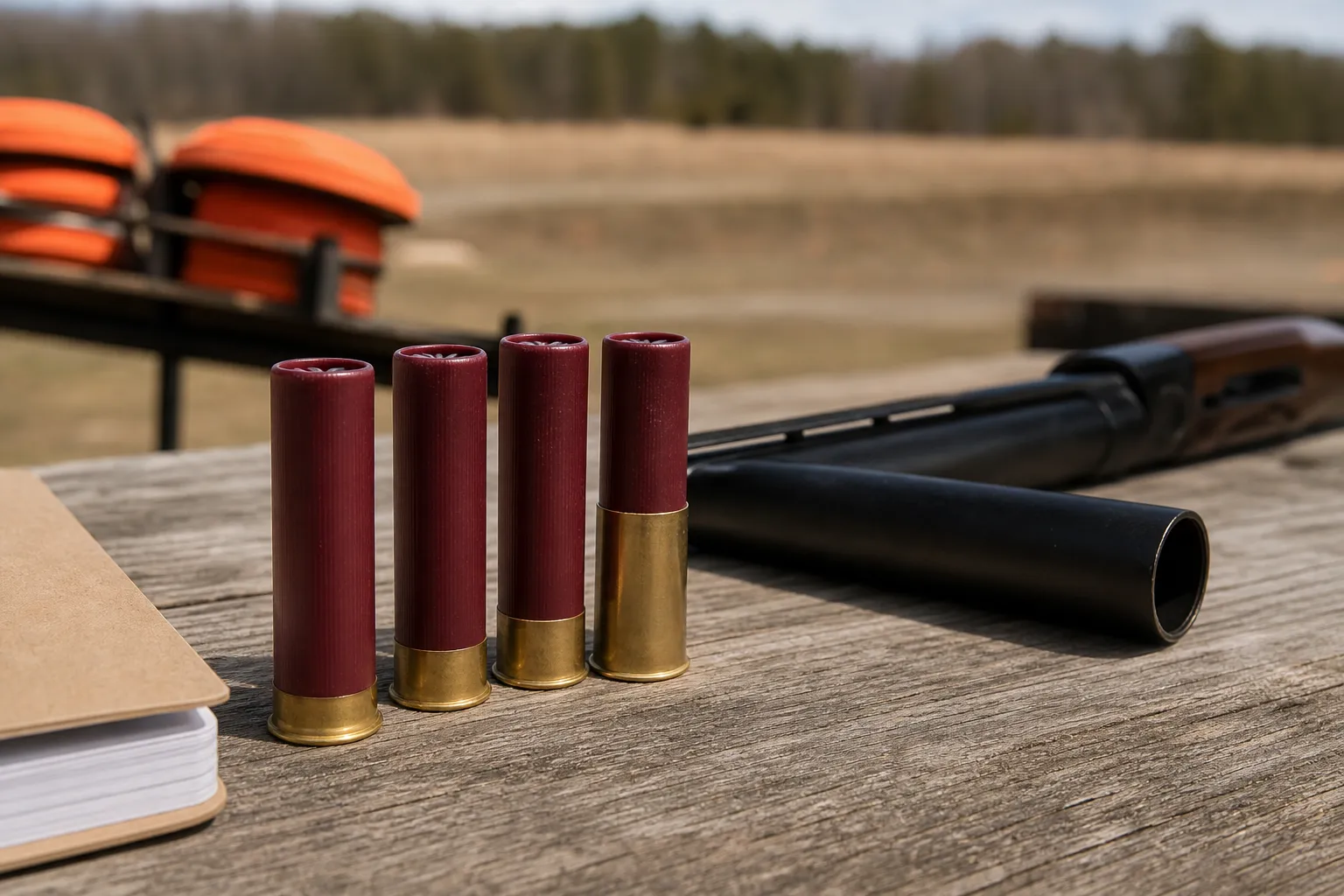
High brass and low brass describe the height of the external metal cup on a shotshell. SAAMI uses the more precise term high cup for high metal head construction. Older shooters often associated high brass with heavier hunting loads and low brass with target loads, but modern plastic hull construction makes brass height a poor shortcut for pressure, recoil, velocity, payload or reliability.
What high brass and low brass actually mean
SAAMI defines high brass as common terminology for the length of the external metal cup on a shotshell, and says the correct term for shotshells with a high metal head construction is high cup. Low brass is the matching common term for a shorter external metal cup.
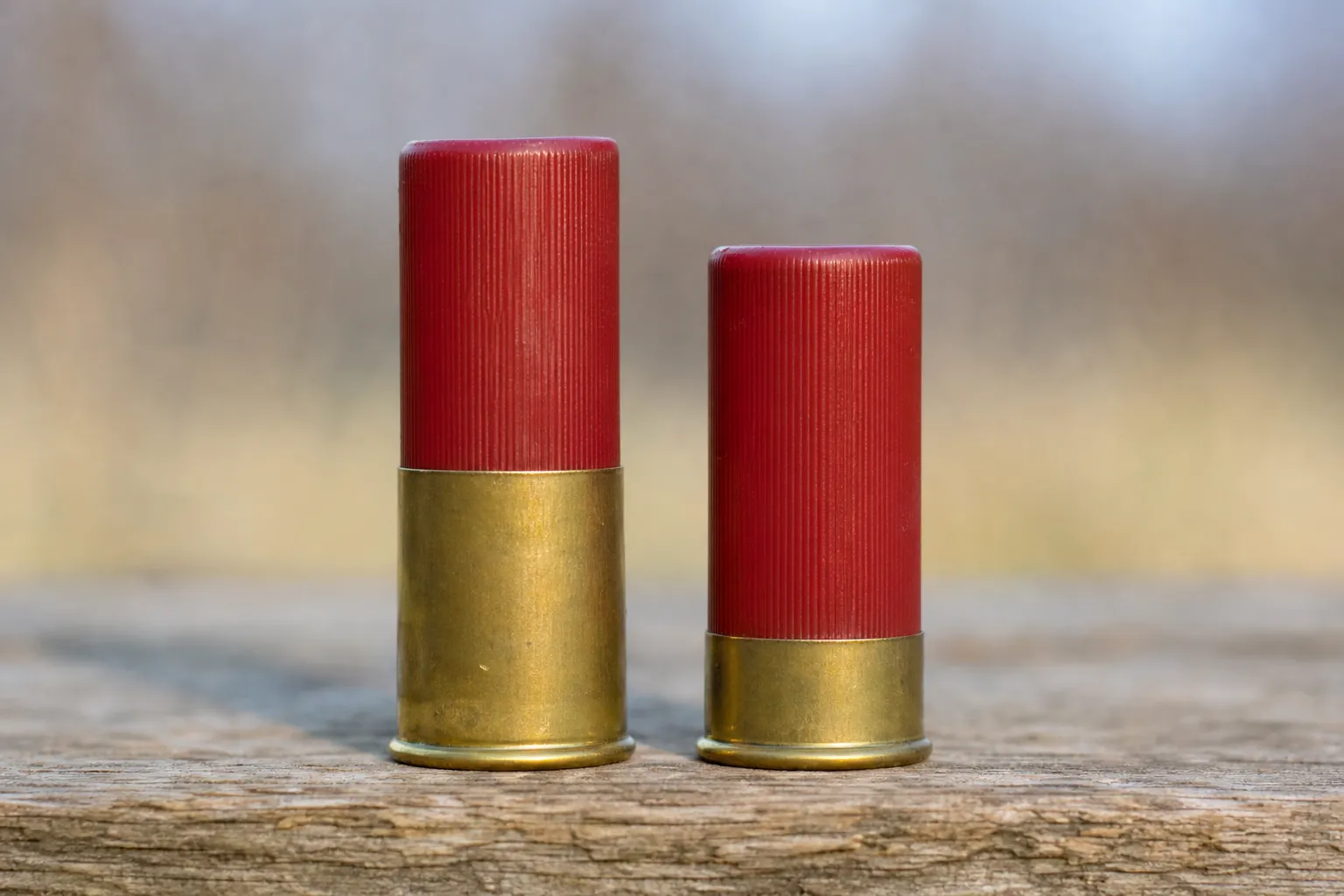
That means the phrase is about what you can see on the outside of the shell. It is not, by itself, a complete description of the load inside.
There is another term that causes confusion: high base. SAAMI states that high base is often misused as another way to say high brass or high cup, but properly applies to the height of the internal base wad.
SAAMI defines a base wad as a cylindrical component assembled into the head end of a shotshell. Federal describes modern shotshell construction as a plastic tube, called the hull, enclosing a wad filled with shot, while the brass head holds the primer, powder and base wad. Winchester explains that the wad, usually plastic, separates the powder from the shot or slug, seals expanding gases during ignition and provides a barrier between the shot and the barrel.
In plain English: high brass and low brass are external cup height terms. High base refers to the internal base wad. In casual conversation these terms are often mixed together, but they do not mean exactly the same thing.
Why high brass once signaled heavier shells
The older rule of thumb came from real marketing patterns. Federal’s company history says Sportload became a trade name in the 1930s and designated low brass ammunition, while X-tra Range denoted high brass shells. In the same discussion of older packaging, Federal notes that illustrated packaging was customary at the time so buyers did not need to check dram equivalent, charge weight and shot size.
NRA American Rifleman gives the common pattern: metal shotshell heads come in different heights, with target loads generally having the lowest and magnum hunting shells the highest. That is the historical background behind the popular low brass and high brass language.
NRA American Hunter adds the paper hull context. It describes high brass as originating with paper hulls to help prevent burn throughs from increased magnum charges of smokeless propellant, and says elevated heads are unnecessary with modern plastic hulls. Federal’s company history also notes that plastic hulls replaced paper around 1965 in the Montgomery Ward shotshell line discussed in that article.
So the old association was understandable. If a shooter was looking at older shells, high brass often pointed toward a heavier field or magnum style shell, while low brass often pointed toward a target style shell. The problem is treating that old visual clue as if it were a modern performance rating.
Why brass height is not a reliable modern guide
Modern shotshells are built around hull, base wad, wad, primer, powder, payload and crimp design. SAAMI’s terminology separates the external metal cup from the internal base wad, and Federal’s modern construction description places the hull, wad, primer, powder and base wad together as parts of the cartridge.
NRA American Rifleman states the key caution plainly: the height of the metal head mainly serves to distinguish hunting loads from target loads, and shotshells with high metal heads are not stronger than those with lower metal heads.
That matters because a shooter may hear advice such as use high brass for power or low brass is only for targets. Those phrases can point to older habits, but they are not a safe or precise way to compare modern shells.
How to read a shotshell box instead
Winchester says gauge alone does not tell the whole load, because a larger gauge shell can have more capacity but is not always loaded to use that capacity. Winchester’s advice is to read the box.
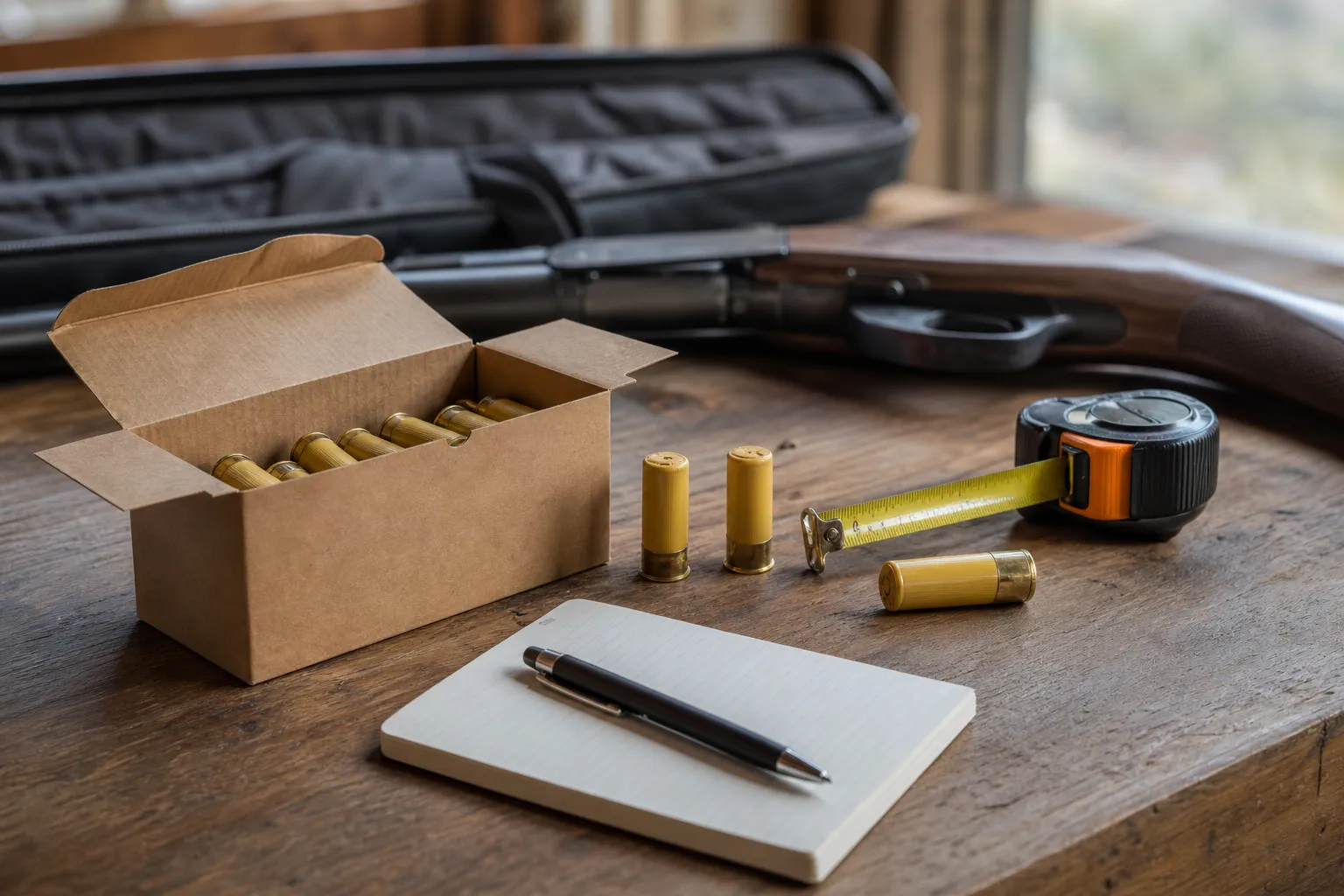
For a practical comparison, look for the information actually printed for the load:
| What to read | Why it matters |
|---|---|
| Gauge or bore | Federal says shotshell ammunition is generally offered in 10, 12, 16, 20 and 28 gauge, plus .410 bore. |
| Shell length | Federal says shells can range in length from 1 3/4 inches to 3 1/2 inches. |
| Payload weight | Federal lists payload weight as a load variable, with broad ranges across shotshell ammunition. |
| Shot size | SAAMI lists American standard lead shot sizes by nominal diameter and calculated pellets per ounce. |
| Shot material | Federal lists lead, steel, bismuth and tungsten alloy shot, as well as slugs and buckshot. |
| Velocity | SAAMI velocity recommendations are nominal lot mean velocities measured with specified equipment, and Winchester notes that many companies now list buckshot velocity rather than dram equivalent. |
| Firearm chamber marking | Match the ammunition information to the firearm’s chamber marking and the firearm maker’s instructions. |
If you are new to shotgun size labels, start with shotgun gauges and shotgun shell length. Those two markings answer two different questions: the bore family and the nominal shell length.
Gauge and shell length basics
Federal says shotshell ammunition is generally offered in 10, 12, 16, 20 and 28 gauge, plus .410 bore, with 10 gauge the largest and .410 the smallest among those listed. Federal also says payloads vary by load.
SAAMI’s shotshell standard lists recommended full names and metric equivalents by gauge and nominal length. Examples in the standard include 12 gauge 2 3/4 inch as 70 mm, 12 gauge 3 inch as 76 mm and 12 gauge 3 1/2 inch as 89 mm.
Do not use gauge by itself to assume the shell is light or heavy. Winchester’s example is that a 10 gauge shell has capacity to hold more shot and powder than a 12 gauge shell of the same length, but it is not always loaded to use that capacity. That same idea is the reason brass height is too vague to be your guide.
Payload, shot size, shot material and velocity
Payload is the amount of shot in the shell. Federal’s shotshell basics page says shells can vary in payload weight and can be loaded with lead, steel, bismuth and tungsten alloy shot, as well as slugs and buckshot.
Shot size is another separate marking. SAAMI’s shot size table lists American standard lead shot sizes by nominal diameter and calculated pellets per ounce. SAAMI also notes that actual pellet counts per ounce can vary because antimony content and shot diameter tolerances can vary.
For more detail on pellet size labels, see birdshot sizes and buckshot sizes. For material differences, see steel shot vs lead shot.
Velocity is useful, but it should also be read carefully. SAAMI says its velocity recommendations are nominal lot mean velocities measured with equipment according to its procedures. SAAMI also cautions that because of sporting firearms and barrel length differences, those test velocities should not be expected to duplicate in a shooter’s firearm.
What dram equivalent means on older boxes
Dram equivalent is older velocity shorthand, not a modern replacement for reading payload and velocity. Winchester says many companies now list buckshot velocity rather than dram equivalent, and describes dram equivalent as a product of powder charge and payload.
Federal’s history of older packaging also shows why this mattered on older boxes. Federal says some packaging was illustrated so buyers did not need to check dram equivalent, charge weight and shot size. That is the world in which quick visual categories such as high brass and low brass made more sense.
Today, if a box gives actual velocity, payload, shot size, material, gauge and length, those markings tell you more than cup height does.
Reloading note: hull construction matters
For reloaders, hull construction matters, but brass height is still not a load recipe. Hodgdon warns not to substitute components in shotshell loading data unless indicated, because substitutions can cause excessive or dangerous pressures.
Hodgdon states that lead shot data should not be used with steel, bismuth or other nontoxic shot, and that shotshell reloading data must be specific to the type of shot being used because hardness and density change reloading data.
MEC’s shotshell reloading guide tells reloaders to inspect hulls, keep hulls with the same capacity and crimp and not mix paper and plastic hulls. MEC also says not all primers are interchangeable and that primers must be compatible with the other components being used. MEC says the wad column must have the proper height to match the other components.
The safe conclusion is that a hull’s construction and exact component combination matter. The height of the outside cup is not enough information.
Practical takeaway
Use high brass and low brass as descriptive terms for the outside metal cup, not as performance ratings. Historically, high brass was often associated with heavier field or magnum shells, and low brass with target shells. Modern plastic hulls make that shortcut unreliable.
When choosing or comparing shells, read the box and the firearm markings. Focus on gauge or bore, nominal shell length, payload weight, shot size, shot material and listed velocity. If you are checking how a specific shell performs in a specific shotgun, patterning a shotgun is the practical way to evaluate pellet distribution.
Before using any shotshell, confirm the gauge or bore and shell length against the firearm’s chamber marking and the firearm manufacturer’s instructions. For reloading, use current published data for the exact hull, primer, wad, shot type and other components, and do not infer data from brass height.
Frequently asked questions
Does high brass mean a shotgun shell is more powerful?
Not by itself. SAAMI defines high brass as common terminology for the length of the external metal cup, and NRA American Rifleman states that high metal heads are not stronger than lower metal heads.
Why did people associate high brass with hunting loads?
Federal’s history shows older marketing that used low brass for Sportload ammunition and high brass for X-tra Range shells. NRA American Rifleman says target loads generally had the lowest metal heads and magnum hunting shells the highest.
What is the correct term, high brass or high cup?
SAAMI says high brass is common terminology for the length of the external metal cup, while high cup is the correct term for shotshells with a high metal head construction.
Is high base the same thing as high brass?
No. SAAMI says high base is often misused as a synonym for high brass or high cup, but properly refers to the height of the internal base wad.
What should I read on a shotshell box instead of brass height?
Read the gauge or bore, nominal shell length, payload weight, shot size, shot material and velocity. Winchester says gauge alone does not tell the whole load.
Can reloaders use brass height to identify a shotshell load?
No. Hull construction and component choices matter. Hodgdon warns against component substitution unless indicated. MEC also warns not to mix paper and plastic hulls and says primers and wad columns must match the other components.
Sources
- SAAMI Glossary, H terms, High Brass, High Cup, High Base, Sporting Arms and Ammunition Manufacturers' InstituteOfficial source. Accessed November 20, 2026.
- SAAMI Glossary, Base Wad, Sporting Arms and Ammunition Manufacturers' InstituteOfficial source. Accessed November 20, 2026.
- ANSI/SAAMI Z299.2, Voluntary Industry Performance Standards for Pressure and Velocity of Shotshell Ammunition for the Use of Commercial Manufacturers, Sporting Arms and Ammunition Manufacturers' InstituteOfficial source. Accessed November 20, 2026.
- Shotgun Basics, Federal Premium AmmunitionOfficial source. Accessed November 20, 2026.
- Ammo Basics, Shotshell, Federal Premium AmmunitionOfficial source. Accessed November 20, 2026.
- Federal Under Another Name, Federal Premium AmmunitionOfficial source. Accessed November 20, 2026.
- Ammo 101, Shotshell, Winchester AmmunitionOfficial source. Accessed November 20, 2026.
- What's on a Box of Shells, Winchester AmmunitionOfficial source. Accessed November 20, 2026.
- Hodgdon Reloading Manual 2024, Shotshell Data section, Hodgdon Powder CompanyOfficial source. Accessed November 20, 2026.
- Warnings, Shotshell, Hodgdon Powder CompanyOfficial source. Accessed November 20, 2026.
- Reloading Education, Hodgdon Powder CompanyOfficial source. Accessed November 20, 2026.
- Shotshell Reloading Basics, MEC OutdoorsOfficial source. Accessed November 20, 2026.
- Lyman Products catalog section, 6th Ed. Shotshell Reloading Handbook, Lyman ProductsOfficial source. Accessed November 20, 2026.
- Back To Basics: Cartridge Cases, American Rifleman. Accessed November 20, 2026.
- Shotshells 101, American Hunter. Accessed November 20, 2026.