Steel Shot vs Lead Shot: Patterning, Density and Waterfowl Use
Steel shot is commonly used as non toxic shot for waterfowl hunting, but it is less dense than lead, so hunters often use larger steel pellets and must confirm patterns with their own shotgun, choke and load. U.S. and Canadian migratory bird rules require non toxic shot in many waterfowl and migratory bird contexts, so hunters should confirm current rules before hunting.
By RaiS. Reviewed by RaiS. Published . 7 min read.
Research and drafting were assisted by AI. RaiS checked the facts against the sources below and approved this page.
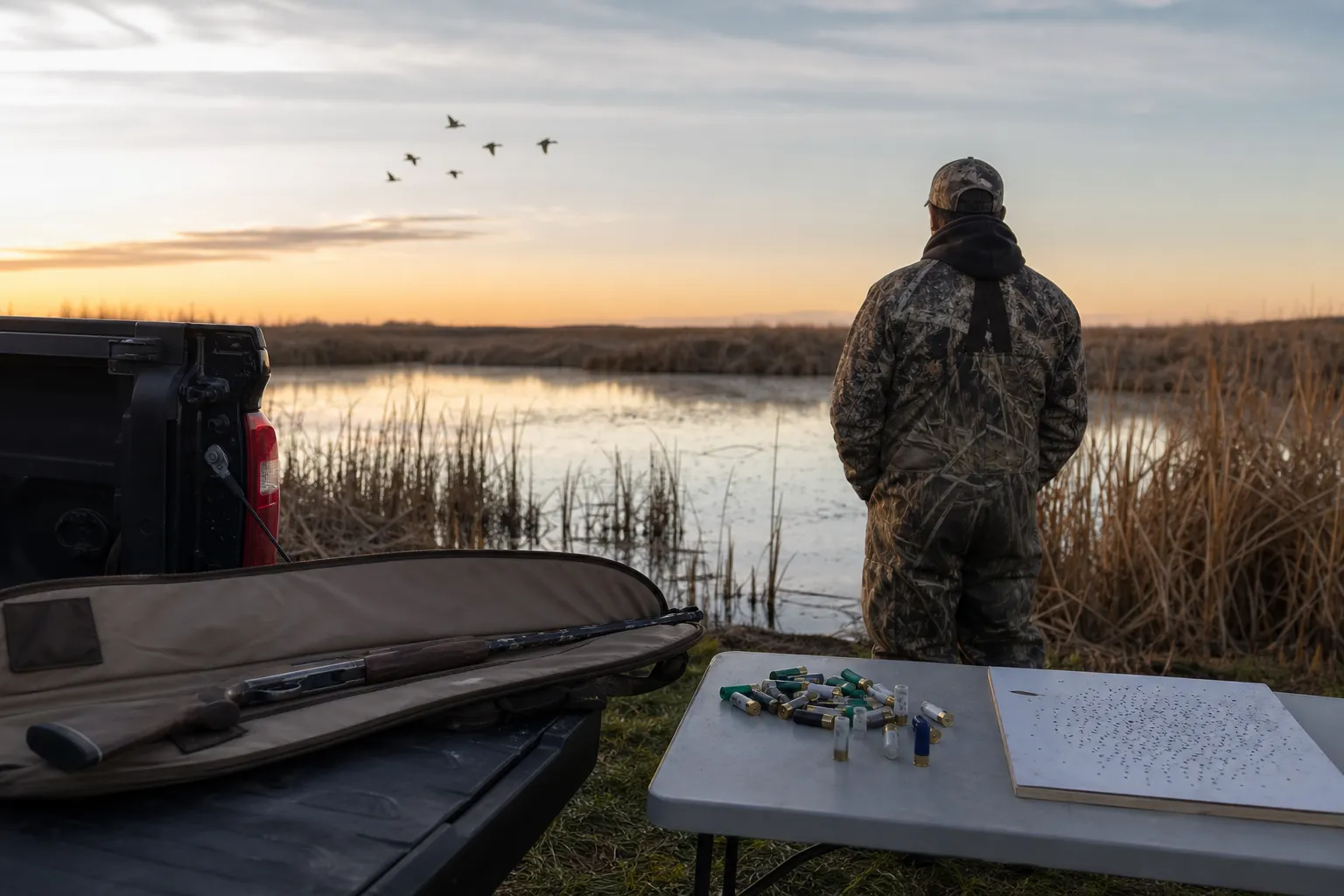
Steel shot and lead shot do not behave the same because they are different materials. A steel pellet of the same nominal size is less dense than a lead pellet. For waterfowl, the difference matters because U.S. and Canadian migratory bird rules require approved non toxic shot in many contexts, and steel is a common non toxic option.
Quick comparison
| Topic | Lead shot | Steel shot |
|---|---|---|
| Density | Denser than steel. | Less dense than lead. |
| Waterfowl rules | The U.S. Fish and Wildlife Service says the U.S. lead shot ban for waterfowl became nationwide in 1991. Environment and Climate Change Canada says lead shot possession and use while hunting migratory game birds is prohibited in all areas of Canada, with listed exceptions. | Canada’s Migratory Birds Regulations, 2022 define non toxic shot to include up to 100 percent iron, tungsten, tin or bismuth, alone or in combination, within listed limits. |
| Pellet size | SAAMI defines shot size as a numerical or letter designation for average pellet diameter. Lead No. 4 and steel No. 4 are both 0.130 inch, 3.30 mm nominal diameter in SAAMI Z299.2. | Same nominal size means the same nominal diameter in the SAAMI table, but steel has more calculated pellets per ounce because it is less dense. SAAMI lists steel No. 4 at 191 calculated pellets per ounce. |
| Pellet count example | SAAMI Z299.2 lists lead No. 4 at 134, 135, 137 or 139 calculated pellets per ounce, depending on antimony content. | SAAMI Z299.2 lists steel No. 4 at 191 calculated pellets per ounce, and notes that actual steel pellet counts vary because of density assumptions and diameter tolerances. |
| Common size choice | Lead pellet sizes are not directly interchangeable with steel in downrange performance. | Larger steel pellets are commonly chosen to help address the lower density of steel. |
| Patterning | Federal Ammunition says lead, steel, bismuth and tungsten pattern differently in common chokes. | Federal Ammunition recommends patterning a variety of loads at different distances to find the best pattern density and pellet distribution. |
For a separate chart of pellet sizes, see birdshot sizes explained.
Why non-toxic shot is required for many waterfowl hunts
The U.S. Fish and Wildlife Service defines non toxic shot as any shot type that does not cause sickness and death when ingested by migratory birds. In a 2022 explanation, the agency says the U.S. lead shot ban for hunting waterfowl was phased in starting with the 1987 to 1988 hunting season and became nationwide in 1991.

Canada has its own federal migratory bird rules. Environment and Climate Change Canada says hunters must use non toxic shot when hunting migratory game birds in Canada, and that lead shot possession and use while hunting migratory game birds is prohibited in all areas of Canada, with listed species exceptions. Canada’s Migratory Birds Regulations, 2022 say a person must not hunt a migratory game bird while possessing shot other than non toxic shot in the hunting area or while using shot other than non toxic shot.
The conservation reason is lead ingestion. The U.S. Fish and Wildlife Service says waterfowl can ingest expended lead shot and die from lead poisoning. The U.S. Geological Survey says ingestion of spent lead shot was known to cause mortality in wild waterfowl in the United States before non toxic shot regulations began in 1972, and that the full transition to non toxic shot for waterfowl hunting occurred in 1991.
Density, pellet size and pellet count
Density is the starting point for understanding the steel versus lead difference. Steel is less dense than lead. Winchester also lists bismuth at 9.7 g/cc, which helps show why not all non toxic shot types are the same material category.
SAAMI’s shot size glossary defines shot size as a numerical or letter designation indicating average pellet diameter. In SAAMI Z299.2, lead No. 4 shot and steel No. 4 shot have the same nominal diameter: 0.130 inch, or 3.30 mm.
The pellet count per ounce changes because the material density changes. SAAMI Z299.2 lists lead No. 4 at 134, 135, 137 or 139 calculated pellets per ounce, depending on antimony content. The same SAAMI standard lists steel No. 4 at 191 calculated pellets per ounce. SAAMI also notes that actual steel pellet counts per ounce vary from calculated values because of variation in density assumptions and diameter tolerances.
That is why the same number on the box does not mean the same downrange result. The nominal pellet diameter can match, but the pellet material changes pellet weight, count per ounce and how the pattern behaves.
Why hunters often choose larger steel shot
Larger steel pellets are commonly chosen to help address the lower density of steel. This kind of size adjustment is a rule of thumb, not a substitute for patterning.
In plain terms, larger steel pellets are commonly chosen to help address the lower density of steel. Federal Ammunition describes steel as a lower density, larger sphere when compared with lead, and says steel does not maintain velocity the way lead does.
Shot size also has to be considered with the target and the pattern. Federal Ammunition says it considers velocity, payload weight and shot size together when developing waterfowl loads, with the goal of balancing pattern density and downrange energy.
Velocity and downrange behavior
Steel waterfowl loads are often marketed at higher velocities, but velocity is only one part of the load. Federal Ammunition says many steel waterfowl offerings are not slower than about 1,300 to 1,350 feet per second. Federal also says 3 inch 12 gauge steel loads with 1 1/8 to 1 1/4 ounce payloads of BBB, BB, 1, 2, 3 or 4 steel often perform best at about 1,350 to 1,500 feet per second.
That does not mean faster is always better. Federal also says steel does not maintain velocity the way lead does.
So a useful comparison is not simply “steel is faster” or “lead hits harder.” The practical question is whether a given shotgun, choke and load produce enough even pattern density at the distance the hunter actually expects to shoot.
For background on shotgun sizes and shell lengths, see shotgun gauges explained and shotgun shell length explained.
Patterning: the real test
Winchester Ammunition says a shotgun pattern starts small and dense near the barrel and becomes larger and thinner downrange. Texas Parks and Wildlife Department says chokes influence the shot stream and pattern density, but they do not make shot travel farther.
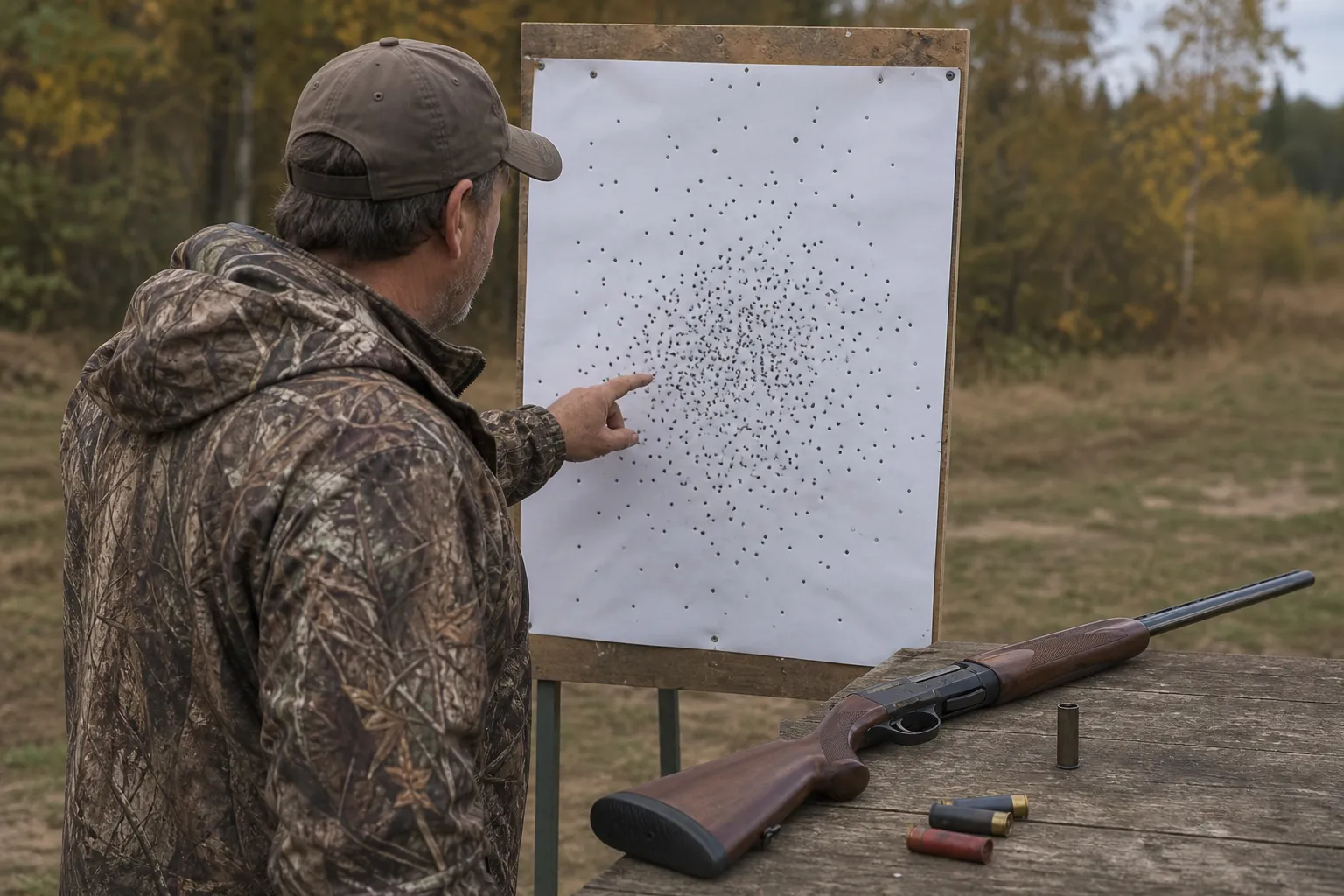
That is especially important when comparing steel and lead. Federal Ammunition says lead, steel, bismuth and tungsten pattern differently in common chokes, and recommends patterning a variety of loads at different distances to find the best pattern density and pellet distribution.
Federal’s patterning guidance includes using patterning paper at least 40 inches square, shooting at the distance usually used in the field, shooting at least five patterns and outlining a 30 inch circle around the densest part of the pattern. Texas Parks and Wildlife Department also tells hunters to pattern the shotgun with the loads and chokes they intend to use at specific distances.
For a step by step explanation of the patterning process, see how to pattern a shotgun. For choke terminology, see shotgun chokes explained.
Choke choice with steel
Steel shot is harder than lead, and that affects choke choice. Winchester Repeating Arms says steel and tungsten are harder than lead and do not compress like lead shot. Winchester Repeating Arms also says forcing steel or tungsten through too tight a constriction can deform the choke tube or produce a blown, inconsistent pattern.
As a general rule, Winchester Repeating Arms recommends not using a choke tighter than Modified with steel or tungsten high density loads unless the tube is specifically marked for a tighter constriction. Hunters should follow the shotgun maker and choke tube maker’s instructions for the exact firearm and tube.
Federal Ammunition also explains that steel shot uses high density polyethylene wads with thick sidewalls to keep the pellets from contacting the shotgun bore surface. That is a factory ammunition design detail, not a reason to ignore firearm or choke markings.
Effective range: why there is no single number
There is no one effective range that applies to every steel or lead load. Federal Ammunition says velocity, payload weight and shot size are considered together for waterfowl loads to balance pattern density and downrange energy. Federal also says different materials pattern differently in chokes.
Texas Parks and Wildlife Department gives a practical warning: most shots should not be taken beyond 40 yards because by the time the shot arrives, it has spread too far and holes will occur in the pattern. That statement is a hunter education guideline from that agency, and it still depends on the actual shotgun, choke and load.
The safest general conclusion is simple: do not assume that switching from lead to steel keeps the same point of impact, pattern density or useful distance. Pattern the actual combination before hunting.
Bottom line for new hunters
For many waterfowl contexts, shot material is not just a performance choice. U.S. and Canadian rules place restrictions on lead shot and require non toxic shot in many migratory bird hunting contexts.
Compared with lead, steel is less dense. SAAMI tables show that the same nominal shot size has the same nominal diameter, but steel has more calculated pellets per ounce. Larger steel pellets are commonly chosen to help address the lower density of steel.
Before hunting, check the current wildlife agency rules for the place, species and season. Also check the firearm manual, choke tube markings and ammunition maker’s information before using steel shot in a particular shotgun.
Frequently asked questions
Is steel shot the same size as lead shot with the same number?
SAAMI defines shot size by average pellet diameter. In SAAMI Z299.2, lead No. 4 and steel No. 4 are both 0.130 inch, 3.30 mm nominal diameter, but the pellet counts per ounce differ because the materials have different densities.
Why do hunters often use larger steel shot than lead shot?
Steel is less dense than lead, so a same diameter steel pellet is lighter. Larger steel pellets are commonly chosen to help address that difference, and Federal Ammunition says steel does not maintain velocity the way lead does.
Why was lead shot restricted for waterfowl?
The U.S. Fish and Wildlife Service says waterfowl can ingest expended lead shot and die from lead poisoning. The agency says the U.S. lead shot ban for waterfowl became nationwide in 1991.
Can I use any choke with steel shot?
Winchester Repeating Arms recommends, as a general rule, not using a choke tighter than Modified with steel or tungsten high density loads unless the tube is marked for a tighter constriction. Check the shotgun and choke tube manufacturer’s instructions.
Does a tighter choke make steel shot travel farther?
Texas Parks and Wildlife Department says chokes influence the shot stream and pattern density, but they do not make shot travel farther. Patterning is needed to see how a specific shotgun, choke and load perform.
Sources
- Nontoxic Shot Regulations For Hunting Waterfowl and Coots in the U.S., U.S. Fish and Wildlife ServiceOfficial source. Accessed November 1, 2026.
- 50 CFR 20.21, What hunting methods are illegal?, Electronic Code of Federal RegulationsOfficial source. Accessed November 1, 2026.
- 50 CFR 20.108, Nontoxic shot zones, Electronic Code of Federal RegulationsOfficial source. Accessed November 1, 2026.
- Migratory game bird hunting regulations: frequently asked questions, Environment and Climate Change CanadaOfficial source. Accessed November 1, 2026.
- Migratory Birds Regulations, 2022, Section 38, Justice Laws Website, Government of CanadaOfficial source. Accessed November 1, 2026.
- Biological and societal dimensions of lead poisoning in birds in the USA, U.S. Geological SurveyOfficial source. Accessed November 1, 2026.
- U.S. Fish and Wildlife Service Approves Four Nontoxic Shot Types, U.S. Fish and Wildlife ServiceOfficial source. Accessed November 1, 2026.
- Ammo 101, Shotshell, Winchester AmmunitionOfficial source. Accessed November 1, 2026.
- Shot Size, Sporting Arms and Ammunition Manufacturers’ Institute. Accessed November 1, 2026.
- SAAMI Z299.2, Voluntary Industry Performance Standards for Pressure and Velocity of Shotshell Ammunition, Sporting Arms and Ammunition Manufacturers’ Institute. Accessed November 1, 2026.
- Guide to Shotguns and Shotshells, Remington ArmsOfficial source. Accessed November 1, 2026.
- Ammo Basics, Shotshell, Federal AmmunitionOfficial source. Accessed November 1, 2026.
- Understanding The Need For Speed, Federal AmmunitionOfficial source. Accessed November 1, 2026.
- Frequently Asked Questions, Winchester Repeating ArmsOfficial source. Accessed November 1, 2026.
- Chokes and Patterns, Texas Parks and Wildlife DepartmentOfficial source. Accessed November 1, 2026.