How to Sight In a Bow: Setting Pins and Yardages
Start close, shoot groups, and move the sight or pin toward the arrow group. For most compound bow shooters, that means confirming at close range, setting a 20 yard top pin, then moving back to set 30 and 40 yard marks before checking broadheads.
By RaiS. Reviewed by RaiS. Published . 7 min read.
Research and drafting were assisted by AI. RaiS checked the facts against the sources below and approved this page.
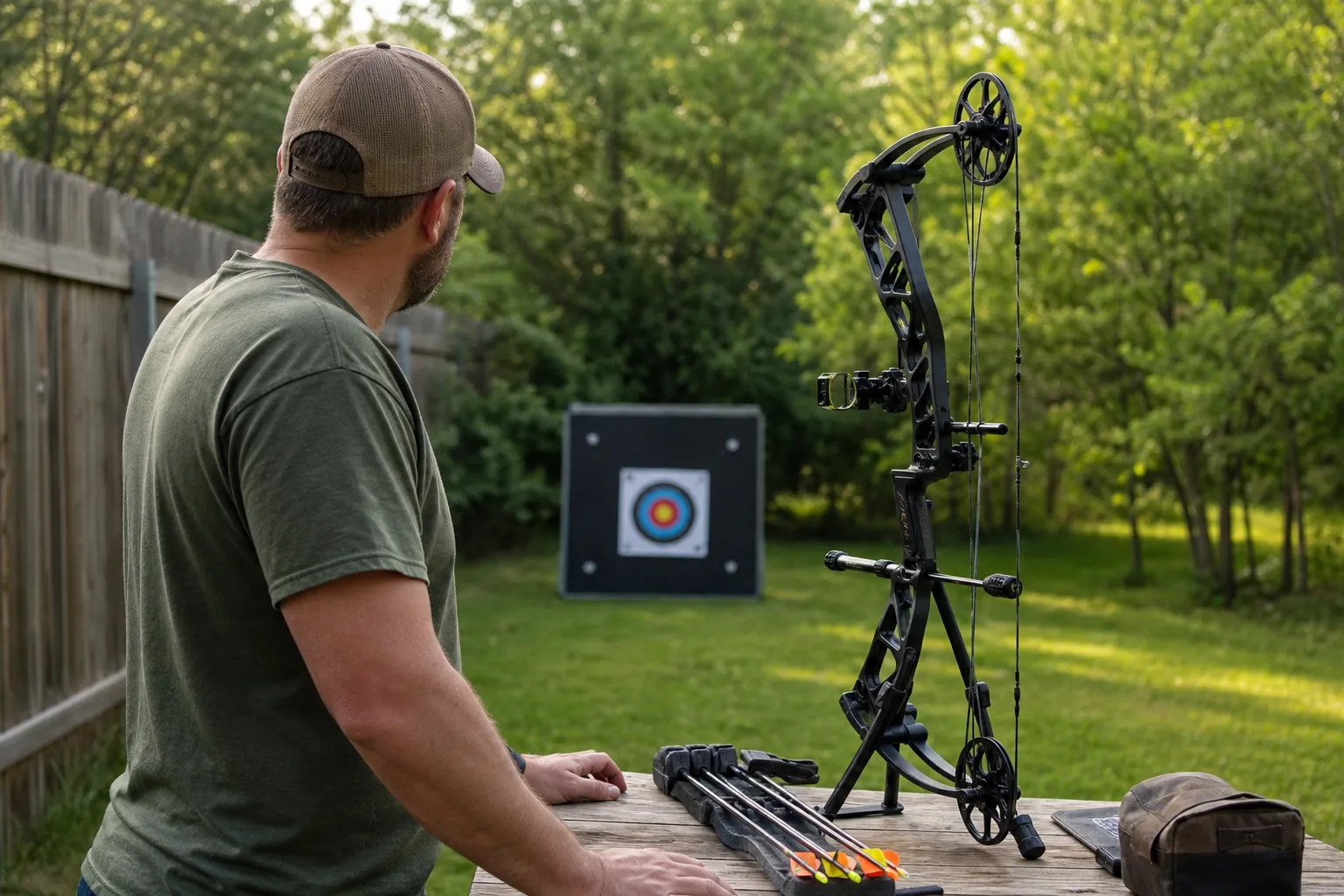
Sighting in a compound bow means matching your sight pins or sight tape to the distances you actually shoot. Start close, use a safe target and backstop, shoot a group before adjusting, then move the sight or pin toward the group. For a common fixed multi pin setup, most shooters set the top pin for 20 yards, then set lower pins for 30 and 40 yards. For a movable single pin sight, set the first zero and follow the sight maker’s tape calibration steps.
Start with a safe place to shoot
Before you worry about pin gaps, make sure the range is safe. The National Field Archery Association says an indoor target backstop must be able to stop an arrow, and its range guidance says pass through problems in target butts must be corrected at once. For outdoor ranges, NFAA guidance says safety buffer areas and terrain must be considered.
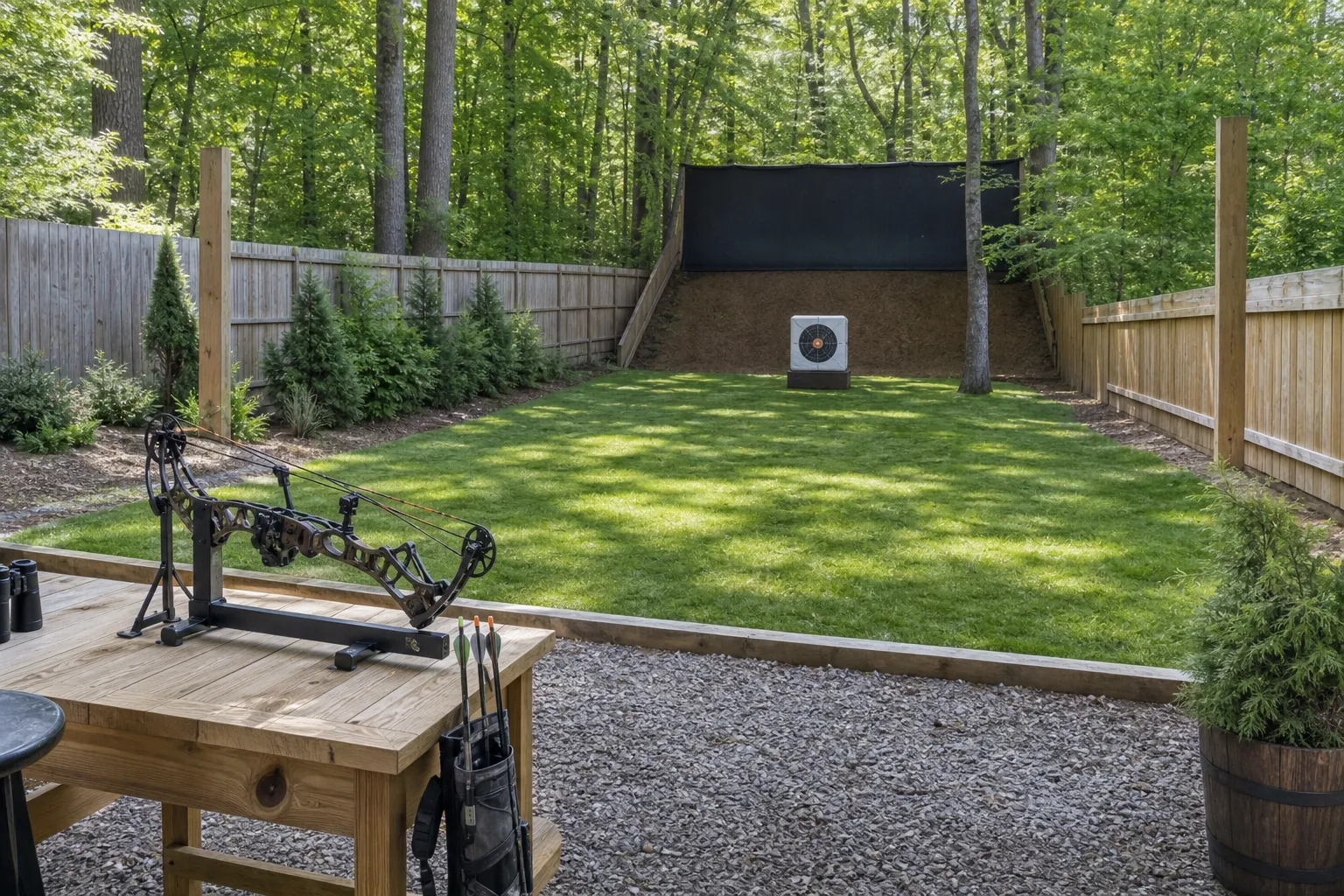
Oregon Department of Fish and Wildlife gives a simple practice standard: use a clear line of sight to the target and a safe backstop. For backyard practice, ODFW says the setup needs a decent size target, a larger backstop, and no structures or animals behind the target.
Use basic range discipline while sighting in. NFAA range rule examples include keeping the bow pointed toward the target, drawing with the arrow parallel to the ground, and nocking arrows only at the shooting line.
Also check your arrows before you shoot. ODFW says arrows should match the bow’s draw weight, because a mismatch can result in serious injury. ODFW also says to check arrows regularly for nicks, splits and fragments, and not to shoot questionable arrows.
The two rules that make sighting in easier
First, start close. Archery 360 says that if you just installed a sight, you should start close to the target before moving back. USA Archery also recommends moving back gradually when practicing at farther distances so arrows hit the target.
Second, adjust from groups, not one arrow. Archery 360 recommends shooting three arrows with good form so they hit the same area, called a group. After an adjustment, Archery 360 recommends shooting another three arrow group to confirm it.
Follow the arrow
The basic bow sight rule is: move the sight or pin toward the group. Archery 360 describes this as moving your sight toward the group.
If your group is left of center, move the sight or pin left.
If your group is right of center, move the sight or pin right.
If your group is high, move the sight or pin up.
If your group is low, move the sight or pin down.
This feels backwards to some new shooters, but it is the standard sight adjustment rule for this job. Make one adjustment, tighten the sight according to the sight maker’s instructions, then shoot another group before changing anything else.
Sighting in a fixed multi-pin bow sight
A multi pin sight usually has a top pin for the closest distance and lower pins for farther distances. Archery 360 says the top pin is 20 yards for most people, but you should start at 10 yards.
1. Start at 10 yards with the top pin
Stand close enough that a badly set sight still keeps arrows on the target. Use the top pin, aim at the center, and shoot a three arrow group.
If the group is left or right, move the sight housing or pin toward the group. If the group is high or low, move the sight or pin toward the group. Confirm with another group.
At this stage, you are not trying to build a full yardage system. You are simply making sure the sight is close enough to move back safely.
2. Set the top pin at 20 yards
Move back to 20 yards and use the top pin again. Shoot a group, then adjust toward the group.
Many sights let you move the entire sight housing, sometimes called a gang adjustment, and also move individual pins. Archery 360 notes that a multi pin sight has multiple adjustments. Black Gold’s competition sight manual, for example, describes using vertical adjustment and micro gang windage to start, with vertical adjustment moving up and down until arrows hit the middle and micro gang windage adjusting left and right.
For the first pin, it is common to use the housing or gang adjustment to center the whole sight for windage and elevation. If the top pin runs out of vertical room, Archery 360 says to move the sight housing up or down.
3. Set the 30 yard pin
After the 20 yard pin is centered, move back to 30 yards. Trophy Ridge’s React multi pin setup uses the 20 yard pin first, then steps back to 30 yards to zero the next pin. Archery 360’s multi pin sequence also supports moving from the 20 yard pin toward 30 yards, then continuing for the other pins.
Use the second pin, shoot a group, then move that pin toward the group. Try not to disturb the already confirmed 20 yard setting unless your sight maker’s instructions call for it.
4. Set the 40 yard pin
Move back again and set the next lower pin for 40 yards. The Boy Scouts of America Archery merit badge pamphlet gives a beginner friendly explanation of pin spacing: the 30 yard sight is below the 20 yard sight, and the 40 yard sight is lower than the 30 yard sight. In other words, lower pins on a fixed pin sight correspond to longer distances.
Shoot a group, adjust the 40 yard pin toward the group, and confirm with another group.
Gang adjustment versus individual pins
Use gang adjustment when you want to move the whole sight picture together. This is most useful early in the process, especially while centering the top pin.
Use individual pin movement when one yardage is off but the others are already close. For example, once your 20 yard pin is centered, the 30 and 40 yard pins are normally set by moving those individual pins.
Sighting in a single-pin movable sight
A single pin movable sight works differently. Instead of several fixed pins, it uses one aiming point and a moving elevation system. Archery 360 says these sights have windage, which moves the pin left or right, and elevation. Archery 360 also says slider sights use sight tapes with markings for various distances.
Start close, just as you would with a fixed pin sight. Establish the first zero with groups and the follow the arrow rule. Then follow the sight maker’s instructions for the tape system.
Different systems use different calibration distances.
Common printed sight tape process described by Archery 360: sight in at 20 and 40 yards to match a printed tape.
Trophy Ridge React single pin: Trophy Ridge describes setting a 20 yard mark, then using another mark such as 30 or 40 yards, with indicators set after two accurate yardage marks.
Some adjustable sights combine fixed pins with a slider.
The key point is simple: do not guess at the tape. Use measured distances, shoot careful groups, and follow the sight maker’s sequence.
Check broadheads before hunting
Do not assume broadheads and field points will group the same. Ohio Department of Natural Resources says that even if they are the same weight, they may not shoot and group the same. Texas Parks and Wildlife also says broadheads may fly differently than field points and should be tuned before going into the field.
Read our Broadheads guide before choosing or checking hunting heads.
Texas Parks and Wildlife advises using one practice broadhead of the same make, model and weight as the heads you will use during the season. Texas Parks and Wildlife also says the target should be rated for broadheads and that broadheads must be allowed at that location.
NFAA range guidance recommends clearly labeled broadhead targets, including one at 20 yards, to accommodate hunters and protect other targets.
Arrow spine and consistency matter
A sight in session only tells you where your current setup hits. If you change arrows, point weight, broadheads, or other parts of the arrow system, your marks may change.
Gold Tip’s spine selector uses draw weight, point weight and arrow length for shaft selection. Gold Tip defines point weight as the combined weight of the point, insert, Ballistic Collar and FACT weight. Gold Tip also says that if a broadhead is longer than the field point, choosing a slightly stiffer shaft may be considered.
For help understanding arrow stiffness and selection variables, see our Arrow Spine Chart guide.
Quick sight-in checklist
Use this as a simple order of operations:
- Set up a safe target, a safe backstop, and a clear shooting lane.
- Check arrows for damage and make sure they match the bow’s draw weight.
- Start close, such as 10 yards for a new or newly installed sight.
- Shoot a three arrow group before adjusting.
- Move the sight or pin toward the group.
- Confirm each change with another group.
- For a multi pin sight, set the top pin at 20 yards, then lower pins such as 30 and 40 yards.
- For a movable sight, set the first zero and follow the sight maker’s tape calibration instructions.
- Before hunting, check with a practice broadhead of the same make, model and weight as your hunting heads, using a broadhead rated target where broadheads are allowed.
What to confirm before you shoot
Confirm that your target and backstop can stop your arrows, that the range allows the arrows and points you plan to use, and that you are following the sight maker’s instructions for your exact sight. If you are preparing for hunting, confirm current hunting rules, broadhead rules, and practice range rules with the wildlife agency or range authority for your location.
Frequently asked questions
Which way do I move my bow sight if my arrows hit left?
Move the sight or pin left, toward the group. Archery 360 describes the basic rule as moving the sight toward the group.
Should I adjust my bow sight after one arrow?
No. Archery 360 recommends shooting a three arrow group with good form before moving the sight, then confirming the adjustment with another group.
What yardages should I use for a multi pin bow sight?
A common beginner setup is a 20 yard top pin, then lower pins for 30 and 40 yards. Archery 360 says the top pin is 20 yards for most people, but to start at 10 yards when sighting in.
How do I sight in a single pin movable sight?
Start close, establish the first zero with groups, then follow the sight maker’s tape instructions. Some tape systems use 20 and 40 yards, and Trophy Ridge React uses two accurate yardage marks such as 20 and 30 or 40 yards.
Do broadheads hit the same place as field points?
Not always. Ohio DNR says broadheads and field points may not shoot and group the same even if they are the same weight, and Texas Parks and Wildlife says broadheads may fly differently than field points.
Why start at 10 yards if my first pin is 20 yards?
Starting close helps keep arrows on the target when a sight was just installed or is badly off. Archery 360 says to start close before moving back, and says most people use a 20 yard top pin but should start at 10 yards.
Sources
- How to Adjust Your Bow Sight, Archery 360. Accessed October 28, 2026.
- NFAA Range Guidelines & Round Summaries, National Field Archery AssociationOfficial source. Accessed October 28, 2026.
- Installation & Sight In Instructions for HHA Tetra, HHA SportsOfficial source. Accessed October 28, 2026.
- Installation & Sight-In Instructions for 4-Pin Scopes on Tetra Series Adjustable Bow Sights, HHA SportsOfficial source. Accessed October 28, 2026.
- How to Sight in Trophy Ridge React Bow Sights, Trophy Ridge via Bear ArcheryOfficial source. Accessed October 28, 2026.
- Black Gold Competition Sight Owner’s Manual, Black Gold SightsOfficial source. Accessed October 28, 2026.
- Bow Shooting Tips, Oregon Department of Fish and WildlifeOfficial source. Accessed October 28, 2026.
- Archery Fact Sheet, Ohio Department of Natural ResourcesOfficial source. Accessed October 28, 2026.
- Bowhunter by Fall: More Practice, Shot Placement and Licenses On Sale, Texas Parks and Wildlife DepartmentOfficial source. Accessed October 28, 2026.
- Arrow Spine Selector Tool, Gold Tip ArrowsOfficial source. Accessed October 28, 2026.
- Transitioning from Indoors to Outdoors: Sight Pin Location, USA ArcheryOfficial source. Accessed October 28, 2026.
- Archery Merit Badge Pamphlet, Boy Scouts of America. Accessed October 28, 2026.