FFP vs SFP: First and Second Focal Plane Scopes Compared
FFP reticles scale with the image, so holdover and wind marks stay valid through the magnification range. SFP reticles stay the same visible size, but their marks are tied to a specific magnification.
By RaiS. Reviewed by RaiS. Published . 7 min read.
Research and drafting were assisted by AI. RaiS checked the facts against the sources below and approved this page.
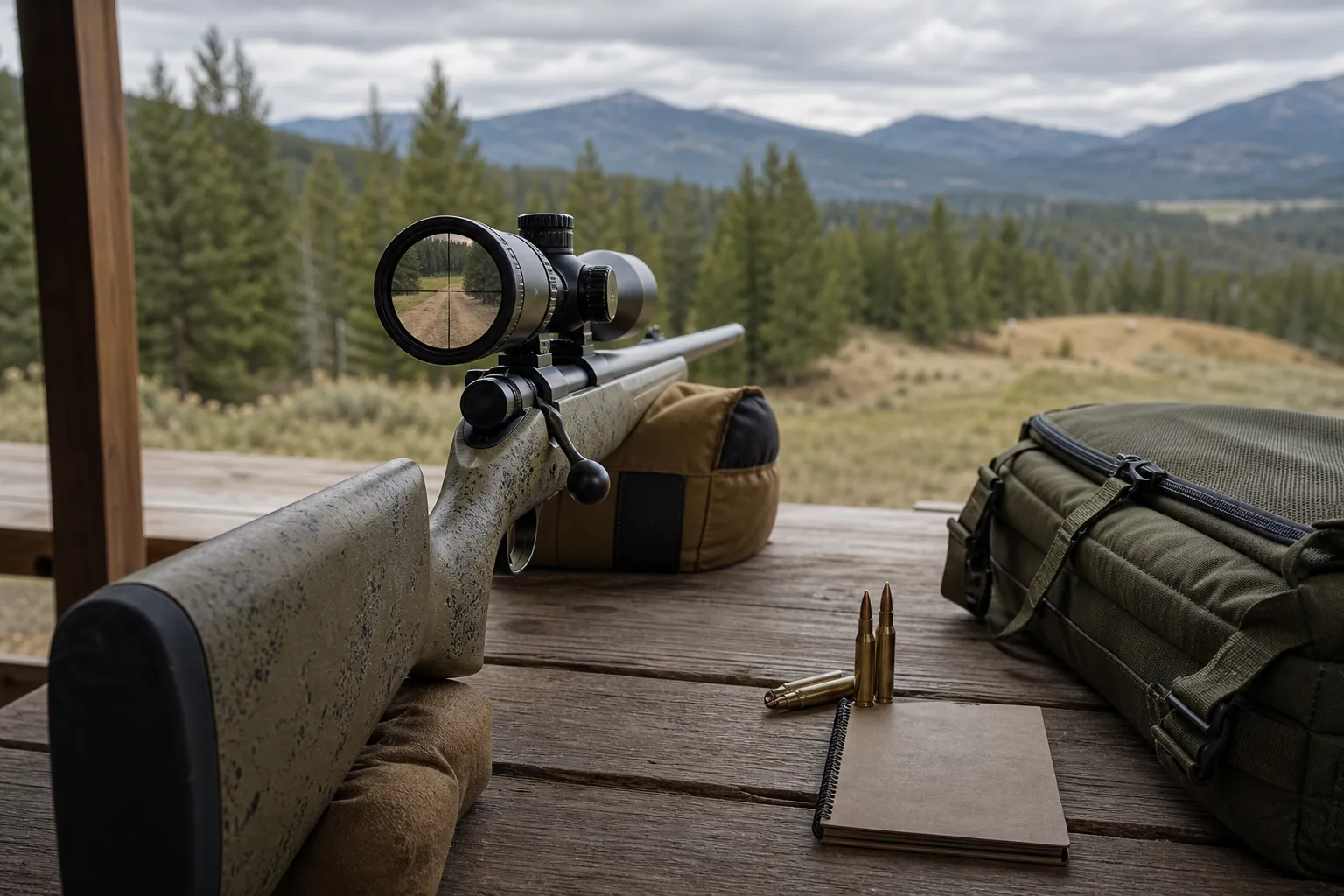
First focal plane and second focal plane describe where the reticle sits inside a riflescope. In a first focal plane, or FFP, scope, the reticle scales with the target image as you change magnification, so its holdover, wind and ranging marks stay valid across the magnification range. In a second focal plane, or SFP, scope, the reticle keeps the same apparent size, so its marks are normally correct only at a specific magnification.
That difference matters most on variable-power scopes because the target image changes size as you turn the magnification ring. The simple rule is: FFP marks stay true as magnification changes, while SFP reticles stay visually consistent but need the correct power setting for measured holds.
Where the reticle sits
Vortex defines first focal plane and second focal plane as reticle placement inside the scope optical system. Leupold describes a front or first focal plane reticle as being in front of the magnification system, and ZEISS describes it as positioned in front of the erector tube near the turrets.
In an SFP scope, the reticle is in a different place. Leupold describes a rear or second focal plane reticle as being behind the magnification system. ZEISS describes the SFP reticle as behind the zoom erector tube, closer to the eyepiece.
Vortex explains the optical result in plain terms: an FFP reticle meets the image before magnification, while an SFP reticle meets the image after the image has already been magnified.
For a broader explanation of scope power markings, see scope magnification explained.
What changes when you turn magnification
In an FFP scope, Vortex says the image and reticle get larger and smaller together while maintaining the same scale to one another. ZEISS describes the reticle and image as a single unit that increases or decreases in size together.
In an SFP scope, Vortex says the image grows and shrinks with magnification, but the reticle does not. Leupold says the apparent size of the reticle will not change when magnification changes.
This is where subtension matters. Leupold defines subtension as the amount of the target covered by some aspect of a reticle. If the reticle scale changes with the image, the subtension relationship stays consistent. If the reticle stays the same visible size while the image changes, the subtension changes.
That is why Leupold says changing magnification in a rear focal plane design changes the subtension of the reticle, effectively changing the amount of holdover provided.
If the reticle types themselves are new to you, see rifle scope reticles explained.
Holdovers, wind holds and ranging marks
FFP is the simpler choice when you want reticle measurements to stay correct while changing power. Leupold says FFP reticle measurements can be used accurately at any magnification setting. Nightforce says FFP reticle elevation and windage markings are valid at every magnification setting.
That matters for reticles with MOA or mil marks. Leupold says placing MOA or mil reticles in the front focal plane lets the shooter use the scope on any magnification while retaining exact spacing. ZEISS says FFP subtension stays the same at all magnifications, which supports range estimation.
SFP can also work well, but the shooter must know the reticle’s reference magnification. Leupold says SFP off-center reticle measurements require a specific magnification, and on Leupold riflescopes this is normally the highest power.
Do not assume every SFP reticle uses the same reference power. Nightforce describes an SFP long-range reticle made for shooters who prefer second focal plane, and one Nightforce Mil-CF2D example has a dual reticle scale for correct subtensions at 16x and 32x. That shows SFP calibration can be model specific.
For the adjustment units used on many reticles and turrets, see MOA vs MIL scope adjustments.
FFP vs SFP side by side
| Feature | First focal plane, FFP | Second focal plane, SFP |
|---|---|---|
| Reticle location | In front of the magnification system, according to Leupold | Behind the magnification system, according to Leupold |
| Apparent reticle size | Reticle and image grow or shrink together | Reticle apparent size does not change |
| Holdover and wind marks | Leupold and Nightforce say measurements are valid at any magnification | Leupold says off-center measurements require a specific magnification, normally highest power on Leupold scopes |
| Subtension | ZEISS says subtension stays the same at all magnifications | ZEISS says subtension depends on magnification setting |
| Low-power visibility | Vortex says FFP details can become very small at the lowest power in LPVOs | Leupold says SFP can appear bolder at low magnification |
| High-power aiming | Reticle appears larger with the target image | ZEISS says SFP remains constantly fine with minimal target coverage |
| Best fit | Changing magnification while using reticle holds, wind holds or ranging marks | Keeping a consistent reticle image, or using marks at the calibrated power |
| Main caution | Reticle details may be small at low power, especially in 1x LPVO use | Holds and ranging marks need the correct magnification setting for that reticle |
Hunting trade-offs
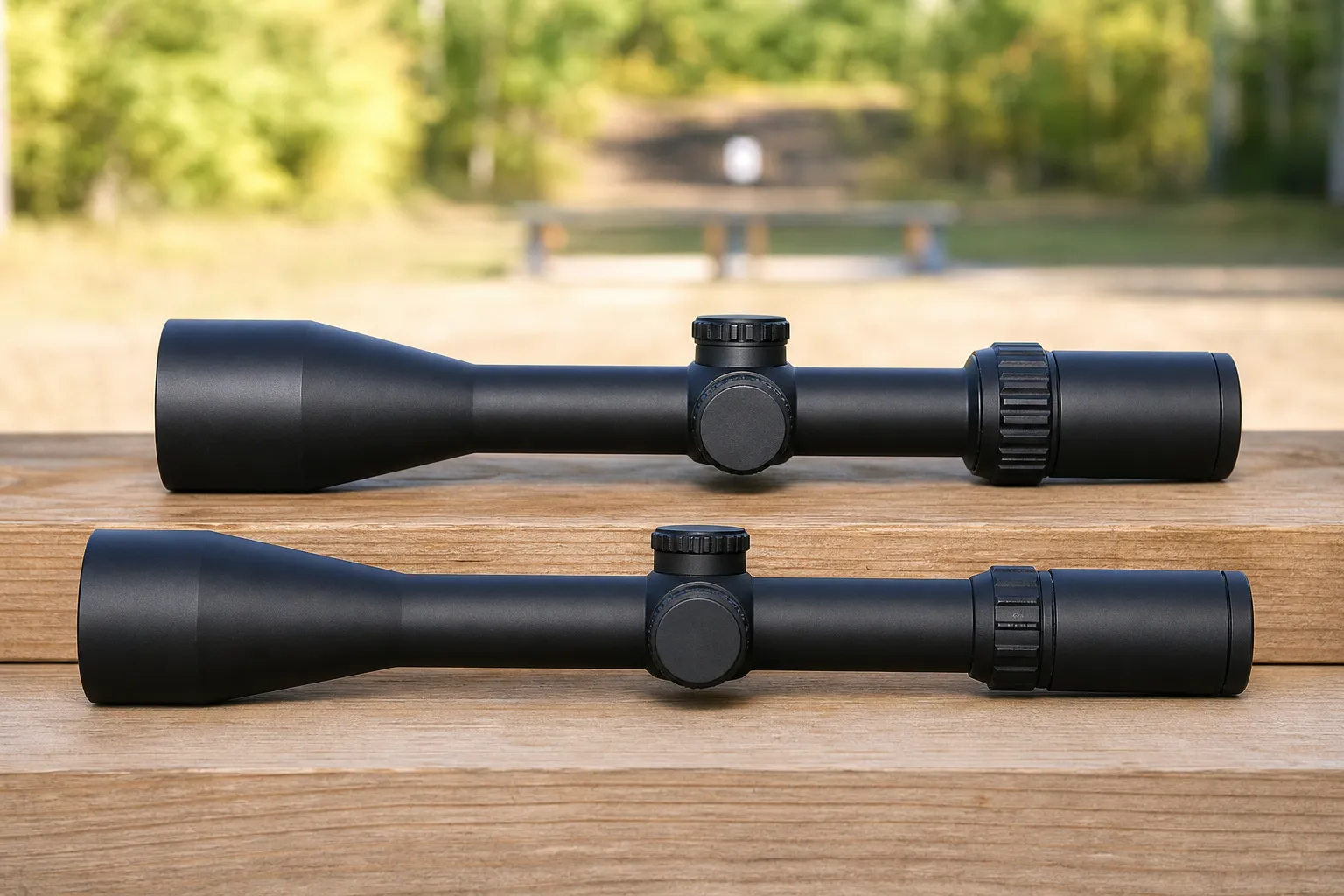
Leupold says many hunting scopes are designed with rear focal plane reticles. One reason is visibility. Leupold says SFP designs let the reticle appear bolder in low light, making it easy to see and faster to acquire.
Leupold also says an SFP reticle can look bolder and heavier at low magnification, but thinner and more precise at high magnification. ZEISS describes SFP reticles as remaining constantly fine with minimal target coverage, which it calls a key benefit for long-distance shots at high magnification.
FFP has a different advantage for hunters who use the reticle for holds. ZEISS says first focal plane technology allows ease of use and speed for hold-over, hold-off and hold-under aiming solutions. Leupold says FFP MOA or mil reticles keep their exact spacing usable at any magnification.
So the hunting choice often comes down to how the reticle will be used. If the scope is mostly used with a centered aim point or with the reticle at its calibrated magnification, SFP can be straightforward. If the hunter changes magnification and still wants hold marks to stay correct, FFP has the clearer measurement advantage.
Long-range and precision trade-offs
For long-range and precision use, FFP is helpful when reticle measurements are part of the shooting process. Nightforce says FFP elevation and windage markings are valid at every magnification setting. ZEISS says FFP subtension stays the same at all magnification levels, making range estimation possible.
SFP is not excluded from longer-range use. ZEISS describes SFP as a good fit when the shooter has time to set up, evaluate and make the shot. ZEISS also says SFP can be a good solution when the shooter dials longer shots or dislikes reticle size changes.
Nightforce examples show both approaches. Nightforce describes first focal plane reticles where windage and elevation marks are valid at every magnification. It also offers second focal plane long-range reticles for hunters and shooters who prefer SFP, including a dual-scale example with correct subtensions at two magnifications.
If you are comparing scopes for longer distances, reticle plane is only one part of the setup. Parallax is a separate topic, covered in rifle scope parallax explained.
Why many LPVOs use SFP
Vortex describes an LPVO as going from 1x, like a red dot, to higher magnifications such as 4x, 6x, 8x or 10x. For the full overview, see What Is an LPVO?.
LPVOs make the focal-plane choice especially noticeable because the low end can be 1x. Vortex says FFP reticle details always get pretty small at the lowest power, and especially in a 1x riflescope they get very tiny.
That helps explain why many 1-6x LPVO examples are SFP or offer SFP as an option. Vortex lists the Strike Eagle 1-6x24 as a 1-6x scope with a second focal plane reticle. Leupold lists the VX-6HD Gen 2 1-6x24 as a second focal plane riflescope. Nightforce describes the NX6 1-6x24mm SFP model as having a consistent reticle image at any magnification.
An LPVO line may be offered with a choice. Trijicon offers its Credo 1-6x24 with a choice of first or second focal planes.
Vortex also notes that the practical benefit of FFP grows as LPVO magnification ranges increase to 1-8x or 1-10x, because there are more usable magnification settings. In other words, SFP can make sense when the priority is a consistent, visible reticle at low power, while FFP becomes more appealing when the shooter wants reticle measurements to remain true across a wider power range.
How to choose
Choose FFP if you want the reticle’s measurement features to stay valid as you change magnification. That is the main technical advantage described by Leupold, Vortex, ZEISS and Nightforce.
Choose SFP if you prefer a reticle that keeps the same apparent size, especially if you value a bolder look at low magnification or a fine aiming appearance at high magnification. Leupold describes both of those SFP traits, and ZEISS notes the benefit of minimal target coverage at high magnification.
Before buying or setting up a scope, check the manufacturer’s reticle manual for that exact model. For SFP scopes, confirm the magnification where holdover, wind and ranging marks are calibrated. For FFP scopes, check whether the reticle remains visible enough for your intended low-power use.
Frequently asked questions
What is the main difference between FFP and SFP scopes?
In an FFP scope, the reticle is in front of the magnification system and scales with the target image. In an SFP scope, the reticle is behind the magnification system and keeps the same apparent size as magnification changes.
Do FFP reticle marks stay accurate at every magnification?
Yes, for the measurement marks described by the manufacturers. Leupold says FFP reticle measurements can be used accurately at any magnification setting, and Nightforce says FFP elevation and windage markings are valid at every magnification setting.
Are SFP holdover marks always wrong except at maximum power?
No. Leupold says SFP off-center marks require a specific magnification, normally the highest power on Leupold riflescopes. Nightforce also shows that some SFP reticles are model specific, including a dual-scale reticle marked for correct subtensions at 16x and 32x.
Why are many hunting scopes second focal plane?
Leupold says many hunting scopes use rear focal plane reticles. It also says SFP reticles can appear bolder at low magnification and in low light, while appearing thinner and more precise at high magnification.
Why do many LPVOs use SFP reticles?
Vortex says FFP details can become very small at the lowest power, especially in a 1x riflescope. Several 1-6x LPVO examples from Vortex, Leupold and Nightforce are SFP, while Trijicon offers a 1-6x model with a choice of FFP or SFP.
Sources
- FAQS, Vortex OpticsOfficial source. Accessed November 26, 2026.
- What’s the Best Optic for Your AR? Let’s Talk LPVO’s, Vortex OpticsOfficial source. Accessed November 26, 2026.
- Strike Eagle 1-6x24, Vortex OpticsOfficial source. Accessed November 26, 2026.
- Glossary, LeupoldOfficial source. Accessed November 26, 2026.
- FAQS, LeupoldOfficial source. Accessed November 26, 2026.
- VX-6HD Gen 2 1-6x24 CDS-SZL2 Illum. FireDot Duplex, LeupoldOfficial source. Accessed November 26, 2026.
- How to choose the right riflescope for long-range hunting?, ZEISS HuntingOfficial source. Accessed November 26, 2026.
- FC-MIL and FC-MOA Reticles, Nightforce OpticsOfficial source. Accessed November 26, 2026.
- Mil-CF2 / Mil-CF2D Reticle Sheet, Nightforce OpticsOfficial source. Accessed November 26, 2026.
- NX6 1-6x24mm, Nightforce OpticsOfficial source. Accessed November 26, 2026.
- Trijicon Credo 1-6x24 Riflescope, TrijiconOfficial source. Accessed November 26, 2026.
- TANGO6 1-6x24 mm Riflescope, SIG SauerOfficial source. Accessed November 26, 2026.