Full-Size vs Compact Pistols: Size, Capacity, Sight Radius and Handling
Full size, compact, subcompact, and micro compact pistol labels are manufacturer categories, not one universal dimensional standard. The most useful comparison points are barrel length, overall length, height, width, weight, listed magazine capacity, and sight radius.
By RaiS. Reviewed by RaiS. Published . 4 min read.
Research and drafting were assisted by AI. RaiS checked the facts against the sources below and approved this page.
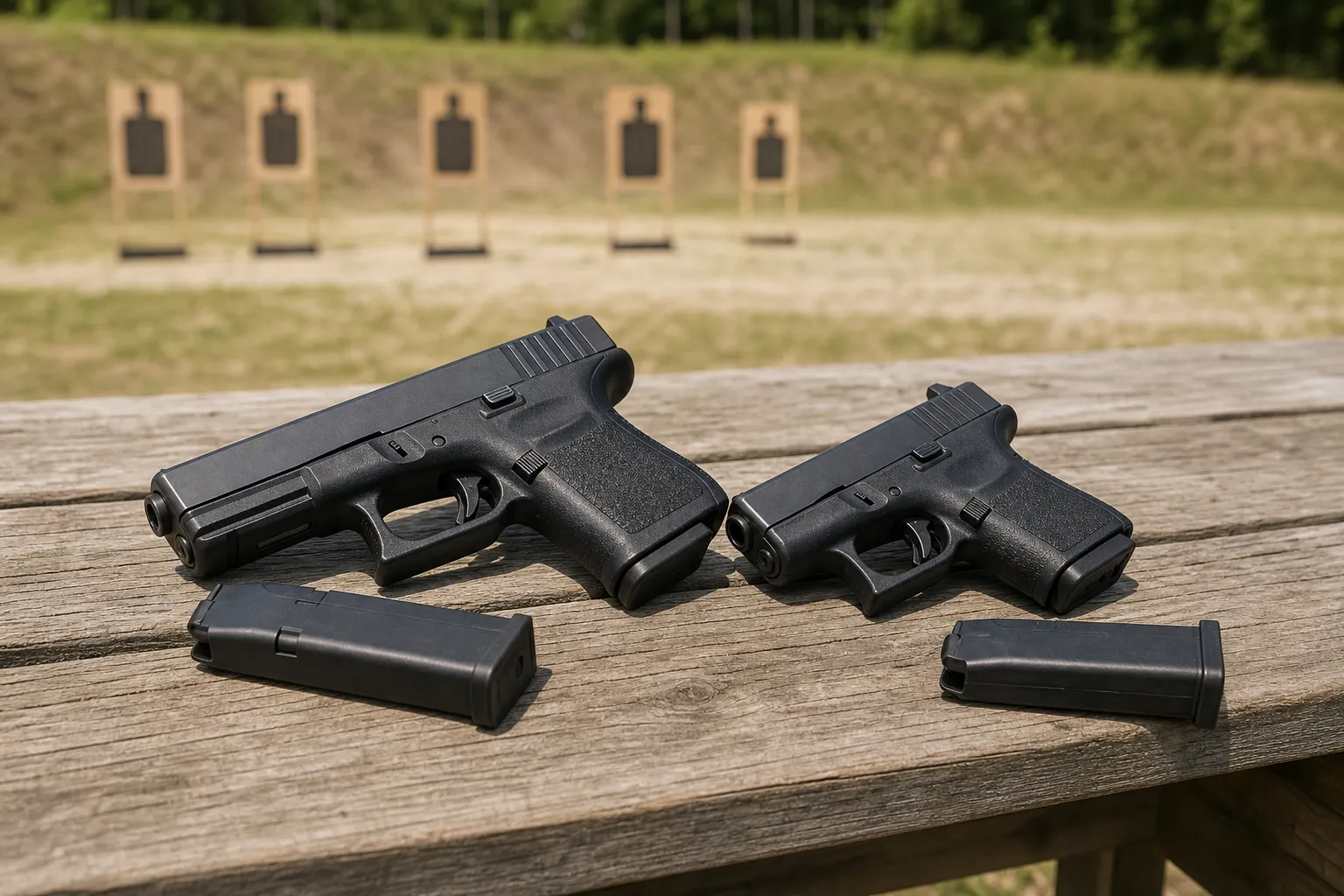
Full size, compact, subcompact, and micro compact pistols are best understood as manufacturer size classes, not one universal standard. In practical comparisons, look at the published barrel length, overall length, height, width, weight, magazine capacity, and sight radius for the exact model rather than relying on the label alone.
Size labels are not one universal standard
SAAMI publishes technical standards for centerfire pistol and revolver ammunition, including pressure and velocity standards, and its glossary includes firearm terminology. SAAMI also states that its glossary is not intended to provide legal definitions. For handgun size classes, the published specifications from the firearm maker matter more than the word on the product page.
Glock’s own product labels show why readers should check the maker’s terminology. Glock labels the G17 Gen5 as Standard, the G19 Gen5 as Compact, and the G26 Gen5 as Subcompact. Those words describe Glock’s model family, while the dimensions show the actual differences.
The objective factors to compare
The strongest way to compare pistol size classes is to read the specification sheet for each exact model. A label like compact is useful, but it does not tell you everything.
Magazine capacity is one comparison point. If you want a deeper explanation of magazine layouts and parts, see pistol magazines.
SAAMI defines sight radius as the distance between the rear sight and the front sight on a firearm. For more background on sight types, see iron sights.
When comparing two pistols, check these items:
- Barrel length: A major part of how manufacturers sort size classes.
- Overall length: Often changes with slide and barrel length.
- Height: Often includes the magazine or grip, depending on the maker’s wording.
- Width: Especially useful when comparing micro compact models.
- Weight: Check whether the maker lists weight without a magazine, with a magazine, or simply as weight.
- Capacity: Keep the maker’s wording exact.
- Sight radius or line of sight: Longer slides generally allow a longer distance between front and rear sights, but published specs should be checked.
Full-size versus compact pistols
Full size pistols usually have longer barrels, longer slides, taller grips, and higher listed capacity than smaller models in the same family. Compact pistols usually shorten one or more of those dimensions. The exact amount depends on the manufacturer and the model.
Within a given product family, the most useful comparison is the exact specification sheet for each model rather than the shared family name.
Subcompact and micro-compact pistols
Subcompact and micro compact pistols push the same tradeoffs further. They are often chosen when smaller overall dimensions, shorter grip length, or lower carry weight are priorities, but the exact specifications vary by maker and model.
Ruger’s MAX 9 launch notice describes that pistol as micro sized. Ruger lists it as 6 inches long, less than 1 inch in slide width, 18.4 ounces, and equipped with a 3.2 inch barrel. Ruger also states that the MAX 9 is chambered in 9mm Luger and has 12+1 capacity. For cartridge background, see 9mm Luger.
Sight radius and sight picture
Sight radius is a simple measurement, but it matters because it is part of how a pistol presents its sights to the shooter. SAAMI defines it as the distance between the rear sight and the front sight. NRA Family identifies sight alignment, sight picture, hold, and sight radius as factors affecting marksmanship, while noting that sight radius depends on the firearm.
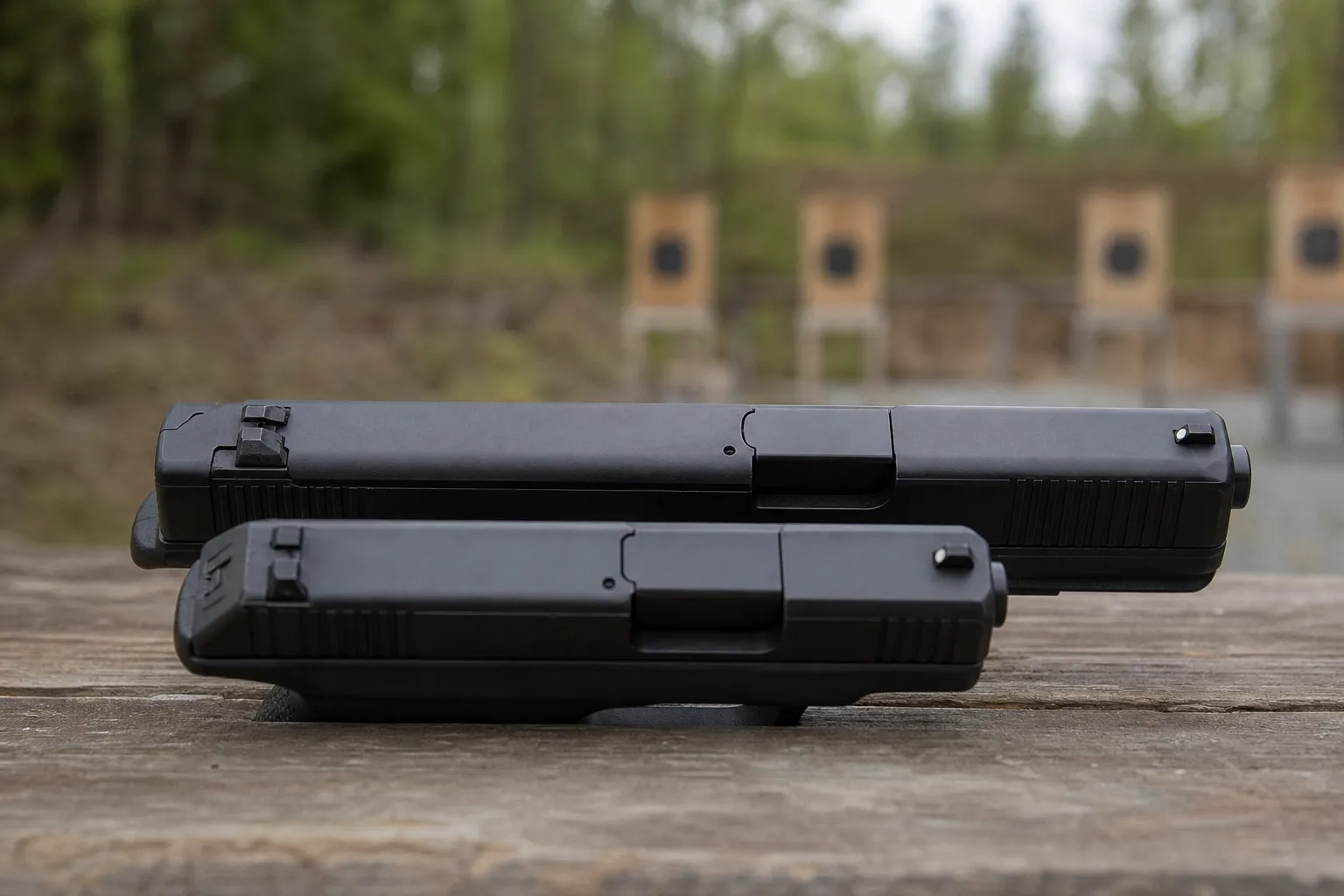
Basic iron sight aiming, as described by the NRA, means centering the front sight with the rear sight at the same height and focusing on the front sight.
Handling tradeoffs without a brand recommendation
No size class is automatically best. A larger pistol may offer more height, more listed capacity, a longer sight radius, and more published weight within a given model family. A smaller pistol reduces dimensions and often reduces weight, but may also reduce grip length, sight radius, and listed magazine capacity.
The handling side is not just about the pistol’s size label. The NRA’s handgun fundamentals article says a good grip helps control recoil and helps recovery. The same article describes basic sight alignment as centering the front sight with the rear sight at the same height and focusing on the front sight.
That means a useful comparison is not, “full size or compact, which is best?” A better question is, “what do the model specifications say, and how do those dimensions affect the way this pistol fits the shooter’s hands and sight picture?”
Before handling any firearm, review the basic rules of firearm safety. This article does not cover concealed carry law, defensive use claims, prices, or rankings. For an exact comparison, check the current manufacturer specification sheet for the exact model, sight configuration, and magazine configuration you are considering.
Frequently asked questions
Is there one official standard for full size, compact, subcompact, and micro compact pistols?
No single SAAMI size class standard is used here. Manufacturers define their own model labels and size categories.
How does a compact pistol usually differ from a full size pistol?
A compact pistol is usually shorter in one or more dimensions than a full size model in the same family. The exact barrel length, overall length, height, weight, sight radius, and capacity depend on the model.
What is sight radius?
SAAMI defines sight radius as the distance between the rear sight and the front sight on a firearm. Manufacturer specs may call a similar measurement sight radius or line of sight.
Are micro compact pistols always low capacity?
Not necessarily. Ruger states that the MAX 9 has 12+1 capacity in 9mm Luger.
Can I compare pistol weights directly across brands?
Use caution. Makers may define weight differently, such as weight with a magazine, without a magazine, or simply as weight. Always check how the manufacturer defines the weight figure.
Sources
- Glossary, SAAMIOfficial source. Accessed November 15, 2026.
- SAAMI Standards, SAAMIOfficial source. Accessed November 15, 2026.
- Full Size, SIG SauerOfficial source. Accessed November 15, 2026.
- Compact, SIG SauerOfficial source. Accessed November 15, 2026.
- Subcompact, SIG SauerOfficial source. Accessed November 15, 2026.
- Micro Compact, SIG SauerOfficial source. Accessed November 15, 2026.
- G17 Gen5, GlockOfficial source. Accessed November 15, 2026.
- G19 Gen5, GlockOfficial source. Accessed November 15, 2026.
- G26 Gen5, GlockOfficial source. Accessed November 15, 2026.
- 2023 Defense Products Catalog, SIG SauerOfficial source. Accessed November 15, 2026.
- 2026 Defense Catalog, SIG SauerOfficial source. Accessed November 15, 2026.
- M&P9 M2.0 Spec Sheet, SKU 11521, Smith & WessonOfficial source. Accessed November 15, 2026.
- M&P9 M2.0 Compact Spec Sheet, SKU 13571, Smith & WessonOfficial source. Accessed November 15, 2026.
- Ruger Introduces the MAX-9 Pistol, Sturm, Ruger & Co.Official source. Accessed November 15, 2026.
- Fundamentals of Handgun Shooting, American Rifleman, NRA. Accessed November 15, 2026.
- Mastering Sight Picture, Sight Radius & Hold, NRA Family. Accessed November 15, 2026.