7mm Remington Magnum: History, Specs and Ballistics Overview
The 7mm Remington Magnum is a belted, long action 7mm magnum and a long established hunting cartridge. The article covers pressure standards, factory load examples, recoil, barrel length considerations and the importance of using the exact cartridge name.
By RaiS. Reviewed by RaiS. Published . 4 min read.
Research and drafting were assisted by AI. RaiS checked the facts against the sources below and approved this page.
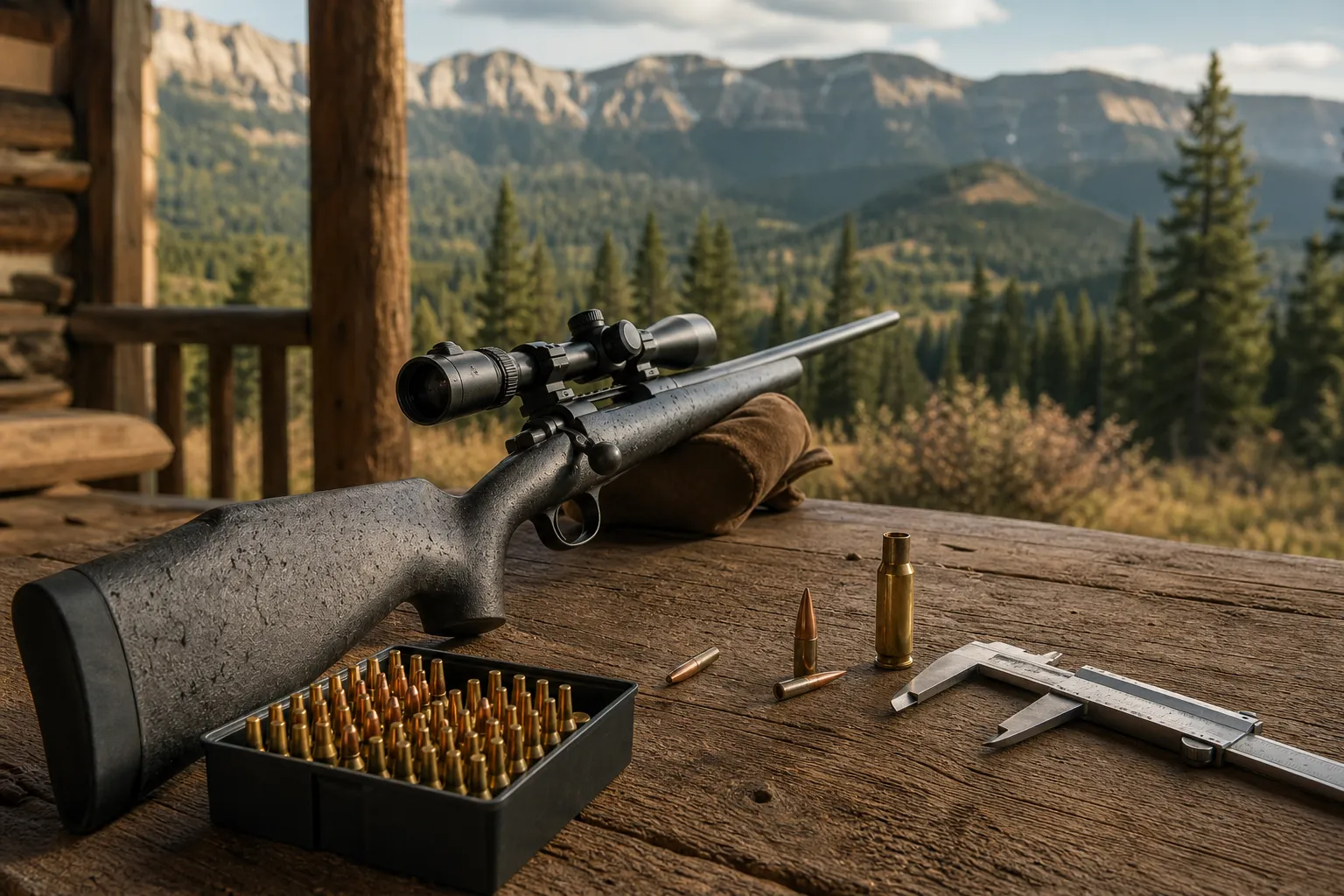
The 7mm Remington Magnum is a classic belted 7mm rifle cartridge. SAAMI lists a 61,000 psi maximum average pressure. For hunters and long range rifle readers, it remains a well known hunting cartridge.
History and introduction
Cartridge type and basic dimensions
American Hunter describes the 7mm Remington Magnum as using the belted .375 H&H case shortened to 2.500 inches to fit in a long action receiver.
The “7mm” name can be slightly confusing for new readers because U.S. cartridge specifications often show bullet diameter in inches. In the standard barrel drawing, SAAMI lists bore and groove dimensions through its barrel specifications, while CIP lists barrel dimensions in millimeters.
CIP also lists the cartridge length dimensions in metric form, including L3 of 63.50 mm and L6 of 83.57 mm.
Key published specifications
| Specification | Published value |
|---|---|
| SAAMI transducer MAP | 61,000 psi |
| SAAMI test barrel twist | 1 in 9.50 inches, right hand |
Pressure standards and test barrels
SAAMI Z299.4 2025 lists the 7mm Remington Magnum transducer maximum average pressure as 610 psi/100, equivalent to 61,000 psi.
Published pressure and velocity figures are tied to controlled test conditions. The same SAAMI drawing specifies six grooves.110 inch groove width, and a 1 in 9.50 inch right hand twist.
That does not mean every hunting rifle will produce the same velocity printed in a catalog. It means the published figure came from a defined test setup.
Factory ammunition and common bullet weights
Manufacturer data show factory hunting loads in several bullet weights.
Hornady’s own blog identifies three 7mm Remington Magnum factory loads: a 139 grain InterLock, a 154 grain SST, and a 162 grain ELD-X. Hornady says the box listed muzzle velocities for those loads were 3150 fps, 3100 fps, and 2975 fps.
| Manufacturer data | Bullet weight | Bullet line named in data | Listed muzzle velocity |
|---|---|---|---|
| Hornady blog | 139 gr | InterLock | 3150 fps |
| Hornady blog | 154 gr | SST | 3100 fps |
| Hornady blog | 162 gr | ELD-X | 2975 fps |
These figures are useful for understanding the cartridge’s general performance range, but they should not be treated as a promise from every rifle. Barrel length, test conditions, and the exact ammunition lot can matter, and manufacturer figures should be checked directly before making decisions about trajectory or rifle setup.
For background on why bullet shape matters downrange, see our guide to ballistic coefficient. For a general explanation of velocity terms, see how fast a bullet travels.
General ballistic reputation
The 7mm Remington Magnum is widely used as a hunting cartridge.

The cartridge also sits in a 7mm bullet diameter class, distinct from .30 caliber cartridges such as the .30-06 Springfield and the 300 Winchester Magnum discussed in our 300 Win Mag vs .30-06 comparison.
Recoil and handling
Recoil should be understood as a system, not as one universal number. SAAMI’s recoil technical sheet explains recoil using conservation of momentum, and its formula uses firearm weight, ejecta weight, ejecta velocity, propellant gas or powder charge weight, and propellant gas velocity.
SAAMI also notes that felt recoil can vary with recoil pads, damping devices, and action type. In practical reading terms, a lighter rifle, heavier bullet, higher velocity load, or different stock setup can change what the shooter feels, even when the chambering name on the barrel is the same.
The 7mm Remington Magnum is a full size magnum rifle cartridge, so eye relief and rifle fit matter when choosing optics and setting up a hunting rifle. For scope setup basics related to recoil clearance, see eye relief explained.
Barrel length considerations
Factory ammunition numbers and rifle barrel lengths are not always identical. When comparing ammunition, rifle specifications, or trajectory tables, check the barrel length and test conditions listed by the manufacturer.
Not the same as every other 7mm magnum
The 7mm Remington Magnum is its own cartridge. Other cartridges with similar 7mm names are not automatically interchangeable.
So, when buying ammunition or reading ballistics data, do not shorten the name to just “7mm magnum” and assume interchangeability. Use the exact cartridge name printed on the firearm and the ammunition box.
Bottom line
The 7mm Remington Magnum remains a well established, standardized hunting cartridge with a long record in factory rifles and ammunition. Manufacturer examples still show hunting loads in several bullet weights.
Before choosing ammunition or setting up a rifle, check the current ammunition manufacturer data, the rifle maker’s specifications, and the latest SAAMI or CIP standards where applicable. Use the exact cartridge name, 7mm Remington Magnum, rather than relying on a shortened 7mm label.
Frequently asked questions
What is the SAAMI pressure for 7mm Remington Magnum?
SAAMI Z299.4 2025 lists the 7mm Remington Magnum transducer maximum average pressure as 610 psi/100, equivalent to 61,000 psi.
What are common 7mm Remington Magnum bullet weights?
Manufacturer examples discussed here include 139, 154 and 162 grain factory hunting loads.
Sources
- SAAMI Z299.4 2025, Voluntary Industry Performance Standards for Pressure and Velocity of Centerfire Rifle Ammunition, Sporting Arms and Ammunition Manufacturers' InstituteOfficial source. Accessed November 12, 2026.
- Gun Recoil Formulae Technical Data Sheet, Rev. 7/9/2018, Sporting Arms and Ammunition Manufacturers' InstituteOfficial source. Accessed November 12, 2026.
- C.I.P. TDCC, 7 mm Rem. Mag., Commission Internationale Permanente pour l'Epreuve des Armes à Feu PortativesOfficial source. Accessed November 12, 2026.
- Remington 2026 Product Catalog, Remington AmmunitionOfficial source. Accessed November 12, 2026.
- Remington 2018 Product Catalog, Remington, catalog copy hosted by Gravel AgencyOfficial source. Accessed November 12, 2026.
- Federal Catalog 2022, Rifle Ballistics, Federal Premium AmmunitionOfficial source. Accessed November 12, 2026.
- Never too much data!, Hornady ManufacturingOfficial source. Accessed November 12, 2026.
- Behind the Bullet: 7mm Remington Magnum, American Hunter. Accessed November 12, 2026.
- Sierra Reloading Manual, 5th Edition, 7mm Remington Magnum section, Sierra Bullets, PDF copy hosted by Furor Sniper. Accessed November 12, 2026.