What Is Parkerizing? The Phosphate Finish on Military Firearms
Parkerizing is a phosphate conversion coating on steel. It became closely associated with military firearms because its matte crystalline surface holds oil and helps protect steel from corrosion.
By RaiS. Reviewed by RaiS. Published . 7 min read.
Research and drafting were assisted by AI. RaiS checked the facts against the sources below and approved this page.
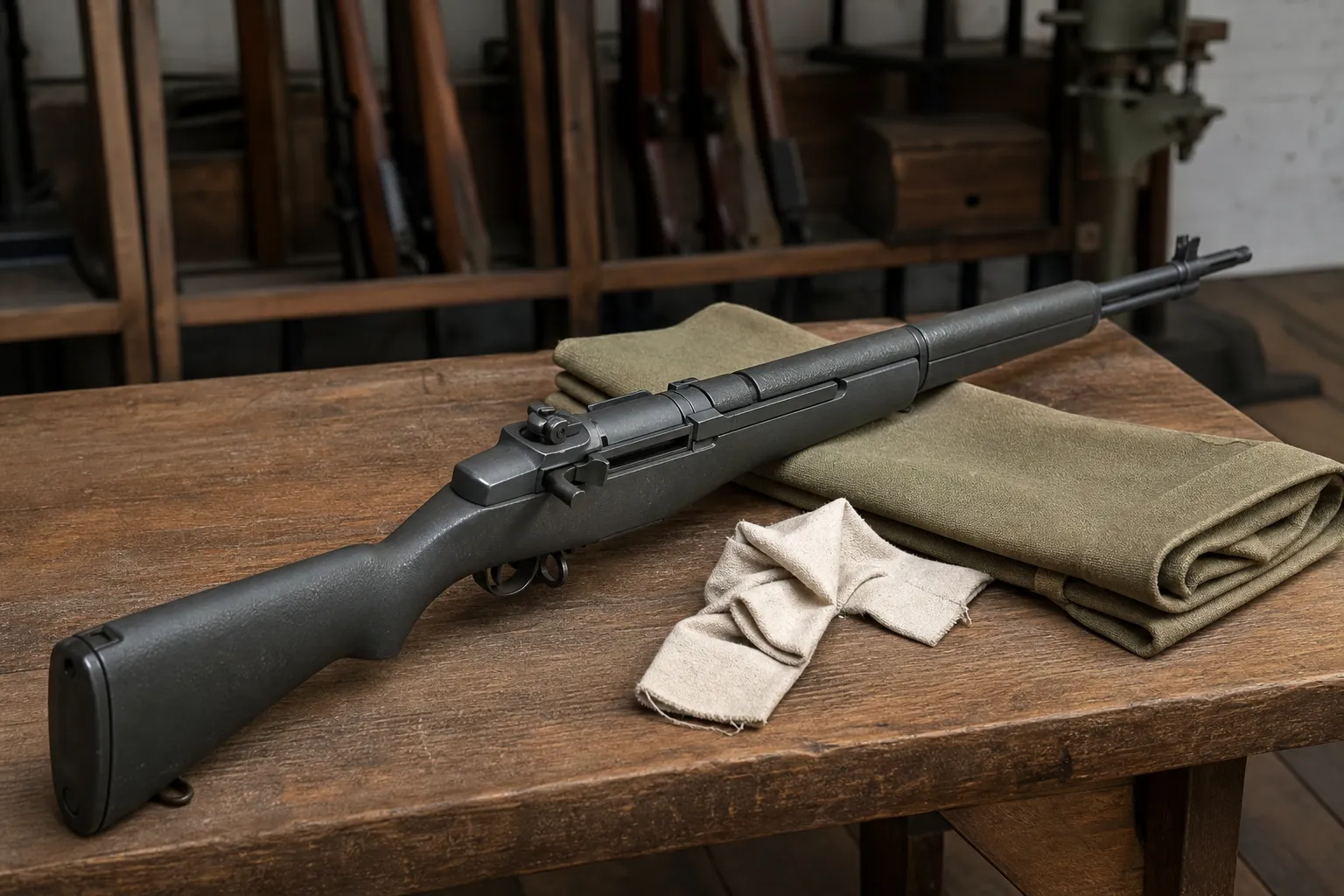
Parkerizing is a phosphate conversion finish used on ferrous steel. On a firearm, the result is usually a matte gray to black surface with a fine crystalline texture, not a shiny plated finish.
What parkerizing is
Parkerizing is a chemical conversion coating. That means the finish is formed on the steel surface itself rather than laid on as a separate decorative layer like paint.
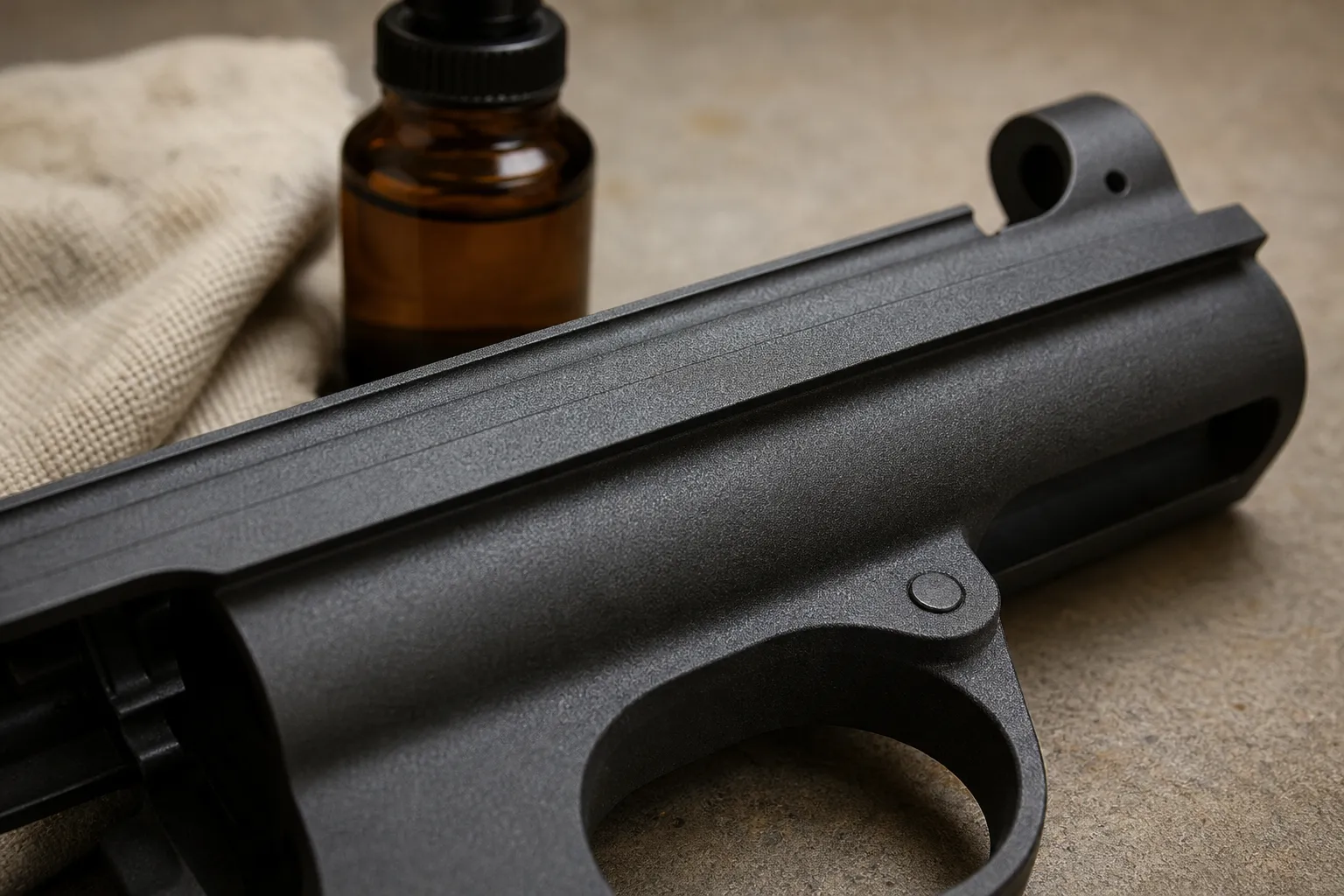
MIL-DTL-16232H describes acceptable phosphate workmanship as evenly deposited and having a uniform crystalline texture. It also says the color range is gray to black and should not have a mottled appearance.
Collectors often notice that parkerized military parts can look slightly different from one another. Within the facts covered here, the official specification gives the broad appearance range: gray to black, matte, crystalline, and even.
Why militaries liked phosphate finishes
The practical value of parkerizing is not only the phosphate layer. It is also the way that layer works with oil or corrosion preventive. Oil or corrosion preventive can be part of the coating system when required, and that treatment is tied to salt spray corrosion requirements.
Parker Rust-Proof describes manganese phosphate as leaving oil in surface valleys, creating small reservoirs that help maintain an oil film compared with untreated surfaces. That oil holding quality is one reason parkerized steel became useful on hard service equipment.
Parker Rust-Proof also describes manganese phosphate as a layer of inert phosphates between mating surfaces. In that industrial context, the company says the layer helps prevent welding of materials under high loads. For firearms, the important collector takeaway is simple: parkerizing is a functional surface treatment, not just a color.
Military specification language notes that phosphate coating adds buildup, so drawings must allow for it.
A short history of parkerizing
The technical roots of parkerizing go back before the name became familiar to firearm collectors. Thomas Watts Coslett received a U.S. patent on November 12, 1907, for treating iron or steel to prevent oxidation or rusting. The patent described furnishing iron or steel with a phosphate of iron deposit to resist oxidation or rusting.
Parker Rust-Proof says the Parker Rust-Proof Company of Ohio became a job shop licensee of the Parker Rust-Proof Company of Detroit in October 1918. The company identifies its metal finishing specialties as including zinc and manganese phosphate coatings.
During World War II, Parker Rust-Proof says its coatings were applied to armament components, airplanes, tanks, stampings, and fasteners. That wartime industrial setting helps explain why the word “Parkerized” became so closely associated with military equipment.
The history is also tied to Springfield Armory. ASME reports that Springfield Armory contributed to industry with a continuous automatic parkerizing process. The National Park Service says Springfield Armory produced more than 3,719,000 M1 rifles by the end of World War II, and the M1 became one of the best known U.S. military rifles of that period.
Military firearm examples
The M1 Garand is the clearest U.S. military example in the facts here. The National Park Service says the Army adopted the M1 in 1936, with the Marine Corps and Navy following by 1940. The same agency says the M1 served U.S. forces from World War II through the Korean War and from 1936 to 1957.
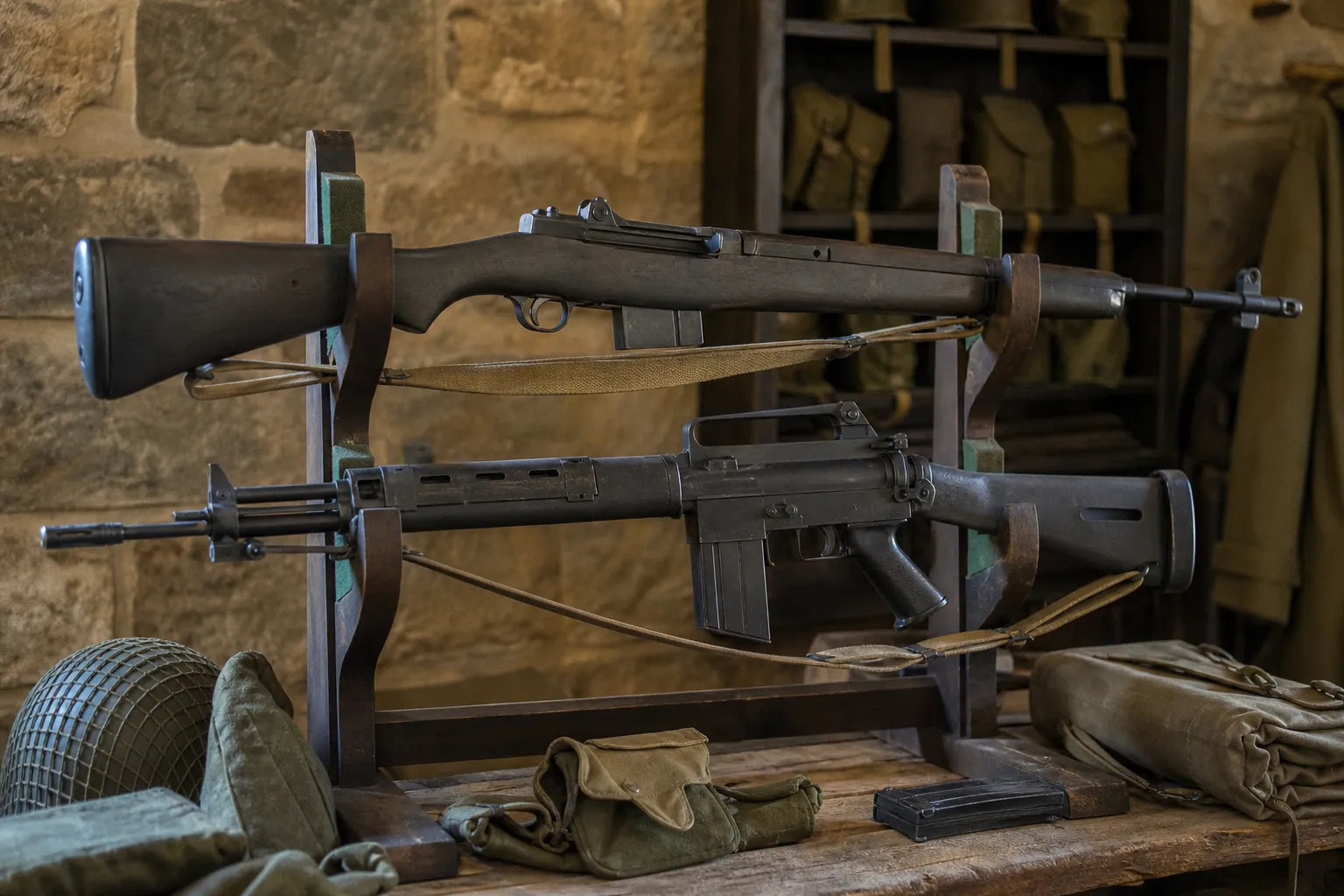
Springfield Armory’s World War II production scale also matters. The National Park Service states that production of the M1 Garand rose to more than 3,719,000 rifles by the end of the war. ASME’s note about Springfield Armory’s continuous automatic parkerizing process places phosphate finishing within that larger manufacturing story.
The 1911 pistol is another model often discussed by collectors in connection with wartime finishes. The Civilian Marksmanship Program currently describes its Tisas M1911A1 as an accurate reproduction of a World War II issued 1911, and CMP’s specification for that reproduction lists manganese phosphate on the slide, frame, and small parts.
That does not mean every individual service pistol or part encountered by a collector should be assumed to have the same original finish. Finish history depends on maker, date, parts, rebuild history, and later handling. For collectible arms, originality questions are best checked against serial number records, arsenal records, and qualified collector references.
Parkerizing compared with black oxide and bluing
Black oxide finishes are a useful comparison because they are different from phosphate conversion finishes used on steel parts.
One key difference discussed in phosphate specification language is buildup. MIL-DTL-16232H says phosphate coating adds buildup that drawings must allow for.
Because black oxide and parkerizing are different processes, the terms should not be used interchangeably. Parkerizing is valued for its crystalline, oil holding character and for the way it works with oil or corrosion preventive.
In plain English, parkerizing can be chosen where a matte phosphate surface that works with oil or corrosion preventive is desired.
Parkerizing compared with modern finishes
Modern firearm finishes can work in very different ways. Ferritic nitrocarburizing is not the same kind of finish as parkerizing. Aalberts describes ferritic nitrocarburizing as producing a compound layer by diffusing nitrogen and carbon into the steel surface, and states that the compound layer is not a coating.
Aalberts also says ferritic nitrocarburizing provides a high level of wear resistance and corrosion resistance benefits. The distinction for collectors is that nitriding type treatments modify the steel surface by diffusion, while parkerizing is a phosphate conversion coating.
Cerakote is different again. Cerakote describes itself as a maker of thin film protective ceramic coatings. Browning describes Cerakote on firearms as a premium polymer ceramic composite coating used on selected rifles and shotguns, and says it protects firearms from scratches and rust.
So, the broad comparison looks like this:
| Finish type | Basic description | Main distinction |
|---|---|---|
| Parkerizing | Phosphate conversion finish used on ferrous steel | Phosphate conversion coating with a crystalline surface |
| Black oxide | A different steel finishing process | Not the same as phosphate conversion coating |
| Ferritic nitrocarburizing | Aalberts says nitrogen and carbon diffuse into the steel surface | The compound layer is not a coating |
| Cerakote | Cerakote describes thin film protective ceramic coatings, and Browning describes a polymer ceramic composite coating on firearms | Applied protective film over a substrate |
None of these terms should be treated as interchangeable. They describe different surface technologies, different appearance, and different preservation concerns.
What a parkerized finish looks and feels like
A parkerized surface is usually subdued rather than glossy. MIL-DTL-16232H’s description of a uniform crystalline texture matches the dull, military look many collectors associate with World War II and later service arms.
The finish can range from gray to black under the military specification. It is not supposed to be mottled under that specification’s workmanship requirement. A well preserved parkerized part also often looks slightly “dry” or matte until oil is present on the surface.
That matte texture is part of the appeal. It reduces shine and provides a surface that can carry oil. It also makes parkerizing visually different from highly polished commercial finishes.
How to care for a parkerized firearm
For care, think preservation first. The National WWII Museum warns that moisture is a major cause of metal corrosion and recommends dry storage for artifacts. That advice fits parkerized firearms because the phosphate surface still depends on proper storage and oil.
The National WWII Museum also says skin oils and acids can damage metal artifacts and recommends gloves rather than bare hands. For collectible firearms, that is a good reason to handle parkerized metal carefully, especially if originality matters.
The same museum says steel artifacts may be preserved by keeping them oiled with light oil. That aligns with the treatment of oil or corrosion preventive as part of some phosphate coating systems.
For general firearm maintenance concepts, see our guide to cleaning a gun safely. If corrosion is already present, our guide to removing rust from a gun and preventing it explains the topic at a high level. For storage conditions, see gun safe humidity.
Avoid polishing a parkerized collector gun simply to make it look newer. Polishing can change the visible surface. Avoid refinishing collectible firearms unless a qualified professional has evaluated the piece and the effect on historical value.
What to check before judging a collector firearm
A parkerized finish can be original, arsenal applied, commercially applied, or part of a later restoration. The facts on the surface alone do not prove the history of a specific firearm.
When judging a collectible military firearm, check the model, maker, serial number range, parts markings, rebuild marks, and any available arsenal documentation. For U.S. military arms, museum records, government records, and recognized collector references are better than appearance alone.
Parkerizing is best understood as a practical military finish: a phosphate conversion coating on steel, usually matte gray to black, valued because its crystalline surface works with oil or corrosion preventive to help protect metal.
Frequently asked questions
Is parkerizing the same as bluing?
No. Parkerizing is a phosphate conversion coating on ferrous steel. Bluing and black oxide are different surface finishes and should not be treated as the same thing.
What color is a parkerized finish?
MIL-DTL-16232H says phosphate coatings are gray to black and should not have a mottled appearance. It also describes acceptable coatings as evenly deposited with a uniform crystalline texture.
Why does parkerizing hold oil well?
Parker Rust-Proof describes manganese phosphate as retaining coating in surface valleys and holding reservoirs of oil in them. That helps maintain an oil film compared with untreated surfaces.
Was parkerizing used on World War II military equipment?
Yes. Parker Rust-Proof says its coatings were applied to armament components, airplanes, tanks, stampings, and fasteners during World War II. ASME also reports that Springfield Armory contributed a continuous automatic parkerizing process.
Is Cerakote the same as parkerizing?
No. Cerakote describes itself as a thin film protective ceramic coating, and Browning describes Cerakote as a polymer ceramic composite coating. Parkerizing is a phosphate conversion coating on ferrous steel.
How should a parkerized collectible be stored?
The National WWII Museum warns that moisture is a major cause of metal corrosion, recommends dry storage for artifacts, and says steel artifacts may be preserved with light oil.
Sources
- Parco Lubrite Phosphate Conversion Coating Services, Parker Rust-Proof. Accessed November 8, 2026.
- MIL-DTL-16232H, Phosphate Coating, Heavy, Manganese or Zinc Base, U.S. Department of Defense via DLA ASSIST Quick SearchOfficial source. Accessed November 8, 2026.
- US870937A, Treatment of Iron or Steel for Preventing Oxidation or Rusting, Google Patents, U.S. patent document. Accessed November 8, 2026.
- United States v. Parker-Rust-Proof Co., E.D. Mich. 1945, CaseMine, reproducing federal court opinion. Accessed November 8, 2026.
- The Original House of Parkerizing, Parker Rust-Proof. Accessed November 8, 2026.
- Springfield Armory Showcases the Machines that Shaped a Nation, ASME. Accessed November 8, 2026.
- John Garand, National Park Service, Springfield Armory National Historic SiteOfficial source. Accessed November 8, 2026.
- Building 104 (Federal Square), National Park Service, Springfield Armory National Historic SiteOfficial source. Accessed November 8, 2026.
- CMP Tisas M1911A1 Pistol, Civilian Marksmanship ProgramOfficial source. Accessed November 8, 2026.
- MIL-DTL-13924E, Coating, Oxide, Black, for Ferrous Metals, U.S. Department of Defense via DLA ASSIST Quick SearchOfficial source. Accessed November 8, 2026.
- Ferritic Nitrocarburizing (FNC), Aalberts Surface Technologies. Accessed November 8, 2026.
- About Us, Cerakote. Accessed November 8, 2026.
- Cerakote, Browning. Accessed November 8, 2026.
- Preservation of Artifacts, The National WWII Museum. Accessed November 8, 2026.
- MIL-DTL-16232H.pdf. Accessed November 8, 2026.