.45 Colt: History, Specifications and Modern Uses
.45 Colt is a classic American revolver cartridge tied to the Colt Single Action Army of 1873. Higher pressure +P style ammunition is firearm specific and outside ordinary standard .45 Colt use.
By RaiS. Reviewed by RaiS. Published . 4 min read.
Research and drafting were assisted by AI. RaiS checked the facts against the sources below and approved this page.
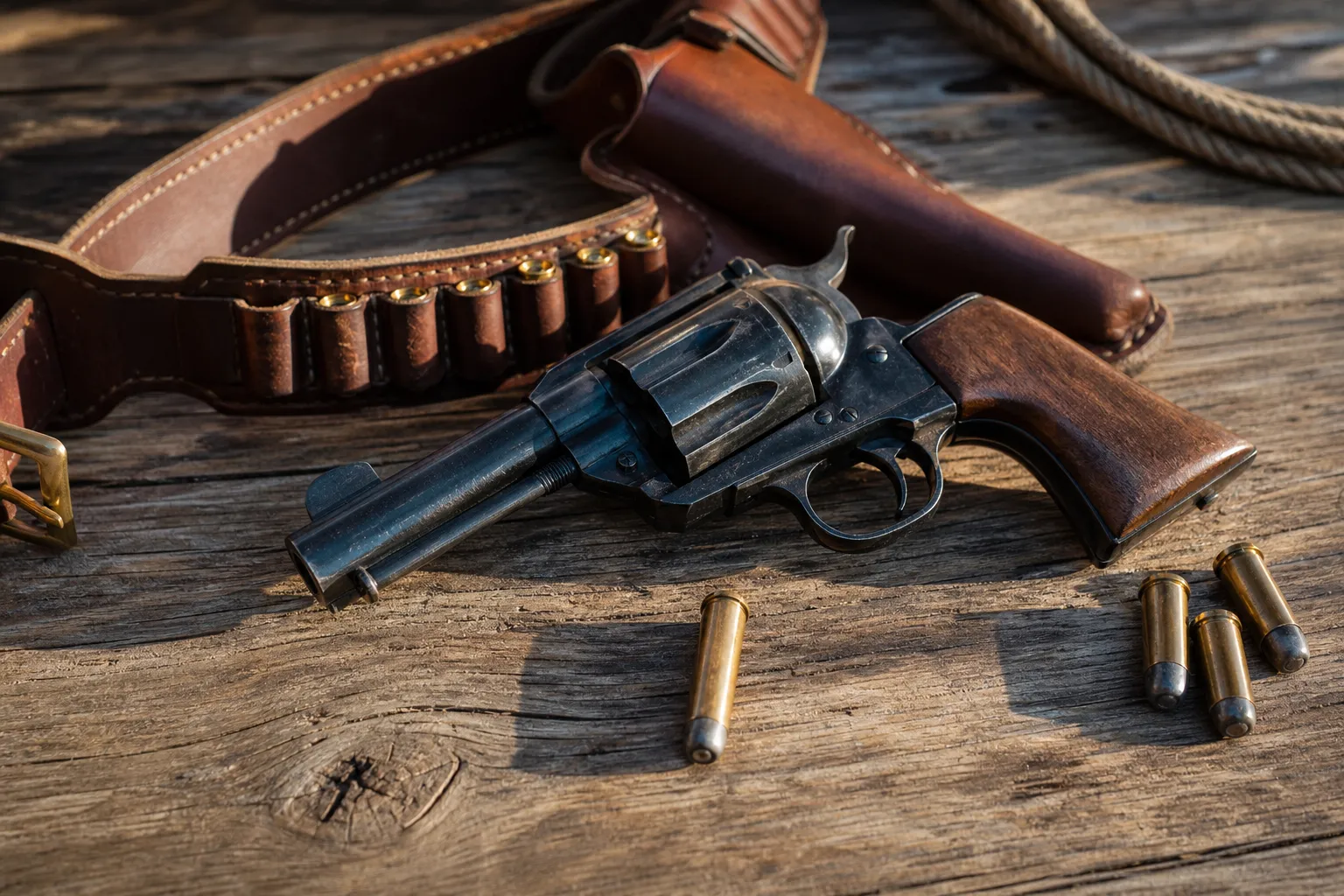
.45 Colt is a centerfire revolver cartridge best known for its connection to the Colt Single Action Army, introduced in 1873. In modern standards, SAAMI lists the cartridge as 45 Colt. Some makers restrict high pressure +P style ammunition to specific modern firearms.
Name and historical origin
Colt’s timeline says the Single Action Army revolver was introduced in 1873 and was also known as the Peacemaker and Colt 45. Colt also says the SAA became a U.S. government standard military service revolver, with more than 30,000 delivered from 1873 to 1891.
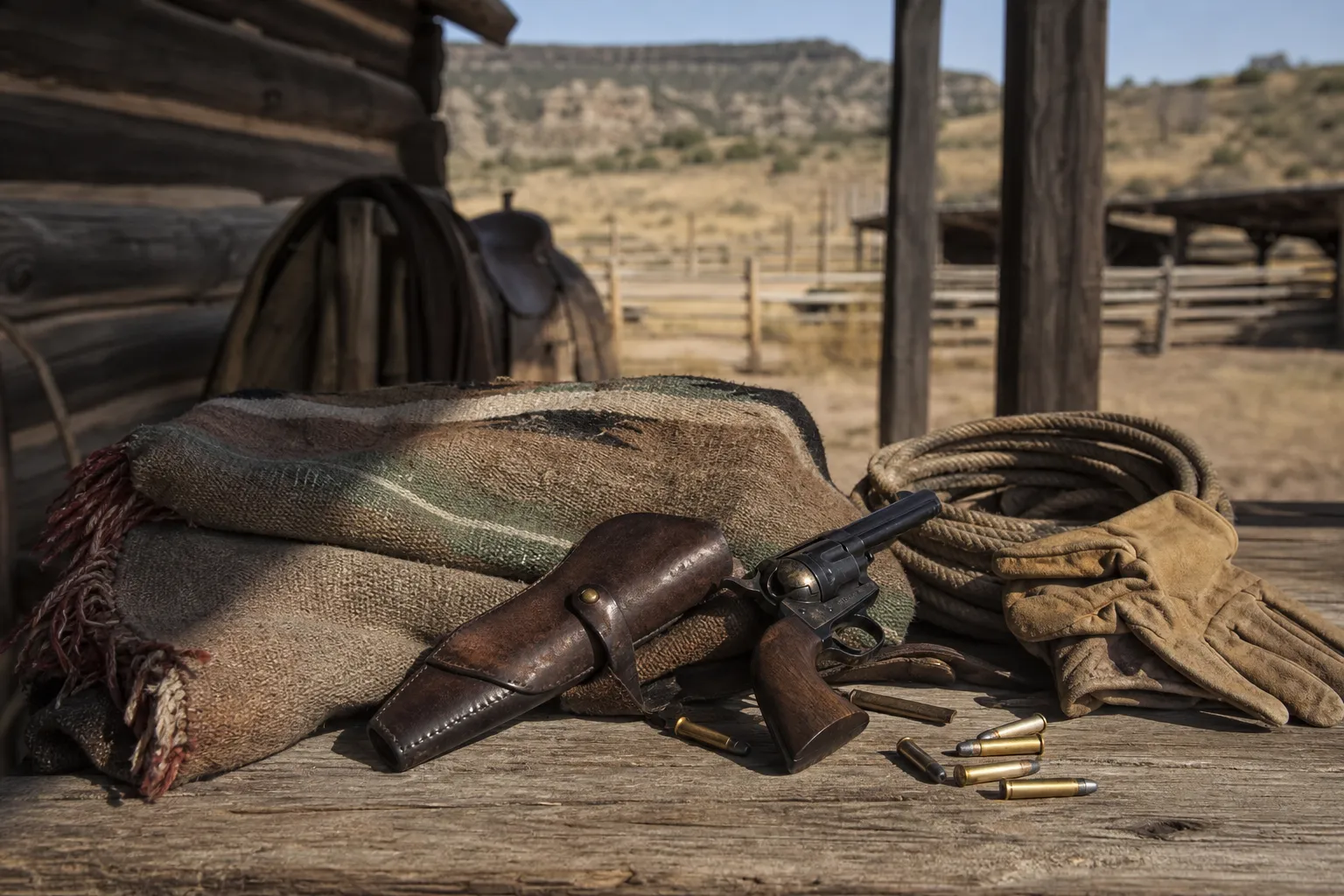
That history is why .45 Colt and the Colt Single Action Army are so closely linked. The National Park Service identifies an 1873 Colt revolver in .45 Long Colt and lists classic barrel lengths of 7 1/2, 5 1/2, and 4 3/4 inches.
The name can be confusing. SAAMI’s current centerfire pistol and revolver standard lists the cartridge name and abbreviation as 45 Colt. Some references still use “.45 Long Colt.”
Historically, the cartridge belongs to the black powder era. American Rifleman describes the early .45 Colt as using a 255 grain bullet with black powder. That is historical context, not modern loading guidance. Modern ammunition should be identified by the ammunition maker and matched to the firearm maker’s chambering and safety instructions.
SAAMI specifications for standard 45 Colt
SAAMI lists the cartridge name and abbreviation as 45 Colt. The values below are from SAAMI’s standard drawing for 45 Colt.
Specification: Cartridge name SAAMI value: 45 Colt
Specification: Bore diameter SAAMI value: .442 inch
Specification: Groove diameter SAAMI value: .450 inch
SAAMI also identifies both vented and solid velocity and pressure test barrels for 45 Colt. SAAMI states that vented test barrels are used to establish catalog velocity values for cartridges normally chambered in revolvers. That matters because a catalog velocity is a test result under stated conditions, not a promise that every revolver or rifle will produce the same number.
Common modern factory load examples
Current and recent manufacturer catalogs show .45 Colt in several bullet weights and load styles. Catalog data is not a recommendation, and it does not replace the firearm manual or the ammunition maker’s warnings.
Modern factory loads can vary, so .45 Colt data needs context. A catalog velocity is a test result under stated conditions, not a promise that every revolver or rifle will produce the same number.
Use in revolvers
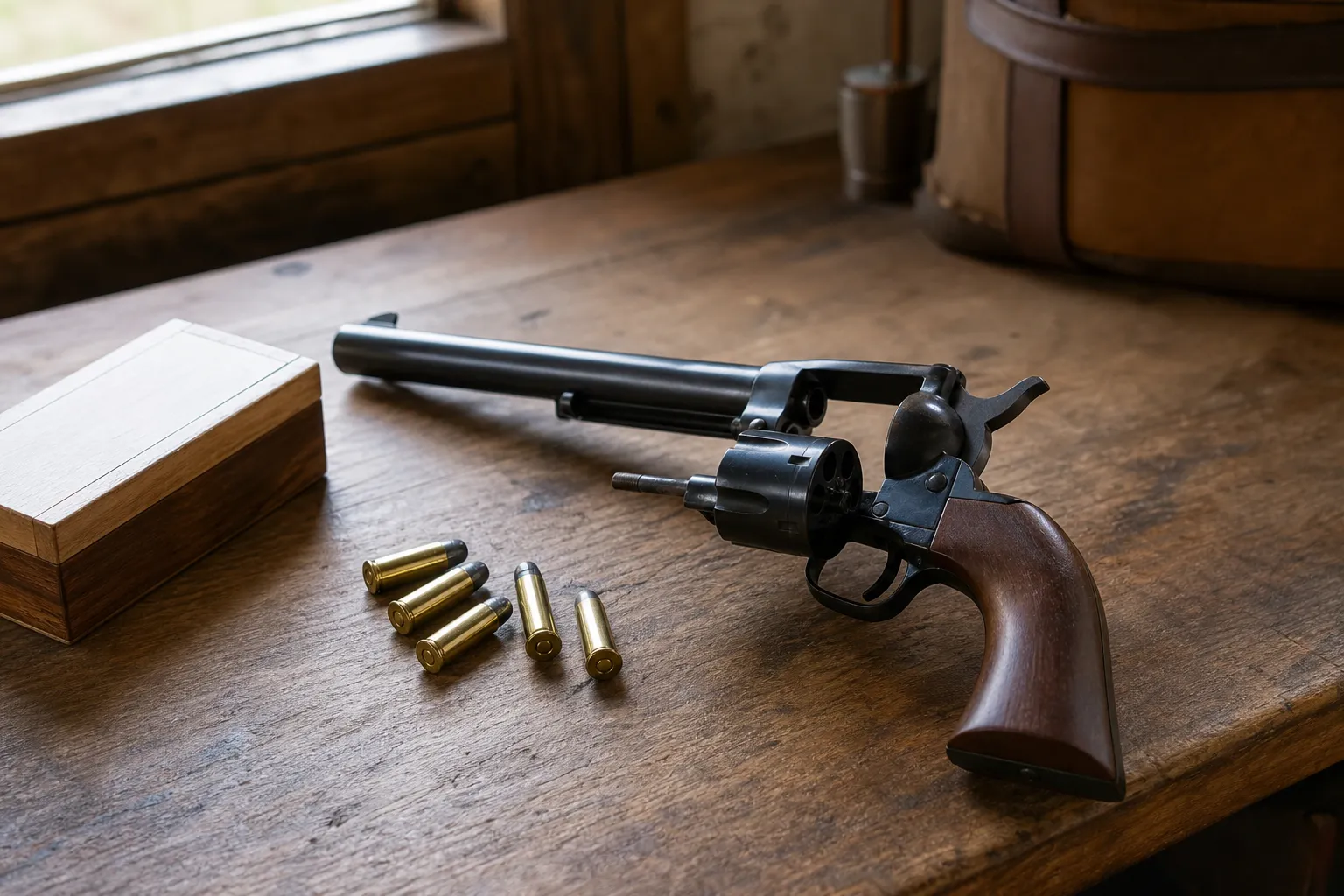
For a new reader, the main safety point is simple: match the exact cartridge marking and the firearm manual. A .45 Colt chamber is not the same thing as .45 ACP.
Ruger’s Redhawk manual also says Ruger revolvers are designed for cartridges of the correct caliber made in accordance with U.S. industry standards. That industry standard language points back to standard ammunition, not an assumption that any cartridge with a similar name, bullet diameter, or case head will be appropriate.
If you are sorting out revolver terminology, it may help to read about how a revolver works and the difference between single action and double action. The .45 Colt cartridge is historically tied to a single action revolver, but modern .45 Colt chamberings also appear in other revolver designs.
Use in lever-action rifles
.45 Colt is also chambered in some modern lever-action rifles.
Henry’s manual states that the .45 Colt chambering is for the .45 Colt cartridge, not .45 ACP. For its .45 Colt rifle, Henry lists capacity as 10 rounds for the standard rifle and 7 rounds for the carbine.
The firearm manual still controls what should be used in a specific rifle. For action type background, see ProjectGuns’ guide to lever-action rifles.
Standard .45 Colt versus high pressure +P style loads
The most important modern caution is that standard .45 Colt and high pressure +P style .45 Colt are not the same category. Standard .45 Colt information should not be read as approval for high pressure ammunition.
Buffalo Bore’s FAQ gives another example of firearm specific limits. It says Taurus Judge and Smith & Wesson Governor firearms are not designed for its +P 45 Colt ammunition.
The safe takeaway is not to generalize from one strong modern firearm to all .45 Colt firearms. Treat +P ammunition as a separate, firearm specific subject. If the ammunition maker and the firearm maker do not both identify the combination as suitable, do not assume it is.
How to read .45 Colt data safely
When reading .45 Colt data, start with the exact standard or catalog being discussed. SAAMI’s values describe standard 45 Colt dimensions. Ammunition catalogs describe specific factory loads. Firearm manuals describe what a particular firearm maker says about that firearm.
Do not mix those categories. Standard cartridge information does not describe +P style ammunition. A rifle load listing does not mean the same load is suitable for every revolver. A historical black powder description is not a modern loading instruction.
Use the current SAAMI standard, the firearm maker’s manual for the exact model and chamber marking, and the ammunition maker’s current product warnings. This is especially important for older revolvers, replicas, smaller frame firearms, lever-action rifles, and any ammunition labeled or described as +P, bear load, heavy, or firearm specific.
Frequently asked questions
Is the cartridge officially called .45 Colt or .45 Long Colt?
SAAMI lists the cartridge name and abbreviation as 45 Colt. Some references also use .45 “Long” Colt, including a National Park Service page on the 1873 Colt revolver.
Can .45 ACP be used in a .45 Colt firearm?
No. A .45 Colt chambering is for .45 Colt, not .45 ACP.
Are +P .45 Colt loads standard .45 Colt ammunition?
No. +P style .45 Colt is firearm specific. Buffalo Bore states that Taurus Judge and Smith & Wesson Governor firearms are not designed for its +P 45 Colt ammunition.
Is .45 Colt used in rifles as well as revolvers?
Yes. The article describes .45 Colt chamberings in modern lever action rifles, including Henry rifle and carbine capacities.
Sources
- Timeline, Colt’s Manufacturing CompanyOfficial source. Accessed November 16, 2026.
- SAAMI Z299.3-2022, Centerfire Pistol & Revolver Ammunition, Sporting Arms and Ammunition Manufacturers’ InstituteOfficial source. Accessed November 16, 2026.
- Colt Single Action Army Revolver Instruction Manual, Colt’s Manufacturing CompanyOfficial source. Accessed November 16, 2026.
- 1873 Colt Revolver, Fort Smith National Historic Site, National Park ServiceOfficial source. Accessed November 16, 2026.
- .45 Colt: History and Performance, American Rifleman. Accessed November 16, 2026.
- 2026 Hornady Product Catalog, English Version, Hornady ManufacturingOfficial source. Accessed November 16, 2026.
- 2022 Hornady Standard Ballistics Chart, Hornady ManufacturingOfficial source. Accessed November 16, 2026.
- 2025 Remington Ammunition Catalog, Remington AmmunitionOfficial source. Accessed November 16, 2026.
- Federal 2026 Catalog, Federal Premium AmmunitionOfficial source. Accessed November 16, 2026.
- Ruger Redhawk Revolver Instruction Manual, Sturm, Ruger & Co.Official source. Accessed November 16, 2026.
- Henry Big Boy Instruction Manual, Henry Repeating ArmsOfficial source. Accessed November 16, 2026.
- FAQ’s, The Hunting Shack, HSM AmmunitionOfficial source. Accessed November 16, 2026.
- FAQ, Buffalo Bore AmmunitionOfficial source. Accessed November 16, 2026.