Bow String Serving Explained: Center Serving, End Serving and Nocking Points
Bowstring serving is protective thread wrapped around high-wear parts of a bowstring. The center serving also forms the working surface for the arrow nock, nocking point, fingers, D-loop, or release setup.
By RaiS. Reviewed by RaiS. Published . 7 min read.
Research and drafting were assisted by AI. RaiS checked the facts against the sources below and approved this page.
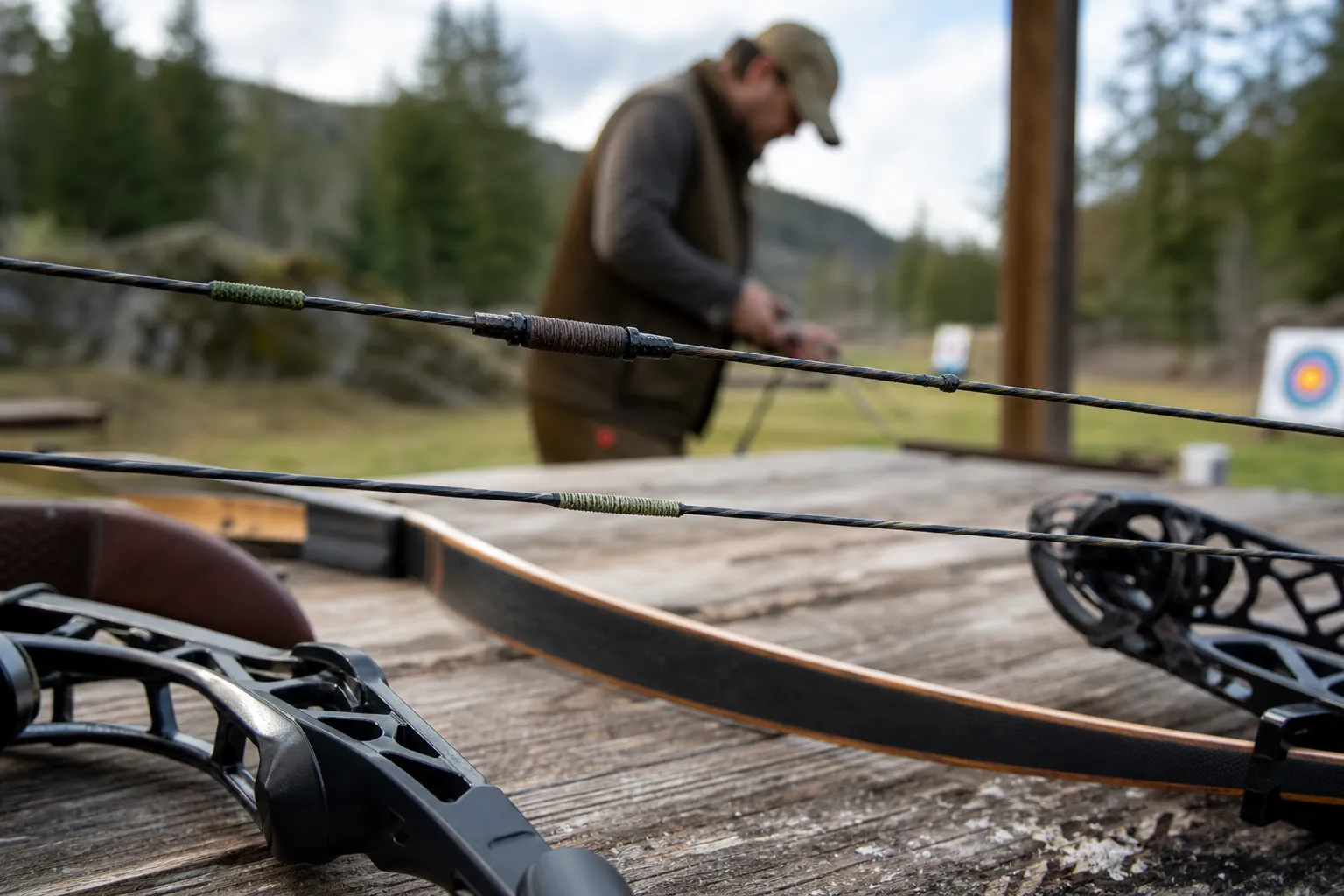
World Archery defines serving as string wrapped around the ends and center of a bowstring to protect it from wear. In plain terms, serving is a tougher wrap over selected parts of the bowstring, especially the center section where the arrow nock and nocking point sit, and the end areas where the string fits the bow or runs around bow contact points.
For an archer learning the language, the key terms are center serving, end serving, nocking point, nock fit, and, on many compound setups, D-loop contact. These terms describe where the wrap is, what it protects, and how the arrow is located on the string.
What bowstring serving means
World Archery’s glossary defines serving as string wrapped around the ends and center of a bowstring to protect it from wear. 60X Custom Strings describes serving as another form of string that is wrapped around the bowstring strands under tension, and says it is more durable than the string fibers where the string contacts the bow.
That is the basic idea: serving is not the main bowstring itself. It is a protective wrap on selected areas of the string. It helps shield the string from repeated contact, and it gives the archer a more consistent surface at important contact points.
World Archery’s coaching glossary defines center serving as the serving on the central area of the bowstring, and says it protects the bowstring from wear.
Serving can also be used for other string-mounted features. 60X Custom Strings says serving is used to tie nocking points, tie in a peep sight, and secure equipment installed on a bowstring. For more on the sighting part of that system, see our glossary entry on the archery peep sight.
Where serving appears on a bowstring
World Archery’s definition points to two broad areas: the center and the ends of the bowstring. Bowstring makers add more detail, because exact serving locations depend on the bow type and the string design.
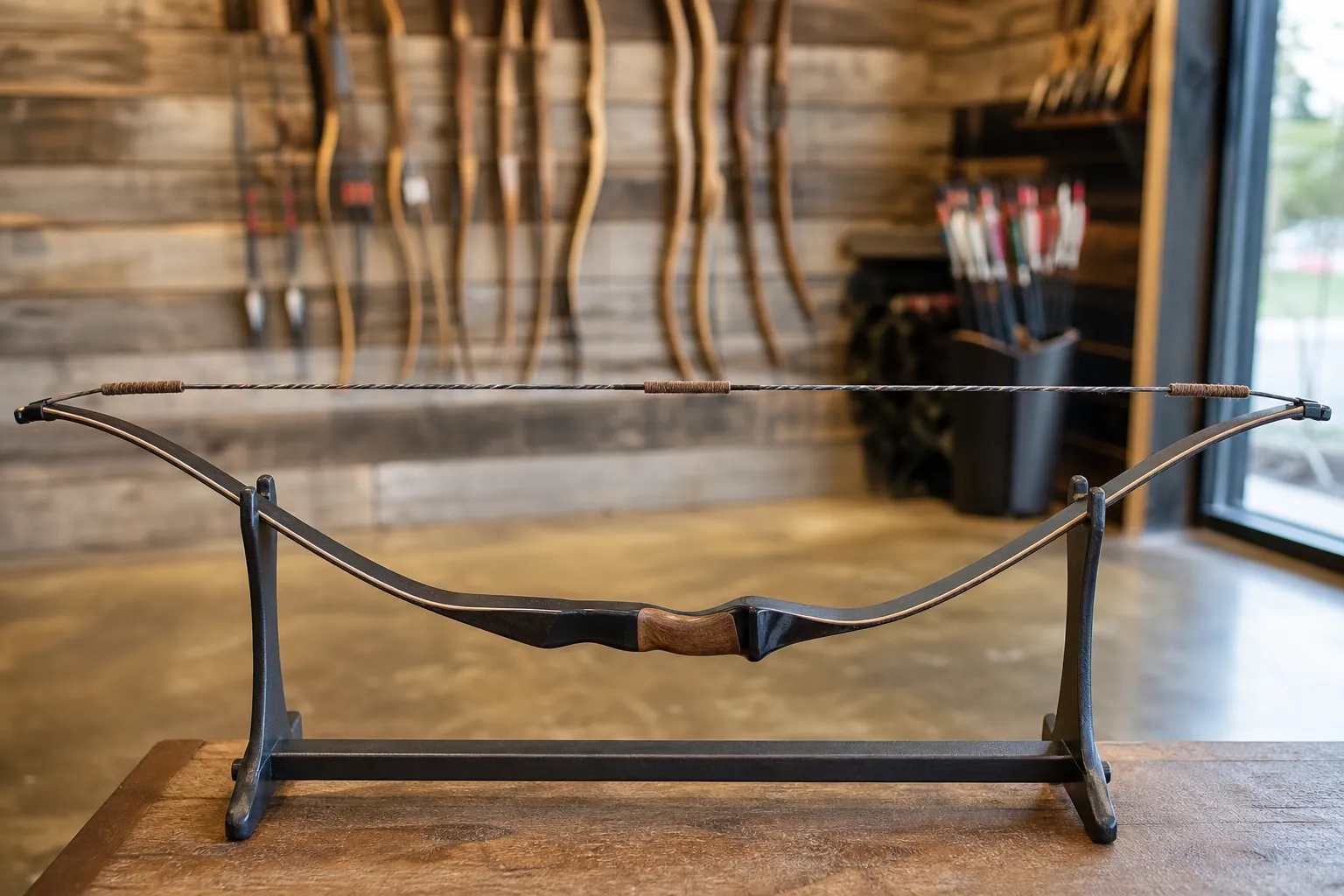
| Term | Where it is | What the cited references say it does |
|---|---|---|
| Center serving | Middle of the bowstring | World Archery says it protects the central area from wear. 60X says it protects the string where the arrow nocks. |
| End serving | Ends of the string | 60X says it protects strands from friction at cams, wheels, and limb tips. |
| Additional serving | Around nocking points or accessories | World Archery rules refer to servings used to fit the arrow nock and locate nocking points. 60X says serving is used for nocking points and other string accessories. |
On a traditional bow, World Archery rules describe a bowstring with a loop at each end, with those loops placed in the bow’s string nocks when the bow is braced. BCY describes one of its nylon serving materials as traditional end serving for recurves and longbows, which fits that general end-loop area. If you are comparing bow types, see our guide to the longbow vs recurve bow and our guide to the recurve bow.
On a compound bow, 60X describes end serving as protecting strands from friction at cams, wheels, and limb tips. BCY says one of its end servings covers areas on strings and cables that need abrasion protection, and another fits snugly into wheel tracks. For the larger bow layout, see our guide to how a compound bow works.
Center serving: the nock contact area
60X Custom Strings defines center serving as the middle serving that protects the string where the arrow nocks to the bowstring. World Archery rules also say a bowstring may have a center serving to accommodate the drawing fingers and one or two nocking points.
This is why the center serving matters to feel and consistency. It is the surface that the arrow nock clips onto. On many bows it is also the area near the archer’s drawing fingers, a release setup, or the nocking point that locates the arrow.
Serving diameter matters because it affects how the nock fits on the string. 60X says serving comes in multiple diameters to help match nock fit. BCY says center serving size depends on the number of bowstring strands, and says its recommendations consider nock fit, arrow speed, durability, and safety.
End serving: protection at string ends and bow contact points
60X Custom Strings defines end serving as serving located at the ends of the string, where it helps protect strands from friction at cams, wheels, and limb tips. BCY also describes end-serving products in terms of abrasion protection and wheel-track fit.
On recurves and longbows, BCY describes 400 Nylon Multifilament End Serving as traditional end serving for recurves and longbows. On compounds, the end-serving discussion often includes cams, wheels, tracks, strings, and cables, because those are the contact areas named by 60X and BCY.
BCY says its Halo serving can be used for either end or center serving. BCY also says its 3D End Serving is recommended for end servings and that servings should be tight but flexible. These manufacturer statements are useful for terminology, but they are not a substitute for the bow or string maker’s service instructions.
Nocking point: where the arrow is located
World Archery defines a nocking point as two raised buttons on the bowstring between which the arrow is clipped, keeping it in place.
That definition describes the practical idea: the nocking point is the reference location for the arrow on the string. Hoyt says bows require a D-loop or a nocking point device to properly locate the arrow on the bowstring in relationship to the arrow rest.
World Archery rules say a bowstring may have one or two nocking points, and may have additional serving to fit the arrow nock and locate the nocking points. Hoyt’s manual also refers to tied-on nocking points made with archery serving material.
A nocking point is related to the arrow nock, but it is not the same part. Bohning defines the string groove as the space between the ears of a nock, measured at the narrowest point, and defines the throat as the bottom of that groove where the string sits during shooting. For the rest of the arrow’s basic components, see parts of an arrow.
Nock fit: why serving diameter matters
Easton says nock fit is important to recurve tuning and can be adjusted by nock groove size or serving diameter. Easton describes a proper fit as tight enough for the arrow to hang vertically from the string without falling off under its own weight, but loose enough to separate from the string with a light tap near the nock.
That description explains why center serving is more than a protective wrap. It also affects the connection between the arrow nock and the bowstring.
A fit that is too tight can cause problems. Easton warns that if the nock is pinched between the top and bottom nocking point at brace height, there will be pressure on the nock at full draw.
D-loop contact on compound bows
60X Custom Strings describes a D-loop as tied on the string above and below the arrow’s nock. World Archery says a release aid attaches to a D-loop rather than directly to the bowstring, reducing wear and undue pressure.
World Archery also says a D-loop helps ensure the arrow is not twisted or pressured by the string at full draw. In common terminology, that means the release aid contacts the D-loop rather than clipping directly to the bowstring. For a broader explanation of release styles, see bow releases explained.
Hoyt says bows require a D-loop or a nocking point device to locate the arrow on the string in relationship to the arrow rest. Hoyt also states that only high quality archery D-loop material should be used for a D-loop, and only high quality archery serving material should be used for a tied-on nocking point.
Serving and competition wording
World Archery rules include specific wording about serving on competition equipment. In one rule section, World Archery says a bowstring may have center serving, one or two nocking points, and added servings to fit the arrow nock and locate the nocking points.
World Archery rules also include a visibility limitation: the end of the serving on the string will not end within the athlete’s vision at full draw. That rule language is especially relevant for archers setting up recurve or barebow equipment for World Archery competition.
If you shoot in a league, club event, school program, or sanctioned tournament, check the current rulebook for that event. Equipment wording can be specific, and official rules should be confirmed with the governing body before competition.
When serving should be checked
The cited manufacturers and archery organizations describe serving as a protective part of the bowstring system, especially at wear points and nock contact points. That makes inspection important, particularly around the center serving, end serving, nocking point, D-loop area, and any served-in accessories.
This guide is terminology only, not a restringing or repair manual. Follow the bow manufacturer’s manual, the string maker’s guidance, and the rules for your shooting organization. If serving is worn, loose, damaged, or affecting nock fit, have the bow checked by a qualified bow technician or the manufacturer’s recommended service channel.
Frequently asked questions
What is bowstring serving?
World Archery defines serving as string wrapped around the ends and center of a bowstring to protect it from wear. 60X Custom Strings describes it as another form of string wrapped around the bowstring strands under tension.
What is center serving?
World Archery defines center serving as the serving on the central area of the bowstring that protects the string from wear. 60X Custom Strings says it protects the string where the arrow nocks to the bowstring.
What is end serving?
60X Custom Strings defines end serving as serving at the ends of the string that helps protect strands from friction at cams, wheels, and limb tips. BCY also describes end-serving materials for areas that need abrasion protection.
How is the nocking point different from the nock?
World Archery defines a nocking point as two raised buttons on the bowstring between which the arrow is clipped, keeping it in place. Bohning defines parts of the arrow nock, including the string groove and throat, where the string sits during shooting. The nocking point is on the string, while the nock is the arrow part that engages the string.
Why does serving diameter matter?
Easton says nock fit can be adjusted by nock groove size or serving diameter.
What does a D-loop do?
60X Custom Strings says a D-loop is tied above and below the arrow’s nock. World Archery says a release aid attaches to the D-loop rather than directly to the bowstring, reducing wear and undue pressure.
Sources
- Archery Glossary, World ArcheryOfficial source. Accessed November 28, 2026.
- Archery Glossary, World ArcheryOfficial source. Accessed November 28, 2026.
- Book 3, Target Archery Differences, 2026-01-27 Version, World ArcheryOfficial source. Accessed November 28, 2026.
- Coaches Manual, Level 1, World ArcheryOfficial source. Accessed November 28, 2026.
- Archery 101: How to tie a D-loop, World ArcheryOfficial source. Accessed November 28, 2026.
- Archery 101: How to tie a nocking point, World ArcheryOfficial source. Accessed November 28, 2026.
- Archery Equipment Challenge, USA ArcheryOfficial source. Accessed November 28, 2026.
- Serving Material, BCY FibersOfficial source. Accessed November 28, 2026.
- Frequently Asked Questions, BCY FibersOfficial source. Accessed November 28, 2026.
- Everything You Need to Know about Bow String Anatomy, 60X Custom StringsOfficial source. Accessed November 28, 2026.
- Bow String Serving Material, 60X Custom StringsOfficial source. Accessed November 28, 2026.
- Center Serving Guide, GAS BowstringsOfficial source. Accessed November 28, 2026.
- Center Serving Safety, GAS BowstringsOfficial source. Accessed November 28, 2026.
- Compound Bow Setup, Tuning, and Maintenance, Hoyt ArcheryOfficial source. Accessed November 28, 2026.
- Nocks, The Vital Connection, Easton ArcheryOfficial source. Accessed November 28, 2026.
- Arrow Tuning and Maintenance Guide, The Complete Archer’s Resource, 2nd Edition, Easton ArcheryOfficial source. Accessed November 28, 2026.
- The Nock Guide, BohningOfficial source. Accessed November 28, 2026.
- Excalibur Crossbow String and Brace Height Guide, Excalibur CrossbowOfficial source. Accessed November 28, 2026.