Rifled Shotgun Barrels Explained: Sabot Slugs, Smoothbores and Accuracy
A rifled shotgun barrel is a specialized slug barrel. It is commonly paired with sabot slugs because the sabot grips the rifling and spins the projectile.
By RaiS. Reviewed by RaiS. Published . 7 min read.
Research and drafting were assisted by AI. RaiS checked the facts against the sources below and approved this page.
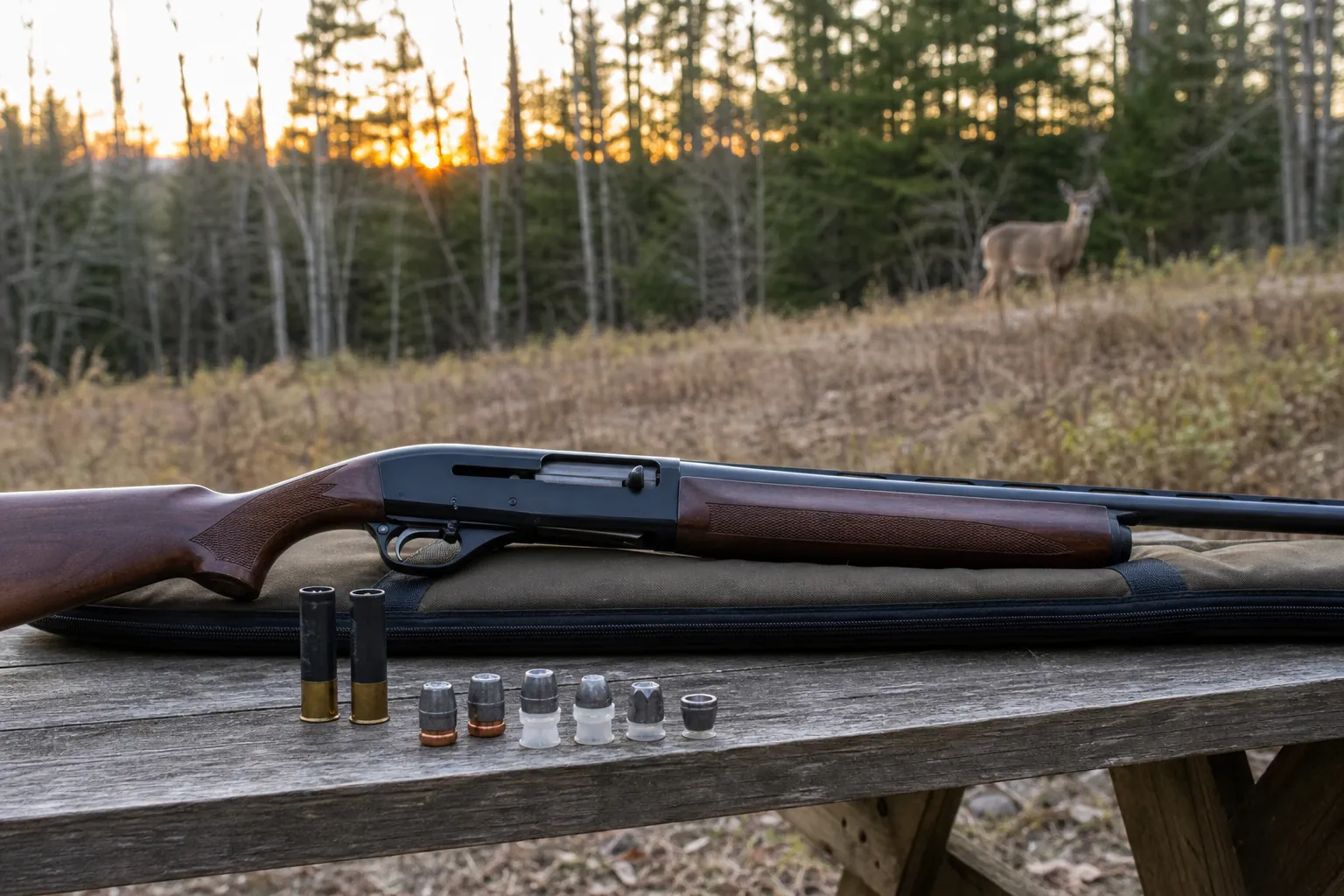
A rifled shotgun barrel has spiral rifling in the bore so a single projectile can spin as it travels down the barrel. That makes it different from the smoothbore barrel used on many shotguns for shot loads. The basic pairing is simple: smoothbores are the normal setup for shot patterns and many Foster or rifled slugs, while fully rifled shotgun barrels are commonly matched with sabot slugs.
The important caution is that this is not a one size fits all rule. Always match the gauge and shell length marked for the firearm, follow the firearm manual, read the ammunition label, and follow the choke or barrel maker’s guidance.
What rifling does in a shotgun barrel
Missouri hunter education material describes rifling as the feature that puts a spiral spin on a bullet, increasing accuracy and distance. In a shotgun slug barrel, rifling serves the same basic purpose: it spins a single projectile instead of letting it travel without that spin.
Shotguns are different from rifles because many of them are built around shot loads. Missouri hunter education material describes the shotgun as usually having a smooth bore. Nebraska hunter education material explains why: rifling would spread the shot pattern too soon.
That is the core tradeoff. Rifling can help a single projectile, but it is not what most shot loads are designed around. A smoothbore is the normal shotgun barrel type for birdshot and buckshot patterning. For more on pellets and pattern behavior, see birdshot sizes, buckshot sizes, and how to pattern a shotgun.
Missouri hunter education material also notes that if a shotgun is designed to fire slugs, it might have a rifled barrel. In other words, a rifled shotgun barrel is usually best understood as a specialized slug barrel, not as the default shotgun setup.
Smoothbore versus rifled shotgun barrels
A smoothbore shotgun barrel has a smooth interior bore. Hunter education materials describe shotguns as usually smoothbore, and Nebraska hunter education material connects that design to shot patterns.
A rifled shotgun barrel has spiral rifling in the bore. Its job is to spin a single projectile. Manufacturers commonly describe fully rifled shotgun barrels as slug barrels, and several ammunition makers pair them with sabot slugs.
Here is the plain English comparison:
| Barrel type | What it is mainly associated with in the cited guidance | Key caution |
|---|---|---|
| Smoothbore shotgun barrel | Shot loads, and many rifled or Foster slug uses | Follow choke, barrel, firearm, and ammunition guidance |
| Fully rifled shotgun barrel | Sabot style slugs | Shot loads and rifled slugs may not be recommended by the firearm maker |
Mossberg’s pump shotgun manual says fully rifled barrels deliver best accuracy with sabot style slugs. The same manual says rifled slugs and shotshells are not recommended in rifled barrels.
That is manufacturer guidance for the firearms covered by that manual, not a universal rule for every shotgun ever made. It shows why the manual matters. A hunter should not assume that a shell is appropriate just because it chambers.
Foster slugs, rifled slugs and sabot slugs
Nebraska hunter education material defines a slug as a solid projectile used for hunting big game with a shotgun. Slug ammunition comes in different designs, and the barrel type matters.
Rifled or Foster slugs
Federal describes a rifled or Foster slug as having helix ribbing to enhance stability through the bore.
Winchester describes smoothbore slugs as a short range, single projectile option for medium to large game. That fits the common role of the traditional slug gun: a shotgun launching one large projectile rather than a pattern of pellets.
The name “rifled slug” can confuse new shooters. In this context, the rifling is on the slug’s exterior, not necessarily in the barrel. Ammunition and firearm maker instructions decide what is appropriate for a particular shotgun, barrel, and choke.
Sabot slugs
Federal says a sabot slug uses a lead or copper bullet enclosed in a polyethylene sleeve. Federal also says that sleeve grips the rifling to provide spin and increased accuracy.
Oregon’s hunting definitions define a sabot as a carrier, bushing, or device that centers a smaller projectile so it can be fired in a larger caliber weapon. That matches the general ammunition description from Federal, with the sabot around the projectile.
Federal’s ammunition basics page says sabot slugs should only be used in rifled barrels. Hornady states that its SST shotgun slugs are designed for use in fully rifled barrels only. Browning’s slug ammunition FAQ suggests sabot slugs with Browning rifled barrels, and Browning’s A-Bolt Shotgun page describes that model’s fully rifled barrel as designed exclusively for sabot type slugs.
For a broader slug overview, see shotgun slugs explained.
Why sabot slugs are commonly paired with rifled barrels
The short answer is engagement. Federal says the sabot sleeve grips rifling to provide spin and increased accuracy.
That lines up with the manufacturer guidance: a sabot slug is built around the idea of a smaller projectile carried in a sleeve, with the sleeve interacting with the rifling. A fully rifled barrel gives that system something to grip.
That does not mean every sabot slug will shoot the same in every rifled barrel. It only explains the design relationship. Exact results depend on the firearm, barrel, sights, shooter, and ammunition.
Accuracy expectations, and why results vary
Manufacturers describe accuracy benefits for the right slug and barrel combination. Mossberg says fully rifled barrels deliver best accuracy with sabot style slugs. Federal describes sabot slugs as using the sleeve to grip rifling for spin and increased accuracy.
Those statements support the general expectation that a fully rifled shotgun barrel and sabot slug are an accuracy focused combination. They do not replace range confirmation with the exact firearm and ammunition being used.
Sights also matter. A shotgun with only a simple bead sight is not set up the same way as a slug gun with rifle style sights or an optic. For the basics of shotgun sighting hardware, see shotgun bead sights and vent ribs. If a shotgun uses a scope, the same general sight in concepts apply as with other scoped firearms, covered in how to sight in a rifle scope.
The safe approach is to follow the firearm manual and ammunition packaging, then confirm point of impact at the range under safe conditions. This guide does not recommend a specific load, because manufacturer guidance varies by firearm, barrel, choke, and ammunition design.
Compatibility and safety cautions
The first compatibility rule is gauge and shell length. Nebraska hunter education material says shotshells must exactly match the gauge and shell length specified by the manufacturer. Browning’s Silver shotgun manual warns users to use only shells of the correct gauge and length.
Browning’s Silver manual also warns not to use longer shells than the barrel’s chamber length. It specifically warns against using 3 inch or 3½ inch shells in a barrel with a 2¾ inch or 2½ inch chamber, and against using 3½ inch shells in a barrel with a 3 inch chamber, because dangerous pressures can result.
For more background, see shotgun gauges explained and shotgun shell length explained.
Chokes and special barrels need the same caution. SAAMI says it has no standard for rifled choke tubes and recommends contacting the slug load or choke manufacturer for specific recommendations. For choke basics, see shotgun chokes explained.
Some warnings are model specific. Mossberg’s pump shotgun manual warns not to fire slugs of any type through the overbored 835 Accu-Mag barrel and says to use 835 barrels designated for slug shooting. That kind of instruction is exactly why the owner’s manual and barrel markings matter.
Do not modify a barrel or choke to make a load fit. If the firearm manual, choke maker, barrel maker, or ammunition package does not clearly answer the question, contact the manufacturer before using that combination.
Hunting regulation cautions
Hunting rules can specify more than just “shotgun.” They can address gauge, bore type, projectile type, capacity, sights, season dates, and the species or season involved.
New Jersey’s 2026 black bear regulations give a clear example. For the listed shotgun segment, the regulations list smooth or rifled bore, not capable of holding more than 3 slugs, not smaller than 20 gauge or larger than 10 gauge, and lead, lead alloy, or copper rifled slug or sabot slug only.
That example should not be copied to another state, province, season, or species. It only shows how specific slug rules can be. Before hunting, confirm the current regulation with the state or provincial wildlife agency for the exact place, season, species, firearm, and projectile.
Bottom line
A rifled shotgun barrel is a specialized slug barrel that spins a single projectile. Sabot slugs are commonly paired with fully rifled barrels because the sabot sleeve grips the rifling and spins the projectile.
A smoothbore remains the standard shotgun barrel type for shot patterns and is commonly associated with Foster or rifled slug use when the firearm, choke, and ammunition maker allow it. The safe answer is always the marked gauge and chamber length, the firearm manual, the ammunition label, the choke guidance, and the current hunting regulations for your location.
Frequently asked questions
What is a rifled shotgun barrel?
It is a shotgun barrel with spiral rifling in the bore. Missouri hunter education material says rifling puts a spiral spin on a projectile, and notes that some shotguns designed to fire slugs might have rifled barrels.
Why use sabot slugs in a rifled shotgun barrel?
Federal says a sabot slug has a bullet inside a polyethylene sleeve that grips rifling to provide spin and increased accuracy.
Can I shoot regular rifled slugs through a rifled barrel?
Do not assume so. Mossberg’s pump shotgun manual says rifled slugs and shotshells are not recommended in rifled barrels, while other makers give their own model specific guidance. Follow the firearm manual and ammunition label.
Are smoothbore barrels only for birdshot?
No. Hunter education materials describe shotguns as usually smoothbore, and manufacturers describe rifled or Foster slugs as common smoothbore slug options.
Do rifled shotgun barrels make a shotgun legally a rifle for hunting?
Do not assume that. Hunting rules vary by agency and season. Oregon’s hunting definitions, for example, state that shotguns equipped with rifled slug barrels are considered shotguns for certain listed game mammal hunting uses when centerfire rifles or shotguns are legal weapons.
What should I check before using slug ammunition?
Check the gauge and shell length marked for the firearm, the chamber length marked on the barrel, the firearm manual, the choke guidance, the ammunition package, and the current hunting rules for the place and season.
Sources
- Differences Between Rifles, Shotguns, and Handguns, Hunter-ed.com, Missouri Hunter Ed CourseOfficial source. Accessed November 12, 2026.
- Rifling in the Rifle or Handgun Bore, Hunter-ed.com, Nebraska Hunter Ed CourseOfficial source. Accessed November 12, 2026.
- Shotshells, Hunter-ed.com, Nebraska Hunter Ed CourseOfficial source. Accessed November 12, 2026.
- Ammo Basics: Shotshell, Federal Premium Ammunition. Accessed November 12, 2026.
- Ammo 101: Shotshell, Winchester Ammunition. Accessed November 12, 2026.
- SST Slugs, Hornady Manufacturing. Accessed November 12, 2026.
- Remington Guide to Shotguns and Shotshells, RemArms, Remington. Accessed November 12, 2026.
- Mossberg Pump Action Shotgun Owner’s Manual, O.F. Mossberg & Sons. Accessed November 12, 2026.
- ANSI/SAAMI Z299.2 Shotshell, 2019, SAAMIOfficial source. Accessed November 12, 2026.
- Shotshell Reference Ammunition Supplemental Information Table, Revised 2024-09-04, SAAMIOfficial source. Accessed November 12, 2026.
- SAAMI FAQs, SAAMIOfficial source. Accessed November 12, 2026.
- What type of slug ammunition should I use with my shotgun?, Browning. Accessed November 12, 2026.
- A-Bolt Shotgun, Browning. Accessed November 12, 2026.
- Silver Shotgun Owner’s Manual, Browning. Accessed November 12, 2026.
- Bear Hunting Regulations, New Jersey Fish & Wildlife via eRegulationsOfficial source. Accessed November 12, 2026.
- Oregon Hunting Definitions, Oregon Department of Fish and Wildlife via eRegulationsOfficial source. Accessed November 12, 2026.